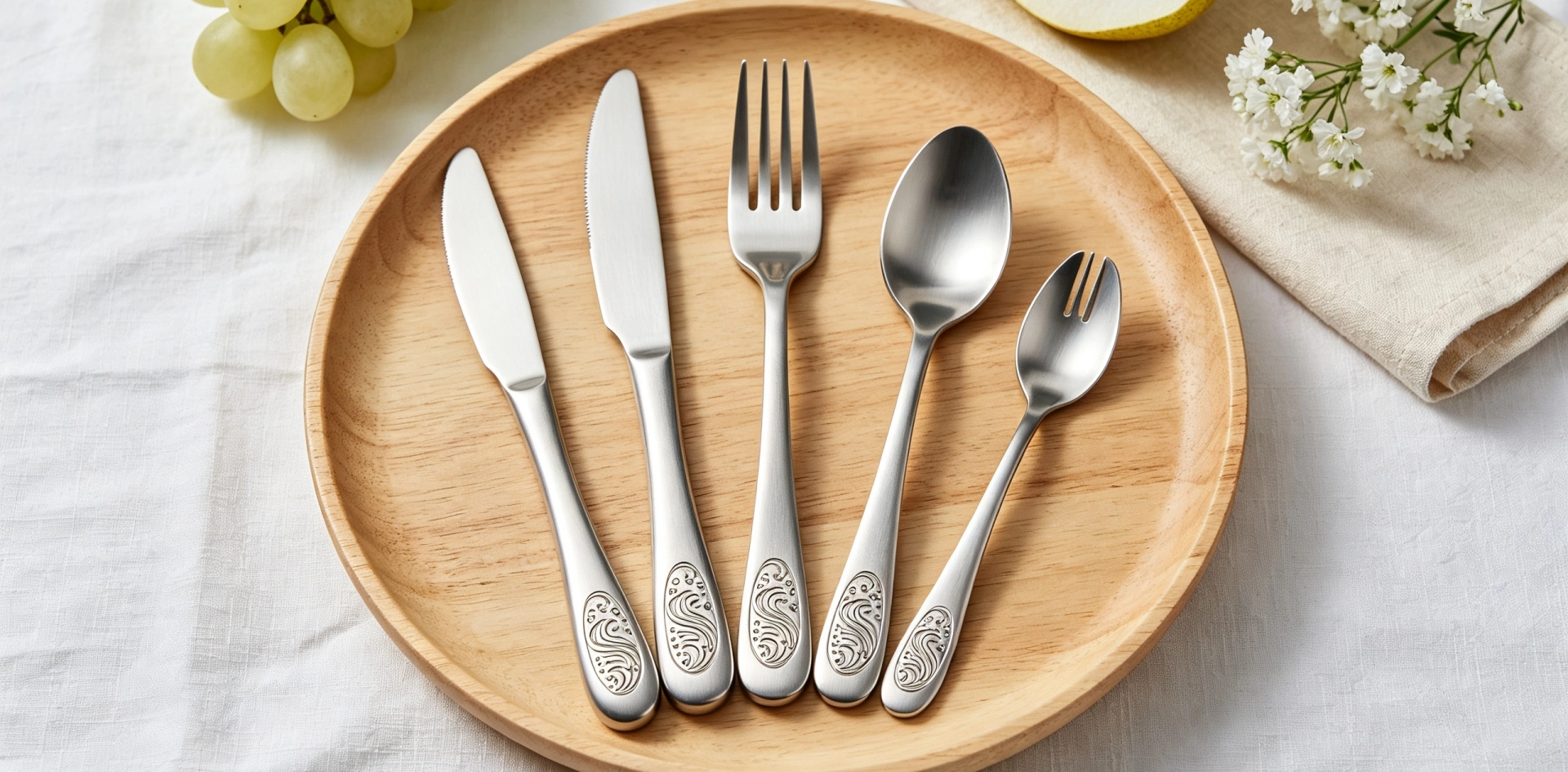
Stainless Steel Cutlery Quality Control: What B2B Buyers Should Check
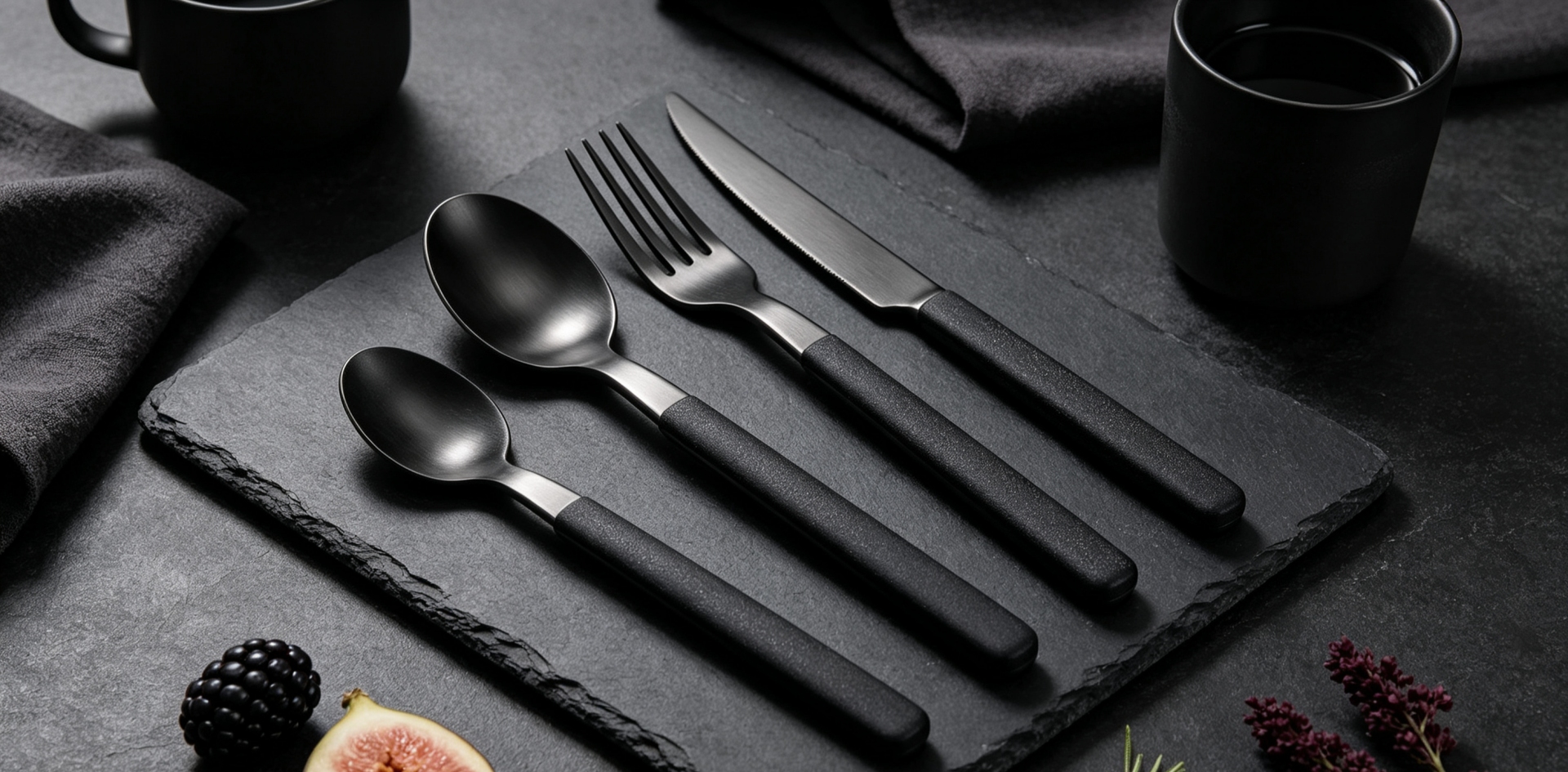
Stainless Steel Cutlery Quality Control: What B2B Buyers Should Check
When purchasing stainless steel cutlery for wholesale, retail, restaurants or hospitality projects, product quality is one of the most important considerations.
A cutlery set may look simple, but consistent quality depends on many details throughout manufacturing. Material, dimensions, weight, polishing, handle shape and packaging can all affect the final product.
For B2B buyers, checking these details before mass production can help reduce quality problems and make repeat orders more consistent.
A clear product specification and approved sample can provide a useful reference between the buyer and manufacturer.
Material Should Be Confirmed First
The stainless steel material is one of the first specifications buyers should confirm.
Common materials used for stainless steel cutlery include 18/10, 18/8 and 18/0 stainless steel.
The appropriate material depends on the intended market, product positioning and customer requirements.
For a long-term product line, the material specification should remain consistent between the approved sample and production orders.
Buyers should also make sure that the material information provided for packaging and product documentation matches the agreed specification.
Checking Product Dimensions
Even small differences in dimensions can affect the appearance of a cutlery collection.
Important measurements may include:
- Overall length
- Handle width
- Spoon bowl size
- Fork dimensions
- Knife dimensions
- Product thickness
When several pieces are sold as one set, the proportions should look coordinated.
For customized products, technical drawings or approved samples can provide a clear reference for production.
Product Weight and Balance
Weight is another useful quality point for B2B buyers.
Two cutlery products with similar dimensions can feel very different because of differences in thickness, construction and handle design.
The buyer should check whether the actual product weight is consistent with the agreed specification.
Balance is also important.
A fork, spoon or knife should feel comfortable when held and used. This is particularly relevant for restaurant, hotel and premium retail projects where the overall user experience is part of the product positioning.
Handle Shape and Surface Details
The handle is one of the most visible areas of stainless steel cutlery.
Quality inspection should check whether the handle shape is consistent across the production batch.
Look for:
- Uneven edges
- Shape differences
- Visible dents
- Deformation
- Poor transitions
- Inconsistent thickness
For custom cutlery, these details are particularly important because the handle often represents the main part of the product design.
Polishing Quality
Surface finishing can have a major effect on the appearance of stainless steel cutlery.
Mirror-polished products should have a clean and consistent bright surface.
Brushed, satin and matte finishes should maintain the intended surface appearance across the complete collection.
Buyers should inspect the products under suitable lighting and compare them with the approved sample.
The purpose is not simply to check whether the product looks attractive, but whether the finish is consistent from piece to piece.
Checking for Scratches and Marks
Finished stainless steel cutlery can be affected by scratches, dents and surface marks during manufacturing, handling and packaging.
This is especially noticeable on polished surfaces.
Quality inspection should check for visible defects before products are packed.
Internal packaging should also be considered because products can rub against each other during transportation if they are not properly protected.
For export orders, packaging should be tested together with the actual cutlery.
Edge and Comfort Checks
Cutlery should be comfortable to handle.
The edges of handles should not have obvious rough areas or uncomfortable sharp points.
Knives, forks and spoons should also meet the intended functional requirements of the product design.
For restaurant and hospitality buyers, testing the actual product can provide information that cannot always be obtained from photographs or specifications.
Consistency Across a Set
When cutlery is sold as a set, quality should be considered across the complete collection.
A fork and spoon may have slightly different shapes, but they should still appear to belong to the same product family.
Check whether they share compatible:
- Material
- Finish
- Handle style
- Proportions
- Weight
- Overall appearance
This is particularly important for retail and hospitality projects where table presentation matters.
Checking Large Production Batches
For wholesale orders, inspecting only one product may not provide enough information.
Buyers should consider how representative the sample is of the full production batch.
The manufacturer should have a process for monitoring production consistency.
Depending on the project, buyers may also arrange pre-shipment inspection or other agreed quality checks.
The inspection method should be discussed before production so both sides understand the expected standard.
Packaging Quality
The product can meet the required specification and still arrive in poor condition if packaging is not suitable.
Packaging inspection should consider:
- Product arrangement
- Internal protection
- Quantity per carton
- Carton strength
- Labels
- Retail packaging
- Shipping marks
For international orders, packaging needs to withstand longer transportation and multiple handling stages.
Quality Control for Custom Cutlery
Customized products require additional attention because the product may contain specifications that are unique to one buyer.
These can include:
- Custom handle shape
- Special dimensions
- Logo
- Surface finish
- Packaging
- Set configuration
The approved sample should be kept as a reference for future production.
If a design changes later, the updated sample or specification should replace the previous version clearly.
This helps avoid confusion when the product is reordered.
Why an Approved Sample Matters
An approved sample gives both the buyer and manufacturer a physical reference.
Instead of relying only on descriptions such as “high quality” or “premium finish,” both sides can compare production against an actual product.
The sample can show:
- Shape
- Weight
- Dimensions
- Finish
- Handle details
- Logo placement
For repeat orders, keeping the approved sample and product specification can make quality management easier.
Quality Control for Repeat Orders
Repeat orders are particularly important for B2B buyers.
A successful product may be reordered several times over the course of a year or longer.
The product should remain consistent between batches.
This is why buyers should keep detailed records of the original order specifications.
Important information can include:
- Material
- Dimensions
- Weight
- Surface finish
- Handle design
- Logo details
- Packaging
- Approved sample
Clear records provide a useful reference when production is repeated.
Choosing a Manufacturer With Manufacturing Experience
Quality control starts with the manufacturing process rather than the final inspection alone.
An experienced manufacturer understands how material selection, forming, polishing, finishing and packaging can affect the final product.
Homefelt has more than 30 years of experience in stainless steel manufacturing and produces stainless steel cutlery together with kitchen and dining products, BBQ tools, pet bowls and children's tableware.
For international B2B customers, Homefelt works with standard and customized stainless steel product requirements.
Buyers can discuss material, product dimensions, surface finish, packaging and inspection requirements before production.
What B2B Buyers Should Check Before Mass Production
Before confirming a large order, buyers can review the following:
- Stainless steel specification
- Product dimensions
- Product weight
- Handle shape
- Surface finish
- Visible surface quality
- Product balance
- Set consistency
- Packaging
- Approved sample
The more clearly these points are defined before production, the easier it is to maintain consistent expectations.
Building a Long-Term Quality Standard
For companies purchasing stainless steel cutlery regularly, quality should become part of the product specification rather than something checked only when a shipment arrives.
A clear standard can help purchasing teams compare future batches with the original product.
This is particularly valuable for wholesalers, distributors, hotel suppliers and retail brands that depend on repeat orders.
When product specifications, samples and packaging requirements are documented, both the buyer and manufacturer have a clearer foundation for long-term cooperation.
Conclusion
Stainless steel cutlery quality depends on much more than the appearance of the finished product.
Material, dimensions, weight, handle shape, surface finish, comfort, consistency and packaging should all be considered when evaluating a B2B order.
For customized and repeat products, an approved sample and clear product specification are especially useful.
With more than 30 years of stainless steel manufacturing experience, Homefelt works with international wholesalers, distributors, retailers, restaurants and hospitality businesses on stainless steel cutlery and other stainless steel products.
A clear quality standard can help buyers reduce uncertainty, maintain product consistency and build a more reliable supply relationship for future orders.
Related Topics for Your Content Matrix
How Stainless Steel Cutlery Is Made
How to Choose the Right Stainless Steel Cutlery Supplier
What Stainless Steel Grade Is Best for Cutlery
Custom Stainless Steel Cutlery for Wholesale Buyers
How to Compare Stainless Steel Cutlery Samples Before Ordering
How to Maintain Consistent Quality for Repeat Cutlery Orders


Stainless Steel Cutlery Finishes Explained for B2B Buyers
Stainless Steel Cutlery for E-commerce and Online Retail
Related Article