
Stainless Steel Cutlery Measurement Control for Consistent B2B Production
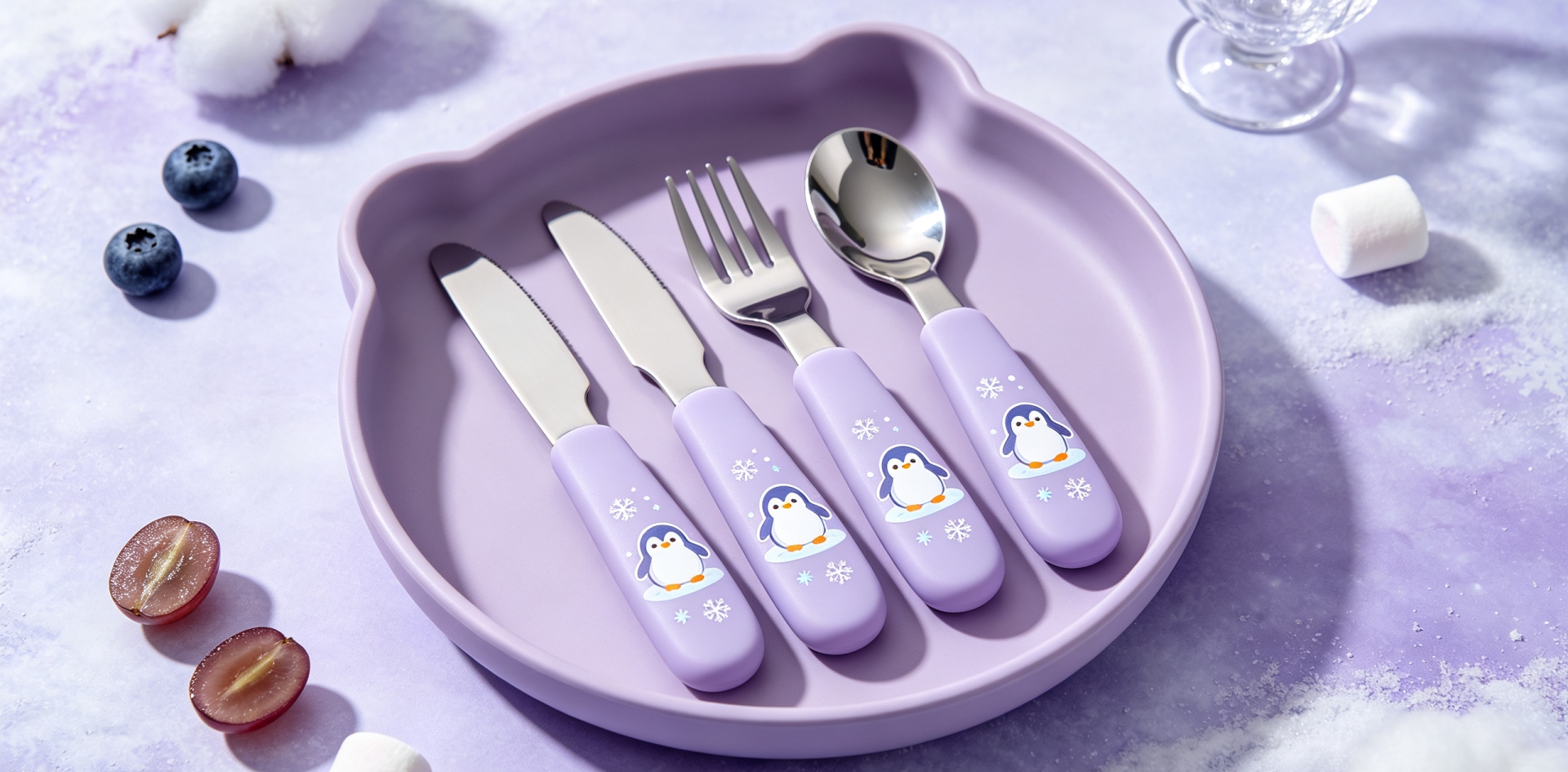
Stainless Steel Cutlery Measurement Control for Consistent B2B Production
For buyers sourcing stainless steel knives, forks, spoons, and cutlery sets in bulk, product consistency depends on more than the material and appearance. Clear measurement control is also important when a customer expects the same product specification to be reproduced across samples, production batches, and future reorders.
A stainless steel cutlery product contains many dimensions that together determine its overall proportion. Overall length, relevant widths, thickness, handle dimensions, and other project-specific measurements can all influence how a knife, fork, or spoon looks and performs.
For B2B buyers, the key is not simply having measurements, but having a clear measurement reference that the buyer and factory understand in the same way.
Homefelt factory supports customized stainless steel cutlery projects by connecting product development with specification confirmation, sampling, production, inspection, packaging, and transportation. This one-stop approach helps customers establish a clear product reference before moving into large-volume production.
Why Measurement Reference Matters in Cutlery Production
When a customer describes a stainless steel spoon as a certain length or a knife as a certain width, the factory needs to know exactly where and how that measurement should be taken.
A measurement without a defined reference can sometimes create different interpretations.
For example, the overall length of a piece may be measured from one end of the product to another, while a local dimension may refer only to a particular section. The same principle applies to width and thickness measurements.
In a professional B2B project, important measurements should therefore be associated with a clear product drawing, approved sample, specification sheet, or agreed inspection method.
This creates a common reference between the customer, product development team, production department, and quality control team.
It also makes future communication easier. When a customer places a repeat order months or years later, the factory can refer to the established specification instead of relying only on a product description or memory.
Which Cutlery Measurements Should Be Defined?
Not every dimension needs the same level of attention. The important measurements depend on the specific product and application.
For a stainless steel knife, buyers may define overall length, relevant blade dimensions, handle dimensions, and other characteristics that influence the final design.
For a stainless steel fork, overall length, head dimensions, handle dimensions, and other agreed measurements may be included.
For a stainless steel spoon, overall length, bowl-related dimensions, handle dimensions, and other product-specific measurements can be recorded.
For a complete cutlery set, the relationship between the different pieces may also need to be considered.
The objective is to identify the dimensions that are important to the product's appearance, function, packaging, and commercial positioning.
A factory should not simply add unnecessary measurements to every specification. Instead, the measurement system should be practical and relevant to the customer's actual product.
Measurement Control During Sample Development
The sampling stage is an important opportunity to confirm whether the customer's concept has been correctly translated into a physical product.
A customer may provide a drawing, reference product, photograph, or product concept. The factory can then develop a sample based on the available information.
At this stage, measurements can be reviewed together with the overall appearance.
If the sample does not have the expected proportions, the customer can provide feedback before mass production begins.
This is particularly useful for custom OEM and ODM projects because the final product may differ from a standard factory model.
The approved sample then becomes a valuable reference for production. Instead of treating the sample only as a visual example, the factory can combine it with documented measurements and product specifications.
This creates a more complete production reference.
Keeping Knife, Fork, and Spoon Proportions Consistent
When a customer develops a complete stainless steel cutlery collection, each individual product should be considered as part of the same design system.
The knife, fork, and spoon do not necessarily need identical dimensions, but their proportions should be coordinated according to the approved collection.
For example, a very large spoon combined with a significantly smaller fork may create an unbalanced visual impression if the collection was intended to have a unified appearance.
This is why measurement control should not always focus on individual numbers in isolation.
An experienced cutlery factory can review the relationship between different pieces when developing a collection. The goal is to make sure that the finished products look like they belong together.
For retail brands, hotel projects, restaurant suppliers, and private label collections, this coordination can be particularly important because the cutlery is often presented together.
Measurement and Packaging Requirements
Product dimensions can also influence packaging.
A cutlery set needs to fit correctly into its inner packaging, gift box, paper sleeve, pouch, or other customized packaging solution. If product dimensions change significantly, the packaging configuration may also need to be adjusted.
This means product measurement should be considered before packaging is finalized.
For large B2B projects, it is useful to confirm the relationship between the product specification and the packaging specification early in the development process.
Homefelt factory can coordinate stainless steel cutlery product design with packaging requirements and transportation arrangements. Customers can discuss the complete project as a one-stop customization service rather than managing every part separately.
This can be particularly helpful for private label customers who require both customized products and branded packaging.
Measurement Records for Repeat Production
A clear measurement record can provide long-term value beyond the first production run.
Suppose a distributor orders a stainless steel cutlery collection and then places another order later. If the product specification has been properly recorded, the factory can use the previous reference when preparing the new production.
The customer can also compare any requested changes against the original specification.
For example, if a buyer wants to update the handle or packaging while keeping the original knife, fork, and spoon dimensions, the factory can clearly identify which parts of the product should remain unchanged.
This helps reduce misunderstandings during repeat orders.
For customers managing multiple product collections, organized measurement records can also make supplier communication more efficient.
Factory Experience and Product Documentation
Measurement control is most effective when it is supported by an organized production system.
Homefelt has 40 years of experience in the stainless steel cutlery business and has experience working with well-known brands. The company has passed BSCI, SEDEX 4P, BRC, ISO9001, and Disney audits and has FAMA and FSC certificates.
For B2B customers, these qualifications can be reviewed together with product samples, specifications, inspection information, and project requirements.
The purpose is to give buyers a broader understanding of the factory's manufacturing capability rather than evaluating a stainless steel cutlery supplier only by quotation.
For custom projects, customers can also discuss which product parameters should be documented and which characteristics are most important for their market.
Building a Clear Specification for Bulk Orders
A successful bulk order starts with a clear understanding of the product.
The more clearly the important measurements and product characteristics are defined, the easier it becomes for the factory to develop the sample, organize production, inspect the finished goods, and support future reorders.
This does not mean every stainless steel spoon, fork, or knife needs an unnecessarily complicated specification.
The better approach is to identify the measurements that matter to the customer's product and establish them as part of a practical specification.
Homefelt factory provides OEM, ODM, private label, wholesale, and large-volume stainless steel cutlery manufacturing. Customers can customize knives, forks, spoons, and complete cutlery sets according to their product positioning and market requirements.
The factory can provide an exclusive service package based on each customer's situation, including product design, packaging, transportation, and other project requirements.
The goal is to become a reliable long-term partner for customers who need consistent stainless steel cutlery supply, rather than simply completing a single order.
Stainless Steel Cutlery Weight & Balance Design for B2B Buyers
Stainless Steel Table Knife Tip Shape Specification for Custom B2B Orders
Related Article



