
https://www.huabao-homecollection.com/en/inquiry.html
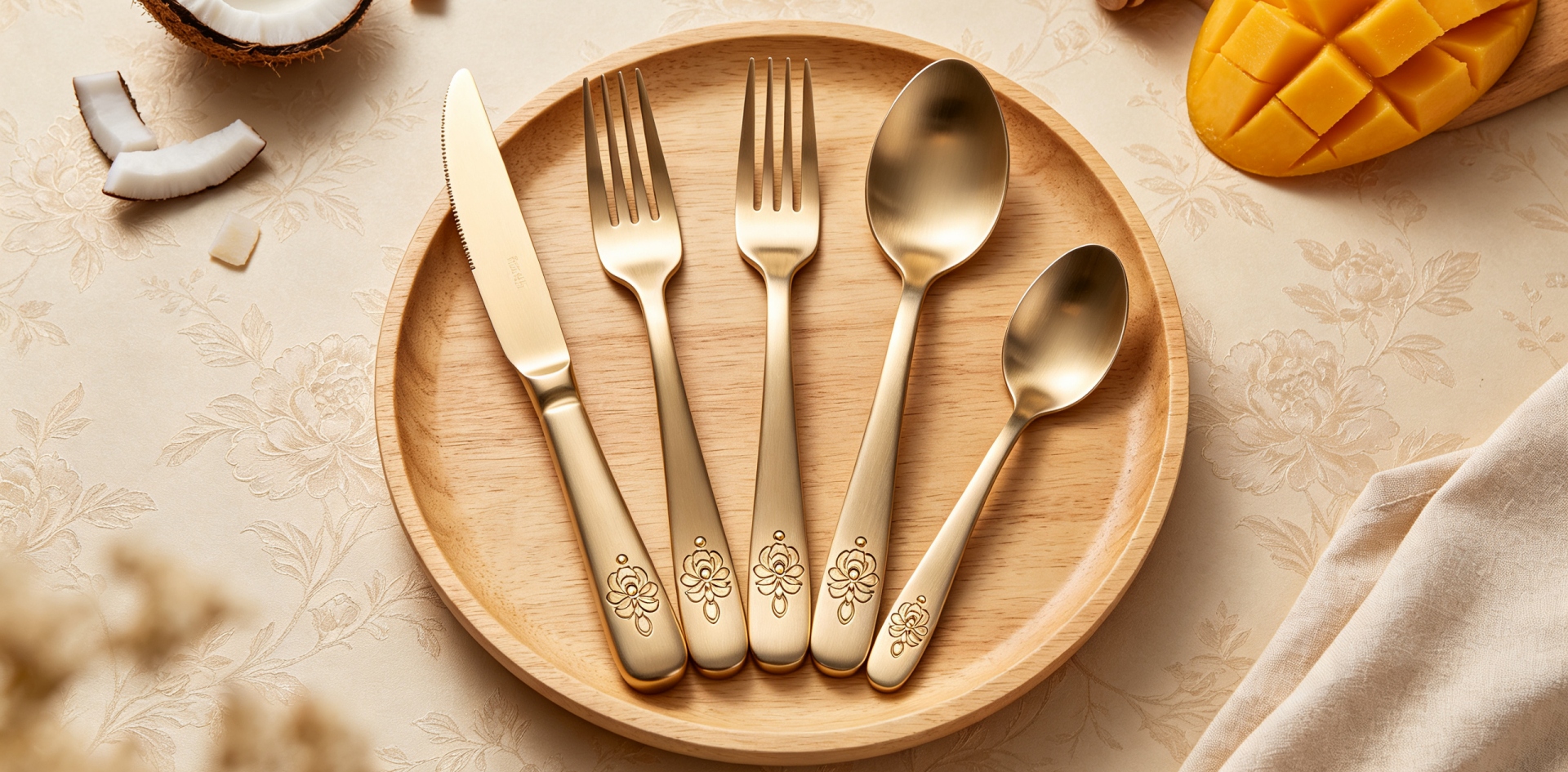
Stainless Steel Cutlery Noise Control for OEM and Commercial Orders
In commercial dining, the sound created when knives, forks and spoons contact plates, trays or other tableware is a small detail that can influence the overall dining environment. For restaurants, hotels, catering companies and distributors, stainless steel cutlery is not only a functional product. Its shape, surface, edge treatment and overall construction can also affect how it feels and sounds during everyday use.
For B2B buyers developing a stainless steel cutlery collection, noise control can therefore become one of the practical product considerations during design and manufacturing. A suitable factory should be able to evaluate the physical characteristics of the spoon, fork and knife together rather than treating each component as an isolated item.
How Stainless Steel Cutlery Design Influences Contact Noise
Cutlery produces sound mainly when metal contacts another hard surface. A knife placed on a ceramic plate, a fork dropped onto a serving tray or several spoons moving inside a commercial washing basket can all create different sounds.
The geometry of the cutlery influences how contact occurs. A smooth transition between different sections of a spoon, fork or knife can help avoid unnecessary sharp contact points. The overall form also determines which part of the product is likely to touch a plate or table first.
For OEM projects, buyers can discuss these requirements with the manufacturer before production. Instead of simply specifying a visual shape, the product brief can include the intended dining environment and expected usage conditions.
This is especially useful when developing flatware for hotels, restaurants, catering operations and other commercial projects where large quantities of cutlery are handled every day.
Key Product Factors to Consider
-
Contact areas
The areas most likely to contact plates, trays and other tableware deserve attention during product development. A well-controlled product form can make contact more predictable and help reduce unnecessary metal-to-metal impact.
For example, the transition between the functional head and handle should maintain a controlled shape. The same principle applies to the lower end of a knife handle or the outer sections of a fork and spoon.
-
Overall rigidity
Material specification and product construction influence how a piece behaves when it contacts another surface. Excessive flexibility may create a different contact response from a more rigid design.
For B2B buyers, this does not mean choosing the heaviest possible cutlery. Instead, the factory should evaluate the material, dimensions and intended application together to create a practical specification.
-
Surface condition
The condition of the stainless steel surface also affects how two hard surfaces interact. A controlled production process helps maintain consistent surface quality across large quantities.
For wholesale and private label collections, consistency is particularly important. If thousands of pieces are supplied to the same customer, differences between batches can become more noticeable in actual commercial use.
-
Handle and head geometry
The shape of a handle changes the way a piece is placed on a table. A spoon with a different handle profile may rest differently from another design, while a knife with a different overall geometry may contact a plate along a different area.
This is why noise considerations should be evaluated together with the complete cutlery design rather than added as an afterthought.
Selecting Specifications for Commercial Flatware
A B2B cutlery specification can include more than material and dimensions. Buyers may also define the application, expected tableware combination, dining environment and handling frequency.
For a hotel project, for example, the same stainless steel cutlery may be used with porcelain plates, stainless steel trays and glassware. A restaurant distributor may require a more versatile design that can work across several customer segments.
A practical specification can therefore include:
-
Stainless steel grade
-
Product dimensions
-
Product weight
-
Overall construction
-
Handle and head geometry
-
Surface treatment
-
Edge condition
-
Intended commercial application
-
Packaging quantity
-
Required production volume
The factory can then review these requirements and recommend suitable product parameters before quotation and mass production.
Homefelt Factory Experience in Stainless Steel Cutlery
Homefelt focuses on stainless steel knives, forks, spoons and flatware collections for B2B customers. With long-term experience in stainless steel cutlery production, the factory can support customers from initial product concepts through manufacturing and bulk supply.
For a project requiring a quieter dining experience, the development process can consider the complete product structure rather than relying on one individual feature. Product shape, material specification, surface treatment and manufacturing consistency can be reviewed together.
This approach is especially valuable for customers developing their own commercial flatware collections. Instead of selecting an existing product only by appearance, buyers can communicate the actual usage environment and let the factory help translate those requirements into practical product specifications.
OEM, ODM and Private Label Cutlery Manufacturing
Different buyers may have different requirements for stainless steel spoons, forks and knives. Some distributors need standard commercial products, while hotel groups and restaurant brands may require customized collections.
Homefelt supports OEM and ODM projects, including custom stainless steel cutlery for private label brands. Customers can discuss product dimensions, shapes, materials, surface treatments, branding requirements and other specifications according to their market positioning.
For larger projects, the factory can also provide a one-stop service covering product design, manufacturing, packaging and transportation. This allows customers to manage the complete supply process through one manufacturing partner instead of coordinating several separate suppliers.
Project Experience and Quality Control
Experience becomes particularly important when a customized flatware project moves from concept to mass production. A product that looks correct in a drawing still needs to maintain its intended characteristics across production batches.
Homefelt's experience with stainless steel cutlery projects helps the production team focus on consistency in dimensions, shape, surface quality and finished appearance. Samples and production specifications can be reviewed before bulk manufacturing so that the approved design becomes the reference for subsequent production.
The factory also maintains relevant management systems and has experience serving customers with demanding quality requirements. Certifications and audit experience such as BSCI, SEDEX 4P, BRC and ISO9001 provide additional reference points for international B2B buyers evaluating a long-term manufacturing partner.
Why Noise Control Can Matter in Bulk Orders
Noise may appear to be a minor consideration when purchasing one cutlery set, but commercial environments operate differently. Hundreds or thousands of pieces can be used, collected, washed, transported and reset every day.
For a hospitality project, small differences in product behavior can become part of the overall dining experience. This is why professional buyers may consider practical details beyond appearance when selecting a long-term flatware supplier.
A suitable stainless steel cutlery manufacturer should be able to discuss these requirements in relation to the complete product rather than offering a generic specification for every application.
Work With Homefelt on Your Stainless Steel Cutlery Project
Whether you are a distributor, importer, restaurant supplier, hotel purchasing team or private label brand, Homefelt can develop stainless steel knives, forks and spoons according to your project requirements.
The factory can support OEM, ODM and private label manufacturing, wholesale supply and large-volume production. Product design, manufacturing, packaging and transportation can also be coordinated as a one-stop service based on your business situation.
If you are developing a new commercial flatware collection and want to discuss product specifications, send your requirements to ingrid@homefelt.net. You can share drawings, reference products, target quantities or application information, and the Homefelt team can help evaluate a suitable solution.
Anti-Fingerprint Stainless Steel Cutlery for OEM and Commercial Orders
Mixed Material Stainless Steel Cutlery for OEM and Private Label Orders
Related Article



