
Stainless Steel Cutlery Order Changes in B2B Manufacturing
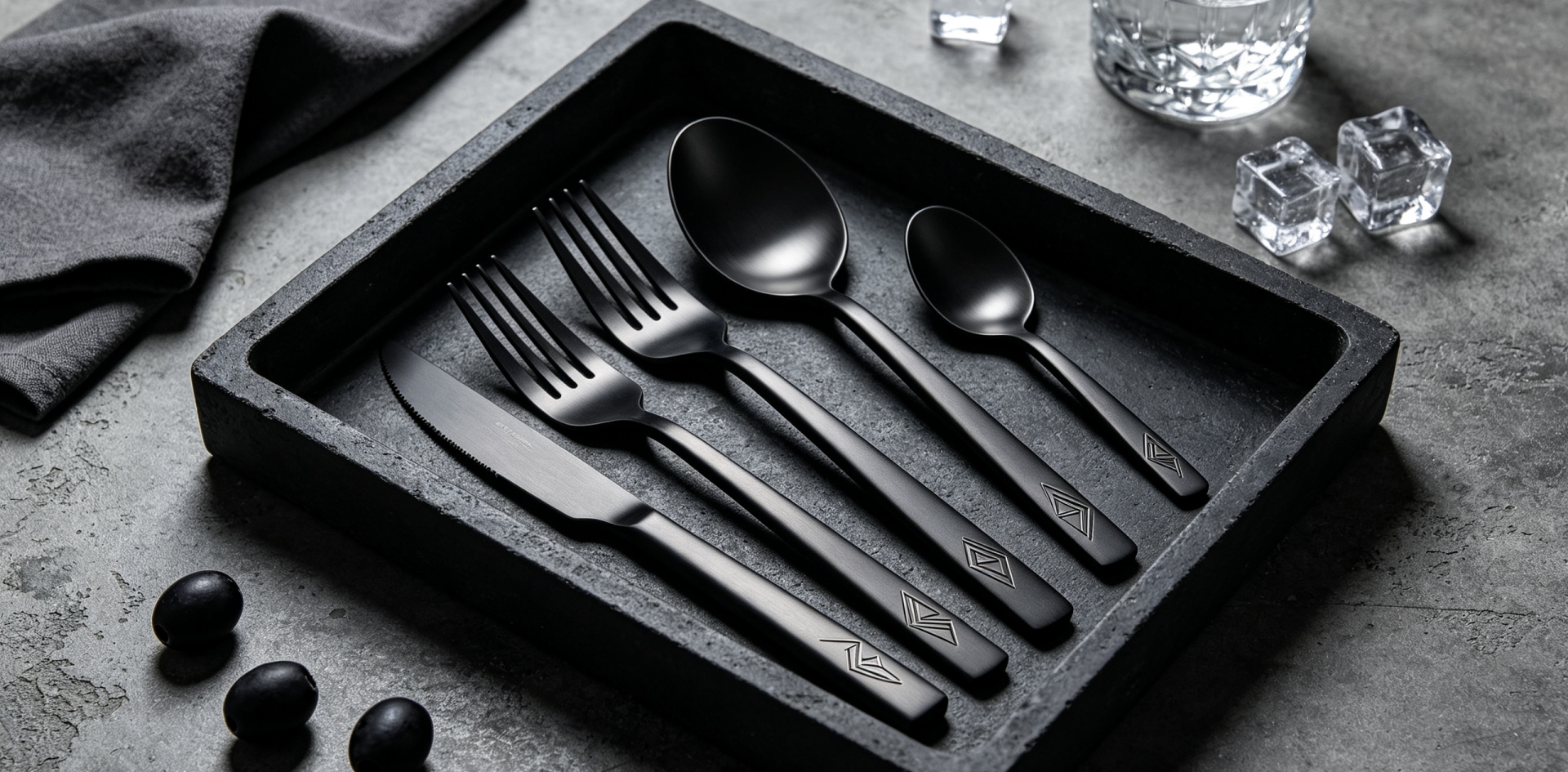
Stainless Steel Cutlery Order Changes in B2B Manufacturing
A stainless steel cutlery project can change several times before the final purchase order is completed. A buyer may adjust a handle detail, update a product quantity, change the combination of pieces, revise packaging or add another SKU to the order.
For small purchases, these changes may be relatively simple. For B2B OEM, ODM and private label projects, however, even a small modification can affect product specifications, sampling, production planning and commercial quotations.
Managing changes clearly is therefore an important part of a successful stainless steel cutlery order.
Why Order Changes Need Clear Communication
A customized cutlery project usually involves more than one specification.
The buyer may have requirements for the stainless steel material, product dimensions, finish, logo, packaging, set composition and quantity. If one of these details changes during the project, other parts of the order may also need to be reviewed.
For example, changing one product in a cutlery set may affect the set composition. Increasing the quantity of one SKU may affect the production plan. A change to the packaging format may influence carton quantities and packing arrangements.
The earlier a change is communicated, the easier it is to evaluate its potential impact.
Common Changes in B2B Cutlery Projects
Not every project follows exactly the same development path. However, several types of changes are relatively common.
A customer may change the quantity after receiving updated sales information. A product designer may adjust a handle detail after reviewing the sample. A purchasing department may add another spoon or fork to the collection. A brand may decide to change the packaging before the production order is finalized.
These changes are normal in product development.
The key is to make sure that the latest information is clearly identified and that both the customer and manufacturer are working from the same version of the specification.
Design Changes After Sample Review
A physical sample often gives the customer a clearer understanding of the product than drawings or photographs alone.
After reviewing a sample, the buyer may request a small design adjustment. The handle may need to be slightly different, the product proportions may be revised, or the overall appearance may need to be brought closer to the rest of the collection.
For an OEM or ODM project, this is part of the development process.
When a change is requested, it is useful to describe exactly what should be modified and what should remain unchanged. Reference photographs, marked drawings or comparison samples can make the communication more precise.
This is especially important when several SKUs share a similar design.
Quantity Changes Before Production
Quantity is another area that can change during a B2B project.
A customer may initially request one quantity for quotation purposes and later adjust the order based on market requirements. The final quantity may also be divided differently among knives, forks and spoons.
Because manufacturing and purchasing costs can depend on order volume, a quantity change may require the quotation to be reviewed.
For example, a larger order may have different production economics from a smaller order. A revised quantity can also affect the planned allocation of products across cartons or sets.
For this reason, buyers should inform the manufacturer as soon as a quantity change becomes likely rather than waiting until the production schedule is already fixed.
Changes to Cutlery Set Composition
A complete cutlery set can contain different combinations of knives, forks and spoons.
A buyer may initially plan a four-piece set and later decide that a different combination is more suitable for the target market. Alternatively, a distributor may request several set configurations using the same basic cutlery models.
These changes should be documented clearly.
The manufacturer needs to know which individual products belong to each set, how many pieces are included and whether the packaging needs to be adjusted accordingly.
For brands developing several product lines, clearly defined set compositions also make future repeat orders easier to manage.
Adding New SKUs to an Existing Project
Sometimes a B2B customer starts with a small group of products and expands the project after seeing the initial results.
For example, a buyer may begin with one knife, one fork and one spoon, then decide to add additional pieces to create a broader collection.
Adding new SKUs can be efficient when the new products share an established design direction. The manufacturer already understands the customer's general requirements, making it easier to discuss the additional products.
However, each new SKU should still have its own confirmed specification.
This prevents assumptions from being carried over incorrectly from one model to another.
Managing Packaging Changes
Packaging is another area where changes may occur during a cutlery project.
A customer may initially request bulk packaging and later decide that individual retail packaging is required. A brand may also revise the number of sets per carton or change the packaging artwork.
These modifications should be confirmed before production and packing begin.
For B2B buyers, packaging changes are particularly important when the goods will be distributed through different sales channels. A product intended for wholesale distribution may have different packaging requirements from a private label retail product.
Connecting Product Changes With the Quotation
Whenever an important specification changes, the commercial quotation should be checked as well.
The price of a stainless steel cutlery project can depend on factors such as product specifications, quantity, customization requirements and packaging.
A change in any of these areas may require a revised quotation.
Keeping the quotation synchronized with the latest product specification helps prevent misunderstandings later in the purchasing process.
For international B2B orders, this is especially useful because purchasing decisions may involve several departments. The buyer, designer, product manager and finance team should ideally have access to the same current information.
Why Version Control Matters
Version control does not have to mean complicated software.
Even a simple system can help.
For example, a customer can identify specifications by revision date or version number and clearly indicate which version is current. When a new change is approved, the previous version should no longer be treated as the active production reference.
This is particularly useful for custom stainless steel cutlery because a project may contain drawings, samples, quotations and packaging information at the same time.
A clear version reference reduces the risk of using an outdated specification.
Avoiding Changes After Production Starts
The easiest time to make a design or specification change is before production begins.
Once bulk manufacturing has started, a change may be more complicated because materials, production capacity, packaging and other resources may already have been arranged.
This does not mean changes are impossible after production begins. It means they should be discussed immediately so the manufacturer can evaluate the situation.
For a B2B buyer, early communication is usually more practical than waiting until the impact becomes larger.
A Practical Change Confirmation Process
For a custom stainless steel cutlery project, a simple change process can include several steps.
First, identify the exact product or SKU affected.
Second, describe what needs to change.
Third, provide an updated drawing, photograph or written specification when necessary.
Fourth, confirm whether the change affects quantity, packaging, tooling, pricing or production timing.
Finally, make sure the latest version is confirmed before production proceeds.
This process is straightforward, but it can significantly improve communication between a buyer and a factory.
Managing Changes Across a Complete Cutlery Collection
For a larger flatware collection, changes need to be considered at collection level as well as individual SKU level.
If a brand changes the handle design, for example, the modification may need to be applied consistently across knives, forks and spoons.
If only one product is changed, the buyer should make that distinction clear.
This is where an experienced stainless steel cutlery manufacturer can provide useful support. The factory can review the relationship between the requested change and the other products in the project, helping the customer identify whether additional specifications need to be updated.
Supporting OEM and Private Label Customers
For OEM, ODM and private label customers, flexibility is an important part of product development.
The goal is not to avoid every change. Product development naturally involves adjustments as customers refine their requirements.
The important part is to manage those changes in a structured way.
Homefelt focuses on stainless steel knives, forks, spoons and cutlery sets for B2B customers. The factory supports custom manufacturing, OEM, ODM, private label and wholesale projects.
Customers can discuss product specifications, quantities, set combinations and other requirements according to the needs of their own market and product range.
When changes are required, clear communication allows the project to remain aligned with the latest approved requirements.
From Product Development to Bulk Order
A custom cutlery project may begin with a simple idea and develop through several stages before becoming a commercial order.
Initial concept
Product references
Sample development
Specification adjustment
Quotation confirmation
Purchase order
Bulk production
Packing and shipment
At each stage, the latest product information should remain clear.
This is particularly important when a buyer is managing several products at once. A small change that is obvious to one person may not be obvious to another department or supplier if it is not documented.
Good communication therefore becomes part of the purchasing process itself.
A Reliable Basis for Repeat Orders
Clear change management also benefits future orders.
Once a final version has been approved and produced successfully, the customer can use that version as the reference for future purchases.
This creates a stable product specification for repeat orders and reduces the need to reconstruct the product requirements from old emails, photographs or informal conversations.
For distributors and private label brands, this can be especially valuable when the same stainless steel cutlery collection is purchased over a longer period.
When planning a new stainless steel cutlery project, buyers do not need to avoid every adjustment. Instead, they should make sure that each important change is communicated clearly, reflected in the relevant specification and confirmed before the next production stage.
This creates a cleaner connection between product development, quotation, manufacturing and bulk purchasing.
For B2B customers looking for a stainless steel cutlery factory for OEM, ODM, private label or wholesale projects, providing a clear product brief and communicating changes early can make the entire order process more efficient.
Custom Stainless Steel Cutlery Manufacturing
Private Label Stainless Steel Cutlery
Stainless Steel Cutlery Visual Inspection for B2B Orders
Stainless Steel Cutlery Scratch Control for B2B Orders
Related Article



