
Stainless Steel Cutlery Order Consolidation for B2B Buyers
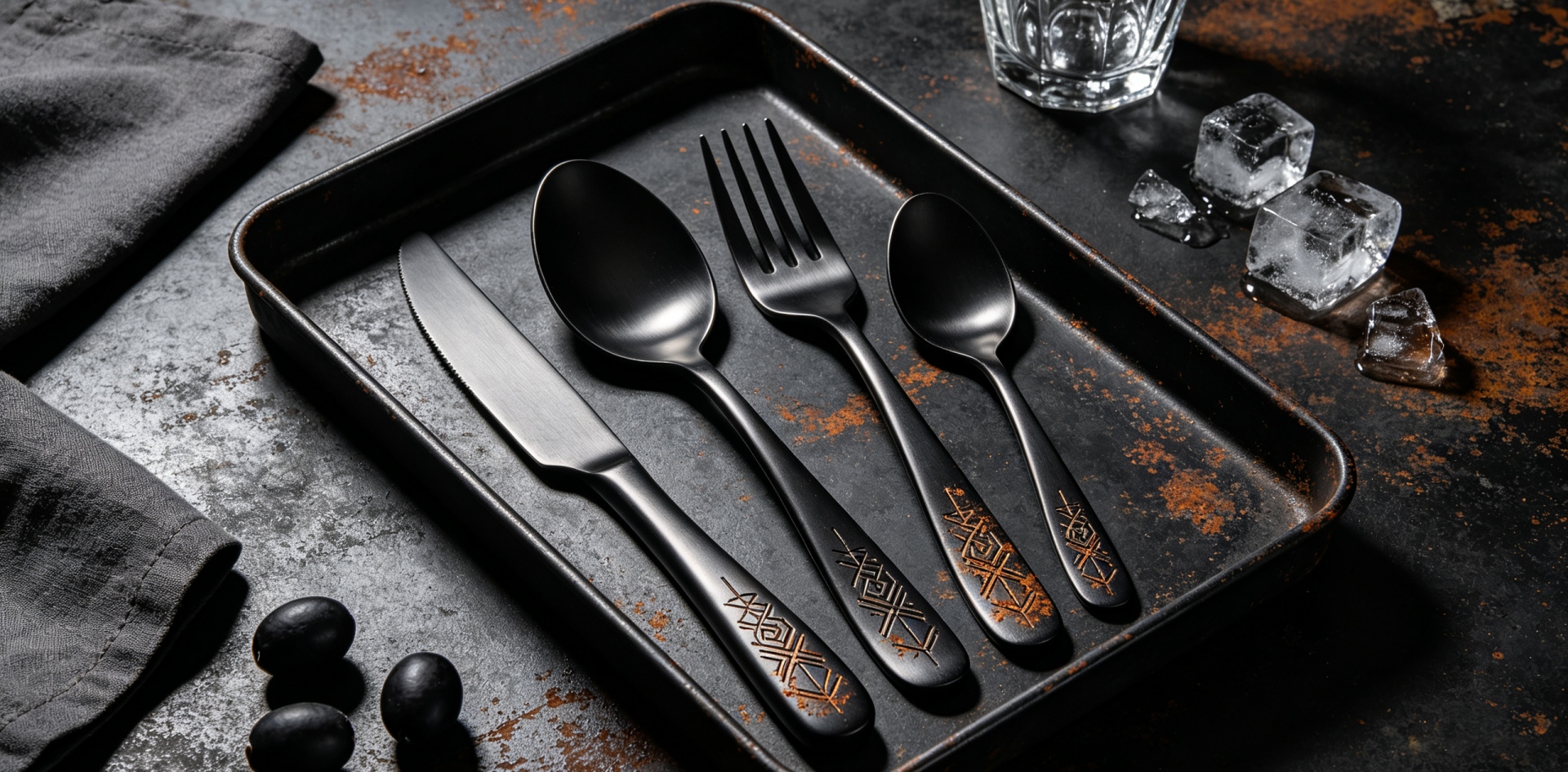
Stainless Steel Cutlery Order Consolidation for B2B Buyers
For importers, distributors, retailers and brands, purchasing stainless steel cutlery often involves more than selecting individual products. A single business may need several spoon, fork and knife styles, multiple finishes, different packaging formats or products for different sales channels. Managing these requirements separately can make communication, production planning and shipment coordination more complicated.
Order consolidation provides a practical way to organize these requirements into a clearer B2B purchasing program. Instead of treating every product as an isolated order, buyers can coordinate related stainless steel cutlery items within one structured purchasing plan.
Why Order Consolidation Matters for Cutlery Buyers
A cutlery program may contain many SKUs. For example, a retailer could need several combinations of dinner knives, dinner forks, table spoons and teaspoons, while a hospitality supplier may require different quantities for different customers.
When each requirement is handled independently, buyers may need to communicate specifications repeatedly, review several quotations and coordinate different production schedules.
Consolidating related requirements can simplify this process. Product specifications, quantities, finishes, packaging requirements and delivery expectations can be reviewed together before production begins.
This does not necessarily mean that every product must have exactly the same design. A consolidated program can include different cutlery styles while maintaining a clear structure for purchasing and production.
Planning Multiple Cutlery SKUs in One Program
One of the first steps is to create a clear SKU list. Each product should have its own identification, description, material specification, dimensions, finish and required quantity.
For a typical stainless steel flatware program, the list may include:
-
Table knives
-
Dinner forks
-
Table spoons
-
Teaspoons
-
Dessert forks
-
Dessert spoons
-
Matching cutlery sets
The exact assortment depends on the buyer's market and sales channel. What matters is that every SKU is clearly defined before quotation and production.
A well-organized list allows the manufacturer to understand the complete requirement instead of evaluating individual products without the wider project context.
Combining Custom and Standard Cutlery Items
B2B buyers do not always need every product to be completely customized. A purchasing program may combine existing stainless steel cutlery designs with selected customized items.
For example, a brand may use an existing spoon and fork design while developing a custom knife handle. Another buyer may select a standard cutlery shape but request a different finish, logo treatment or packaging configuration.
A flexible manufacturing partner can review these requirements together and identify which elements can follow existing production specifications and which require custom development.
This approach can help buyers create a more distinctive collection without making every component unnecessarily complicated.
Coordinating Quantities Across Products
Quantity planning is another important part of order consolidation.
The required number of knives, forks and spoons does not always need to be identical. A foodservice customer may require more spoons than forks, while a retail brand may sell complete sets with fixed product ratios.
When quantities are reviewed as one program, buyers can establish the relationship between individual SKUs before placing the order.
This is particularly useful when several products will be sold together. Instead of discovering a shortage of one component after production, the buyer can review the complete assortment in advance.
For large B2B projects, buyers can also discuss expected replenishment requirements with the factory. This gives both sides a clearer understanding of the product program rather than focusing only on the immediate shipment.
Simplifying Communication With the Factory
Order consolidation can also make communication more efficient.
Instead of sending separate messages for every spoon, fork or knife, buyers can provide one structured project file containing the main requirements. The manufacturer can then review the information and identify missing specifications before production planning.
Useful information may include:
-
Product names or SKU numbers
-
Stainless steel material
-
Product dimensions
-
Weight requirements
-
Surface finish
-
Handle design
-
Logo or branding requirements
-
Packaging specifications
-
Required quantities
-
Target delivery schedule
Clear information reduces unnecessary back-and-forth communication and gives both the buyer and manufacturer a common reference for the project.
Supporting OEM and Private Label Programs
For OEM, ODM and private label projects, order consolidation can be especially useful because several products may need to share a consistent brand identity.
A private label cutlery collection might contain different spoon, fork and knife designs, but the products may still need to work together visually and commercially.
The factory can review the collection as a complete program while maintaining individual specifications for each SKU.
This is also useful when a brand plans to launch several products at the same time. The buyer can discuss product development, quantities, packaging and branding requirements together instead of creating disconnected purchasing processes.
Homefelt factory supports stainless steel cutlery customization for B2B customers, including knives, forks, spoons and cutlery sets. OEM, ODM, private label and wholesale projects can be developed according to the buyer's product requirements and order structure.
Preparing for Production More Efficiently
Before a consolidated order enters production, the buyer and factory should confirm the final product information.
This includes checking whether all SKUs have approved specifications, whether quantities are correct and whether customized details have been confirmed.
The purpose is not simply to create a larger order. It is to create a clearer order.
When the factory receives a well-structured requirement, production teams can better understand which products belong to the same customer program and which specifications apply to each SKU.
For international B2B purchasing, this level of organization can also make communication between purchasing, product development, quality and logistics teams easier.
When Order Consolidation Makes Sense
Order consolidation can be particularly practical when a buyer:
-
Needs several stainless steel cutlery SKUs
-
Is developing a new flatware collection
-
Has multiple products for one retail program
-
Combines standard and customized designs
-
Requires OEM or private label production
-
Plans recurring wholesale purchases
-
Wants to coordinate several related products with one factory
It may also be useful for buyers who are moving from small product trials toward larger commercial programs.
The key is to consolidate related requirements without making the purchasing document unnecessarily complicated.
A Clearer Route From Product Selection to Bulk Order
For B2B stainless steel cutlery purchasing, the objective of order consolidation is simple: make a complex product program easier to understand and manage.
A buyer may start with several individual product ideas, but the final commercial requirement can be organized into a structured collection with clear SKUs, quantities and specifications.
This gives the factory a better understanding of the project and gives the buyer a clearer basis for quotation, customization and production.
For brands, distributors and importers looking for a long-term stainless steel flatware supplier, this type of organized purchasing process can also make future product additions easier to manage.
If you are preparing a stainless steel cutlery program with multiple knives, forks, spoons or complete flatware sets, providing the factory with your SKU list and basic requirements is a practical first step. The manufacturer can then review the project and discuss suitable customization, production and quotation options.
Custom Stainless Steel Cutlery for B2B Orders
OEM & ODM Stainless Steel Flatware Manufacturing
Private Label Cutlery Manufacturing for Brands
Stainless Steel Cutlery Product Assortment for B2B Brands
Stainless Steel Cutlery Factory Assessment for B2B Buyers
Related Article



