
Stainless Steel Cutlery Passivation for B2B Buyers
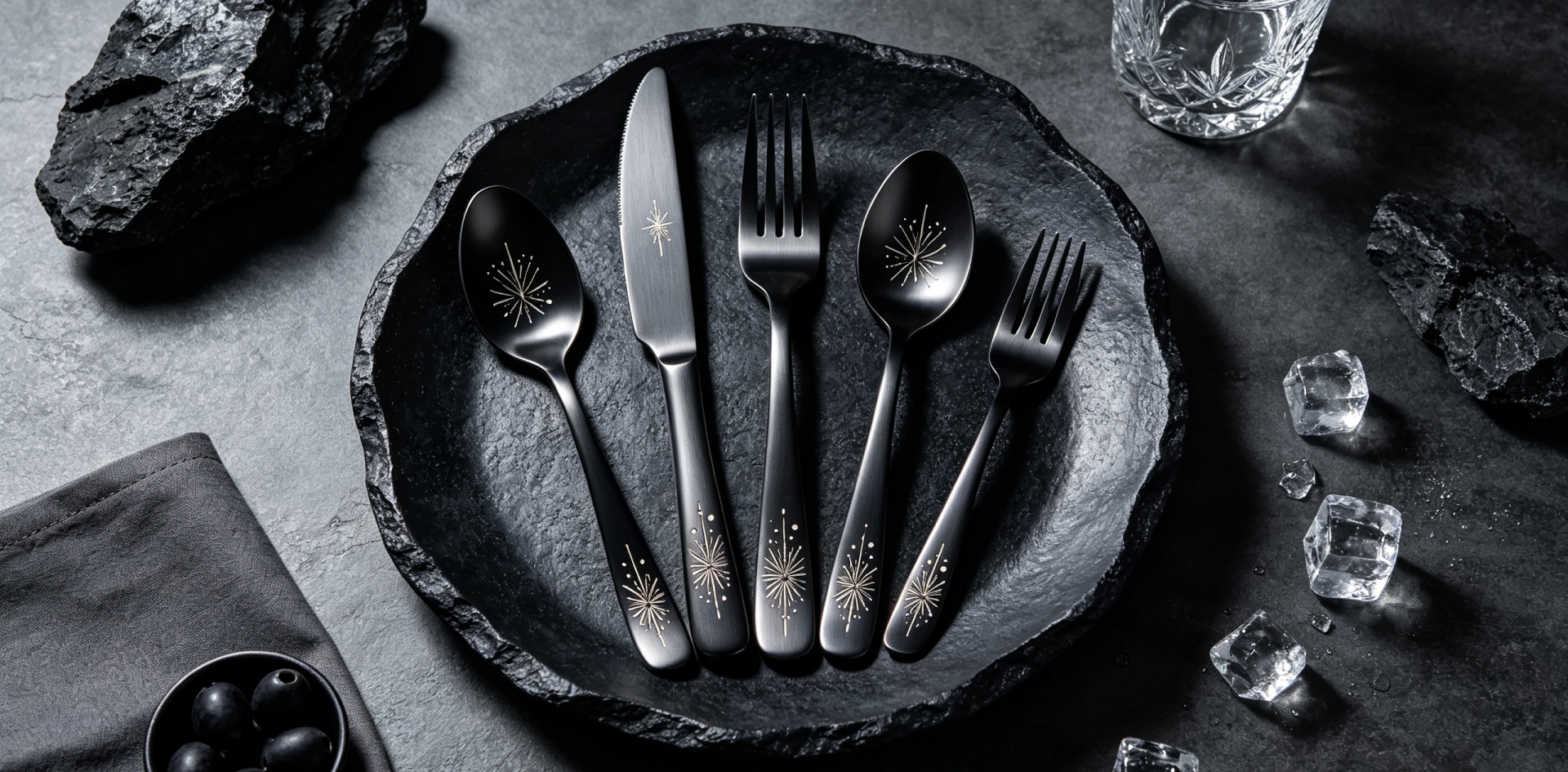
Stainless Steel Cutlery Passivation for B2B Buyers
For B2B buyers purchasing stainless steel cutlery in commercial quantities, the final appearance of a product is only one part of manufacturing quality. The condition of the stainless steel surface can also influence how the finished knife, fork or spoon performs during storage, handling and everyday use.
Passivation is one of the surface-related processes that may be considered during stainless steel manufacturing. It is designed to support the natural protective characteristics of stainless steel by helping establish a clean and stable passive surface.
For brands, wholesalers and distributors developing custom stainless steel cutlery, understanding where passivation fits into manufacturing can make technical discussions with a factory more productive.
What Is Passivation?
Stainless steel naturally forms a very thin protective oxide layer when exposed to oxygen. This passive layer is an important reason stainless steel can resist corrosion under many normal conditions.
During manufacturing, however, the surface can come into contact with processing residues, free iron particles or other contaminants. Cutting, forming, polishing and handling may all influence the condition of the surface.
Passivation is a controlled treatment intended to remove certain contaminants and promote the restoration of the protective passive surface.
It is not a decorative finish. It does not mean changing the visual appearance of the cutlery in the same way as polishing, satin finishing or colored surface treatment.
Instead, it is related to the condition of the stainless steel surface.
Why Surface Condition Matters for Cutlery
Knives, forks and spoons are repeatedly handled, washed and exposed to food, moisture and different storage environments.
A clean stainless steel surface provides an important foundation for the material's corrosion resistance.
For B2B customers, this becomes particularly relevant when products are manufactured in large quantities. A single product may look acceptable during an initial visual inspection, but a commercial program requires the manufacturing process to remain controlled across many pieces.
Surface preparation and appropriate manufacturing practices can therefore contribute to more consistent product quality.
Passivation should not be viewed as a substitute for selecting suitable stainless steel or controlling the complete manufacturing process. It is one element within the broader production system.
Passivation and Stainless Steel Grades
Different stainless steel grades have different compositions and properties.
The selected material should therefore be considered before discussing any surface treatment.
For stainless steel cutlery, buyers may specify a particular grade according to the intended application, product positioning and customer requirements. The manufacturer then needs to ensure that the selected production processes are appropriate for that material.
Passivation is intended to support the corrosion-resistant characteristics of stainless steel; it does not transform an unsuitable material into a different grade.
This distinction is important when B2B buyers evaluate custom flatware specifications.
Material selection and surface treatment should be discussed as separate but related parts of the product specification.
Where Passivation Fits in Cutlery Manufacturing
Stainless steel cutlery can pass through several manufacturing stages before reaching the finished-product stage.
Depending on the product design and factory process, these may include material preparation, forming, cutting, shaping, polishing and final surface treatment.
The timing and necessity of passivation depend on the specific manufacturing process and customer requirements.
For some projects, the factory may use other controlled cleaning or finishing processes that address the surface condition. For projects with particular technical requirements, passivation may form part of the agreed manufacturing procedure.
This is why B2B buyers should avoid assuming that every stainless steel cutlery product requires exactly the same treatment.
The appropriate process should be determined according to the material, manufacturing route and final product requirements.
Passivation Is Different From Polishing
Polishing and passivation serve different purposes.
Polishing is primarily associated with creating the desired surface appearance and smoothness. A polished stainless steel spoon, fork or knife can have a bright and reflective appearance.
Passivation, by contrast, is a chemical surface treatment associated with the condition and protection of the stainless steel surface.
A product can therefore be polished and also undergo a suitable passivation process where the manufacturing specification calls for it.
This distinction can help buyers communicate more clearly with a stainless steel cutlery manufacturer.
Instead of treating every surface process as a single category, buyers can identify the appearance they want separately from the technical surface requirements.
Why B2B Buyers May Discuss Passivation
Not every customer needs to specify passivation independently.
However, it can become relevant when a buyer has detailed technical requirements, works with a demanding quality specification, or needs to understand the manufacturer's surface-treatment process.
For private label and OEM customers, technical requirements may be included in a broader product specification.
This can help ensure that the factory and buyer have the same understanding of the required material, surface condition and manufacturing process.
For large-volume orders, having these requirements defined before production can also reduce uncertainty during supplier communication.
Surface Treatment for Custom Cutlery
Custom stainless steel cutlery can involve more than changing the shape of a standard product.
A B2B brand may specify material grade, dimensions, surface finish, handle design and other technical requirements.
When several specifications are combined into one product, the manufacturer needs to understand how the requirements interact.
For example, a buyer may want a particular polished appearance while also requiring controlled surface treatment. The factory can then review the complete manufacturing route and determine the appropriate production process.
This type of discussion is especially useful for OEM and ODM projects where the product is being developed according to a customer's own specification.
Maintaining Consistency Across Production
For commercial orders, consistency is important because buyers may receive thousands or tens of thousands of pieces.
The purpose of defining a manufacturing process is not simply to produce one acceptable sample. The process needs to be suitable for repeated production.
Surface treatment is therefore one area that can be included in a factory's production controls.
The exact control method depends on the manufacturer's process and the requirements of the project.
For B2B buyers, the practical approach is to communicate the required material, appearance and technical standards clearly and confirm the manufacturing process before mass production.
This creates a shared reference between the buyer and supplier.
Passivation and Different Cutlery Finishes
Stainless steel cutlery can be produced with different surface appearances.
Mirror polishing, satin finishes and certain colored finishes can all create different visual results.
Passivation should not be confused with these decorative or visual treatments.
A B2B customer selecting a finish should first define the desired appearance. Technical surface-treatment requirements can then be discussed separately with the manufacturer.
This is particularly useful for private label collections where appearance is important but the buyer also wants to establish clear production specifications.
The final manufacturing process should support both objectives without treating them as the same thing.
Discussing Technical Requirements With a Factory
A good B2B manufacturing discussion does not need to begin with highly complicated technical language.
The buyer can start with the basic product requirements:
Which stainless steel grade is required?
What surface appearance is expected?
Is the product polished, satin or another finish?
Are there specific corrosion-resistance or surface-treatment requirements?
What quantity is expected?
Will the product be supplied as individual pieces or as complete flatware sets?
Once these requirements are clear, the manufacturer can review the appropriate production process.
At Homefelt factory, B2B customers can discuss customized stainless steel knives, forks, spoons and flatware sets for OEM, ODM and private label production.
The factory can work with customers on product specifications and support wholesale and large-volume manufacturing according to the agreed requirements.
Why Technical Specifications Matter for Private Label Brands
Private label brands often need products that can be reordered consistently.
If a collection becomes an important part of the brand's assortment, future orders may need to reproduce the same material, dimensions, appearance and manufacturing requirements.
Clear technical specifications provide a useful reference for this purpose.
Rather than relying only on photographs or a general product name, the buyer and manufacturer can maintain a defined product specification covering the important characteristics.
Surface-treatment requirements, where relevant, can form part of this specification.
This approach can make future communication easier when the same product is reordered or when related pieces are developed.
From Material Preparation to Finished Flatware
The final quality of stainless steel cutlery is the result of many connected manufacturing decisions.
Material selection provides the foundation. Forming and shaping create the physical product. Polishing or other finishing processes establish the desired appearance. Cleaning and surface treatment help prepare the finished surface.
No single process should be considered responsible for the entire performance of the product.
For B2B buyers, understanding this broader manufacturing picture makes it easier to evaluate suppliers and discuss product requirements realistically.
Passivation can be one part of this process when it is appropriate for the material and manufacturing route.
Choosing a Manufacturer for Custom Stainless Steel Cutlery
When developing a custom flatware project, buyers can look beyond the finished appearance and ask how the manufacturer controls the production process.
Questions about material specifications, surface treatment, finishing methods and production requirements can help establish whether the factory understands the technical expectations of the project.
For OEM and ODM customers, these conversations are particularly important because the products may need to follow specifications that differ from standard catalog items.
Homefelt factory provides custom stainless steel cutlery manufacturing for B2B customers, including stainless steel knives, forks, spoons and complete flatware collections. The factory supports OEM, ODM, private label, wholesale and large-volume production.
For customers with specific technical requirements, discussing the material and surface-treatment expectations at the beginning of the project can help create a clearer path from product concept to commercial production.
Stainless steel cutlery may look simple on the table, but its manufacturing involves many controlled steps. Understanding processes such as passivation gives B2B buyers a better foundation for discussing material and surface requirements with their manufacturing partner.
For brands, distributors and wholesalers developing stainless steel flatware, the most useful approach is to define the required product characteristics clearly and work with a factory that can translate those requirements into a practical production process.
Custom Stainless Steel Cutlery for B2B Buyers
OEM & ODM Stainless Steel Flatware Manufacturing
Private Label Stainless Steel Cutlery
Wholesale Stainless Steel Cutlery Supplier
Custom Stainless Steel Knives, Forks and Spoons
Homefelt Factory — OEM, ODM & Bulk Stainless Steel Cutlery Production
Stainless Steel Cutlery Brand Signature for B2B Brands
Heritage Stainless Steel Cutlery for B2B Brands
Related Article



