
Stainless Steel Cutlery Piece Coordination for B2B Brands
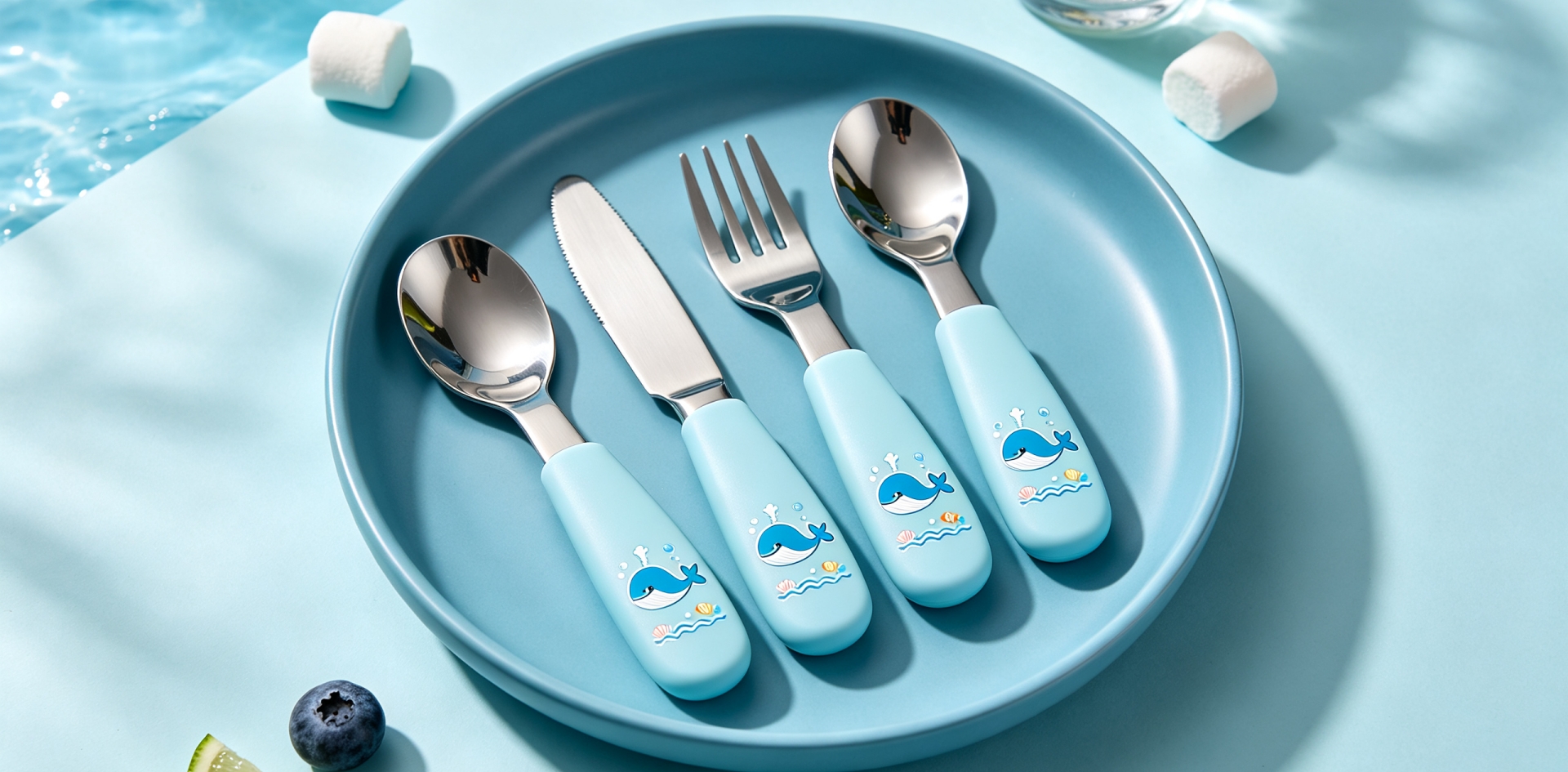
Stainless Steel Cutlery Piece Coordination for B2B Brands
A stainless steel cutlery collection is made up of individual pieces, but customers usually experience those pieces as one complete product family. A knife, fork and spoon may have different functions and dimensions, yet they still need to look and feel as though they were designed together.
For B2B brands, distributors and importers developing a custom flatware range, this coordination can make a significant difference. A collection does not need every piece to be identical. Instead, the important point is to create a consistent visual and functional relationship between the different pieces.
This is where proportion, shape, surface treatment and manufacturing details need to work together.
Why Coordination Matters in a Cutlery Collection
When a customer places a knife, fork and spoon next to each other, the relationship between the three pieces becomes immediately visible.
A spoon with a very wide handle combined with a narrow fork handle may create an inconsistent appearance. A knife with a much heavier visual profile can also make the collection feel unbalanced, even when every individual piece has been correctly manufactured.
For this reason, professional cutlery development considers the collection as a whole rather than designing each piece independently.
The goal is not to make every product the same. Each piece needs to retain its own function. The goal is to establish common design principles that connect the products.
These principles can include the overall handle character, proportions, curvature, surface treatment, decorative elements and the relationship between the functional head and the handle.
Creating a Consistent Handle Language
The handle is often one of the most recognizable parts of a cutlery collection.
For a custom project, the handle of the knife can establish a visual reference that is then adapted for the fork and spoon. The width, taper, contour and decorative details may be adjusted according to the function of each piece while maintaining the same overall design language.
This approach allows a collection to appear coordinated without forcing every piece into exactly the same shape.
For example, a spoon may require a slightly different transition because of its bowl, while a fork needs to accommodate the fork head. A knife may require a different structural arrangement around the blade. The handle can still carry common visual characteristics across all three products.
For private label brands, this consistency can become part of the identity of the collection.
Balancing Different Product Dimensions
Knife, fork and spoon dimensions naturally differ. A knife generally has a longer functional section, while a spoon and fork have different head shapes and proportions.
If these differences are not considered during development, the collection may appear visually disconnected.
A professional manufacturer can evaluate the dimensions together instead of reviewing them as isolated specifications.
The total length, handle proportion and functional section can be compared across the range. This helps determine whether the pieces have a coherent visual rhythm when displayed together.
For B2B buyers, this is particularly useful when developing a complete collection rather than purchasing standard stock products.
Coordination Through Surface Finishes
The surface finish is another element that can connect different pieces.
A polished spoon combined with a satin fork and a different visual treatment on the knife may create a deliberate mixed-finish collection, but if the difference is not intentional, it can simply look inconsistent.
When a uniform appearance is required, the finish should be considered across the entire collection.
The same principle applies to colored or decorative stainless steel cutlery. If a brand chooses a special surface treatment, the color and visual character need to be considered across knives, forks and spoons.
This does not mean that every detail must be identical. Rather, the collection should have a clear design direction.
Coordinating Decorative Details
Small decorative elements can also influence how a collection is perceived.
A line near the end of a handle, a recessed detail, a geometric transition or another decorative feature may look attractive on an individual piece. However, the same feature needs to be adapted carefully when it is applied to different cutlery shapes.
A decorative element that works well on a knife may need slight adjustment on a spoon because of the different handle transition. The same principle applies to forks.
During OEM and ODM development, these details can be reviewed at the collection level so that the final products share the same visual character.
This can be particularly valuable for brands that want their stainless steel cutlery to have a recognizable appearance without relying on a large logo or obvious branding.
Designing for Both Appearance and Manufacturing
Good coordination is not only about appearance. It also needs to work with manufacturing processes.
When several pieces share similar design principles, production can often be organized more clearly. Drawings, samples and specifications can be compared more easily, and changes to the collection can be discussed with a common reference.
However, similar-looking pieces still require their own production specifications.
A knife, fork and spoon may require different forming conditions and different attention during finishing. A professional factory therefore needs to preserve the individual technical requirements of each product while maintaining the common design direction.
This balance is important for B2B production because the final goal is not simply a good-looking sample. The design needs to remain practical when thousands or tens of thousands of pieces are produced.
Building a Collection Around a Core Design
For brands expanding their product range, one practical approach is to establish a core design first.
The initial collection might contain only a few key pieces. Once the main design characteristics have been approved, additional products can be developed around the same visual foundation.
This may include different spoon sizes, additional fork styles or knife variations, depending on the target market.
A manufacturer with OEM and ODM experience can help determine which design elements should remain consistent and which can be adapted for different products.
This approach gives a growing brand more flexibility without forcing every new product to start from zero.
Homefelt Factory for Coordinated Cutlery Development
Homefelt factory works with B2B customers looking for stainless steel knife, fork, spoon and flatware solutions tailored to their market requirements.
For a custom collection, the service can cover product development, sample coordination, stainless steel cutlery manufacturing, surface finishing, packaging and transportation arrangements.
The advantage of an integrated approach is that the different stages can be considered together.
A customer may arrive with a basic product idea rather than a complete technical drawing. In that situation, the development process can focus first on the intended appearance and use, followed by dimensions, materials, finishes and production details.
For customers that already have finished designs, the focus can instead be on manufacturing execution, bulk production and maintaining consistency across the order.
The service can therefore be adapted to different levels of product development.
Preparing a Coordinated Cutlery Project
Before requesting a quotation, B2B buyers can prepare the basic information available to them.
Useful materials may include reference photos, drawings, product dimensions, estimated quantities, preferred finishes, packaging requirements and information about the target sales channel.
If the customer is developing a complete collection, it is also helpful to identify which pieces need to share the same design language.
This gives the factory a clearer understanding of the project and makes it easier to discuss what should remain fixed and what can be customized.
A clear project brief does not have to be complicated. Even a simple description of the desired collection can be a useful starting point for discussion.
From Individual Pieces to a Complete Product Family
The strength of a custom stainless steel cutlery collection often comes from the relationship between its individual products.
A knife should work as a knife, a fork should function as a fork and a spoon should perform its own role. At the same time, when these products are placed together, customers should be able to recognize the connection between them.
For B2B brands, that connection can support a stronger and more professional product presentation.
Whether the project involves a new private label collection, a wholesale range or a large-volume OEM order, coordinated development can help transform separate cutlery pieces into a unified product family.
Homefelt factory can support customers from product design and customization through production, packaging and transportation, providing an integrated service for stainless steel cutlery projects.
If you are developing a new collection and already have drawings, reference products or simply an initial idea, sharing those details with the factory is a practical first step toward discussing the right manufacturing solution.
Custom Stainless Steel Cutlery for OEM & ODM Projects
Private Label Stainless Steel Flatware Manufacturing
Wholesale Stainless Steel Cutlery for B2B Buyers
Stainless Steel Fork Tine Alignment for B2B Cutlery
Rayons des Couverts Inox pour les Projets B2B
Related Article



