
Stainless Steel Cutlery Pilot Production for B2B Orders
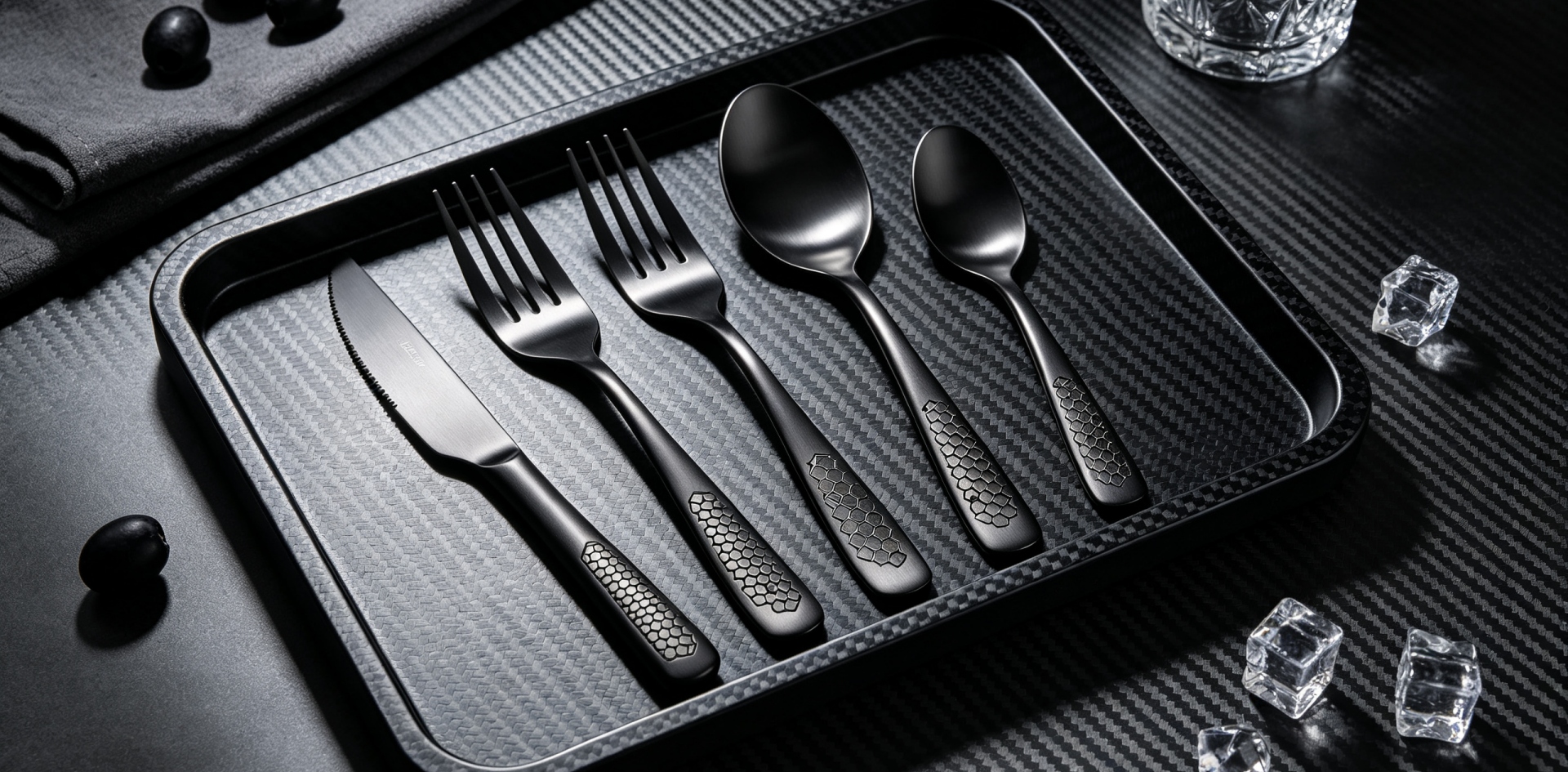
Stainless Steel Cutlery Pilot Production for B2B Orders
Moving from a finished sample to full-scale stainless steel cutlery production is an important step for B2B buyers. A product may look correct as a sample, but commercial manufacturing involves a much larger quantity and a complete production process.
For custom knives, forks, spoons and flatware sets, a pilot production run can provide a practical bridge between product approval and larger-volume manufacturing.
Instead of moving directly from one approved sample to a large commercial quantity, the buyer and factory can use a controlled production run to confirm that the product works smoothly under real manufacturing conditions.
What Is Pilot Production?
Pilot production is a limited manufacturing run completed before the main production quantity.
It is larger than a development sample but smaller than a normal bulk order. The purpose is to manufacture the product using the intended production methods and review the result before moving into a larger volume.
For stainless steel cutlery, this can be useful when a product includes customized dimensions, a new handle design, special finishing or other requirements that need to be confirmed through actual production.
A pilot run gives the factory an opportunity to work with the final production specifications rather than relying only on a single sample.
Why It Can Help B2B Buyers
A single sample shows what one finished product looks like.
A pilot production run can show how the same product performs when multiple pieces are manufactured through the complete production process.
This creates a different type of information.
For example, a buyer may be satisfied with the appearance of one custom spoon but still want to understand whether the same appearance can be maintained across a larger quantity.
The pilot run provides a practical opportunity to review consistency before the order volume increases substantially.
Testing the Complete Production Setup
A customized cutlery product may involve several manufacturing stages, including forming, polishing, finishing and other production operations.
The pilot run allows the factory to use the intended process and review how the different stages work together.
This can be particularly useful for products with customized handles or unusual design details.
A design that works well during development still needs to be suitable for repeat manufacturing. Pilot production helps reveal whether any part of the process requires adjustment before the main quantity is released.
Reviewing Product Consistency
Consistency is one of the main reasons a pilot run can be valuable.
When several pieces are produced together, the buyer can compare them as a group instead of examining one isolated sample.
For a cutlery collection, this can include checking:
-
Overall appearance
-
Product dimensions
-
Handle proportions
-
Surface finish
-
Knife blade appearance
-
Fork head consistency
-
Spoon bowl consistency
-
Branding details
-
General product uniformity
The exact inspection points should follow the agreed specifications for the project.
The goal is to confirm that the production process can reproduce the approved product consistently.
Useful for Custom Handle Designs
Custom handles can make a stainless steel cutlery collection distinctive, but they can also introduce additional production considerations.
A handle may contain curves, transitions, textures, decorative elements or branding details that need to remain consistent across a large quantity.
Pilot production gives the factory and buyer an opportunity to review these details using production quantities rather than only development samples.
This can be especially useful for private label brands launching a new collection.
Checking Finishing Requirements
Finishing is another area where a pilot run can provide useful information.
Polished, matte, brushed, colored or other surface treatments can create different visual effects. When several products are produced together, the buyer can review whether the intended appearance is maintained throughout the batch.
If a collection contains several cutlery pieces, reviewing them together can also help confirm that the overall visual effect is consistent.
This is important for brands that plan to sell knives, forks and spoons as one coordinated collection.
Confirming Production Practicality
A successful product needs to be more than visually attractive.
It should also be practical for commercial manufacturing.
During pilot production, the factory can identify whether a particular design requires additional production attention, whether certain specifications need clarification or whether any manufacturing step should be adjusted.
This does not mean changing the buyer's design without approval.
Instead, the pilot stage creates an opportunity for the buyer and manufacturer to discuss practical production observations before a larger quantity is released.
Reducing Unnecessary Changes During Bulk Production
Changes become more complicated once a large production quantity has already been started.
A pilot run provides a smaller window in which adjustments can be discussed.
If the buyer identifies a genuine issue, the manufacturer can review the requirement and determine whether the product specification, production method or other detail needs to be clarified.
This can make the transition to the larger order more organized.
The objective is not to eliminate every possible production variation. It is to identify important issues early enough to manage them properly.
When Pilot Production Makes Sense
Not every stainless steel cutlery order requires a pilot run.
It may be particularly useful when:
-
The product is newly customized
-
The handle design is new
-
Several customized SKUs are being launched together
-
A special surface finish is required
-
The product is intended for a private label collection
-
The buyer expects significant repeat orders
-
The design will become a long-term commercial product
For straightforward standard products, the buyer and manufacturer may determine that a separate pilot stage is unnecessary.
The appropriate approach depends on the complexity and commercial importance of the project.
How Buyers Can Prepare
Before a pilot production run begins, buyers should make sure that the core product information is clear.
This can include the approved design, stainless steel specification, dimensions, finish, branding requirements, packaging requirements and target quantity.
The buyer should also define what aspects of the pilot production need to be reviewed.
A clear checklist helps both sides focus on the same product characteristics.
After the pilot run, feedback should be specific. If an adjustment is required, it is better to identify the exact product detail than to provide a general comment about the overall quality.
Supporting OEM, ODM and Private Label Manufacturing
Pilot production can be particularly useful for OEM and ODM projects because the product is often developed specifically for one customer.
Homefelt factory supports B2B customization of stainless steel knives, forks, spoons and complete flatware sets. OEM, ODM, private label and wholesale customers can discuss product development and manufacturing requirements according to their project needs.
For a new private label collection, a controlled production stage can help connect the approved product concept with the practical requirements of commercial manufacturing.
Moving From Pilot Production to Bulk Orders
Once the pilot production has been reviewed and the relevant requirements have been confirmed, the product can move toward larger-scale manufacturing.
At this point, the buyer and factory should have a clearer understanding of the product and its production requirements.
The pilot run therefore serves as a bridge between development and commercial supply.
For importers, distributors and brands, this can create a more structured path when launching customized stainless steel cutlery. Rather than treating product development and bulk manufacturing as completely separate activities, the pilot stage connects the two.
A well-managed pilot production run does not replace clear specifications or quality control. Instead, it provides another practical opportunity to confirm that a customized product is ready for larger-volume production.
For B2B buyers planning a new stainless steel cutlery collection, discussing whether a pilot production run is appropriate with the factory can be a useful part of the product development process. It is especially relevant when the project involves custom knives, forks, spoons, coordinated flatware sets or private label requirements.
Custom Stainless Steel Cutlery Manufacturing
OEM & ODM Stainless Steel Flatware
Private Label Cutlery Production
Stainless Steel Cutlery Distribution Programs for B2B Brands
Stainless Steel Cutlery Sample Review for B2B Buyers
Related Article



