
Stainless Steel Cutlery Pilot Production for OEM and Bulk Orders
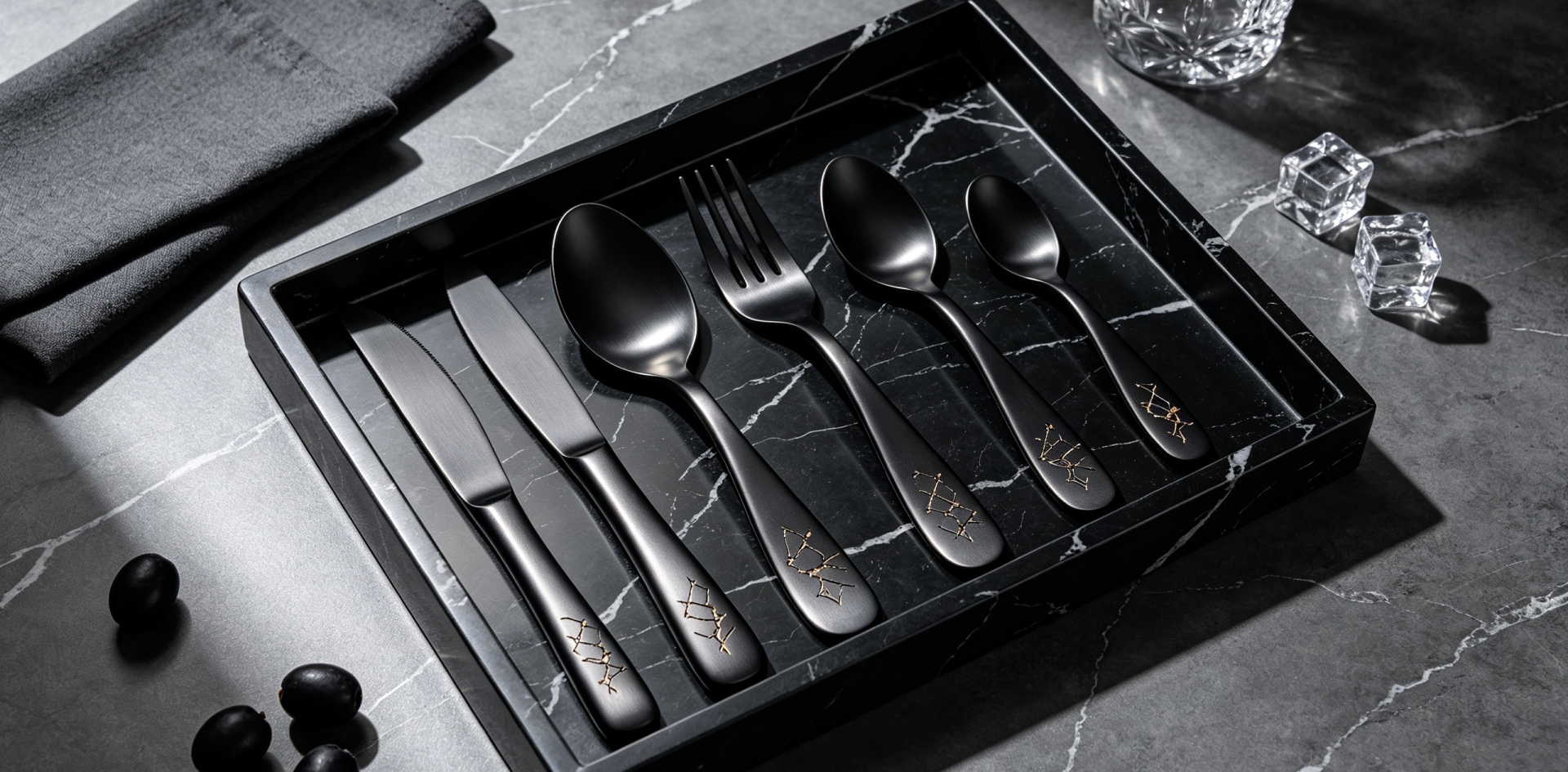
Stainless Steel Cutlery Pilot Production for OEM and Bulk Orders
Moving from a stainless steel cutlery concept to full-scale production is an important stage for B2B buyers. A product may look correct during development, but commercial manufacturing involves larger quantities, production equipment and repeated processing.
Pilot production provides a practical bridge between product development and bulk manufacturing. It allows the factory and buyer to evaluate a limited production quantity before the full order is released.
For stainless steel spoons, forks, knives and complete flatware collections, this stage can help confirm that the approved product can move into commercial production with a clear and repeatable specification.
What Is Pilot Production for Stainless Steel Cutlery?
Pilot production is a controlled production stage carried out before the main bulk order. Instead of immediately producing the entire quantity, the manufacturer produces a limited batch using the intended production process.
The purpose is to evaluate the actual manufactured products rather than relying only on drawings, photographs or individual samples.
Depending on the project, the pilot batch can be used to review:
-
Overall product appearance
-
Production consistency
-
Relationship between different cutlery pieces
-
Surface finish and visual quality
-
Product specifications
-
Packaging requirements
-
Manufacturing practicality
The exact scope depends on the customer's project. A simple wholesale product may require a straightforward confirmation, while a new private label collection may benefit from a more structured pilot stage.
Why Pilot Production Matters for OEM Projects
OEM customers often develop products that are different from standard catalogue items. Because the design has been created specifically for the customer, the transition from development to production deserves particular attention.
A prototype or individual sample demonstrates what the product can look like. Pilot production demonstrates how that product behaves when it is manufactured as a batch.
This difference matters.
A sample can be carefully prepared as a single piece, while commercial production requires the same product to be reproduced repeatedly. Pilot production provides an opportunity to confirm that the approved design can be translated into the intended manufacturing process.
For buyers placing large orders, this can provide additional confidence before committing the full production quantity.
Connecting Product Development With Mass Manufacturing
The pilot stage works best when the product information has already been clearly established.
Before production begins, the buyer and manufacturer can confirm the product specification, approved reference, material requirements and other relevant details. The pilot batch is then produced according to those agreed requirements.
The resulting pieces can be evaluated as a group rather than as isolated samples.
This gives the buyer a better understanding of the actual production result and gives the factory a practical reference for the next manufacturing stage.
For ODM projects, this process is also useful because the factory may be responsible for turning an initial product concept into a manufacturable design.
Pilot Production for Spoons, Forks and Knives
The approach can be applied to individual cutlery products or complete collections.
For a stainless steel spoon, the buyer can review whether the production batch reflects the approved product appearance and specifications.
For a stainless steel fork, the pilot batch provides an opportunity to compare multiple pieces and confirm that the finished products remain consistent.
For a stainless steel table knife, the production trial can help establish a practical reference before the full order is manufactured.
When all three products are part of the same flatware collection, evaluating them together can also help confirm that the finished pieces work as one commercial range.
A Useful Stage for Private Label Collections
Private label buyers often have higher expectations because the products represent their own brand.
The customer may have developed a new collection around a particular design concept, target market or retail positioning. Before placing a large production order, it is useful to confirm that the actual manufactured products match the approved direction.
Pilot production provides this additional checkpoint.
If a product requires clarification or adjustment, the discussion can take place before the complete order is produced. Once the customer and factory agree on the final production reference, the project can proceed to the larger manufacturing quantity.
This approach can be particularly useful when several SKUs are being developed under one private label.
Homefelt Factory Experience
Homefelt factory focuses on stainless steel cutlery including spoons, forks, knives and flatware sets for international B2B customers.
With 40 years of experience in the stainless steel cutlery business, Homefelt has worked with international buyers and well-known brands on customized and large-volume projects.
The factory's experience supports OEM, ODM, private label, wholesale and bulk manufacturing requirements. It also provides a practical understanding of the difference between developing an individual product sample and preparing a product for repeated commercial production.
Homefelt has passed BSCI, SEDEX 4P, BRC and ISO9001-related audits, with relevant certification and testing materials available according to project requirements.
The focus remains on creating a stable production result that reflects the customer's approved stainless steel cutlery specification.
From Pilot Batch to Full Production
Once the pilot production has been reviewed and confirmed, the project can move into the main manufacturing stage.
At this point, the approved product reference becomes particularly valuable. The factory can use the confirmed specifications and production information as the basis for the bulk order.
For large-volume customers, this creates a more organized transition between development and manufacturing.
It can also support future repeat orders. When a customer returns for another purchase, the previous approved product can provide a useful reference for maintaining continuity.
One-Stop Service for the Complete Project
Pilot production is only one part of a complete B2B cutlery project.
Homefelt can support customers with product design, stainless steel cutlery manufacturing, packaging and transportation as a one-stop service according to the customer's actual situation.
For an OEM project, the process can begin with the customer's design concept and continue through product development, pilot production and bulk manufacturing.
For private label and wholesale customers, packaging and transportation can also be coordinated as part of the same order.
This allows customers to work with one manufacturing partner instead of managing each stage through separate suppliers.
Supporting Long-Term B2B Cooperation
For a professional cutlery buyer, the objective is usually not one isolated order. A successful first project may develop into repeated purchasing, new SKUs and larger production volumes.
A reliable pilot-to-production process can support this growth by creating a clear product reference from the beginning.
Homefelt aims to become a long-term China service partner for stainless steel cutlery customers, providing customized solutions according to their market, product and purchasing requirements.
The goal is to grow together with customers through stable product development, manufacturing and service.
For product information, customization questions or a quotation, contact ingrid@homefelt.net.
Stainless Steel Cutlery Version Management for OEM and Bulk Production
Stainless Steel Cutlery Sample Set for OEM and Wholesale Buyers
Related Article



