
Stainless Steel Cutlery Polishing and Surface Finish Process
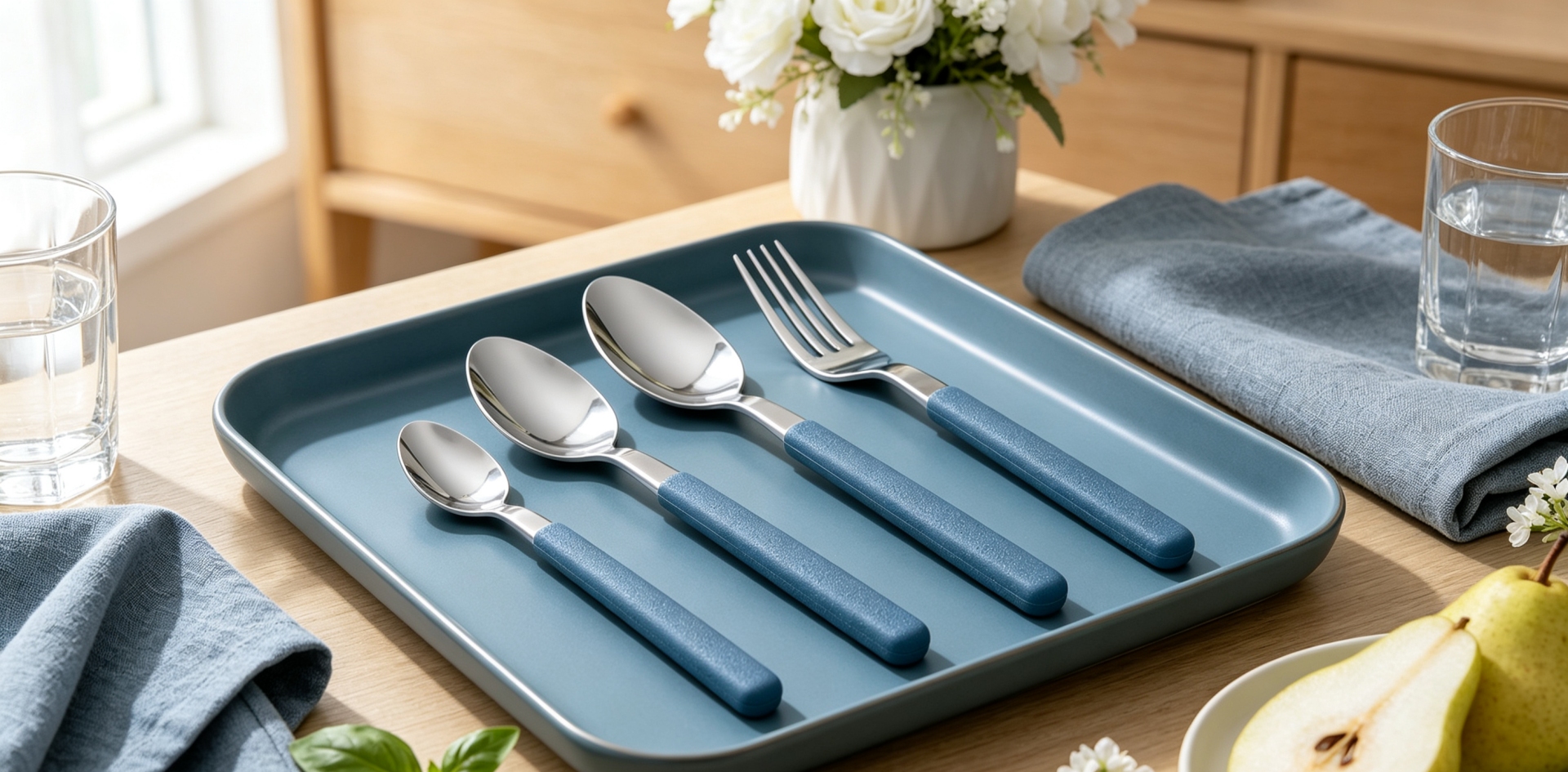
How Stainless Steel Cutlery Is Polished and Finished for Commercial Use
The surface finish of stainless steel cutlery has a direct influence on its appearance and overall presentation. For restaurants, hotels, distributors, retailers and private label brands, polishing is therefore an important part of the manufacturing process rather than simply a final visual step.
A stainless steel fork, spoon or knife passes through several production stages before reaching its finished surface. The preparation of the material, forming process, grinding, polishing and final inspection all contribute to the appearance of the finished product.
For B2B buyers, understanding the polishing process can make it easier to compare different products and communicate finish requirements with a manufacturer. It can also help buyers identify why two products made from similar stainless steel can have noticeably different surface appearances.
Why Polishing Matters
Stainless steel naturally provides a durable and attractive surface, but the condition of the material after forming may not be suitable for the final table setting.
Polishing can improve the visual consistency of the surface and help create the desired finish.
The process can influence:
-
Surface brightness
-
Reflection
-
Smoothness
-
Visual uniformity
-
Product appearance
-
Overall presentation
The appropriate finish depends on the design and intended market.
From Stainless Steel Material to Finished Flatware
The polishing process is only one part of cutlery manufacturing.
A typical production sequence can involve material preparation, cutting, forming, shaping, grinding, polishing, cleaning, inspection and packaging.
Each stage can affect the following stage.
If the surface is not properly prepared before polishing, the final result may not meet the required appearance.
Surface Preparation
Before polishing begins, the stainless steel surface needs to be prepared.
Forming and shaping can leave marks or irregularities that need to be addressed during subsequent processing.
The preparation stage helps create a more uniform surface for polishing.
For custom products, the surface requirements should be considered during the design stage.
Grinding Before Polishing
Grinding can help remove forming marks and prepare the surface for later polishing.
The appropriate grinding process depends on the product shape and required finish.
A fork, spoon and knife may require different handling because their surfaces and contours are not identical.
Careful preparation can make the polishing stage more consistent.
Polishing the Flatware Surface
Polishing uses controlled mechanical processes to improve the surface appearance.
The exact process can vary according to the product design and desired finish.
Large flat areas, curved handles and detailed sections may require different approaches.
The objective is to create a consistent surface while maintaining the original product shape.
Polishing Forks
Forks contain several areas that require attention, including the handle, neck and head.
The spaces around the tines can require careful processing.
Polishing should maintain the intended shape of the fork while producing a consistent appearance across the accessible surfaces.
Polishing Spoons
Spoons contain a curved bowl and handle.
The bowl requires controlled processing because excessive treatment could affect its shape.
The handle may require a different polishing approach depending on its design.
The final result should provide a consistent appearance across the complete product.
Polishing Knives
Knives can have different construction characteristics from forks and spoons.
The blade, handle and transition areas may require different processing.
The polishing process should preserve the intended dimensions and shape while achieving the required surface appearance.
Mirror Polished Finish
A highly reflective finish can create a bright and premium appearance.
This type of surface can be suitable for hospitality, restaurant and retail collections where a polished visual presentation is important.
The final appearance depends on the quality of surface preparation as well as the polishing process itself.
Satin Finish
Satin finishes create a softer visual effect than highly reflective surfaces.
They can be suitable for contemporary dining environments and products designed with a more understated appearance.
The exact texture and visual effect should be confirmed through physical samples.
Brushed Finish
Brushed surfaces provide a directional texture that creates a distinctive appearance.
This finish can work well with modern tableware designs.
For B2B projects, the buyer and manufacturer should agree on the desired visual result through samples before production.
Finish Consistency
Consistency is particularly important for large commercial orders.
If different batches have noticeably different surface appearances, the products may not look uniform when used together.
Production specifications and approved samples can provide a useful reference for repeat orders.
Surface Finish and Product Design
The same finish can look different on different handle shapes.
A highly curved handle can reflect light differently from a flat handle.
Decorative details can also influence the final visual effect.
For custom cutlery, the finish should therefore be evaluated together with the complete product design.
Finish and Material
The stainless steel material and surface treatment work together.
Different material specifications can respond differently to manufacturing and polishing processes.
B2B buyers should confirm both the material requirement and finish requirement rather than specifying only one.
Finish and Product Positioning
Surface finish can influence how a product is positioned in the market.
A bright polished collection may suit premium hospitality or retail.
A softer finish may be preferred for modern commercial dining.
The finish should support the intended customer segment and price level.
Why Samples Are Important
Photographs can provide an initial visual reference, but they cannot fully represent the way a stainless steel surface looks under different lighting conditions.
Physical samples allow buyers to evaluate:
-
Brightness
-
Reflection
-
Surface texture
-
Finish consistency
-
Handle appearance
-
Overall workmanship
Sample approval is especially important for customized products.
Quality Inspection of Polished Cutlery
Surface inspection can be performed at different stages of production.
Depending on the buyer's requirements, inspection may review:
-
Visible scratches
-
Surface marks
-
Uneven polishing
-
Finish consistency
-
Forming quality
-
Product dimensions
-
Overall appearance
The inspection criteria should be agreed before mass production.
Common Surface Issues
A finished product can show visible differences if the surface preparation or polishing process is not properly controlled.
Potential issues may include uneven brightness, visible grinding marks, scratches or inconsistent texture.
An experienced production team can reduce these problems through controlled processing and inspection.
Polishing and Product Shape
Complex cutlery designs can require more careful surface treatment than simple shapes.
Deep curves, decorative patterns and narrow sections can make polishing more demanding.
When developing custom products, buyers should consider whether the desired design can be finished consistently at commercial production volumes.
Polishing and Manufacturing Cost
Surface finishing can contribute to production cost.
More detailed designs may require additional processing time.
Premium finishes can also require additional preparation or polishing stages.
For B2B buyers, quotations should be compared using equivalent finish specifications.
Finish Requirements for Restaurant Buyers
Restaurants should select a finish that works with the complete dining environment.
Tableware, glassware, plates, lighting and interior materials can all influence how the cutlery appears.
Testing a sample on the actual table setting can provide a more reliable evaluation than reviewing photographs alone.
Finish Requirements for Hotel Buyers
Hotels may use several cutlery collections across restaurants, banquets and other foodservice areas.
A central specification can help maintain consistency.
Different dining concepts can use different finishes while still maintaining a coordinated product strategy.
Finish Requirements for Retail Brands
Retail brands often need the surface appearance to remain consistent across production batches.
The approved sample can become a reference for future manufacturing.
Packaging photographs should also be checked against physical samples when developing a new retail collection.
Finish Requirements for Distributors
Distributors may stock products from several manufacturers.
A clear finish specification can make product selection easier and reduce confusion between similar collections.
For customized programs, the finish should be recorded together with material, dimensions and other product information.
Cleaning and Surface Appearance
The appearance of stainless steel cutlery can change through regular use and cleaning.
Foodservice operators should follow appropriate cleaning procedures for their products and equipment.
For B2B purchasing, buyers can also consider whether the selected finish is suitable for the intended operating environment.
Maintaining Consistency Across Repeat Orders
Repeat orders should reference the original approved product.
The manufacturer can use product specifications and samples to reproduce the agreed finish.
For larger programs, buyers may also establish inspection criteria for surface appearance.
This is particularly useful when the same collection is supplied to multiple locations.
Custom Surface Finishing
Custom stainless steel cutlery can be developed with specific surface requirements.
The buyer can request a particular visual effect and review samples before production.
The manufacturer can then use the approved sample as a production reference.
This process helps translate a visual preference into a more practical manufacturing specification.
Working With an Experienced Manufacturer
Surface finishing requires coordination between product design, forming, grinding, polishing and inspection.
Homefelt has more than 30 years of stainless steel manufacturing experience and produces stainless steel cutlery together with kitchen and dining products, BBQ tools, pet bowls and children's tableware.
For international B2B customers, Homefelt supports standard and customized stainless steel products.
Importers, restaurant suppliers, hospitality businesses, distributors and private label brands can discuss material, product design, surface finish, packaging, branding and estimated quantities according to their requirements.
For repeat production, approved samples and detailed specifications can provide a consistent reference for future orders.
What B2B Buyers Should Specify
When requesting polished stainless steel cutlery, buyers can prepare:
-
Product design
-
Stainless steel material
-
Overall dimensions
-
Thickness or weight requirements
-
Desired surface finish
-
Finish reference or sample
-
Order quantity
-
Packaging requirements
-
Branding requirements
-
Inspection requirements
Providing this information can help the manufacturer understand the intended result more accurately.
Build a Surface Finish Standard
Businesses with regular purchasing needs can create a written finish specification.
It can include the approved sample, material, product dimensions, surface treatment and inspection requirements.
This provides a reference for future replenishment and helps reduce visual differences between production batches.
Conclusion
The polishing and finishing of stainless steel cutlery involves several interconnected manufacturing stages. Surface preparation, grinding, polishing and inspection all contribute to the final appearance.
For B2B buyers, the desired finish should be evaluated together with material, product design, dimensions and intended application. Physical samples are particularly important when selecting polished, satin or brushed surfaces.
Homefelt has more than 30 years of stainless steel manufacturing experience and works with international B2B customers on standard and customized stainless steel products.
By establishing a clear surface finish requirement and retaining an approved sample, importers, distributors, restaurant suppliers and hospitality brands can create a more consistent reference for initial production and future repeat orders.
You May Be Interested In
Stainless Steel Cutlery Thickness Guide: What B2B Buyers Need to Consider
Stainless Steel Cutlery Weight Guide for Bulk and Wholesale Buyers
How Stainless Steel Flatware Is Made: From Sheet to Finished Product
How to Choose Stainless Steel Cutlery for Commercial Foodservice
Custom Stainless Steel Flatware Development From Sample to Production
Stainless Steel Flatware Finishes Explained for B2B Buyers


Stainless Steel Cutlery Handle Design Guide for B2B Buyers
Stainless Steel Cutlery Weight Guide for Bulk and Wholesale Buyers
Related Article



