
Stainless Steel Cutlery Polishing Direction for B2B Brands
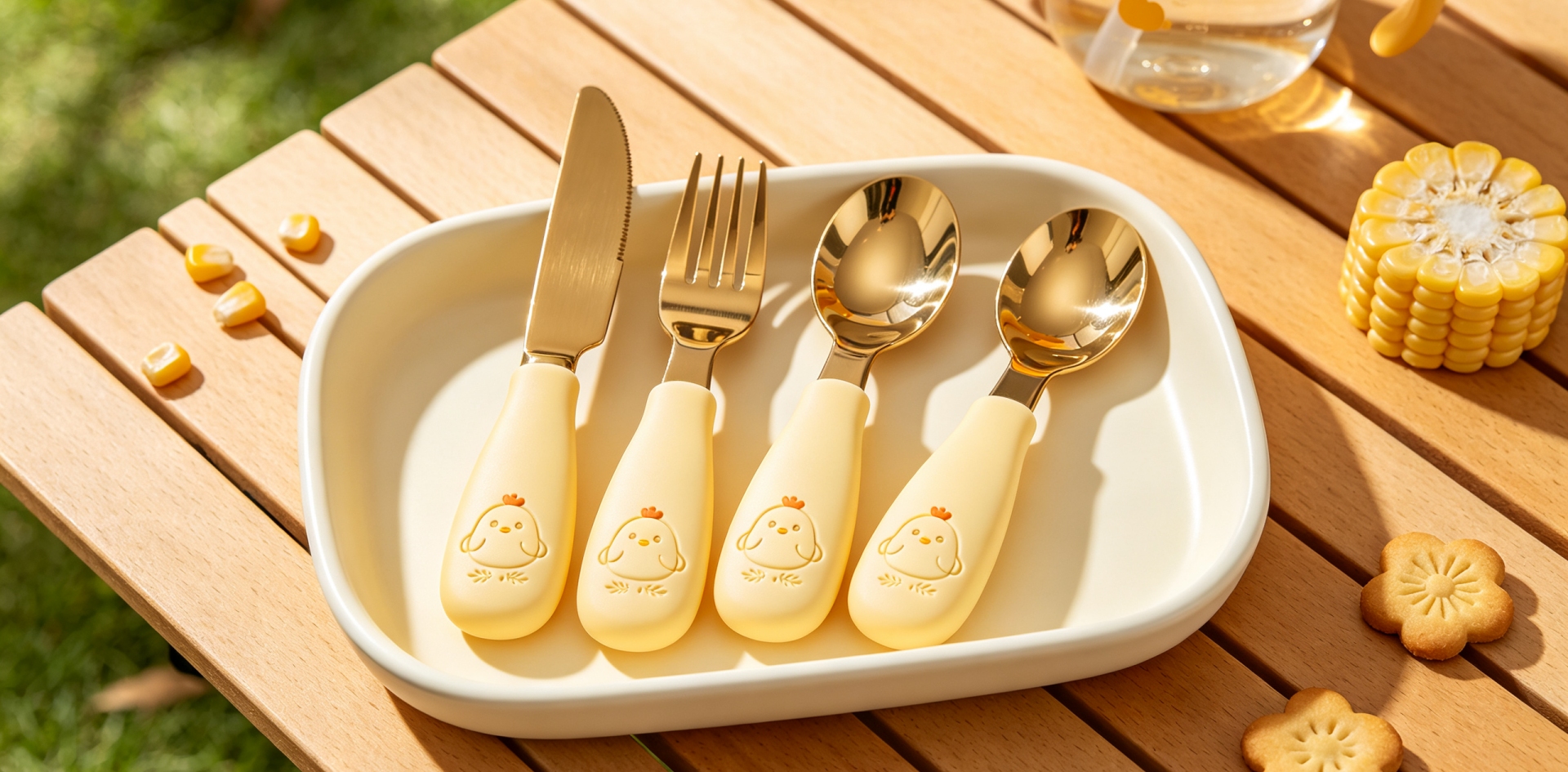
Stainless Steel Cutlery Polishing Direction for B2B Brands
The surface of stainless steel cutlery can look simple at first glance, but the finishing process has a strong influence on how the final product appears. In particular, the direction of polishing can affect how light moves across the surface and how consistent multiple pieces look when displayed together.
For B2B brands developing custom knives, forks, spoons and flatware sets, polishing direction is a useful detail to discuss during product development.
It is different from simply choosing between a polished or satin finish. The direction in which the surface is processed can become part of the visual character of the product, especially on larger handle surfaces and other relatively flat areas.
Why Polishing Direction Matters
When stainless steel is polished or given a brushed finish, the surface may contain very fine lines or directional marks created during processing.
These marks may be subtle on one individual piece. However, when several pieces are placed next to each other, differences in direction can become easier to notice.
For a B2B product collection, consistency is important.
A retailer displaying several pieces together, a distributor preparing a product catalog or a brand presenting a complete flatware set may expect the surface appearance to remain uniform across the collection.
Controlling polishing direction can therefore contribute to a more organized and intentional visual result.
Polishing Direction Is Not the Same as Surface Finish
Surface finish describes the general appearance of the stainless steel, while polishing direction describes the orientation of the surface treatment.
For example, two products may both have a satin appearance but use different processing directions.
Likewise, a particular polishing process may create a directional visual effect that is more noticeable on certain handle shapes.
This distinction becomes useful when a customer has a specific product reference.
Simply telling a manufacturer that the product should have a satin finish may not communicate every visual requirement. A reference sample or photograph can provide additional information about how the surface should look.
For OEM and ODM projects, discussing these details before sampling can make product development more precise.
How Direction Changes the Appearance of a Handle
The handle is often one of the largest visible surfaces on a stainless steel cutlery piece.
If the polishing direction follows the length of the handle, the product can have a different visual character from one where the direction crosses the handle.
The choice may depend on the design.
A long, simple handle can visually emphasize its length when the finishing direction follows the main axis. A more decorative handle may use the direction differently to support its shape.
The important point for a custom project is consistency with the approved design.
If the direction is part of the intended appearance, it should be clearly understood before bulk production begins.
Polishing Direction Across Knife, Fork and Spoon
A complete flatware collection contains different product shapes, so the same finishing principle may need to be adapted to each piece.
A knife may have a relatively broad handle and blade area. A fork has a head with multiple tines. A spoon contains a curved bowl and a handle.
The surface treatment therefore interacts differently with each product.
For a coordinated collection, the goal is not necessarily to force the exact same polishing movement onto every surface. Instead, the finishing direction should support a common visual language.
For example, the main handle areas of the knife, fork and spoon can follow a consistent visual principle, while the more complex functional areas are finished according to their geometry.
This helps the complete collection look related without ignoring the structure of each individual piece.
Curved Surfaces Require More Attention
Flat or relatively straight surfaces are generally easier to evaluate visually because the direction of the finishing marks is more obvious.
Curved surfaces can be more complicated.
A spoon bowl, for example, changes direction continuously because of its three-dimensional form. The finishing process therefore needs to work with the curvature rather than treating the entire bowl like a flat panel.
The same principle applies to rounded or sculpted handles.
During custom product development, the manufacturer needs to understand which visual effect the customer expects and how that effect should be achieved on different parts of the product.
This is another reason why physical samples are valuable.
Sample Approval for Surface Direction
A photograph can provide a useful first reference, but a physical sample gives a much clearer impression of the actual stainless steel surface.
Under different lighting conditions, directional finishing marks may appear differently.
A buyer can inspect the sample from several angles and compare it with the intended product concept.
For a complete collection, the knife, fork and spoon can also be viewed together.
If the customer wants the polishing direction adjusted, this can be discussed before bulk production.
Once the sample is approved, it can become a reference for the production team and help maintain the intended appearance during the manufacturing process.
Consistency in Bulk Production
For B2B orders, surface consistency becomes increasingly important as the quantity increases.
One sample can look excellent, but a commercial order may contain thousands of pieces.
The factory therefore needs to maintain the selected finishing process across the production run.
This involves more than simply using the same stainless steel material. The finishing process, equipment, production method and handling can all contribute to the final appearance.
For repeat orders, the original approved reference is also useful.
A brand may reorder the same cutlery several times over the life of a product. Maintaining the same surface character helps the new shipment remain compatible with the previous production.
This is especially valuable for private label products that remain in a catalog for an extended period.
Polishing Direction and Product Design
The finishing direction can also support the design itself.
A simple geometric handle may use directional finishing to emphasize straight lines. A curved handle may use the surface treatment to follow its contours.
Decorative details can also interact with the direction.
For a custom collection, these decisions can be made during product development rather than added as an afterthought.
When the design and finishing are considered together, the final product can have a more coherent appearance.
This approach is particularly useful for brands that want to create a recognizable stainless steel cutlery collection without relying heavily on logos or printed branding.
Coordinating Finishing With Packaging
The surface appearance of a cutlery collection is often visible before the product is removed from its packaging.
A retail box, presentation tray or customized set package may position several pieces next to each other.
If the finishing direction is consistent, the products can create a more uniform visual presentation.
This means that product finishing and packaging can be considered together during development.
Homefelt factory can support customers with customized stainless steel cutlery manufacturing as well as packaging and transportation arrangements. This allows the customer to discuss the product and its presentation as part of one project.
Homefelt Factory for Custom Stainless Steel Cutlery
Homefelt factory provides OEM, ODM and private label manufacturing for stainless steel knives, forks, spoons and complete flatware collections.
Customers can provide technical drawings, reference samples, photographs or initial product concepts. The factory can then discuss the appropriate material, dimensions, surface treatment, packaging and production requirements.
For customers with an established specification, the focus can be on accurate manufacturing and consistent bulk production.
For customers who are still developing the product, the project can include sample development and discussion of the desired surface appearance.
Homefelt can also coordinate packaging and transportation, providing a one-stop service that can be adapted to the customer's actual situation.
This is useful for brands that want to develop a new collection without having to manage every manufacturing stage separately.
How Buyers Can Describe Their Surface Requirements
B2B buyers do not always need a complex technical document to begin discussing a surface treatment.
A reference sample is often very helpful. Clear photographs under normal lighting can also communicate the general direction.
Other useful information includes the desired finish, product shape, target quantity, packaging requirements and whether the product needs to match an existing collection.
If the customer has a specific preference for the direction of polishing or brushing marks, this should be mentioned during the product development stage.
The factory can then take the requirement into consideration when preparing the sample.
Clear communication before production helps reduce the possibility of different interpretations later.
A Small Detail With Commercial Value
Polishing direction may not be the first specification a buyer considers, but it can influence how a stainless steel cutlery collection looks when several products are viewed together.
For B2B brands, consistency is often just as important as the appearance of one individual product.
A well-developed finishing specification can therefore help connect product design, sample approval and bulk manufacturing.
For a private label collection, these details can also contribute to a distinctive and recognizable product appearance.
Homefelt factory can support customers from initial cutlery development through customization, sampling, OEM/ODM production, packaging and transportation.
Whether the requirement is for a small customized collection or a large-volume stainless steel cutlery program, the finishing details can be discussed according to the customer's product concept and commercial needs.
When the desired polishing direction is clearly defined and consistently reproduced, it becomes another element connecting the original design idea with the finished product.
Custom Stainless Steel Cutlery Manufacturing for B2B Brands
OEM & ODM Stainless Steel Flatware Solutions
Private Label Stainless Steel Knife, Fork and Spoon Factory
Stainless Steel Knife Bevel Consistency for B2B Orders
Stainless Steel Cutlery Symmetry for B2B Production
Related Article



