
Stainless Steel Cutlery Product Catalog for B2B Buyers
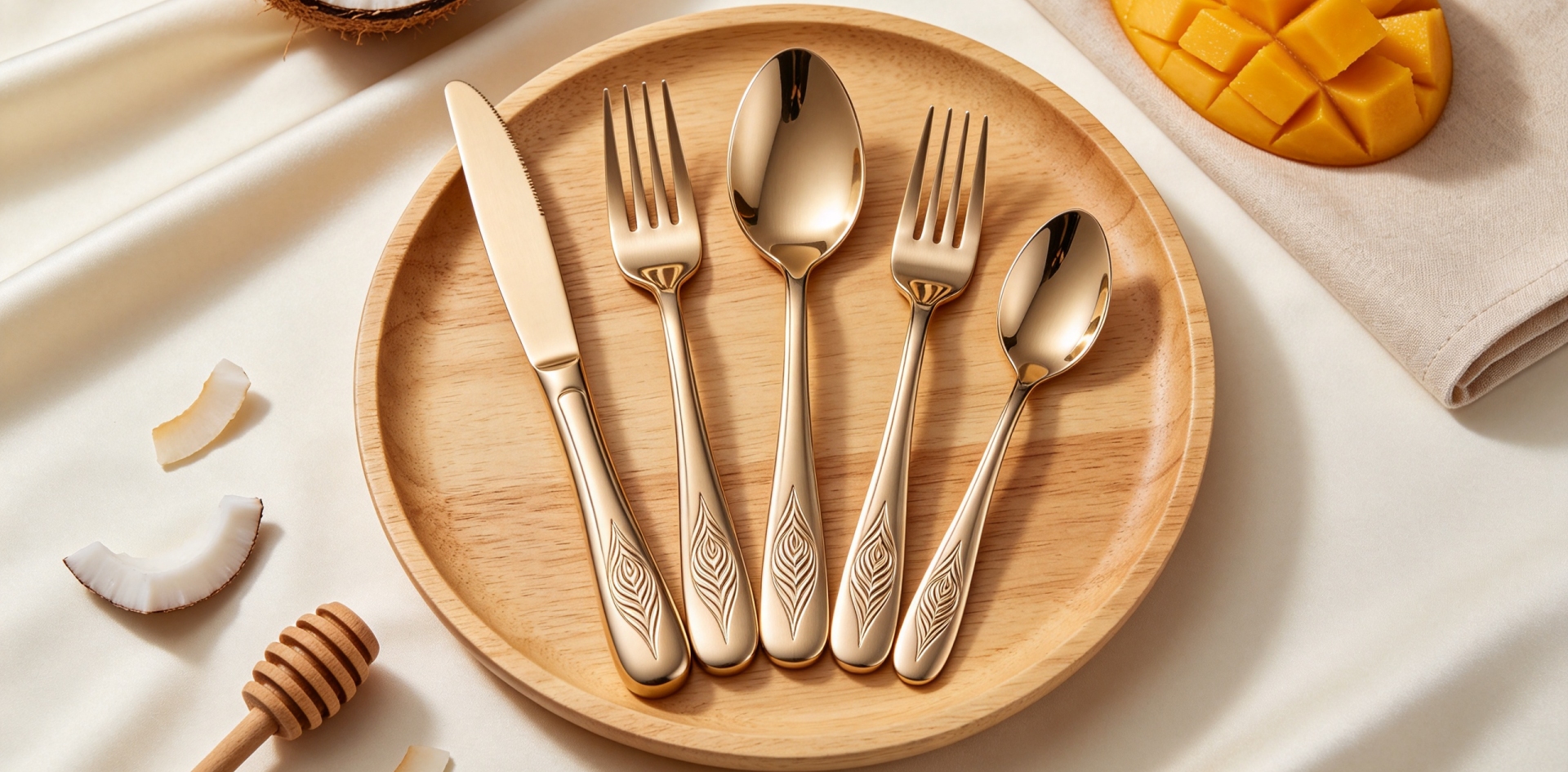
Stainless Steel Cutlery Product Catalog for B2B Buyers
For a B2B company selling stainless steel cutlery, the product range is often much larger than a simple list of knives, forks and spoons.
A professional product catalog needs to help buyers understand what is available, how different products relate to each other and which items can be developed as customized products.
For wholesalers, distributors and private label brands, a well-structured stainless steel cutlery catalog can also make purchasing discussions more efficient. Instead of discussing individual products without context, the buyer can build a complete product program around clearly organized categories and specifications.
A good catalog is therefore not only a presentation tool. It can become part of the product development and sourcing process.
Why a B2B Cutlery Catalog Matters
Professional buyers usually need more information than a product name and a photograph.
When evaluating stainless steel flatware, they may need to understand the product type, material, dimensions, finish, available configurations and whether customization is possible.
A structured catalog brings this information together.
It also helps buyers identify relationships between products. A table knife may belong to the same design family as a dinner fork and table spoon, while another collection may use a completely different handle concept.
For a private label project, these relationships can be important when planning a complete collection.
Organizing Products by Cutlery Type
The first level of a B2B stainless steel cutlery catalog can be organized by product type.
Typical categories include:
Table knives
Dinner forks
Table spoons
Dessert forks
Dessert spoons
Tea spoons
Soup spoons
Special-purpose knives
Special-purpose forks
Other stainless steel cutlery pieces
The exact categories depend on the target market and the manufacturer's product range.
The purpose is to help a buyer quickly identify the products relevant to the purchasing project.
Separating Individual Products From Collections
A B2B catalog can also distinguish between individual cutlery pieces and complete collections.
Some customers purchase individual knives, forks and spoons in bulk. Others are looking for complete flatware sets for retail or private label programs.
These are different commercial requirements even when the individual products are similar.
A clear catalog structure allows the buyer to see both possibilities.
For example, a brand may select individual pieces for a hospitality program while another customer may require a coordinated set for retail distribution.
This flexibility is useful when developing different B2B sales programs.
Creating Product Families
A product family is a group of stainless steel cutlery pieces that share a recognizable design direction.
The handle shape, proportions, finish and other visual characteristics may be coordinated across several products.
For a B2B brand, organizing the catalog by product family can make it easier to identify a potential collection.
Instead of selecting a spoon, fork and knife independently, the buyer can consider them as part of one commercial product range.
This can also provide a starting point for OEM and ODM development.
A buyer may select an existing product family as a reference and then discuss changes required for a private label project.
Making Customization Visible
Not every product in a B2B cutlery catalog needs to be presented as a fixed product.
Some products may be suitable for customization.
A catalog can therefore distinguish between standard product options and areas where the buyer can request modifications.
Depending on the project, customization may involve:
Handle design
Product dimensions
Surface finish
Branding
Cutlery set composition
Packaging
Related product development
The actual possibilities depend on the manufacturing requirements of the project.
The important point is to make it clear to the buyer that a catalog product can sometimes be the starting point for a customized stainless steel cutlery program.
Helping Buyers Build a Private Label Range
Private label customers often need several products rather than one individual SKU.
A well-organized catalog can help them identify a starting point for the collection.
For example, a buyer may first select a basic knife, fork and spoon combination and then discuss whether the handle or finish should be customized.
Another buyer may want to develop an entirely new collection based on a reference design.
In both situations, the catalog serves as a practical starting point for the conversation.
Product Information That Supports B2B Purchasing
The amount of information required for each catalog item depends on its purpose.
For a B2B stainless steel cutlery product, useful information can include:
Product name
Product code
Product type
Material
Dimensions
Weight
Finish
Available set configuration
Customization options
Packaging options
Minimum order information where applicable
This does not mean every catalog needs to contain every technical detail.
The objective is to provide enough information for a buyer to identify the appropriate product and move toward a quotation discussion.
Keeping the Catalog Commercially Focused
A B2B catalog should make it easy for a purchasing professional to move from product discovery to inquiry.
If a buyer finds an interesting stainless steel spoon but cannot understand whether it is available for wholesale or custom production, the catalog has not fully answered the commercial question.
Product information should therefore be connected with the next purchasing step.
For example, a buyer should be able to identify a product, understand its basic specifications and then request a quotation or discuss customization.
This is particularly important for OEM and private label customers.
Using the Catalog for Product Development
A catalog can also support conversations before a final product has been selected.
A buyer may use several existing products as references and ask the manufacturer to combine certain characteristics into a new stainless steel cutlery concept.
For an ODM project, the catalog can provide examples of the factory's product direction and manufacturing experience.
For an OEM project, it can help the buyer understand which existing products may serve as useful references before submitting a completely new design.
This makes the catalog more than a static list of products.
It becomes a starting point for product discussions.
Planning a Catalog Around Different B2B Buyers
Different customers may use the same stainless steel cutlery products in different ways.
A wholesaler may be interested in a broad product range.
A distributor may focus on a smaller number of high-volume SKUs.
A private label brand may be interested in a coordinated collection.
A hospitality buyer may require individual pieces in larger quantities.
The catalog can support these different purchasing requirements by presenting the product range clearly without forcing every customer into the same product structure.
This flexibility can make commercial communication more efficient.
Updating the Product Catalog
A stainless steel cutlery catalog should also reflect the current product range.
As new products are developed and older products are updated or discontinued, the catalog needs to remain consistent with the actual purchasing program.
This is especially important for long-term B2B customers.
If a buyer returns to a product after several months, the information should still provide a clear reference for the purchasing discussion.
For customized products, the catalog can also distinguish between standard offerings and products developed specifically for particular customers.
Homefelt for B2B Stainless Steel Cutlery Manufacturing
Homefelt focuses on stainless steel knives, forks, spoons and cutlery sets for professional B2B customers.
With more than 40 years of experience in the stainless steel cutlery business, the factory supports OEM, ODM, private label, wholesale and bulk production projects.
For buyers exploring a new collection, an existing product can serve as the starting point for a customization discussion. For customers with their own designs, the project can move directly into OEM development according to the required specifications.
Whether the buyer needs individual cutlery pieces or a complete flatware collection, the key is to connect product selection with the actual commercial requirements of the business.
A well-structured stainless steel cutlery catalog makes this process easier by giving buyers a clear view of the available product categories, design families and potential customization directions.
For B2B companies planning a new purchasing program, the catalog should ultimately answer three practical questions: what products are available, how can they be customized, and how can the buyer move forward with a quotation and bulk order?
When these points are clear, the product catalog becomes a useful bridge between product discovery and real B2B business.
Custom Stainless Steel Cutlery Manufacturing
Stainless Steel Cutlery B2B Projects: Better Factory Communication
Stainless Steel Cutlery Product Substitution for B2B Orders
Related Article



