
Stainless Steel Cutlery Product Differentiation for B2B Brands
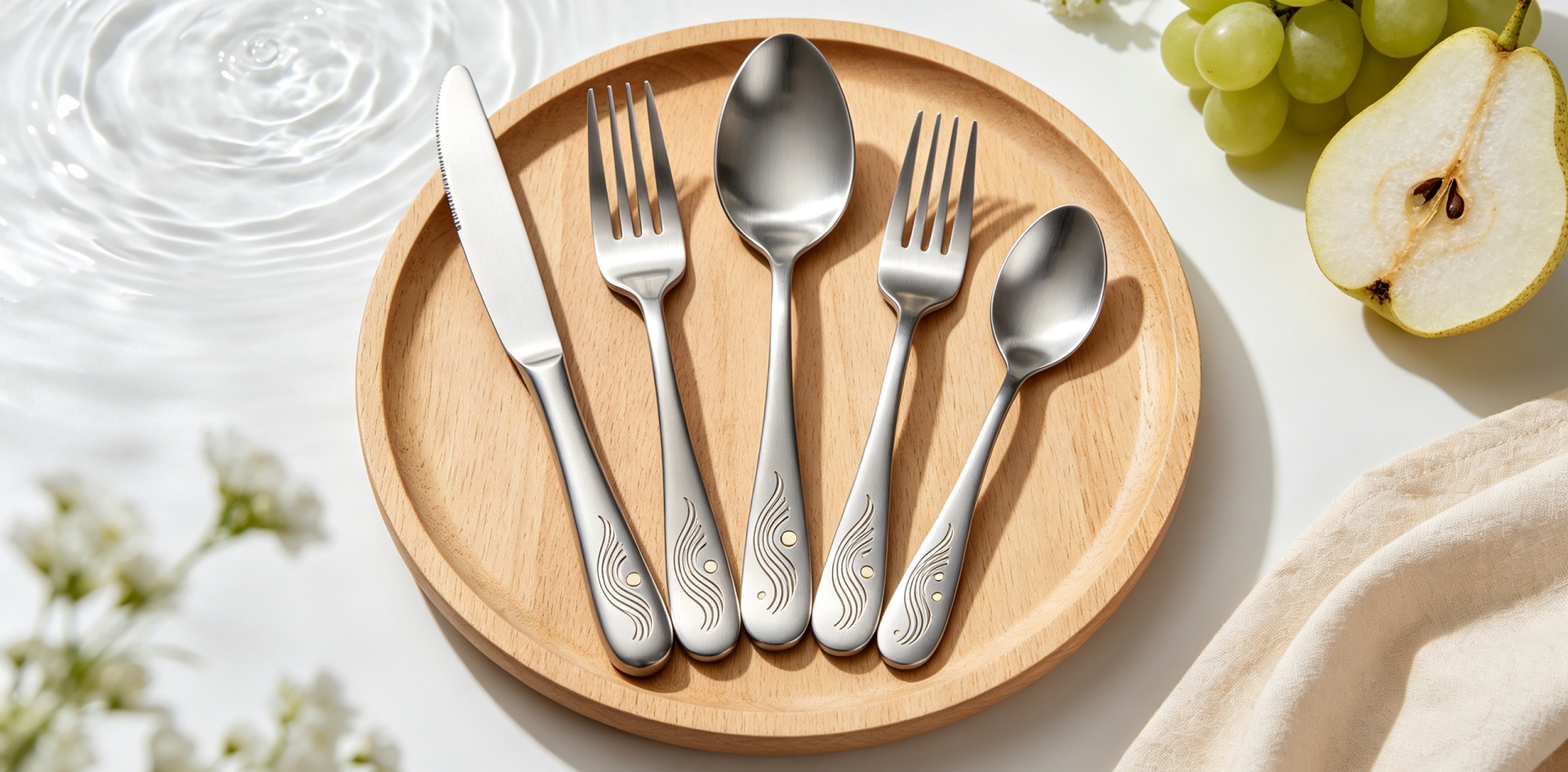
Stainless Steel Cutlery Product Differentiation for B2B Brands
For a B2B brand entering or expanding the stainless steel cutlery market, offering another standard spoon, fork or knife may not be enough to create a recognizable product range.
Product differentiation gives brands an opportunity to develop a collection with its own commercial identity while still using practical manufacturing processes.
This does not necessarily mean creating an extremely complicated design. In many cases, differentiation can come from a combination of handle proportions, surface finish, product combinations, branding and overall collection structure.
For OEM, ODM and private label projects, these details can turn a standard product category into a more distinctive commercial offering.
Why Product Differentiation Matters in B2B Cutlery
Wholesale buyers and private label brands often compete in markets where many stainless steel flatware products look similar.
A product range with a clear visual direction can make it easier for a brand to build its own identity.
The purpose of differentiation is not simply to make a product unusual. The design still needs to be practical to manufacture, suitable for the intended market and commercially appropriate for the planned price level.
A good B2B cutlery project therefore considers both product identity and manufacturing feasibility.
Starting With the Brand's Product Positioning
Before developing a custom stainless steel cutlery design, a brand can define what it wants the collection to represent.
A company may be looking for a modern everyday flatware range, a more premium-looking collection, a distinctive private label product or a coordinated set for a specific sales channel.
This commercial direction can influence the product development process.
The same stainless steel material can be used to create very different collections through changes in shape, proportions, finish and presentation.
For the manufacturer, understanding the intended positioning provides useful context when discussing possible product solutions.
Differentiation Through Handle Design
The handle is one of the most visible areas of a stainless steel cutlery product.
Small changes in its width, profile, proportions or decorative treatment can create a different visual impression.
For a private label collection, the handle can also become a common design element across knives, forks and spoons.
The objective is not necessarily to make every piece identical. Each product has its own functional requirements, but shared design characteristics can help the collection look consistent.
For B2B buyers, this can be a practical way to create a recognizable product family.
Using Surface Finish as a Design Element
Surface finish is another way to differentiate a stainless steel flatware collection.
Depending on the project, a buyer may consider polished, matte or other customized surface treatments.
The choice should be considered together with the intended market and overall product design.
A particular finish can change the visual character of a collection without requiring a completely different product structure.
For brands developing several SKUs, coordinating the finish across the collection can also help create a unified appearance.
Creating Differentiation Through Set Composition
Product differentiation does not always have to come from the physical design of each individual piece.
The structure of the cutlery set can also create a different commercial proposition.
One brand may focus on essential everyday pieces, while another may offer a larger collection with additional tableware components.
For B2B buyers, the set composition can be adapted according to the intended sales channel.
A retailer may require a particular piece count for its product range. A hospitality customer may need individual pieces rather than retail-oriented sets. A private label brand may want several package sizes based on different market requirements.
This flexibility allows the same manufacturing category to support different commercial programs.
Combining Standard Manufacturing With Custom Elements
Not every element of a custom cutlery collection needs to be completely new.
A practical OEM or ODM project can combine established manufacturing structures with selected customized features.
For example, a buyer may use a proven stainless steel construction while developing a distinctive handle or finish. Another project may use a related design across several SKUs and customize the packaging and branding.
This approach can provide a balance between product differentiation and practical production.
The manufacturer can focus development resources on the elements that are most important to the brand instead of redesigning every part of the product unnecessarily.
Differentiation Across a Complete Collection
A successful private label range usually needs more than one attractive individual product.
If a brand plans to sell several stainless steel knives, forks and spoons together, the products should have a relationship with each other.
The handle language, proportions, finish and overall visual direction can be coordinated across the range.
This creates a stronger collection and can also make future product expansion easier.
Once the basic design language has been established, new SKUs can be developed around the same commercial concept.
For a B2B brand, this can create a more structured path for expanding its stainless steel flatware assortment.
Balancing Uniqueness and Production Practicality
One of the most important considerations in custom cutlery development is finding the right balance.
A highly unusual design may create visual differentiation, but it may also introduce additional manufacturing requirements.
A simpler design may be easier to produce but provide less distinction in a competitive market.
The right solution depends on the buyer's objectives.
This is where cooperation with an experienced stainless steel cutlery manufacturer can be useful. The factory can review a proposed concept from a production perspective and discuss how the design can be translated into a practical finished product.
For OEM and ODM projects, this conversation should take place before the final production decision.
Private Label Opportunities
Private label brands can use product differentiation to create a collection that is more closely connected to their own market positioning.
Instead of selecting only standard products from an existing catalogue, the buyer can develop specific product characteristics that make the range easier to identify.
The level of customization can vary.
Some brands may require a completely new product concept. Others may only need selected changes to an existing structure.
Both approaches can be suitable depending on the commercial objective, expected order quantity and target market.
From Product Concept to Bulk Production
Once the design direction has been established, the project still needs to move through sampling and manufacturing.
The final product needs to be suitable for repeat production, especially when the buyer plans a wholesale or private label program.
This is why product differentiation should be considered together with the intended production volume.
A design that works well for a long-term B2B program needs to be more than visually attractive. It should also provide a practical basis for consistent manufacturing.
Homefelt for Custom Stainless Steel Cutlery Programs
Homefelt focuses on stainless steel knives, forks, spoons and cutlery sets for B2B customers.
With more than 40 years of experience in the stainless steel cutlery business, the factory supports OEM, ODM, private label, wholesale and bulk production projects.
For brands developing a differentiated collection, the project can begin with an existing product idea, reference sample, drawing or new concept.
The manufacturing process can then be developed around the agreed product requirements and commercial objectives.
This approach allows buyers to create stainless steel flatware that is not simply another standard product, but part of a broader brand and product strategy.
For companies planning a new collection, differentiation does not have to mean unnecessary complexity. A carefully selected combination of design, finish, product structure and branding can be enough to create a recognizable B2B flatware range.
The important step is to define which elements should make the product different and then work with the manufacturer to turn those ideas into practical stainless steel cutlery for bulk production.
Custom Stainless Steel Cutlery Manufacturing
Private Label Cutlery Development
Stainless Steel Cutlery Drawing Revision for B2B Projects
Prévoir les Commandes de Couverts Inox pour un Projet B2B
Related Article



