
Stainless Steel Cutlery Product Naming for B2B Brands
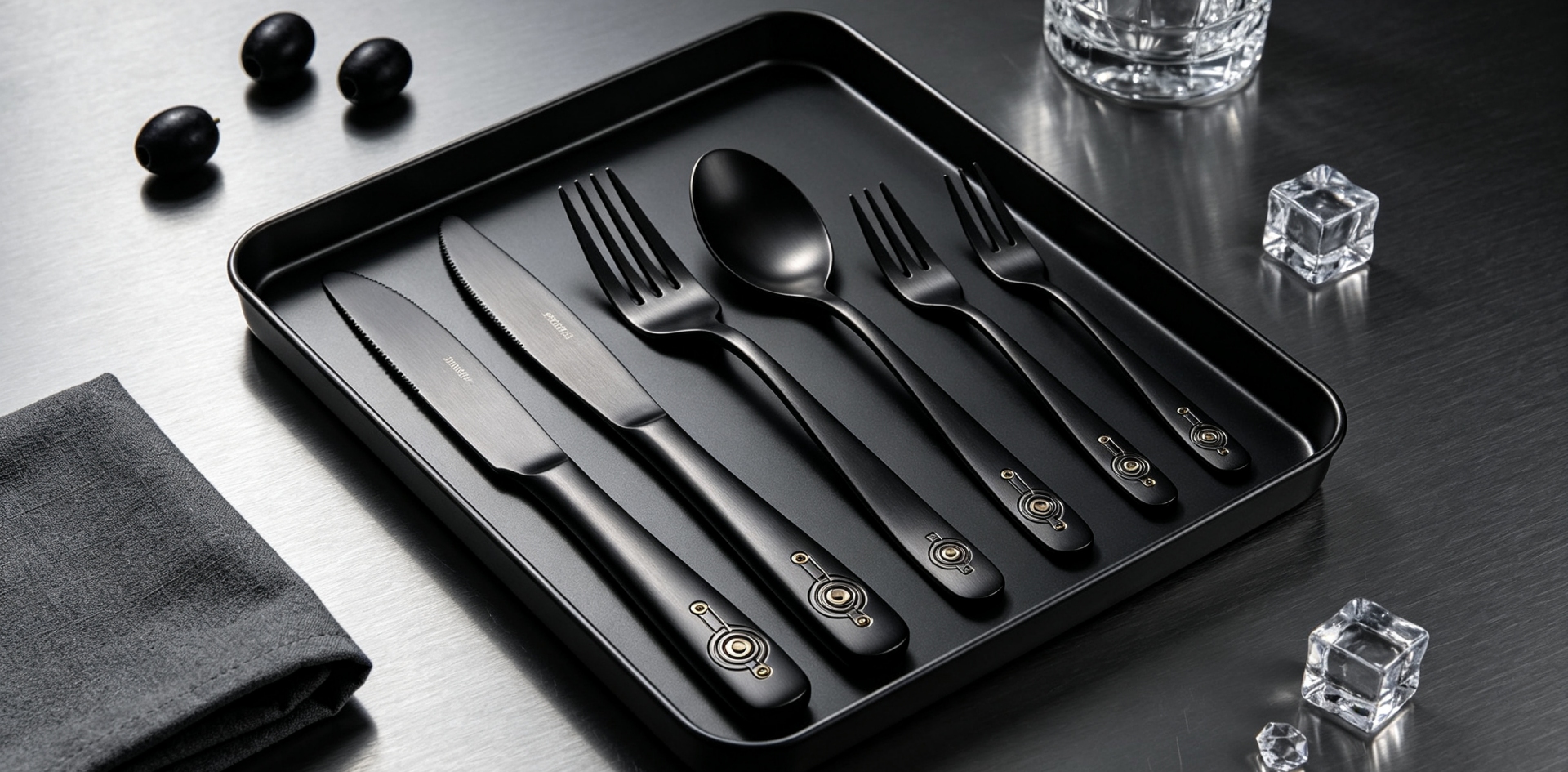
Stainless Steel Cutlery Product Naming for B2B Brands
When a B2B brand develops a stainless steel cutlery collection, product naming may seem like a small administrative detail. In practice, a clear naming system can make communication between the buyer, supplier, sales team and production department much easier.
This becomes particularly important when a company manages multiple stainless steel knives, forks, spoons and flatware sets at the same time.
A growing product range may include different sizes, finishes, handle designs, set combinations and private label versions. If product names are unclear or inconsistent, it becomes harder to identify the correct item during quotation, sampling, purchasing and repeat orders.
A practical naming system gives every product a clear identity from the beginning.
Why Product Naming Matters in B2B Cutlery
Consumers may choose a cutlery product by appearance, but B2B purchasing teams often need to identify products repeatedly across different documents and orders.
A product can appear in a quotation, sample list, purchase order, packing list, internal product database and sales catalog. If different teams use different names for the same item, communication can quickly become confusing.
For example, one person may call a product a “classic dinner fork,” while another refers to it as “fork model A.” A third document may use a completely different description.
For an OEM stainless steel flatware manufacturer, having a clear product reference from the buyer makes the production process easier to follow.
Keep Product Names Simple and Consistent
A useful B2B product name does not need to describe every characteristic of the product.
The main purpose is identification.
A brand may choose to structure names around a collection name, product type and basic variant. For example, a product family could have a collection name followed by “Dinner Spoon,” “Dinner Fork” or “Table Knife.”
If multiple finishes or sizes exist, the additional information can be handled separately rather than creating extremely long product names.
This keeps the product name readable while allowing detailed specifications to remain in the technical documentation.
Separate Product Names From Specifications
One common problem in B2B product management is putting too much technical information into the product name.
A product name can identify the item, while specifications provide the detailed information required for manufacturing.
For example, a name may identify a spoon within a particular collection. The corresponding specification can then contain information about material, dimensions, thickness, finish, logo requirements and packaging.
This separation is particularly useful for custom flatware product development because design changes can be documented without constantly changing the basic product identity.
It also helps avoid confusion when a product is updated during development.
Create a Logical Product Family
For brands with several stainless steel cutlery designs, organizing products into families can make the range easier to manage.
A collection may contain knives, forks and spoons that share the same handle design. Another collection may use a different design language but contain similar product types.
Grouping related items under a recognizable collection name helps the sales team communicate the range and helps the manufacturer understand which products are intended to belong together.
For private label flatware programs, this can be especially useful when a brand plans to expand its collection over time.
New products can be introduced while maintaining a consistent relationship with the existing range.
Use Names That Work Across Different Documents
A B2B cutlery product name should remain practical when used outside the website or catalog.
The same reference may eventually appear on a quotation, sample approval document, purchase order or shipping documentation.
For this reason, overly promotional names are not always useful for internal product management.
A clear product reference can make communication more efficient because the buyer and supplier can use the same name when discussing an item.
This is particularly valuable when a project involves multiple people on both sides.
Make Variants Easy to Identify
A stainless steel cutlery product may have several versions.
For example, the same basic design could be produced in different surface finishes or as different set configurations. A buyer may also develop separate versions for different markets.
Instead of creating completely unrelated names for every variation, a structured naming approach can help show the relationship between products.
This allows the purchasing team to identify the core design while distinguishing the specific version being ordered.
For an ODM stainless steel cutlery factory, this type of organization can also make product development discussions more efficient.
Think About Future Expansion
A product naming system should not only work for today's products.
A brand may begin with a small collection of six or eight cutlery items and later expand the range. If the original naming system has no logical structure, adding new products can create inconsistency.
Planning for future expansion makes it easier to add new knives, forks, spoons and coordinated flatware sets without rebuilding the entire product database.
This is especially relevant for brands using OEM manufacturing as a long-term product strategy rather than placing only one isolated order.
Clear Naming Supports Repeat Orders
Repeat purchasing is another reason to keep product names consistent.
When a customer places a reorder months after the original production, the purchasing team needs to identify the exact product without relying on memory or old conversations.
A consistent product name, combined with an approved sample and complete specifications, creates a much stronger reference for repeat business.
This helps reduce the possibility of accidentally requesting a similar but different product.
For a wholesale stainless steel cutlery manufacturer, clear product identification can therefore support smoother repeat-order communication.
Connect Product Names With the Factory's References
For a B2B project, the buyer does not need to use the manufacturer's internal reference system, but both sides should understand how the products correspond.
For example, a brand can maintain its own commercial product name while the manufacturer records the corresponding factory reference internally.
The important point is that both references should be connected to the same approved product.
This approach allows the brand to maintain its own catalog structure while giving the production team a reliable manufacturing reference.
A Practical Approach for OEM Projects
When developing a custom stainless steel cutlery project, product naming can be established at the beginning of the development process.
Start by identifying the collection, then define the individual knives, forks and spoons. Variants can be identified according to clearly defined characteristics, while detailed technical requirements remain in the product specification.
Once the sample is approved, the final product name and reference can be connected to the approved version.
This creates a simple information chain from product development to quotation, production and future purchasing.
Supporting Organized B2B Cutlery Development
Homefelt factory supports B2B customers developing stainless steel knives, forks, spoons and complete flatware collections for wholesale, OEM, ODM and private label programs.
Customers can provide their own product concepts, drawings, samples or reference designs. During the development process, product details can be reviewed and organized so that the finished items are clearly identified before bulk production.
For importers, distributors, retailers and brands managing multiple cutlery products, this type of organized communication can make future purchasing easier.
A well-defined product name will not replace a complete specification, but it can provide a simple and consistent starting point for communication.
When product names, samples and specifications all point to the same approved item, B2B cutlery projects become easier to manage from the first quotation through repeat orders.
Custom Stainless Steel Cutlery Manufacturing
OEM & ODM Stainless Steel Flatware
Private Label Cutlery Production
Stainless Steel Cutlery Project Communication for B2B Buyers
Stainless Steel Cutlery Project Confirmation for B2B Orders
Related Article



