
Stainless Steel Cutlery Product Positioning for B2B Brands
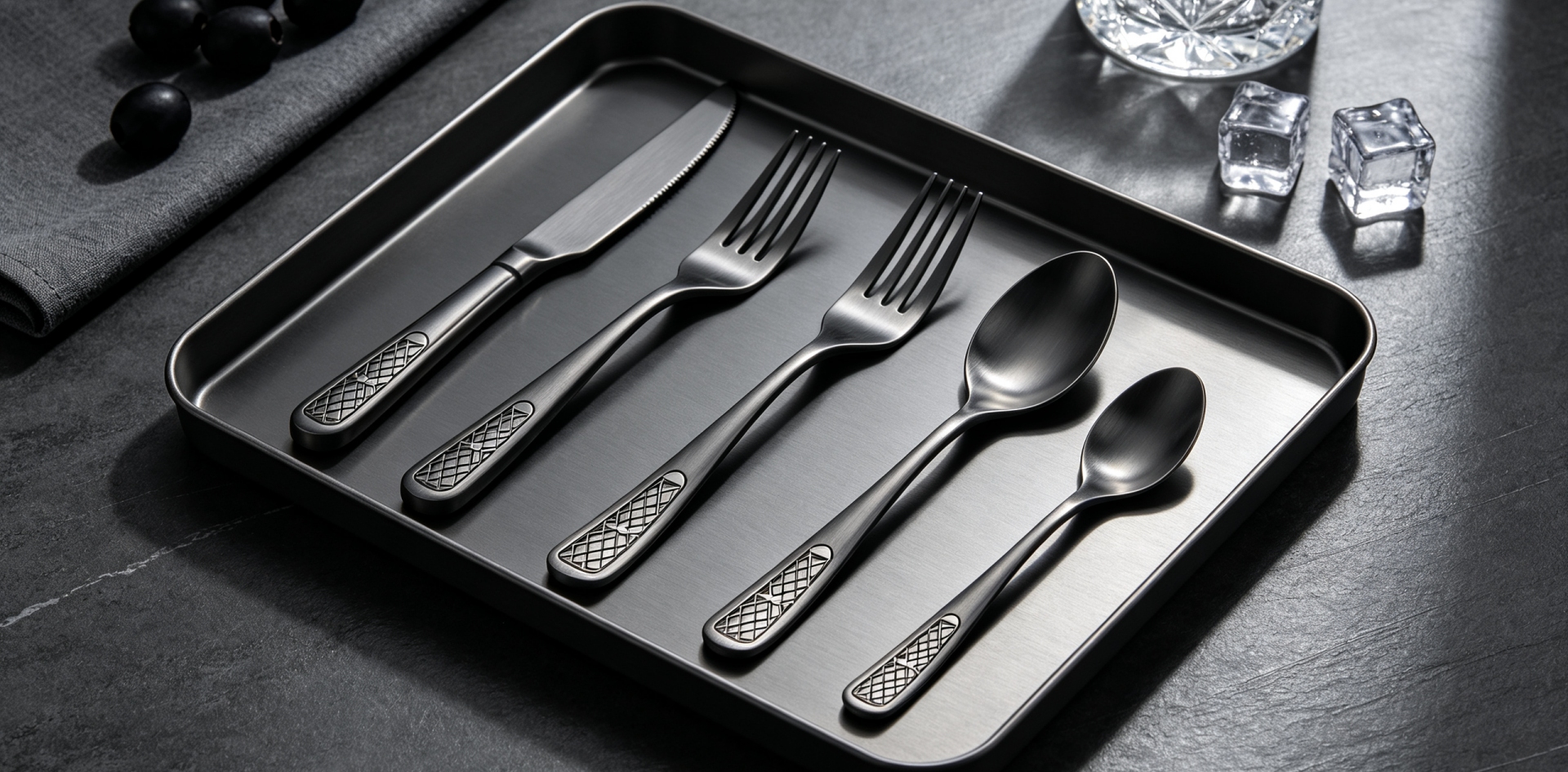
Stainless Steel Cutlery Product Positioning for B2B Brands
Developing a stainless steel cutlery collection is not only a design exercise. For B2B brands, the product also needs to fit a specific market, sales channel and commercial position.
A distributor may need practical stainless steel flatware for wholesale customers, while a retail brand may want a more distinctive collection for its own label. The products can use the same basic stainless steel category while having very different requirements.
For OEM, ODM and private label projects, defining product positioning early can help connect design decisions with actual market requirements.
Start With the Target Customer
The first question in product positioning is who will purchase the product.
A stainless steel cutlery collection intended for a mass-market retailer may require a different approach from one developed for a premium homeware brand.
Likewise, a distributor serving commercial customers may prioritize practical product specifications and repeat availability.
Understanding the target customer gives the manufacturer useful context before detailed product development begins.
It helps explain why a particular handle, finish, product weight or packaging format has been requested.
Define the Intended Market Position
A cutlery product can occupy different positions within a market.
Some products are designed around practical everyday use. Others place greater emphasis on appearance, distinctive design or brand presentation.
The product position should be reflected in the specifications.
For example, a brand looking for a refined collection may pay more attention to handle proportions, surface treatment and overall visual consistency.
A buyer developing a commercial wholesale range may focus more strongly on practical construction, repeat production and a clear product assortment.
Neither approach is automatically suitable for every market. The important point is to make the manufacturing requirements consistent with the intended product position.
Connect Design With Manufacturing
A product concept needs to be translated into something that can be manufactured consistently.
This is where communication between the buyer and factory becomes important.
A buyer may have a visual reference showing the desired appearance, but the manufacturer also needs to understand the physical requirements behind the design.
These may include:
-
Material specification
-
Product dimensions
-
Handle structure
-
Surface finish
-
Product weight
-
Branding
-
Packaging
-
Expected order quantity
When the commercial position of the product is clear, these specifications can be developed with a more defined purpose.
Choosing the Right Level of Customization
Customization can range from relatively simple adjustments to completely new product development.
For some B2B brands, an existing stainless steel cutlery design with selected branding or finishing changes may be sufficient.
Other brands may require a custom handle, unique proportions or a completely new collection.
The right level depends on the market opportunity and the role the product will play within the brand.
A manufacturer experienced in OEM and ODM stainless steel flatware can discuss the available approaches according to the buyer's requirements.
Avoid Designing Without a Commercial Purpose
A visually interesting cutlery product does not automatically make a strong commercial product.
For B2B purchasing, buyers need to consider how the product will be presented, sold and reordered.
Will it be sold as an individual spoon, fork or knife?
Will it be included in a complete cutlery set?
Will distributors purchase it in bulk?
Will the product become part of a larger private label collection?
These questions can influence the design direction.
Defining the commercial role early can prevent unnecessary product development that does not match the intended sales channel.
Consider the Relationship Between Product and Brand
A private label cutlery collection should normally have a recognizable relationship with the brand behind it.
This does not mean every product needs an identical appearance.
Instead, the collection can share certain characteristics, such as handle styling, surface treatment or overall proportions.
When new products are added later, these characteristics can provide a reference for maintaining the identity of the collection.
This is useful for brands that plan to build a long-term stainless steel flatware range rather than launch only one product.
Positioning Across Different Sales Channels
The same stainless steel cutlery design may be presented differently depending on the sales channel.
A retailer may emphasize appearance and collection presentation.
A distributor may focus on product specifications and wholesale availability.
An e-commerce brand may need clear product differentiation and strong visual presentation.
A hospitality supplier may prioritize practical requirements and repeat purchasing.
Understanding the sales channel helps buyers decide which product characteristics deserve the most attention.
It can also help the manufacturer understand why particular customization requests are important.
Developing a Product With the Factory
Once the target market and product position are defined, the buyer can provide the factory with a clearer development brief.
The information does not need to be complicated.
A useful starting point can include:
-
Target customer
-
Intended sales channel
-
Product category
-
Preferred design direction
-
Expected market position
-
Approximate quantity
-
Customization requirements
-
Branding requirements
-
Packaging expectations
This gives the manufacturer more context than a product image alone.
For OEM and ODM projects, this information can help the factory understand the commercial objective behind the physical product.
Homefelt factory supports B2B stainless steel cutlery manufacturing and customization, including knives, forks, spoons and complete flatware sets. OEM, ODM and private label programs can be developed according to the product requirements and intended market.
Building a Collection Instead of a Single Product
For many B2B brands, the long-term opportunity is larger than one cutlery item.
A successful product can become the starting point for a coordinated collection.
A brand may begin with a core spoon, fork and knife, then introduce additional pieces or complete sets as the product range develops.
When the original positioning is clearly defined, future products can be developed around the same commercial direction.
This helps the collection remain coherent as it expands.
Review the Product Before Moving to Bulk Production
Before commercial production, buyers should review whether the final product still matches the original market position.
The product should be considered from both a physical and commercial perspective.
Does the design communicate the intended brand image?
Are the specifications appropriate for the target customer?
Is the product suitable for the intended sales channel?
Does the customization provide a meaningful difference?
Can the product form part of a broader collection?
These questions can help ensure that product development has remained connected to the original business objective.
From Product Concept to B2B Supply
Good product positioning gives a stainless steel cutlery project a clear direction.
Instead of starting with design details alone, the buyer defines the target customer, sales channel and role of the product first. The design and manufacturing specifications can then be developed around that direction.
For B2B brands, this approach can make communication with an OEM or ODM manufacturer more productive and can provide a stronger foundation for future product expansion.
Whether the requirement is a customized spoon, a coordinated knife and fork collection or a complete private label flatware program, clear product positioning helps connect the commercial idea with practical manufacturing.
If you are preparing a new stainless steel cutlery project, sharing your target market, sales channel and product concept with the manufacturer can be a useful first step toward developing the right product specifications and wholesale production plan.
Custom Stainless Steel Cutlery Manufacturing
OEM & ODM Stainless Steel Flatware
Private Label Cutlery for B2B Brands
Stainless Steel Cutlery Range Optimization for B2B Brands
Stainless Steel Cutlery Specification Management for B2B
Related Article



