
Stainless Steel Cutlery Product Substitution for B2B Orders
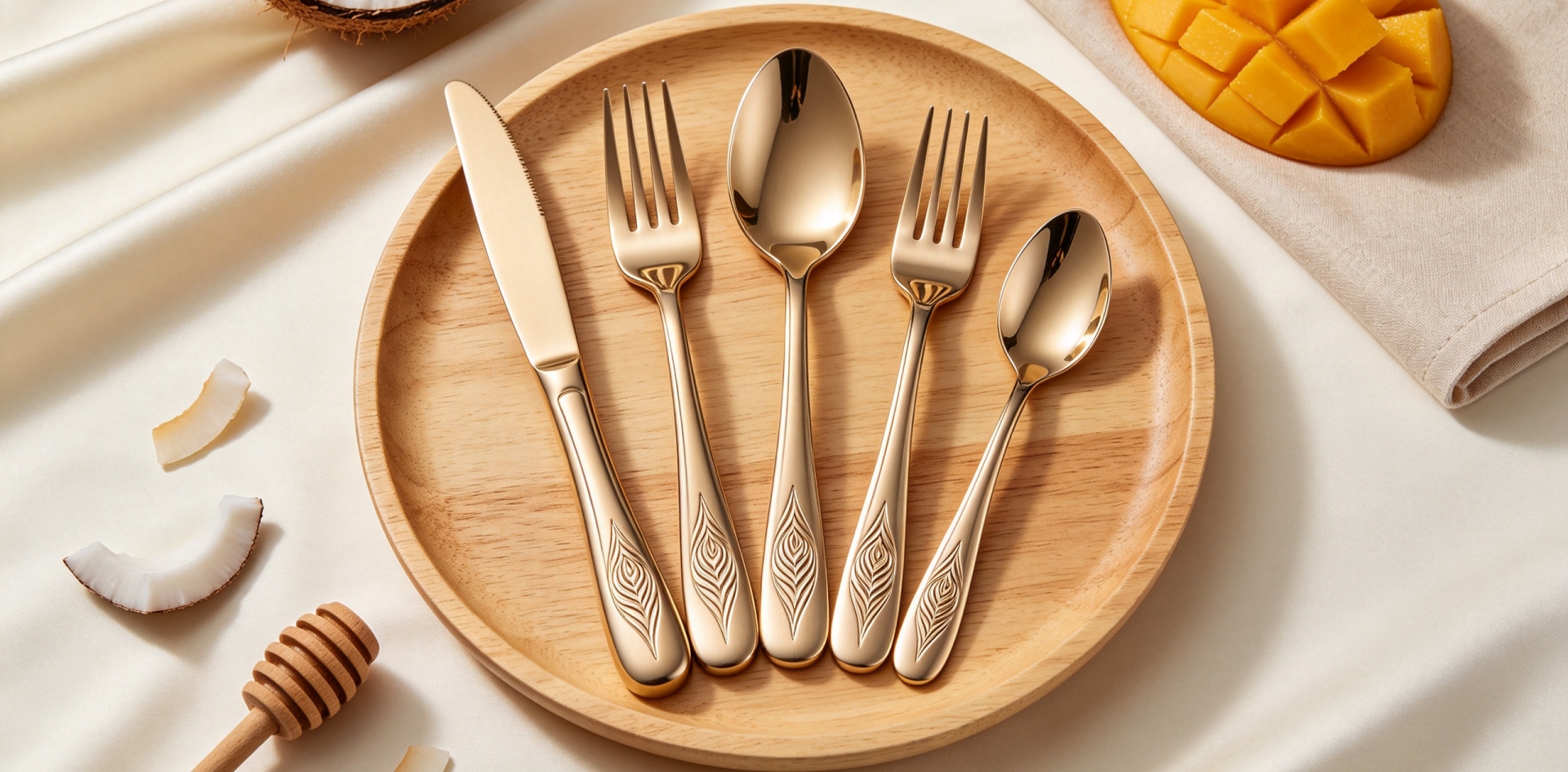
Stainless Steel Cutlery Product Substitution for B2B Orders
In a long-term stainless steel cutlery program, a buyer may occasionally need to evaluate an alternative product or production solution.
The reason can vary. A product may be updated, a collection may be redesigned, a buyer may want to introduce a related SKU, or an existing product may need to be replaced with another version.
For B2B buyers, product substitution should not be treated simply as choosing something that looks similar. The alternative needs to be reviewed against the requirements of the original product and the commercial purpose of the order.
This is particularly important for OEM, ODM and private label stainless steel cutlery projects.
What Does Product Substitution Mean?
Product substitution means replacing an existing cutlery product or product version with another option that can serve the intended commercial purpose.
The replacement may be a different stainless steel spoon, fork or knife, or it may be a modified version developed specifically for the buyer.
The level of similarity can vary.
In some cases, the new product may have a very similar appearance and function. In other cases, the buyer may intentionally introduce a new design while maintaining the overall identity of the collection.
The important point is that the replacement should be evaluated systematically before it becomes part of a bulk order.
Why B2B Buyers May Consider a Substitute Product
There are several situations where product substitution may become relevant.
A buyer may want to refresh an existing collection without changing its overall positioning. A private label brand may want to replace an older SKU with a new design. A wholesaler may need a product that fits a different price segment.
Another situation is product range expansion.
A brand may already have a stainless steel spoon and fork but need a related knife that fits the same collection. Instead of treating the new product as completely independent, the buyer can evaluate how well it works as part of the existing range.
In each case, the substitute should be considered from both product and commercial perspectives.
Comparing Function Before Appearance
When evaluating an alternative stainless steel cutlery product, appearance is important, but it is not the only factor.
The buyer should first confirm that the replacement performs the intended function.
For example, a spoon should provide the appropriate bowl shape and size for its intended application. A fork should have a suitable head and tine configuration. A table knife should correspond to the intended use and product positioning.
The replacement does not have to be identical to the previous product, but its function should remain appropriate for the target market.
This provides a practical starting point for comparison.
Comparing Dimensions and Proportions
Dimensions are another important consideration.
Two stainless steel spoons may appear similar in photographs but have different lengths, widths or proportions.
The same applies to knives and forks.
When a product is being substituted within an existing collection, these differences should be understood before the new version is approved.
For a private label brand, the replacement may also need to maintain visual relationships with the other pieces in the collection.
A small dimensional difference can sometimes change the overall appearance when the products are displayed together.
Maintaining Collection Consistency
A substitute product should be considered in relation to the complete flatware range.
If a brand already sells a coordinated stainless steel knife, fork and spoon collection, introducing a replacement product with a completely different visual language may make the range look less consistent.
The buyer can therefore compare:
Handle proportions
Overall length
Visual weight
Surface finish
Design details
Relationship between functional and handle sections
Packaging presentation
The objective is not necessarily to make every product identical. Rather, the collection should maintain a recognizable relationship between its different pieces.
Product Substitution in Private Label Programs
Private label brands often need stronger control over product consistency because the stainless steel cutlery is sold under their own brand.
If an existing SKU is replaced, the buyer should consider whether the change affects:
Product photographs
Packaging
Product descriptions
Retail listings
Set composition
Customer expectations
Internal product codes
This is especially important when the replacement product is visually different from the original.
A planned product update can be managed effectively when the buyer and manufacturer agree on the transition before the new product enters regular production.
Substitution and OEM Manufacturing
In an OEM project, the buyer usually has specific product requirements.
If a replacement is needed, the manufacturer should understand which characteristics must remain unchanged and which characteristics can be modified.
For example, the buyer may require the same overall handle concept but accept a new functional shape.
Alternatively, the buyer may want to maintain the product's dimensions while changing the surface finish.
The more clearly these priorities are communicated, the easier it becomes to evaluate possible alternatives.
Substitution Does Not Mean Losing Product Identity
A product replacement does not necessarily mean abandoning the original collection.
In many cases, the replacement can be developed to preserve the most important elements of the original product.
For example, a private label brand may maintain its handle design while introducing a revised product proportion.
This approach can allow the brand to update its range without losing its established visual identity.
For B2B buyers, identifying which product characteristics are essential is therefore an important part of the substitution process.
Creating a Product Comparison
Before approving a replacement, the buyer can create a simple comparison between the existing product and the proposed alternative.
Useful comparison points include:
Product type
Material
Overall length
Width
Thickness
Weight
Handle design
Functional section
Surface finish
Branding
Set compatibility
Packaging
The comparison does not need to be complicated.
Its purpose is to make the differences visible and help the purchasing team determine whether the alternative meets the commercial requirements.
Sampling the Replacement Product
For a significant B2B order, a physical sample can provide information that photographs and drawings cannot fully communicate.
The buyer can compare the existing product and proposed replacement side by side.
This can help evaluate the overall appearance, proportions and relationship between different pieces in the collection.
For custom OEM or ODM projects, the sample stage also gives the factory an opportunity to receive clear feedback before the replacement moves into bulk production.
Substitution and Future Repeat Orders
If the replacement product becomes the new standard SKU, the buyer should ensure that its information is clearly recorded.
The new product should have a defined product code and current specifications so that future orders are based on the correct version.
This is particularly important when a brand continues purchasing the collection over several years.
Clear product identification helps prevent the previous version from being ordered accidentally.
Homefelt for Custom Stainless Steel Cutlery Programs
Homefelt focuses on stainless steel knives, forks, spoons and cutlery sets for B2B customers.
With more than 40 years of experience in the stainless steel cutlery business, the factory supports OEM, ODM, private label, wholesale and bulk manufacturing projects.
For buyers considering a replacement or new version, the process can begin with the existing product, a reference sample or a new design concept.
The factory can then work with the buyer to understand the required product characteristics and develop a practical stainless steel cutlery solution.
For long-term B2B programs, product substitution should be treated as part of product development rather than simply as a purchasing decision.
The right replacement is one that continues to meet the intended functional requirements while fitting the brand's design direction, commercial positioning and future production plans.
For companies developing private label stainless steel flatware, having a clear method for evaluating replacement products can make collection updates more organized and reduce unnecessary disruption to ongoing purchasing.
Custom Stainless Steel Cutlery Manufacturing
Stainless Steel Cutlery Product Catalog for B2B Buyers
Stainless Steel Cutlery Product Lifecycle for B2B Brands
Related Article



