
Stainless Steel Cutlery Product Training for B2B Sales Teams
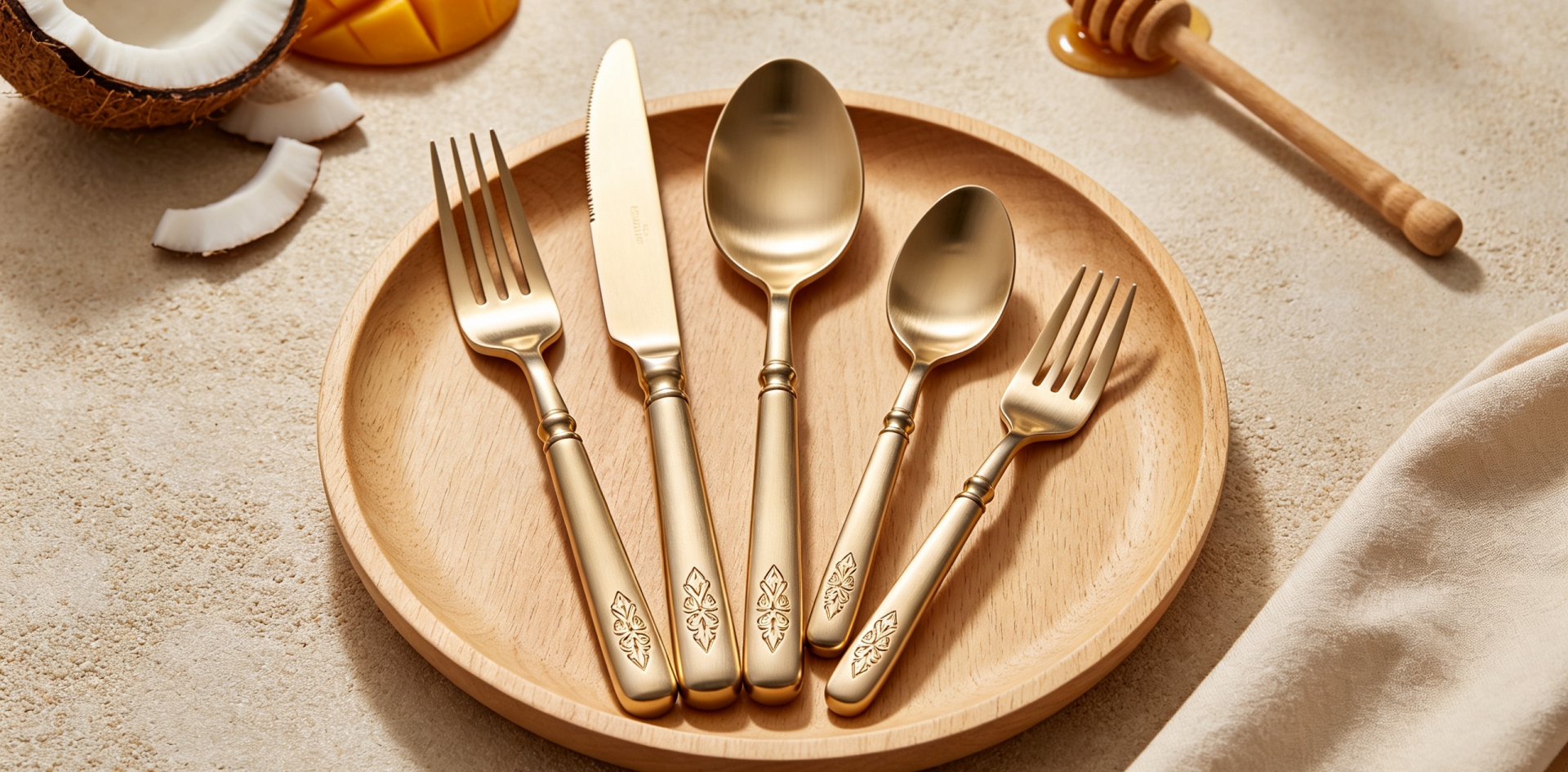
Stainless Steel Cutlery Product Training for B2B Sales Teams
For companies selling stainless steel cutlery to professional customers, product knowledge can make a significant difference in the sales conversation. Buyers may ask about material, weight, dimensions, finish, customization, packaging or production options before they decide which products to purchase.
A sales team does not need to become a stainless steel engineer, but it should understand the basic characteristics of the products it represents.
For distributors, importers, wholesalers and private label brands, clear product knowledge makes it easier to answer customer questions and communicate requirements accurately to the factory.
Understanding the Main Cutlery Categories
The first step is knowing the role of different stainless steel cutlery products.
Knives, forks and spoons may look straightforward, but each category has different functional characteristics.
A knife can have different blade shapes, thicknesses and handle proportions. Forks can vary in tine design, head width and overall dimensions. Spoons can differ in bowl shape, depth, length and handle construction.
Understanding these differences helps sales teams describe products more accurately.
It also allows them to ask better questions when a customer is looking for a specific product.
Knowing What Makes Products Different
Two stainless steel forks can look similar while having different specifications.
Differences may include material grade, thickness, weight, length, surface finish or handle construction. These characteristics can influence the appearance, feel and intended market positioning of the finished product.
Sales teams should therefore avoid describing products only by appearance.
When a customer asks why two products have different quotations, the sales team can refer to the actual product specifications and customization requirements rather than simply discussing price.
Understanding this relationship is particularly useful in B2B sales, where buyers often compare several products before placing an order.
Explaining Stainless Steel Material Clearly
Material is one of the most common subjects in stainless steel cutlery discussions.
B2B customers may ask about the stainless steel grade, product durability, surface condition or suitability for their market.
Sales teams should have access to the factory's confirmed material specifications and communicate them accurately.
It is important not to make broad claims that are not supported by the actual product specification.
For a professional sales process, the factory's technical information should be the reference whenever a customer asks for material details.
Learning to Discuss Weight and Dimensions
Weight and dimensions can influence how a piece of cutlery feels in the hand and how it fits within a collection.
For buyers developing a private label range, these specifications can also help maintain consistency between knives, forks and spoons.
A sales representative should know where to find the relevant dimensions and weight for each product.
When a customer has a target size or weight, the requirement can then be passed to the factory for review.
This is more useful than trying to judge technical specifications from photographs alone.
Understanding Surface Finishes
Surface finish is another important part of stainless steel cutlery presentation.
Polished and matte finishes can create different visual effects, while other decorative treatments may be selected for particular product concepts.
When discussing finishes with customers, sales teams should use the actual factory terminology and approved product references.
If a customer wants to change the finish, the request should be treated as a product customization requirement and confirmed with the factory.
This prevents assumptions about what can be produced on a particular model.
Explaining Customization Without Overpromising
B2B customers often ask whether a standard cutlery product can be changed.
Possible requests may involve handle design, dimensions, surface treatment, product combinations, branding or packaging.
The sales team should understand the difference between an existing option and a new customization request.
Instead of promising that every change is possible, the request can be documented and sent to the factory for evaluation.
Homefelt factory supports customized stainless steel knives, forks, spoons and complete flatware sets for B2B customers. OEM, ODM and private label projects can be discussed according to the customer's design concept, specifications and production requirements.
Helping Customers Choose Between Individual Pieces and Sets
A customer may need individual stainless steel cutlery pieces or complete flatware sets.
Sales teams should understand the difference because it affects quantities, packaging and the way the product is presented.
A retailer may prefer a four-piece set, while a distributor may purchase individual knives, forks and spoons as separate SKUs.
The same product family can sometimes support both formats.
By asking how the customer plans to sell the products, the sales team can provide more relevant product suggestions and discuss suitable packaging arrangements.
Understanding Private Label Requirements
Private label projects require additional product knowledge because the buyer is not simply purchasing a standard factory item.
The customer may have its own brand identity, packaging requirements and product specifications.
The sales team should therefore understand which information needs to be confirmed before production, including product details, branding requirements, packaging and quantities.
Homefelt can support private label stainless steel cutlery programs involving customized knives, forks, spoons and complete flatware sets.
This allows the sales conversation to move from a standard product inquiry toward a more detailed brand-specific project when appropriate.
Knowing When to Involve the Factory
Not every customer question requires a technical discussion with the factory.
Basic product information can normally be handled by the sales team. More specific requests, however, should be confirmed before a commitment is made.
Examples include unusual dimensions, new handle designs, special finishes, custom packaging structures or large mixed-product projects.
A good sales process creates a clear connection between the customer and the manufacturing team.
The sales representative collects the requirements, organizes the information and communicates the project clearly to the factory.
This saves time and reduces the possibility of important details being lost between departments.
Using Samples as a Sales Tool
Samples can make product training much more practical.
A salesperson can physically examine the handle, weight, surface finish and overall construction of a stainless steel knife, fork or spoon.
This experience makes it easier to describe the product to customers.
For B2B buyers, a physical sample can also become the basis for discussing changes. The customer can identify what they like and explain what they want to modify.
The factory can then use the sample as a reference during customization discussions.
Building Confidence Through Accurate Information
B2B buyers generally appreciate clear and direct answers.
If a sales representative does not know a technical detail, it is better to confirm the information with the factory than to provide an uncertain answer.
This is especially important for customized projects, where a small misunderstanding can affect the final product.
Accurate communication creates a stronger foundation for quotations, samples and bulk production.
It also helps the customer understand that the supplier is taking the product requirements seriously.
Supporting Distributor Sales Teams
For distributors, factory support can extend beyond manufacturing.
A distributor may need product descriptions, specifications, sample references and customization information to introduce the products to its own customers.
Homefelt can work with B2B customers on stainless steel cutlery product requirements, including product selection, customization, OEM/ODM manufacturing, private label projects and bulk production.
This gives distributors a manufacturing resource they can return to when their customers request products outside the standard range.
Turning Product Knowledge Into Better Customer Communication
The purpose of product training is not to make sales teams memorize technical terms.
The real goal is to help them understand what the customer is asking for and communicate the requirement accurately.
When a buyer says they need a heavier fork, a different handle, a special finish or a matching spoon, the salesperson should know which product characteristics are relevant and what information needs to be confirmed.
That makes the conversation more efficient for everyone involved.
Creating a Stronger Connection Between Sales and Manufacturing
A successful B2B stainless steel cutlery project requires cooperation between the customer, sales team and factory.
The sales team understands the commercial requirement. The factory understands the manufacturing process. The customer provides the final market and product expectations.
When these three areas are connected through clear product information, customized projects become easier to discuss.
For Homefelt, stainless steel cutlery is the core manufacturing focus. The factory supports knives, forks, spoons and complete flatware sets for wholesale, OEM, ODM and private label customers.
Customers can bring standard product requirements, existing samples or new design concepts and discuss suitable manufacturing possibilities with the factory.
If your sales team needs stainless steel cutlery products for wholesale, distribution or private label projects, contact Homefelt at ingrid@homefelt.net. Share the products you are interested in, your target market and estimated quantities, and the factory can provide product information and discuss customization or bulk production requirements.
Stainless Steel Cutlery Product Selection
OEM Stainless Steel Flatware Manufacturing
Stainless Steel Cutlery Product Data for B2B Buyers
Stainless Steel Cutlery Launch Production for B2B Brands
Related Article



