
Stainless Steel Cutlery Production Changeover for B2B Orders
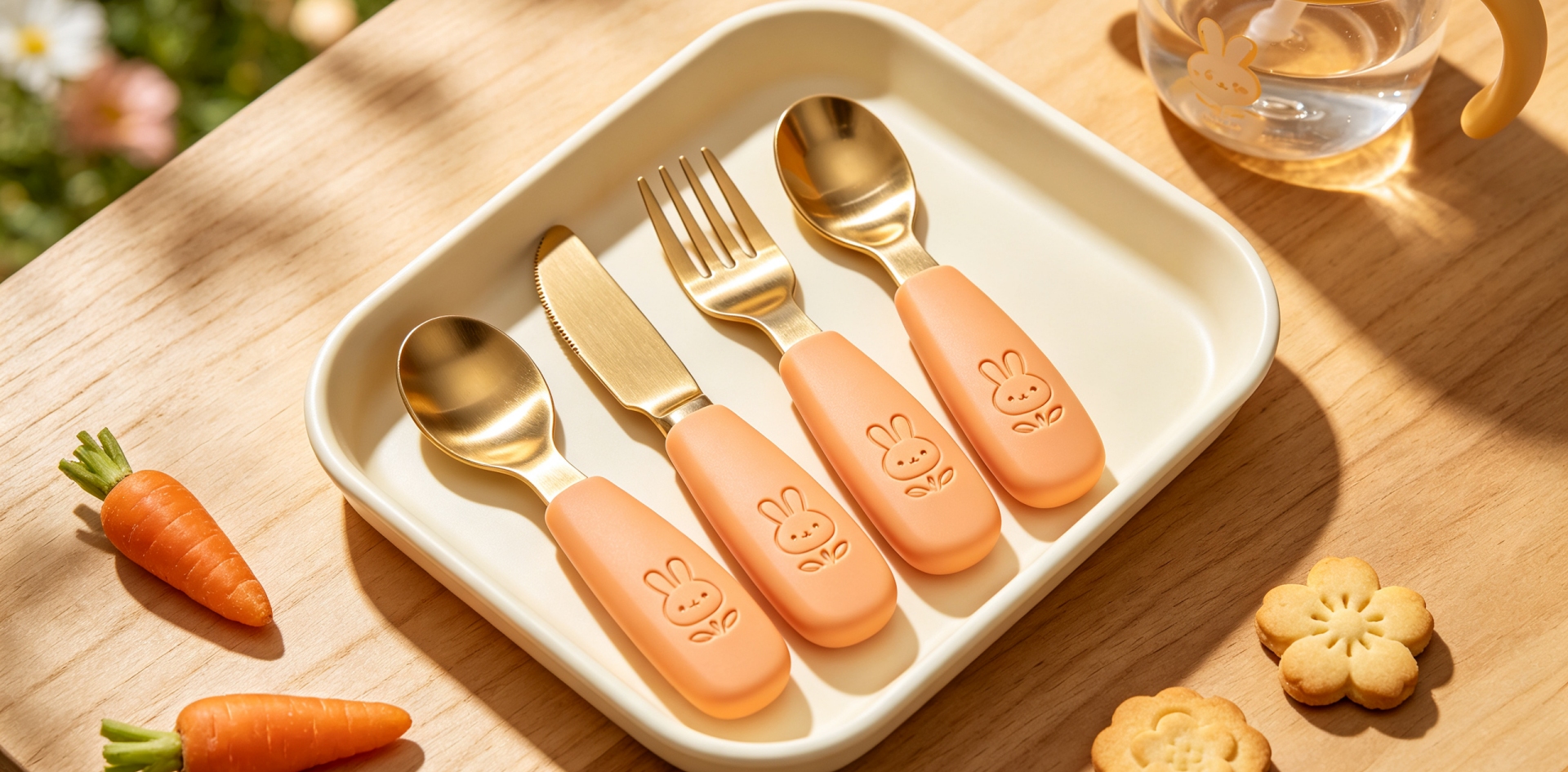
Stainless Steel Cutlery Production Changeover for B2B Orders
A B2B stainless steel cutlery order may contain several products that look similar but require different production settings. A table knife, dinner fork and table spoon can belong to the same collection while still requiring different forming, finishing or handling processes.
When a factory produces multiple stainless steel cutlery SKUs, moving from one product to another is part of normal production planning. This transition is often referred to as a production changeover.
For buyers developing custom OEM, ODM or private label flatware, understanding this part of manufacturing can provide useful insight into how different products are organized during bulk production.
What Is a Production Changeover?
A production changeover is the transition between different products, specifications or production requirements.
In stainless steel cutlery manufacturing, a changeover may happen when production moves from one SKU to another or when the manufacturing requirements change.
For example, a factory may complete one stainless steel spoon specification before moving to a fork or knife with different dimensions. A custom project may also contain several versions of a similar product that require different production arrangements.
The changeover is therefore part of the factory's internal production organization.
Why Changeover Planning Matters for B2B Orders
For a large cutlery order, the factory needs to coordinate many individual production requirements.
If a buyer orders several SKUs, the products cannot always be manufactured as if they were one identical item. Each SKU has its own specifications, quantity and production requirements.
Good production planning allows the factory to organize these products in a practical sequence.
For the buyer, this can help explain why a quotation or production schedule is based on the complete order rather than simply on the number of finished pieces.
A professional manufacturer considers the relationship between the different products when organizing the production program.
Multi-SKU Private Label Cutlery
Private label brands frequently develop collections rather than individual products.
A collection may include matching knives, forks and spoons with a shared handle design, finish and overall visual identity. Although these products are visually related, their manufacturing requirements are not necessarily identical.
The factory therefore needs to manage each SKU while maintaining the consistency of the collection.
This is where production planning becomes important.
The buyer can help by providing a clear product list with the required quantities and specifications for each SKU. The manufacturer can then organize the production program according to the actual order.
Custom Designs Can Increase Production Complexity
A standard cutlery product may follow an established manufacturing process.
A custom product can require additional coordination.
A buyer may request a new handle profile, a different surface finish, a special branding treatment or a particular combination of products. Each additional requirement needs to be understood before the factory organizes production.
This does not mean custom stainless steel cutlery is impractical. It simply means that product development and manufacturing planning should be connected.
When the factory understands the complete collection before production begins, it can better organize the transition between different products.
Production Sequence and Order Organization
The sequence used by a factory depends on the specific production program.
There is no single sequence that applies to every stainless steel cutlery order. The manufacturer may consider product specifications, quantities, processes and other practical production factors.
For B2B buyers, the important point is that the order should be organized clearly by SKU.
A useful order structure can include:
Product name
Product code
Product type
Material specification
Dimensions
Finish
Quantity
Packaging requirement
Approved sample reference
Special production notes
This gives the factory a clearer basis for arranging production.
Why Clear SKU Information Helps
A multi-product order can become difficult to manage if similar products have unclear names or incomplete descriptions.
For example, two spoons may have similar appearances but different dimensions or handle designs. If the buyer identifies them only as “spoon,” the production information may not be sufficiently precise.
Clear product codes and descriptions reduce this ambiguity.
This is particularly useful for private label brands that plan to reorder the same collection later.
Once the SKU structure is established, future purchasing can refer to the same product information rather than recreating the entire product description.
Changeover and Bulk Production Efficiency
Production changeover is one of the factors a manufacturer considers when organizing bulk production.
The larger the order and the greater the number of product variations, the more important overall production planning becomes.
This does not mean buyers should reduce the number of SKUs simply to make manufacturing easier.
Instead, it can be useful to discuss the complete product range with the factory at the quotation and development stage.
The manufacturer can then understand the actual scope of the project and provide a quotation based on the intended production program.
For brands launching a new collection, this can create a better connection between product design and commercial planning.
Coordinating Matching Cutlery Collections
One advantage of working with a factory experienced in custom stainless steel cutlery is the ability to consider a collection as a complete product program.
A brand may want its knife, fork and spoon to share a common handle language. The individual pieces still need to meet their own functional requirements, but the collection should look coherent when presented together.
Production planning needs to maintain these relationships.
For B2B customers, this is particularly relevant when the products will be sold together as a flatware collection or offered across several retail and hospitality channels.
Production Changeover and Future Orders
The first production run is often only the beginning of a B2B cutlery program.
If a collection is successful, the buyer may reorder the same products or introduce additional SKUs.
Keeping clear production information can make future orders easier to manage.
The manufacturer can refer to established product specifications and previous production requirements when preparing the next order. The buyer can also communicate quantities and new requirements more efficiently.
This creates a more organized foundation for long-term OEM and private label cooperation.
How Buyers Can Prepare for a Multi-SKU Order
Before requesting a quotation, buyers can prepare a simple product list covering the planned collection.
Useful information includes:
The number of SKUs
Product names and codes
Knife, fork or spoon type
Material requirements
Dimensions
Surface finish
Branding requirements
Quantity per SKU
Set composition
Packaging requirements
Expected purchasing volume
With this information, a stainless steel cutlery manufacturer can better understand the complete project rather than evaluating each product in isolation.
Homefelt for Custom B2B Cutlery Production
Homefelt specializes in stainless steel knives, forks, spoons and cutlery sets for B2B customers. With more than 40 years of experience in the stainless steel cutlery business, the factory supports OEM, ODM, private label, wholesale and bulk manufacturing projects.
For a buyer developing a new collection, the process can begin with drawings, reference samples or product concepts. The factory can then work with the agreed specifications and order quantities to organize the manufacturing program.
For multi-SKU projects, clear communication is especially useful because several related products may need to move through production as one commercial collection.
A well-planned production program helps connect customized product development with practical factory manufacturing.
For B2B buyers, understanding production changeover is not about managing the factory's internal operations. It is about providing clear product information and realistic order requirements so that the manufacturer can organize the project effectively.
Whether you are sourcing a small customized collection or preparing a larger private label flatware program, discussing the complete SKU range with the factory before production can help create a smoother path toward bulk manufacturing.
Custom Stainless Steel Cutlery Manufacturing
Private Label Cutlery Manufacturing
Prévoir les Commandes de Couverts Inox pour un Projet B2B
Stainless Steel Cutlery Raw Material Planning for B2B Orders
Related Article



