
Stainless Steel Cutlery Proportions: A Key Detail for Custom B2B Collections
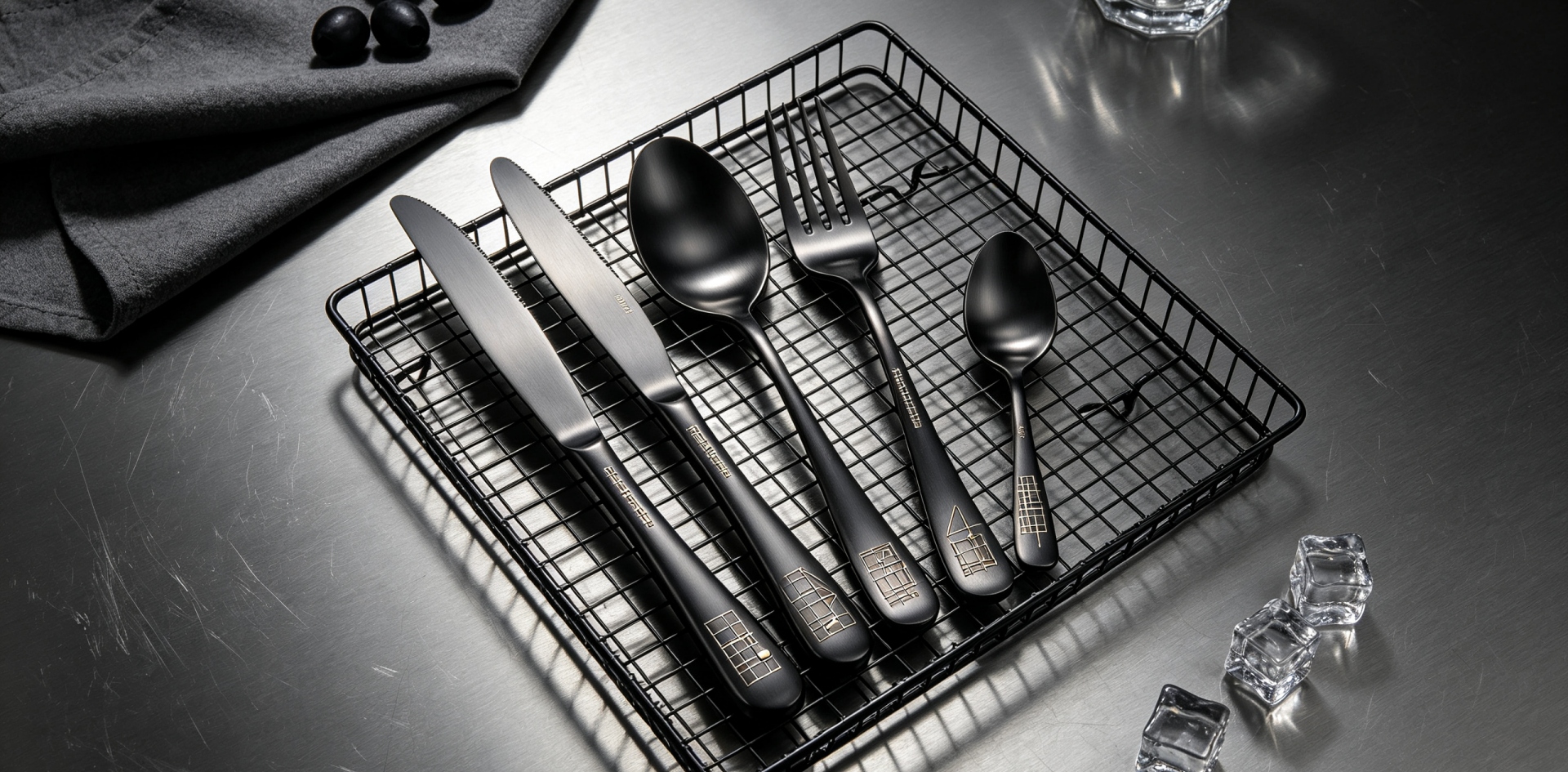
Stainless Steel Cutlery Proportions: A Key Detail for Custom B2B Collections
When developing a stainless steel cutlery collection, buyers often begin with the material, finish, weight or overall style. These are important considerations, but another detail can have a strong influence on the finished product: proportion.
A knife, fork or spoon can have the correct overall length and still look unbalanced if the relationship between its different parts is not carefully considered.
For B2B brands, wholesalers and private label companies developing a new collection, getting these proportions right can help create products that look coherent, feel natural in use and are easier to present as a complete range.
What Do Cutlery Proportions Mean?
Proportion refers to the relationship between the different parts of a piece of cutlery.
For example, a spoon has a handle and a bowl. A fork has a handle, neck and head with its tines. A table knife has a handle and blade. The overall dimensions of these parts work together to create the visual character of the product.
Two pieces can have the same total length but look completely different because their individual sections are not proportioned in the same way.
This is particularly relevant for custom stainless steel flatware. A brand may have a specific visual concept in mind, but turning that concept into a practical product requires careful consideration of how each part relates to the others.
Why Proportion Matters in a Collection
When several pieces are displayed together, people naturally compare their shapes.
A spoon with a very wide handle next to a fork with a very narrow handle may not create the same visual impression, even if both pieces belong to the same product range.
A coordinated collection does not necessarily mean that every piece must have identical dimensions. Instead, the different products should share certain visual relationships.
The handle may follow a similar design language. The transition between sections may have a comparable character. The overall length and width can be adjusted according to the function of each item while maintaining a recognizable family appearance.
For a private label brand, these details can help make a collection look deliberately designed rather than assembled from unrelated products.
Balancing Appearance and Function
Proportion is not only a visual issue.
Every piece of cutlery has a specific function, and its dimensions need to support that function. A fork needs enough width and suitable tine spacing for practical use. A spoon needs a bowl that works with the intended application. A table knife needs a blade and handle relationship that feels appropriate when held.
The design process therefore requires a balance between appearance and practical use.
A manufacturer working on a custom project needs to consider the complete product rather than focusing on one measurement in isolation.
This is one reason why physical samples can be valuable during product development. A drawing provides precise dimensions, while a sample allows the buyer to see and feel how those dimensions work together.
Proportions for Different Market Positions
Not every B2B cutlery collection needs to follow the same proportions.
A retail brand targeting a modern lifestyle market may prefer slim and visually light designs. A hospitality-oriented collection may require a more substantial appearance. A premium product range may use carefully controlled proportions to create a distinctive visual identity.
The right choice depends on the intended market, sales channel and product concept.
For this reason, a stainless steel cutlery manufacturer should understand the commercial purpose of the product rather than simply producing according to isolated measurements.
When buyers communicate their target positioning clearly, it becomes easier to discuss suitable design directions and product specifications.
Developing Proportions Across Knives, Forks and Spoons
A complete cutlery collection usually contains several related products.
The knife, fork and spoon do not need to have exactly the same width or shape because their functions are different. However, they can share common characteristics that make them visually connected.
For example, the handle length, contour and general thickness can follow a consistent design concept. The working sections can then be adjusted according to their individual purposes.
This approach is particularly useful when a brand wants to expand from a few initial SKUs into a broader stainless steel flatware collection.
Instead of designing each item independently, the manufacturer and buyer can establish a common design direction first and then apply it across the range.
Why Samples Are Useful for Proportion Decisions
Proportion can be difficult to judge from photographs alone.
A product may appear balanced on a screen but feel different when it is held in the hand. Likewise, several products may look similar individually but reveal noticeable differences when placed side by side.
For a custom OEM project, the sample stage provides an opportunity to review these details before moving into bulk production.
Buyers can compare:
Overall length and width
Handle-to-working-section relationships
Visual balance between different SKUs
How the product feels when held
How knives, forks and spoons look together
Whether the design matches the intended market position
If adjustments are needed, they can be discussed before the production specification is finalized.
Proportion and Manufacturing Practicality
A visually attractive design also needs to be suitable for manufacturing.
Some proportions may require additional development to achieve the desired result consistently in stainless steel. The manufacturer needs to consider the relationship between design requirements and production processes.
This is especially important when a customer requests several customized SKUs.
A practical design allows the manufacturer to reproduce the approved form across a larger quantity while maintaining the intended characteristics of the collection.
For B2B buyers, this connection between design and manufacturing can make the development process more efficient.
What to Include in a Custom Cutlery Inquiry
When requesting a quotation for custom stainless steel cutlery, buyers do not need to have every technical detail finalized.
A useful starting package can include a drawing, reference photograph or sample, the desired cutlery types, approximate dimensions, estimated order quantity and target market.
If the buyer already has a preferred proportion or visual reference, that information should also be shared.
The manufacturer can then review the requirements and discuss which details need to be confirmed during sample development.
For OEM, ODM and private label projects, this early communication helps turn a general product idea into a clearer manufacturing brief.
Building a Recognizable Flatware Collection
For brands, a successful cutlery collection is more than a group of individual products.
The relationship between the pieces can become part of the brand's visual identity.
When the proportions are carefully coordinated, a knife, fork and spoon can immediately look as though they belong together. This can be valuable when products are displayed together in retail stores, catalogs, online shops or hospitality presentations.
It also gives the brand a stronger foundation for future product expansion.
New SKUs can be developed using the same design principles, making it easier to grow the collection without losing its overall character.
Choosing the Right Manufacturing Partner
Custom cutlery development requires more than the ability to produce stainless steel products in large quantities.
The manufacturer should be able to understand design requirements, develop samples and translate approved specifications into repeatable production.
For B2B customers, this is particularly useful when the project involves multiple products, private labeling or future collection expansion.
An experienced stainless steel cutlery factory can work with buyers on knives, forks, spoons and complete flatware sets according to their requirements for OEM, ODM and wholesale programs.
The earlier design details are discussed, the easier it becomes to establish a practical production direction.
A Small Detail That Shapes the Whole Collection
Proportion may not be the first specification that comes to mind when sourcing stainless steel cutlery, but it has a direct influence on how a product looks and feels.
For custom B2B collections, the goal is not simply to make every measurement different or identical. The goal is to create relationships between dimensions that support the function, appearance and commercial positioning of the product.
With a clear design concept, appropriate samples and close communication with the manufacturer, buyers can develop stainless steel flatware that feels coherent from the first SKU to the final collection.
If you are planning a new private label or OEM cutlery project, sharing your product references, expected quantities and preferred design direction is a practical first step. A qualified manufacturer can then review the requirements, discuss customization possibilities and prepare a quotation for the project.
Request a Custom Stainless Steel Cutlery Quote
Discuss Your OEM Flatware Project
Develop a Private Label Cutlery Collection
Request a Custom Cutlery Sample
Edelstahlbesteck mit abgerundeten Kanten: Ein wichtiges Detail für B2B-Projekte
Fabrication de Couverts Inox : Comment la Forme Influence la Production en Série
Related Article



