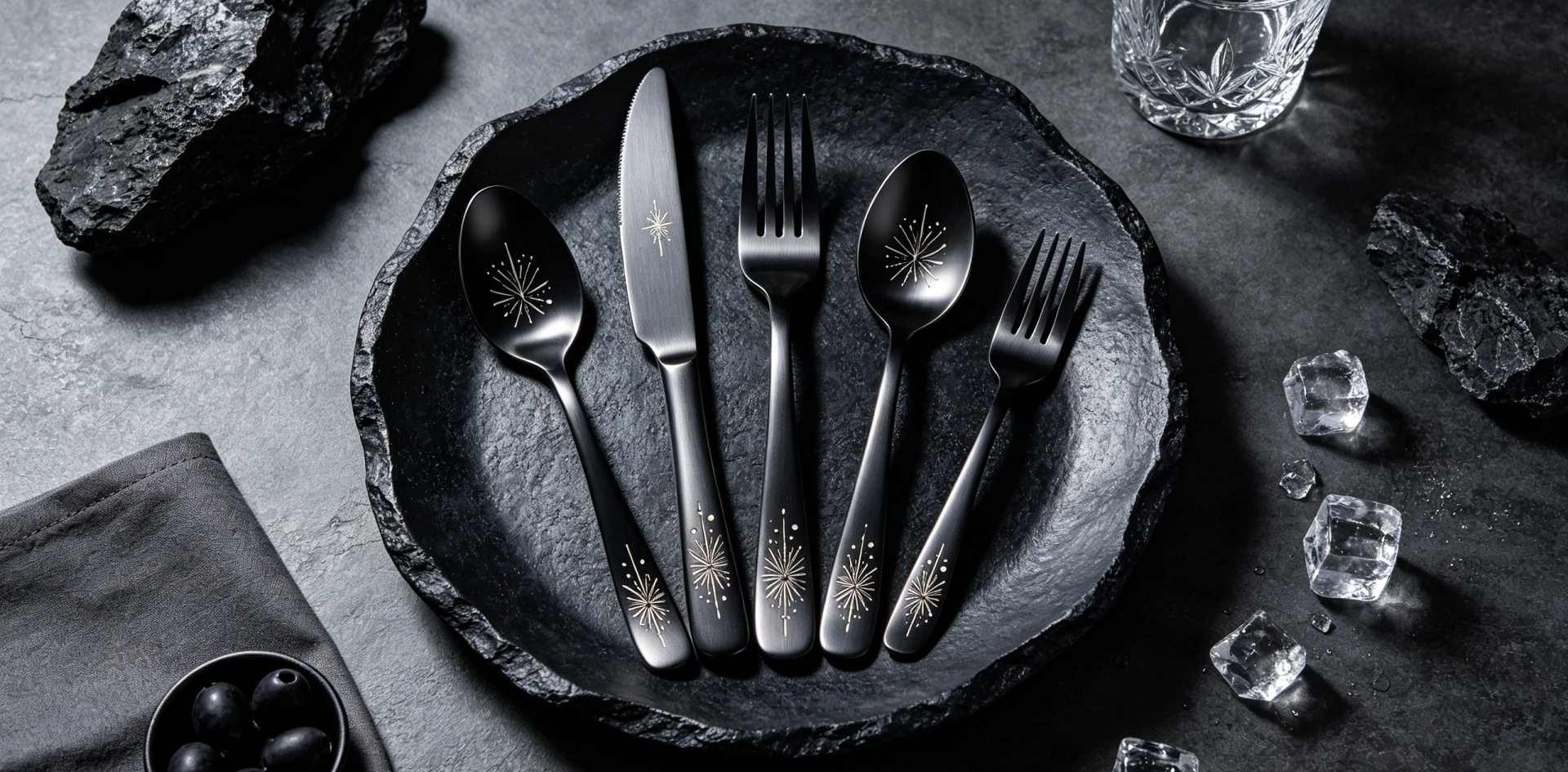
Stainless Steel Cutlery Quality Control and Inspection Guide

Stainless Steel Cutlery Quality Control and Inspection Guide
For wholesalers, distributors, retailers and foodservice suppliers, consistent quality is one of the most important factors when purchasing stainless steel cutlery.
A fork or spoon may look simple, but its final quality depends on many details throughout manufacturing. Material selection, thickness, shaping, polishing, surface finishing and final inspection can all influence the finished product.
For buyers placing large orders, checking these details before production and shipment can help reduce unnecessary problems and make future purchasing more predictable.
What Does Cutlery Quality Control Include?
Quality control for stainless steel cutlery is not limited to checking the final appearance.
A complete process can involve several stages, including:
- Raw material checking
- Product dimension control
- Weight checking
- Shape inspection
- Surface finishing
- Polishing
- Edge inspection
- Logo checking
- Packaging inspection
- Final quantity checking
Each stage contributes to the final product.
When the same standards are followed across production, different batches can maintain a more consistent appearance and feel.
Material Inspection
The raw material is the starting point of stainless steel cutlery production.
Buyers should clearly confirm the required stainless steel grade before production. Common options include 18/10, 18/8 and 18/0 stainless steel.
The selected material should match the agreed product specification.
For long-term orders, maintaining the same material requirement is important because changes in material can affect the product's appearance, weight and overall performance.
Checking Product Thickness
Thickness is another detail that can affect the finished product.
A thicker design may provide a more substantial feel, while a thinner product may be suitable for applications where lightweight handling is preferred.
Thickness should be established according to the product design rather than judged only by appearance.
For customized projects, the manufacturer and buyer should confirm the required dimensions before mass production.
Weight Consistency
Product weight can be a useful reference during inspection.
If a collection includes forks, spoons and knives, each product should remain within the agreed specification.
Significant differences between pieces can affect the overall user experience and may indicate inconsistencies during production.
For wholesale orders, weight should therefore be checked against the approved sample or product specification.
Shape and Dimensions
The basic shape of a cutlery product should remain consistent from one piece to another.
Important measurements may include:
- Overall length
- Handle width
- Bowl size
- Fork tine length
- Knife blade dimensions
- Product thickness
For a complete collection, the different pieces should also look visually balanced when placed together.
This is especially important for retail and hospitality products where appearance plays an important role.
Surface Finish Inspection
The surface finish is one of the most visible quality details.
Depending on the design, stainless steel cutlery may have a mirror, satin, matte or brushed finish.
During inspection, buyers should look for:
- Uneven polishing
- Visible scratches
- Discoloration
- Rough areas
- Uneven texture
- Inconsistent brightness
For products with a polished surface, consistent reflection can be an important part of the final appearance.
Polishing Quality
Polishing requires careful control because it directly affects how the stainless steel looks.
Poor polishing may leave visible marks or uneven areas.
A well-finished product should have a clean and consistent surface according to the approved design.
For large orders, inspecting samples from different production stages or finished batches can provide a better understanding of consistency.
Edge and Handle Inspection
Cutlery should be comfortable to handle and suitable for normal use.
The edges should be properly finished, and the handle should not have obvious rough areas.
For knives, the blade edge should follow the agreed design.
For forks and spoons, the working ends should have a consistent shape and finish.
Small details can make a noticeable difference when products are used repeatedly in restaurants, hotels or catering environments.
Logo and Custom Details
Custom cutlery often includes logos or other decorative details.
The position, size and appearance of the logo should be checked against the approved sample.
Important points include:
- Logo placement
- Logo size
- Clarity
- Alignment
- Surface consistency
For private label projects, these details are particularly important because the product represents the buyer's brand.
Matching a Complete Cutlery Collection
A common quality issue is not necessarily a defect in an individual product, but a mismatch between different pieces.
A fork, spoon and knife may each meet their own specifications while still appearing inconsistent as a collection.
Buyers should therefore inspect the products together.
Check whether they have compatible:
- Handle proportions
- Surface finishes
- Color or brightness
- Overall styling
- Weight and thickness
This approach is especially useful for restaurant and retail collections.
Packaging Inspection
Packaging is part of the final supply process.
Before shipment, buyers should confirm that the packaging matches the agreed requirements.
For bulk orders, check:
- Inner packaging
- Product quantity per carton
- Carton markings
- Protective materials
- Packaging strength
- Label information
Good packaging helps protect finished cutlery during transportation and makes warehouse handling easier.
Sample Approval Before Production
A physical sample is an important reference for customized projects.
Before mass production, buyers should confirm the sample carefully.
The approved sample can be used as a reference for:
- Material
- Weight
- Dimensions
- Shape
- Finish
- Logo
- Packaging
This gives both the buyer and manufacturer a clear understanding of the expected final product.
Final Inspection Before Shipment
Final inspection should take place after production is completed and before the products are shipped.
Depending on the project, buyers may check a representative quantity of products rather than inspecting every individual piece.
The inspection should focus on the specifications that matter most to the order.
For example, a customized retail collection may require particular attention to logo placement and packaging, while a foodservice project may focus more heavily on dimensions, weight and surface finish.
Quality Control for Repeat Orders
Quality control becomes even more important when a product is reordered regularly.
A manufacturer should have access to the original specifications and approved samples.
This helps maintain consistency between the first order and subsequent production.
For wholesalers and distributors, reliable repeat production can make inventory planning much easier.
Choosing a Manufacturer With Strong Quality Control
A capable manufacturer should be able to explain how products are checked throughout production.
B2B buyers can ask about:
- Material inspection
- Production inspection
- Finishing inspection
- Final inspection
- Sample approval
- Packaging inspection
Clear answers can provide useful information about how the factory manages production.
With more than 30 years of stainless steel manufacturing experience, Homefelt produces stainless steel cutlery and a wide range of kitchen and dining products.
The factory works with different product specifications and supports standard as well as customized projects for international B2B customers.
For buyers developing long-term products, clear specifications and sample approval can help establish a consistent reference for future orders.
What Buyers Should Prepare
Before beginning a new cutlery project, buyers can prepare a simple specification list covering:
- Stainless steel grade
- Product dimensions
- Product weight
- Surface finish
- Product design
- Logo requirements
- Packaging
- Quantity
- Sample requirements
- Delivery schedule
The more clearly these requirements are defined, the easier it is to evaluate samples and compare production results.
Conclusion
Stainless steel cutlery quality depends on much more than a clean appearance.
Material, dimensions, weight, shape, polishing, surface finishing, custom details and packaging all contribute to the final product.
For B2B buyers, an approved sample and clear product specification provide a practical reference for production and future repeat orders.
Choosing an experienced manufacturer with established quality control processes can also make large-scale purchasing more reliable.
With more than 30 years of stainless steel manufacturing experience, Homefelt works with international wholesalers, distributors, retailers and foodservice customers on stainless steel cutlery and other kitchen and dining products.
Related Topics for Your Content Matrix
How to Choose the Right Stainless Steel Cutlery Supplier
What Is the Best Stainless Steel Grade for Cutlery
How Stainless Steel Cutlery Is Polished and Finished
What Should You Check Before Ordering Wholesale Cutlery
How to Compare Stainless Steel Cutlery Samples
Stainless Steel Cutlery Packaging for Wholesale Orders


Custom Stainless Steel Cutlery for Brands and Wholesale Buyers
Stainless Steel Cutlery Factory and Manufacturer for B2B Buyers
Related Article