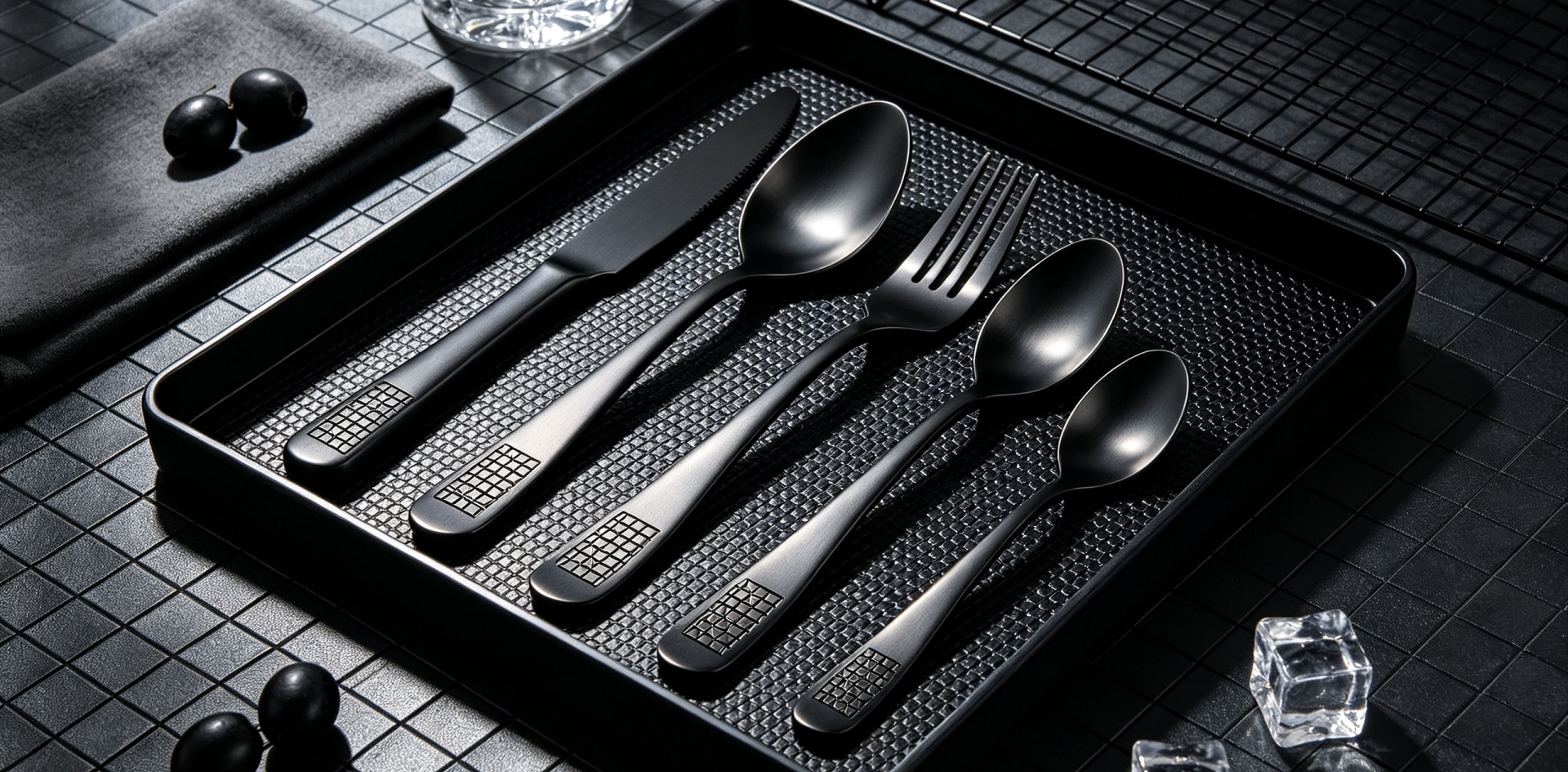
How to Grade and Recover Returned Stainless Steel Cutlery Products

How to Grade and Recover Returned Stainless Steel Cutlery Products
Returns are an important part of managing stainless steel cutlery across wholesale, retail, and distribution channels. A returned spoon, fork, or knife does not always need to be discarded. Some products may be suitable for resale after inspection, while others require repackaging, rework, or disposal. The right decision depends on the product's condition, the reason for return, applicable customer requirements, and the cost of recovery.
For B2B importers and distributors, a clear return-grading process helps protect product quality, control inventory losses, and provide more consistent information to manufacturing partners. It also helps distinguish isolated handling damage from issues that may require corrective action at the factory.
Why Returned Cutlery Needs a Structured Assessment
Stainless steel cutlery can be returned for different reasons. A retailer may report damaged packaging, a distributor may identify scratches during warehouse handling, or an end customer may receive an item that differs from the approved specification. These situations should not automatically receive the same treatment.
A product with an undamaged surface and only a crushed outer carton presents a different recovery opportunity from a fork with a bent tine or a knife with a damaged edge. Likewise, a cosmetic concern may be acceptable under one customer's agreed specification but unacceptable for another premium retail collection.
A structured assessment makes the decision traceable. It also prevents usable products from being unnecessarily scrapped and stops defective items from being returned to saleable stock.
Establish Practical Return Grades
A simple grading system can help warehouse teams make consistent decisions. Buyers should define the criteria with their own quality team and supplier before applying the system to commercial inventory.
Grade A: Suitable for resale
Products meet the approved specification, show no unacceptable damage, and retain the required packaging and labeling. If the return was caused by a delivery error or a change in customer demand, the item may be returned to available inventory after the required checks.
Grade B: Resale after repackaging
The cutlery itself remains acceptable, but the retail box, sleeve, insert, or shipping carton is damaged. Depending on the sales channel, the products may be repacked using approved materials and checked for correct labeling, barcode, and set composition.
Grade C: Requires technical review or rework
Products show issues that may be correctable, such as removable contamination, a packaging assembly error, or a finish concern that can be assessed under an approved rework procedure. Rework should only proceed when it is technically appropriate and authorized by the relevant quality team.
Grade D: Not suitable for resale
Products with unacceptable structural damage, sharp-edge defects, serious corrosion, unapproved material or specification deviations, or other safety and quality concerns should be segregated. They should not be mixed with saleable inventory while a final disposition decision is pending.
The grading labels are an example, not a universal industry standard. Each buyer and supplier should define what each grade means for the particular product and market.
Identify the Root Cause Before Choosing a Recovery Option
The visible condition of a returned item does not always reveal why it was returned. A scratched spoon may have been damaged during factory polishing, packing, international transit, warehouse handling, or customer use. The correct response depends on the evidence.
Record the return reason, SKU, production lot when available, quantity affected, photographs, packaging condition, and inspection findings. Compare the returned products with the approved sample and original order requirements. If multiple units show the same issue, review whether the problem is linked to a specific lot, packaging method, or handling stage.
For example, repeated scratches on products from one shipment may justify checking internal separators and movement inside the retail box. If the same finish defect appears across different shipments, the buyer may need a broader manufacturing review.
This information allows the supplier and distributor to focus corrective action on the source of the problem rather than simply processing each return as an isolated event.
Choose the Most Suitable Recovery Route
After inspection, each returned batch should receive a documented disposition decision.
-
Restock: Return products to available inventory when they meet the agreed resale criteria.
-
Repackage: Replace damaged packaging when the product itself remains acceptable and replacement packaging is approved.
-
Rework: Use an authorized process for correctable issues, followed by the necessary inspection.
-
Return to supplier: Arrange a supplier review when evidence indicates a potential manufacturing or specification problem and the commercial agreement supports this route.
-
Recycle or dispose: Use an appropriate process for products that cannot be safely or economically recovered.
Recovery decisions should consider labor, replacement packaging, transport, inspection, and handling costs. Reworking a low-value item may cost more than replacing it, while a premium stainless steel flatware set may justify a more detailed evaluation. Any rework affecting food-contact surfaces, edges, structural integrity, or product conformity requires particular care and suitable verification.
Protect Product Identity and Traceability
Returned products should remain identifiable throughout inspection and recovery. Keep them separated from approved stock until their status is confirmed. Use clear labels or inventory-system codes to record whether each batch is awaiting inspection, approved for resale, under rework, or rejected.
Where lot or batch information is available, retain it with the return record. This is especially useful for wholesale customers managing several stainless steel spoon, fork, and knife designs, or for private-label collections where similar-looking items may have different specifications.
Packaging and labeling should also be checked before restocking. A complete set must contain the correct pieces, quantities, inserts, and branded materials. A product that passes a physical inspection can still be unsuitable for sale if the box contains the wrong combination of items or carries incorrect product information.
How Homefelt Can Support Better Return Prevention
Homefelt works with B2B buyers on stainless steel cutlery projects involving product specifications, OEM and ODM customization, packaging coordination, and bulk production. Clear requirements at the start of a project help buyers and the factory establish consistent expectations for appearance, dimensions, finish, packaging, and inspection.
For a new collection, buyers can reduce return risks by approving production samples, confirming packaging details, and agreeing on inspection criteria before mass production. If a return issue occurs, photographs, SKU information, lot details, and a clear description of the defect help the factory evaluate the case more efficiently.
The objective is not only to recover individual products. It is also to identify recurring causes and improve future orders through better specifications, packaging, handling, and communication.
Measure Recovery Performance
A return process becomes more useful when performance is reviewed regularly. B2B distributors can track the percentage of returned products approved for resale, repackaging costs, rework costs, write-off value, and the most common reasons for return. These measures help reveal whether losses are mainly caused by transit damage, customer selection, packaging issues, or product quality.
Review the results by SKU, customer, sales channel, and supplier where the available data allows. A high recovery rate is not automatically a sign of success if products are being returned to stock without sufficient checks. Product conformity and customer safety must remain the priority.
A consistent grading and recovery process gives distributors a clearer view of the true cost of returns and provides manufacturers with practical evidence for preventing repeat problems.
Discuss Your Stainless Steel Cutlery Project With Homefelt
For wholesale, OEM, ODM, and private-label stainless steel cutlery orders, it is helpful to define product requirements and packaging standards before confirming the purchase order. Homefelt can coordinate with buyers on product design, packaging details, and transportation arrangements according to project requirements.
To discuss a new cutlery collection, review product specifications, or request a bulk quotation, email ingrid@homefelt.net. Include the product type, expected quantity, packaging format, and any known quality requirements so the team can understand your project more clearly.
You May Be Interested In
-
How to Calculate the Cost of Poor Quality in Stainless Steel Cutlery Orders
-
How to Test Stainless Steel Cutlery Packaging Before International Shipping
-
How to Manage Aging Inventory and Dead Stock in Stainless Steel Cutlery Distribution
-
How to Track Corrective Actions With Stainless Steel Cutlery Suppliers
How SKU Rationalization Improves Stainless Steel Cutlery Inventory Planning
How Production Changeover Costs Affect Stainless Steel Cutlery Bulk Orders
Related Article