Stainless Steel Cutlery Manufacturer | Choosing the Right Material for B2B Products
Stainless Steel Cutlery Manufacturer: How Material Selection Affects Custom Cutlery
When developing stainless steel cutlery for a B2B market, material selection is one of the fundamental decisions that should be made before production begins.
Spoons, forks, knives, and other flatware products may look similar from a distance, but their material specifications can influence corrosion resistance, appearance, durability, weight, manufacturing characteristics, and overall product positioning.
For wholesalers, retailers, distributors, hospitality suppliers, and private-label brands, choosing the right material is therefore not simply a technical decision. It is also a commercial decision that can influence the quality and positioning of the finished product.
An experienced Stainless Steel Cutlery Manufacturer can help buyers understand how different material requirements affect the product and determine a specification that matches the intended application.
Why Material Matters in Stainless Steel Cutlery
Stainless steel is widely used for cutlery because it combines durability with a clean appearance and suitability for repeated use.
However, stainless steel is available in different grades and specifications.
These differences can influence how the material performs during forming, polishing, everyday use, and long-term storage.
For a B2B buyer, the goal is not necessarily to select the most expensive material available. The goal is to select a material specification that provides an appropriate balance between product performance, appearance, application, and commercial requirements.
Understanding this balance can make product development more effective.
Common Stainless Steel Considerations
When discussing stainless steel cutlery with a manufacturer, buyers may encounter specifications such as 18/10, 18/0, and other stainless steel grades.
The numbers refer to the approximate chromium and nickel composition in certain commonly used stainless steel categories.
Chromium contributes to corrosion resistance, while nickel can contribute to corrosion resistance and the characteristics of the material's appearance and performance.
The exact material specification should always be confirmed with the manufacturer according to the requirements of the particular product.
For B2B purchasing, the important point is to avoid assuming that all stainless steel cutlery has identical material characteristics.
Material Selection Should Match the Product Positioning
A cutlery product designed for everyday retail use may have different requirements from a premium private-label collection.
Similarly, products intended for professional foodservice environments may prioritize different characteristics from decorative tableware designed primarily for retail presentation.
Before selecting the material, buyers should therefore consider:
Target customer
Intended application
Expected frequency of use
Product positioning
Required appearance
Expected service life
Budget
Production requirements
This creates a more practical basis for material selection.
Material and Product Appearance
Material characteristics can also influence the final appearance of stainless steel cutlery.
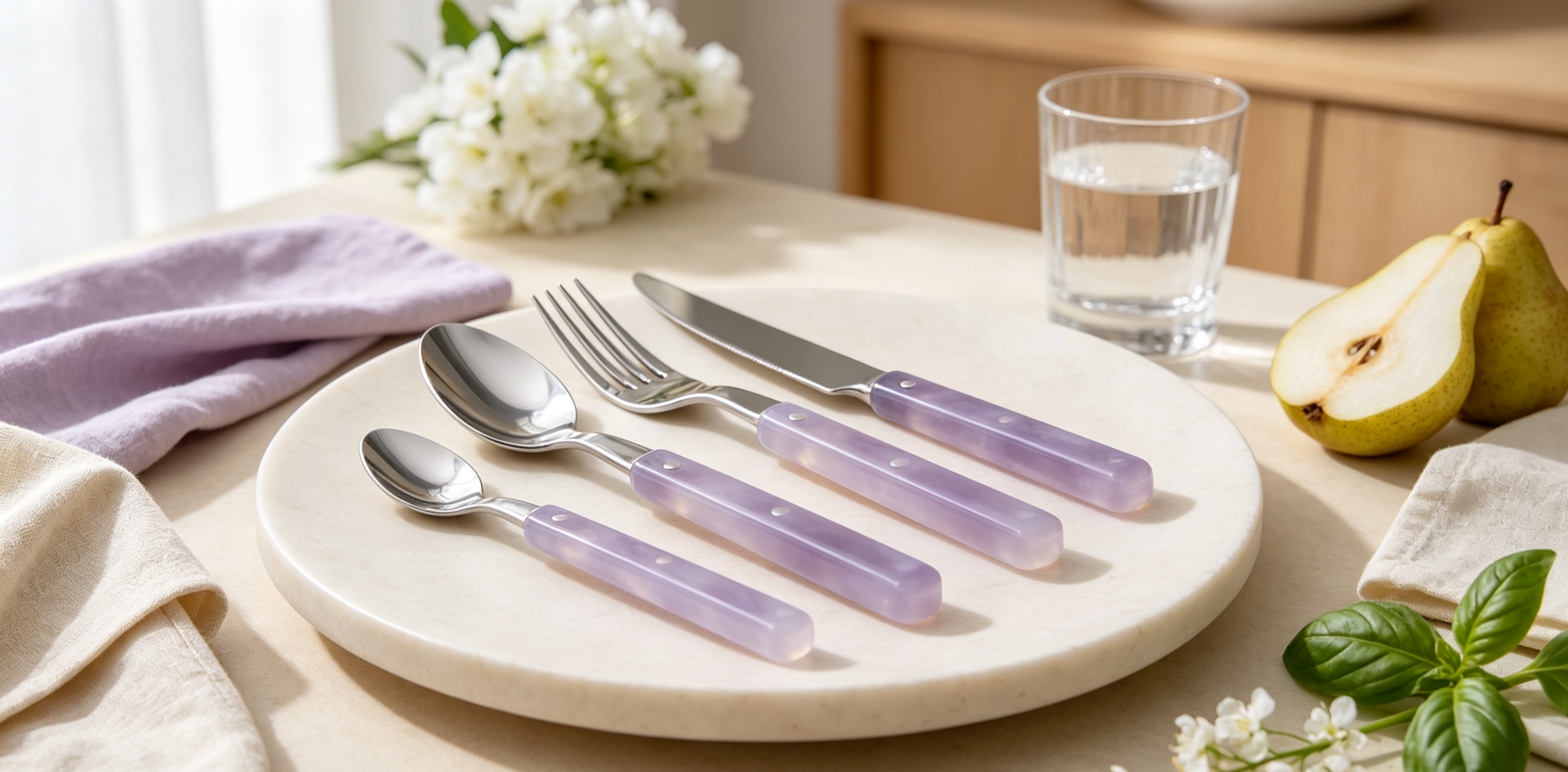
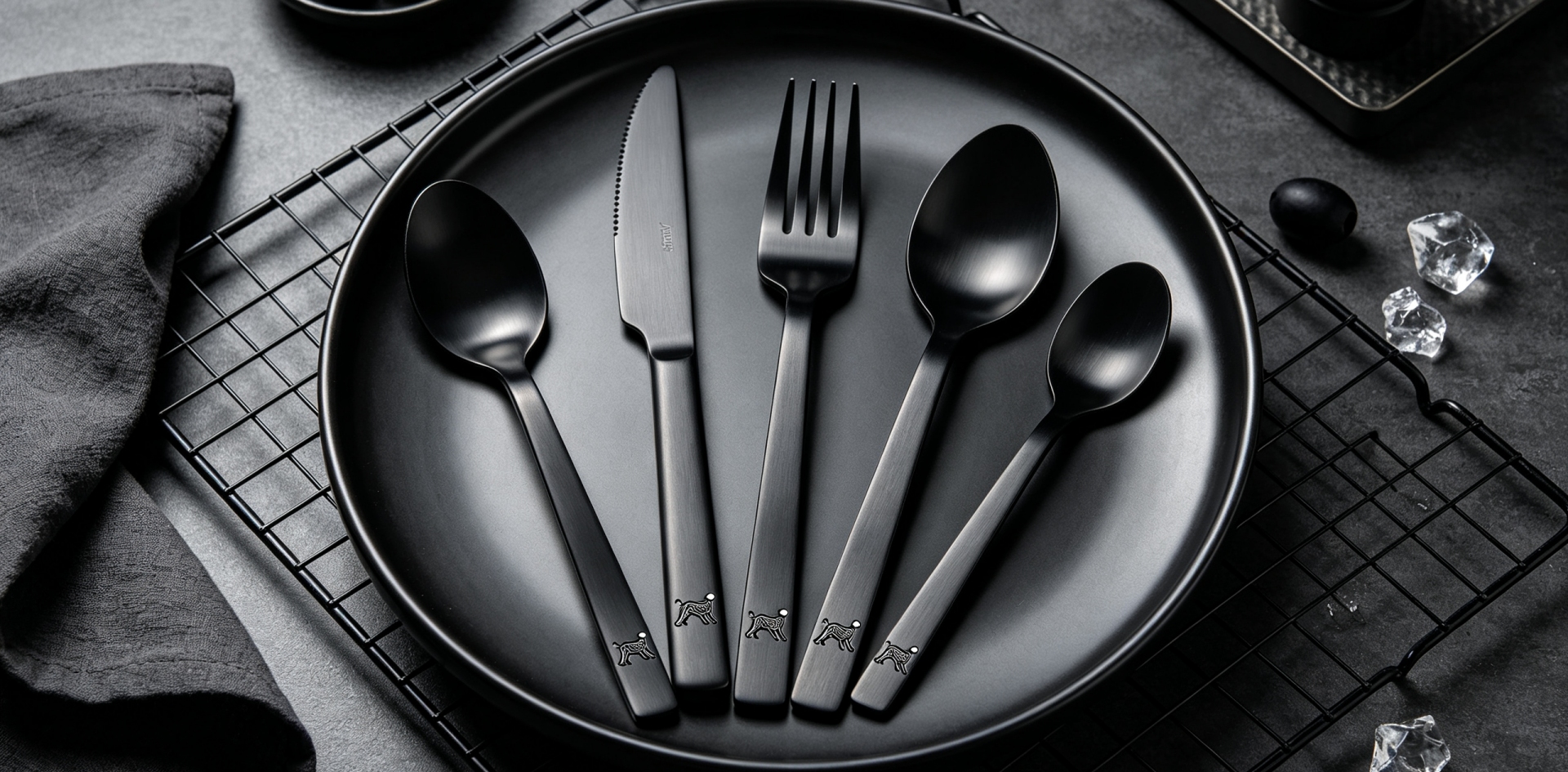
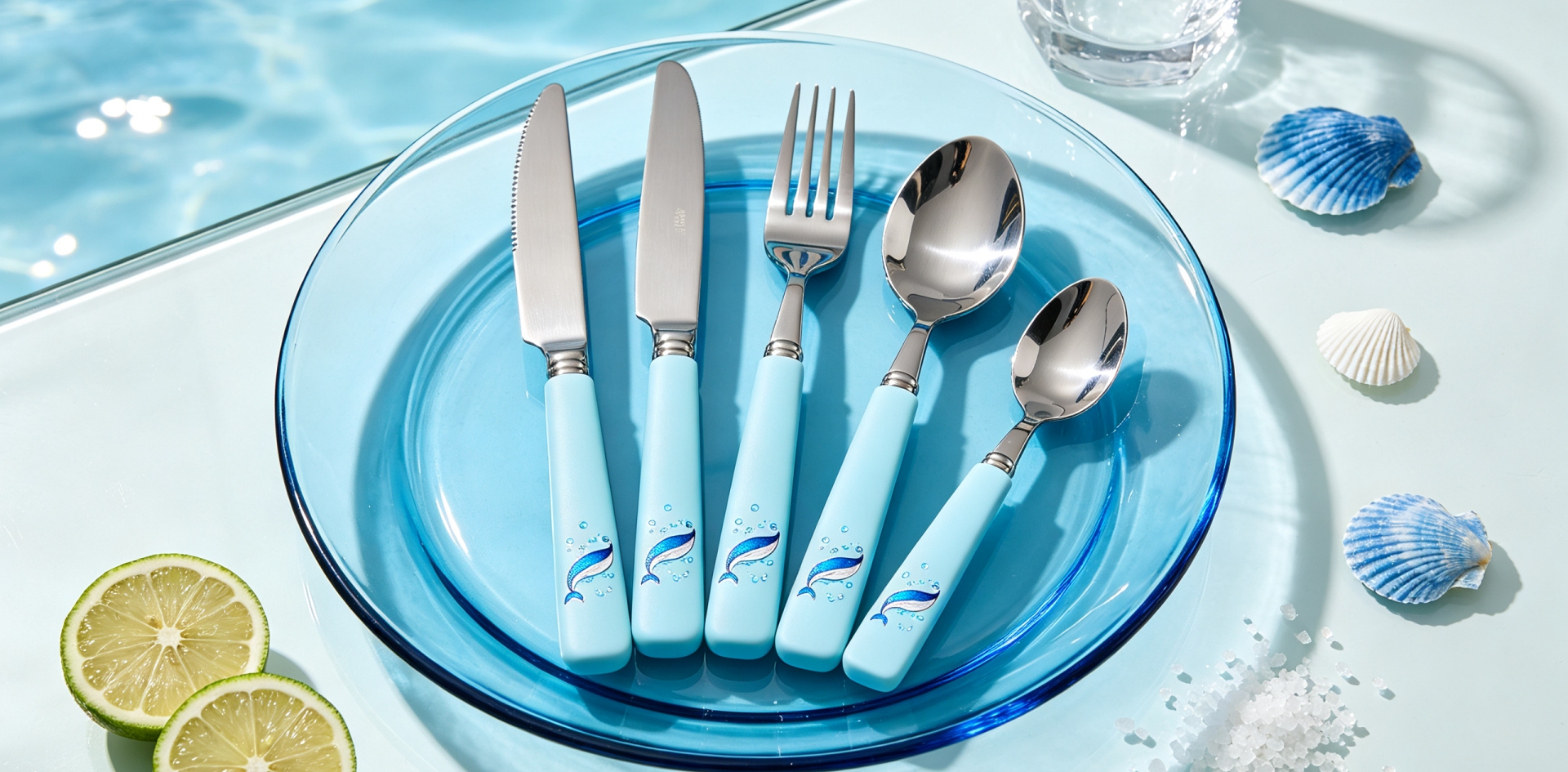
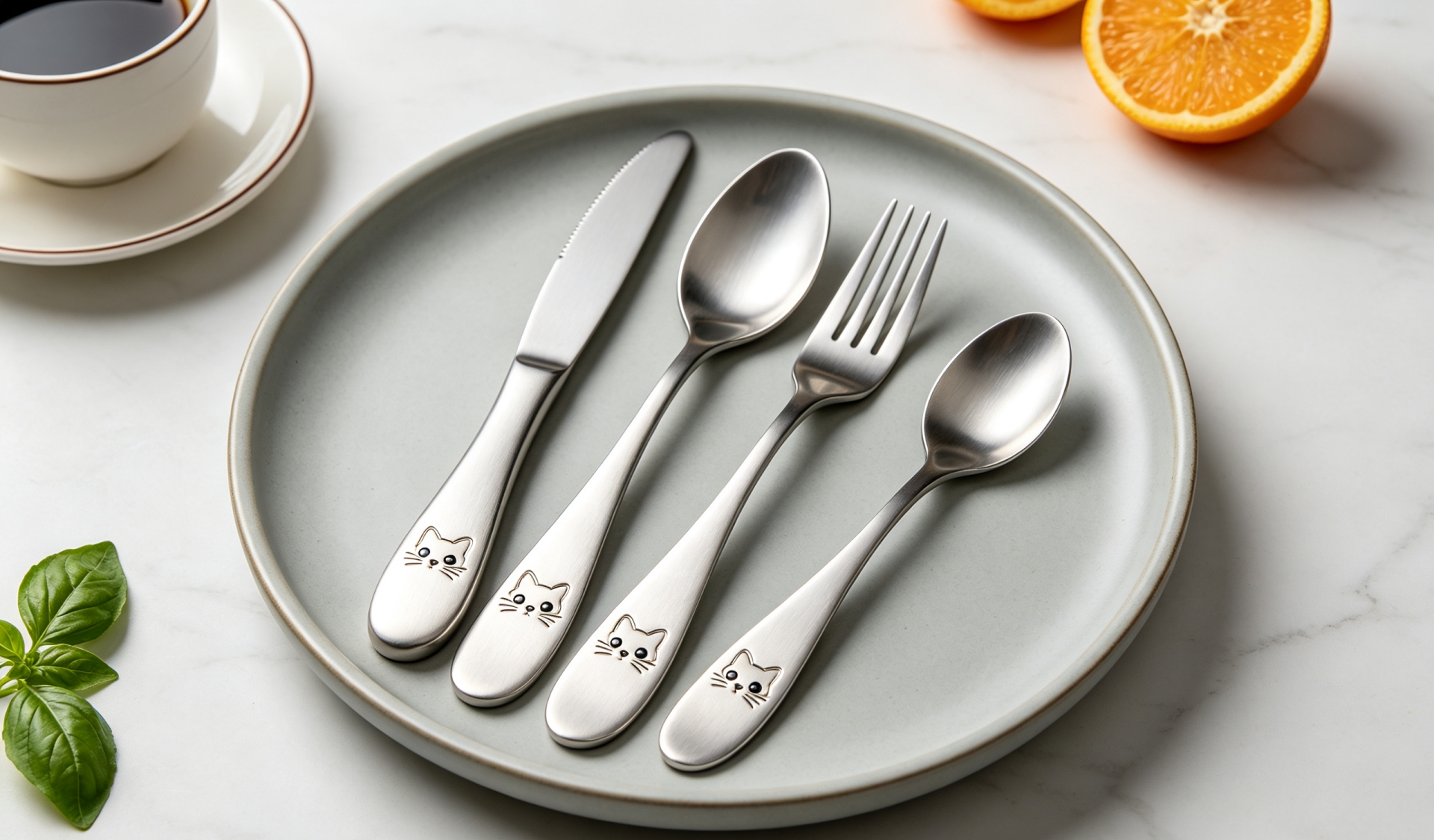
The surface can be polished, brushed, matte, or treated with other decorative processes, but the underlying material remains an important part of the product specification.
For a brand developing a premium collection, the material should support the desired visual and tactile impression.
The relationship between material, thickness, product shape, and surface treatment can determine how the finished cutlery looks and feels.
A professional Custom Flatware Manufacturer can evaluate these factors together rather than considering material as an isolated specification.
Material and Product Weight
The amount of stainless steel used in a product has a direct relationship with its weight.
However, weight is not determined by material grade alone.
Product dimensions, thickness, handle construction, and overall design also influence the final weight.
For this reason, buyers should avoid using weight alone to judge material quality.
Instead, weight should be considered together with material specification and product construction.
This is particularly important for brands developing a particular user experience or product positioning.
Material and Durability
Durability is an important consideration for professional and everyday cutlery.
Products may be exposed to repeated washing, handling, storage, and transportation.
The intended application should therefore be considered when selecting the material and overall product construction.
A cutlery product used regularly in a commercial environment may require a specification that is appropriate for frequent use.
A retail product may place greater emphasis on the balance between appearance, durability, and commercial positioning.
The Stainless Steel Cutlery Manufacturer can help connect the material choice with the actual use case.
Material and Corrosion Resistance
One of the main reasons stainless steel is widely used for cutlery is its resistance to corrosion compared with many other metals.
However, corrosion resistance is not an absolute guarantee against every environmental condition.
Product care, exposure to chemicals, washing conditions, storage, and material composition can all influence performance.
For B2B buyers, the intended use environment should therefore be communicated to the manufacturer.
This is particularly relevant when products are intended for intensive commercial use or particular distribution markets.
Material and Manufacturing Requirements
Material selection also affects manufacturing.
Different stainless steel materials can have different characteristics during cutting, forming, stamping, polishing, and other production processes.
For customized cutlery, the material should be considered together with the product design.
A complex handle shape or particular structure may require specific manufacturing considerations.
An experienced manufacturer can review the proposed design and material specification together before production.
This can help identify potential issues earlier in the development process.
Why Buyers Should Confirm Material Before Quotation
Material should ideally be confirmed before comparing supplier quotations.
If two factories quote different material specifications, their prices may not be directly comparable.
A lower Stainless Steel Cutlery Price may result from a different material, thickness, finish, packaging configuration, or product specification.
For this reason, B2B buyers should provide the manufacturer with a clear material requirement when requesting a quotation.
If the material has not yet been decided, the buyer can instead ask the factory to provide suitable options for comparison.
This creates a more transparent purchasing process.
Material Selection for Private-Label Cutlery
Private-label brands often need to communicate a clear product proposition to customers.
Material can become part of that proposition.
For example, a brand may position its flatware as practical everyday tableware, premium dining products, or durable products for frequent use.
The material specification should support the claims and expectations associated with that positioning.
It should also be consistent across products that are presented as one collection.
A Stainless Steel Flatware Material specification that works well for one product should be evaluated before being applied across an entire range.
Material Consistency Across a Collection
When a brand develops multiple pieces, consistent material specifications can simplify purchasing and quality management.
A collection containing spoons, forks, knives, teaspoons, and serving pieces can be manufactured according to clearly defined material requirements.
This helps create a more consistent product range.
However, each product should still be evaluated according to its own manufacturing requirements.
A knife, for example, has different structural characteristics from a spoon or fork.
The manufacturer should therefore confirm that the selected material and product construction are appropriate for each individual SKU.
Do Not Select Material Based Only on Price
One of the most common mistakes in B2B purchasing is treating material as a simple cost comparison.
A cheaper material specification may reduce the initial unit price, but the buyer should consider whether it provides the performance and appearance expected by the target market.
At the same time, choosing a higher-cost specification without a clear commercial reason may unnecessarily increase the product cost.
The better approach is to establish the product requirements first and then select the material that fits those requirements.
This allows the buyer to balance quality and commercial objectives.
Discuss Material With the Manufacturer
An experienced Stainless Steel Tableware Supplier can provide useful feedback during product development.
For example, the buyer may specify a desired appearance and target price while the manufacturer evaluates suitable material options.
The factory can also explain how the chosen material may interact with product thickness, forming, polishing, and other manufacturing processes.
This type of discussion can be particularly useful when developing a new product rather than purchasing an existing standard design.
Material Specifications Should Be Documented
Once the material has been selected, the specification should be clearly documented.
The information can become part of the product specification used for sampling and mass production.
Clear documentation helps prevent confusion during repeat orders and makes it easier to maintain the same product standard over time.
For B2B buyers managing several SKUs, documenting material specifications can also simplify communication with purchasing teams and suppliers.
This becomes increasingly important as a product range expands.
Material Selection and Long-Term Supply
A custom cutlery product may remain in a company's product portfolio for years.
The material specification should therefore be considered from a long-term supply perspective.
If a buyer expects regular repeat orders, the manufacturer should understand the approved material requirements and maintain them for future production.
When new products are added to the collection, the same material strategy can be evaluated for compatibility.
This creates a more organized approach to long-term product management.
Material Is Only One Part of Product Quality
Although material is important, it should not be considered the only indicator of cutlery quality.
Product design, thickness, forming accuracy, polishing, finishing, branding, quality control, packaging, and production consistency can all affect the final result.
A high-quality material cannot compensate for poor manufacturing.
Likewise, an appropriately selected material combined with professional manufacturing processes can create a product that meets the requirements of its target market.
This is why B2B buyers should evaluate the complete manufacturing solution rather than focusing on one specification.
How Homefelt Supports Custom Cutlery Projects
Homefelt Houseware Co., Limited has more than 40 years of experience in stainless steel cutlery manufacturing and supports B2B customers with stainless steel spoons, forks, knives, flatware sets, OEM, ODM, and private-label projects.
For customized products, buyers can discuss material requirements together with dimensions, design, finish, branding, packaging, and expected order quantities.
The manufacturing team can evaluate the requirements and help determine a suitable product specification before production.
This approach allows material selection to become part of the overall product development process rather than an isolated purchasing decision.
Making a Practical Material Decision
Choosing the right stainless steel material does not have to be complicated.
B2B buyers should first identify the intended application and product positioning. They can then discuss suitable material specifications with the manufacturer and consider how the material interacts with product design, thickness, finish, durability, and cost.
Once the specification is confirmed, it can be documented for sampling and future production.
For companies developing custom stainless steel cutlery, this process provides a clearer foundation for manufacturing and helps ensure that the finished product matches the expectations of the target market.
A professional Stainless Steel Cutlery Manufacturer can contribute valuable manufacturing experience throughout this process, helping buyers turn a material requirement into a practical, repeatable, and commercially suitable cutlery product.
Request Custom Stainless Steel Cutlery Based on Your Material Requirements
Discuss Stainless Steel Material Options With Our Cutlery Factory
Request a Quote for Custom Stainless Steel Flatware
Send Your Product Requirements for Professional Material Evaluation
Start Your OEM Stainless Steel Cutlery Project With Our Manufacturer
Request Custom Spoons, Forks and Knives for Your B2B Product Range
Discuss Private Label Stainless Steel Cutlery With Our Factory
Send Your Cutlery Specifications for a Manufacturing Assessment
Request B2B Pricing for Custom Stainless Steel Tableware
Contact Our Stainless Steel Cutlery Manufacturer for Your Next Project
Related Article