
Stainless Steel Cutlery RFQ: How B2B Buyers Can Get a More Accurate Quotation
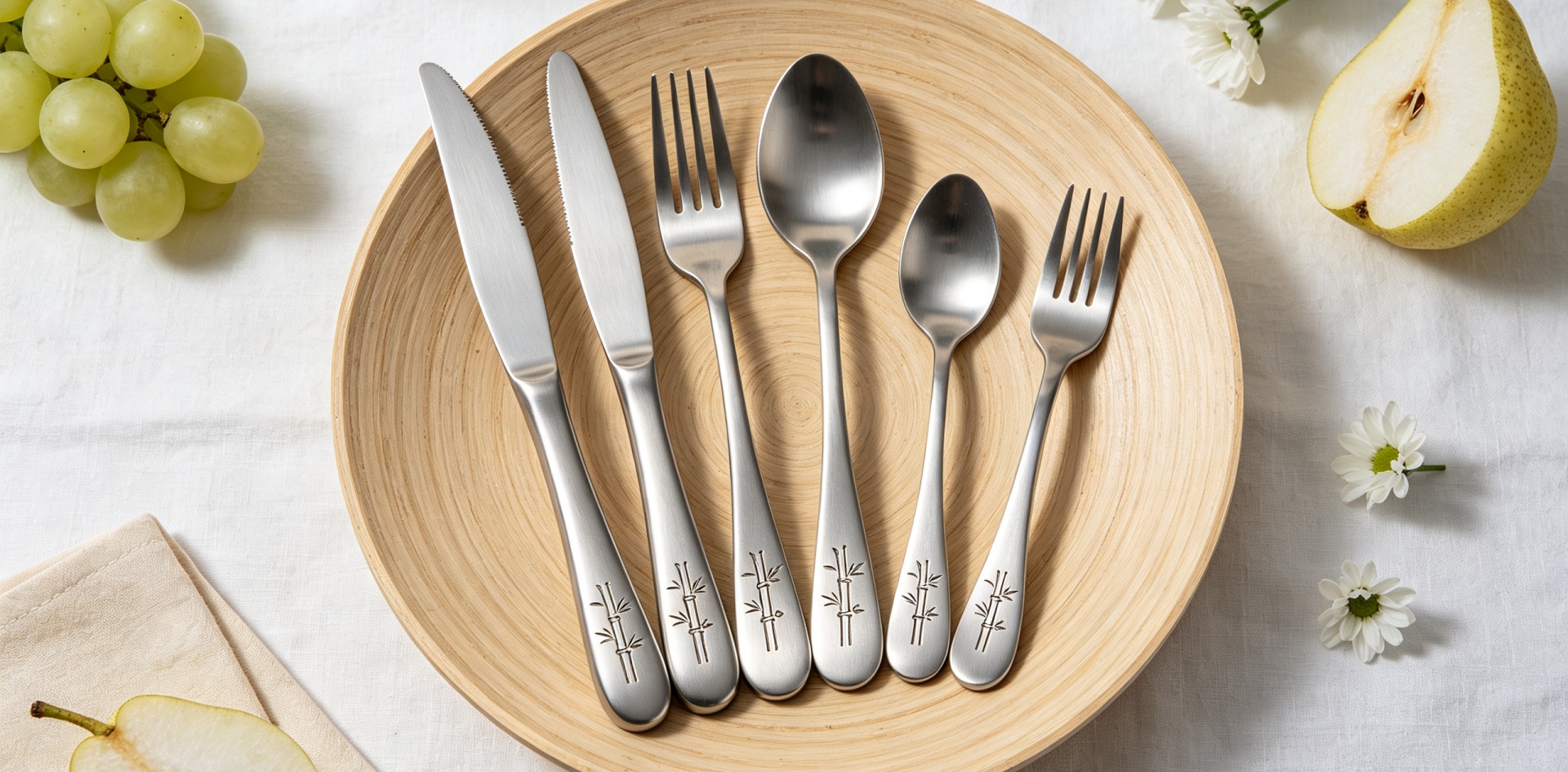
Stainless Steel Cutlery RFQ: How B2B Buyers Can Get a More Accurate Quotation
For a B2B buyer sourcing stainless steel cutlery, the first quotation is often the starting point of a much larger business discussion.
A buyer may need several thousand knives, forks and spoons for a retail program, restaurant supply business, distribution network or private label collection. In these situations, the quotation needs to reflect the actual product requirements rather than simply provide a general unit price.
A clear RFQ can make that process much easier.
By giving a stainless steel cutlery manufacturer the right information from the beginning, buyers can receive a more relevant quotation, discuss customization more efficiently and move faster toward samples and bulk production.
What Is an RFQ for Stainless Steel Cutlery?
An RFQ, or Request for Quotation, is a purchasing request that tells a supplier what products and commercial requirements the buyer is considering.
For stainless steel cutlery, an RFQ may cover knives, forks, spoons, cutlery sets or a combination of different SKUs.
It can also include information about material, finish, dimensions, packaging, branding and estimated quantity.
For standard products, the information may be relatively simple. For OEM, ODM and private label projects, a more detailed RFQ gives the manufacturer a much clearer picture of what the buyer actually needs.
The goal is not to create complicated paperwork.
The goal is to give the supplier enough information to prepare a quotation that can realistically support the buyer's purchasing decision.
Start With the Product You Need
The first part of an RFQ should clearly identify the products.
Instead of simply asking for a price for “stainless steel flatware,” a B2B buyer can specify the required items.
For example, the project may include table knives, dinner forks, table spoons and teaspoons. If several designs are required, each SKU can be listed separately.
For custom products, a photograph, drawing or existing sample can be included as a reference.
This helps the manufacturer understand whether the buyer is looking for standard catalog products or a customized manufacturing solution.
Clear product information is especially important when requesting prices for a large order.
Specify the Material Requirements
Stainless steel cutlery can be manufactured according to different material specifications.
If the buyer already has a required stainless steel grade, it should be included in the RFQ.
If the buyer does not have a fixed material specification, this can also be discussed with the manufacturer according to the intended product and market.
Providing the material requirement at the quotation stage helps avoid situations where two suppliers quote for products that are not actually comparable.
For private label and OEM projects, material requirements can also become part of the final product specification.
Include the Estimated Quantity
Quantity is one of the most important pieces of information in a B2B quotation request.
A buyer may be planning an initial order of 2,000 pieces, 10,000 pieces or a much larger production program. The supplier needs to understand the approximate volume in order to prepare the appropriate commercial offer.
If the buyer is considering several possible quantities, it can also be useful to request pricing based on different volume levels.
For example, a buyer may ask for an initial quotation based on a trial quantity and a larger quantity planned for the next stage.
This gives both sides a clearer basis for discussing the potential business relationship.
Explain Customization Requirements
If the project involves customization, the RFQ should make this clear.
Customization may include:
Custom product shape
Special handle design
Specific surface finish
Brand requirements
Custom cutlery sets
Customized packaging
OEM product development
Private label production
Not every detail needs to be finalized before the first quotation.
However, if the buyer already has a drawing, sample or reference image, providing it with the RFQ can significantly improve the discussion.
The manufacturer can then evaluate the product more specifically instead of estimating the project from a general description.
Why Reference Samples Can Help
For custom stainless steel cutlery, a reference sample can communicate details that are difficult to explain with words alone.
A physical sample can show the shape, proportions, handle style and overall appearance the buyer is looking for.
If sending a physical sample is not practical at the beginning, clear photographs and drawings can still provide useful information.
For an OEM cutlery manufacturer, these references can become the starting point for sample development.
Once the buyer receives a sample, the design can be reviewed and adjusted before the bulk order is confirmed.
Ask for a Complete B2B Quotation
A professional B2B quotation should help the buyer understand the commercial conditions of the proposed order.
Depending on the project, the buyer may want to confirm:
Product unit price
Minimum order quantity
Available customization
Sample cost
Production time
Packaging options
Payment terms
Shipping terms
Quotation validity
The exact commercial conditions will depend on the supplier and project.
For international buyers, it is useful to make sure that the quotation clearly explains what is included in the offered price.
This makes it easier to evaluate the complete purchasing cost rather than focusing only on the product unit price.
RFQ for OEM and Private Label Projects
An RFQ becomes even more important when the buyer is developing a private label cutlery collection.
The supplier may need to quote several different SKUs, customized products and packaging requirements at the same time.
In this situation, a simple message such as “Please quote your best price for custom cutlery” does not provide enough information for an accurate manufacturing discussion.
A stronger inquiry could include the product reference, estimated quantity, desired material, finish, branding requirements and packaging expectations.
This gives the manufacturer a practical foundation for evaluating the project.
It also shows that the buyer is discussing a genuine commercial program rather than simply checking a retail price.
From Quotation to Sample
A quotation is not necessarily the final step.
For a new custom product, the next stage may be sample development.
After reviewing the quotation, the buyer can confirm the products that should move forward and discuss sample requirements with the manufacturer.
The sample allows both sides to verify the product before committing to a larger order.
If changes are required, they can be discussed during development.
Once the sample and commercial conditions are approved, the project can move toward bulk production.
This creates a natural purchasing process:
RFQ → quotation → sample → approval → bulk order
For B2B buyers, this process can make a new product project easier to organize.
Turning an Inquiry Into a Real Order
The purpose of an effective RFQ is not simply to collect several prices.
For a serious buyer, the quotation should become part of the process of selecting a manufacturing solution and preparing an actual purchase.
This is why it is useful to communicate the project clearly.
If the buyer has a planned launch date, estimated annual demand or expected reorder program, sharing this information can also help the manufacturer understand the potential scale of the business.
For a factory, knowing that a buyer is developing a long-term product range can be very different from receiving a request for a single small shipment.
Building a Long-Term B2B Supply Relationship
Many stainless steel cutlery projects do not end with one order.
A distributor may reorder popular SKUs. A private label brand may expand its collection. A hospitality supplier may need regular replenishment.
For these businesses, the first RFQ can be the beginning of a longer supplier relationship.
Clear communication at the quotation stage can establish product specifications, pricing expectations and customization requirements that can later be used for repeat orders.
When additional products are introduced, the same manufacturer can also support the development of new SKUs within the existing product program.
Why Work Directly With a Cutlery Manufacturer?
For buyers planning customized or large-volume orders, communicating directly with a stainless steel cutlery manufacturer can make the product discussion more specific.
Instead of discussing only finished catalog products, the buyer can talk directly about design requirements, material, finishing, samples and production quantities.
This can be particularly useful for OEM and private label projects.
A specialized cutlery factory can work with businesses that need customized knives, forks, spoons and complete flatware sets for wholesale distribution and B2B sales.
The buyer can provide the product concept, and the manufacturer can evaluate the manufacturing requirements and prepare a quotation based on the project.
What Makes a Useful Cutlery Inquiry?
A strong inquiry does not need to be long.
It needs to be clear.
A buyer can start with the following information:
Product type
Reference image or drawing
Required material
Desired finish
Estimated quantity
Customization requirements
Brand or packaging requirements
Target market
Expected purchasing schedule
With this information, a manufacturer has a much better basis for responding.
If some details are not yet confirmed, the buyer can simply state that they are open to recommendations.
This keeps the discussion flexible while still giving the supplier enough information to begin.
Prepare Your Next Stainless Steel Cutlery Order
For B2B buyers, a well-prepared RFQ can save time on both sides.
It helps the manufacturer understand what needs to be produced and gives the buyer a more useful quotation to evaluate.
For standard wholesale cutlery, the process may be relatively straightforward. For custom OEM, ODM and private label projects, a clear RFQ can provide an important bridge between the initial idea and the final production order.
The most effective inquiry is one that makes it easy for the supplier to answer three basic questions: What does the customer need, how much does the customer need, and what level of customization is required?
Once those points are clear, the next steps become much easier to discuss.
If you are currently sourcing stainless steel cutlery for your business, you can send your product references, required SKUs, estimated quantity and customization requirements to a professional manufacturer. The supplier can review your requirements, prepare a B2B quotation and discuss sample development for the products you want to move forward with.
For buyers who already have a clear purchasing plan, this can be the first practical step toward confirming a sample and placing a bulk order.
Request a Stainless Steel Cutlery Quotation
Discuss Your OEM Flatware Project
Request a Private Label Cutlery Quote
Get a Wholesale Stainless Steel Cutlery Price
Edelstahlbesteck für B2B: Produktvarianten effizient entwickeln und fertigen
Stainless Steel Cutlery Stamping and Forming: A Key Detail in B2B Manufacturing
Related Article



