
Stainless Steel Cutlery Rounded Edge Design for B2B Collections
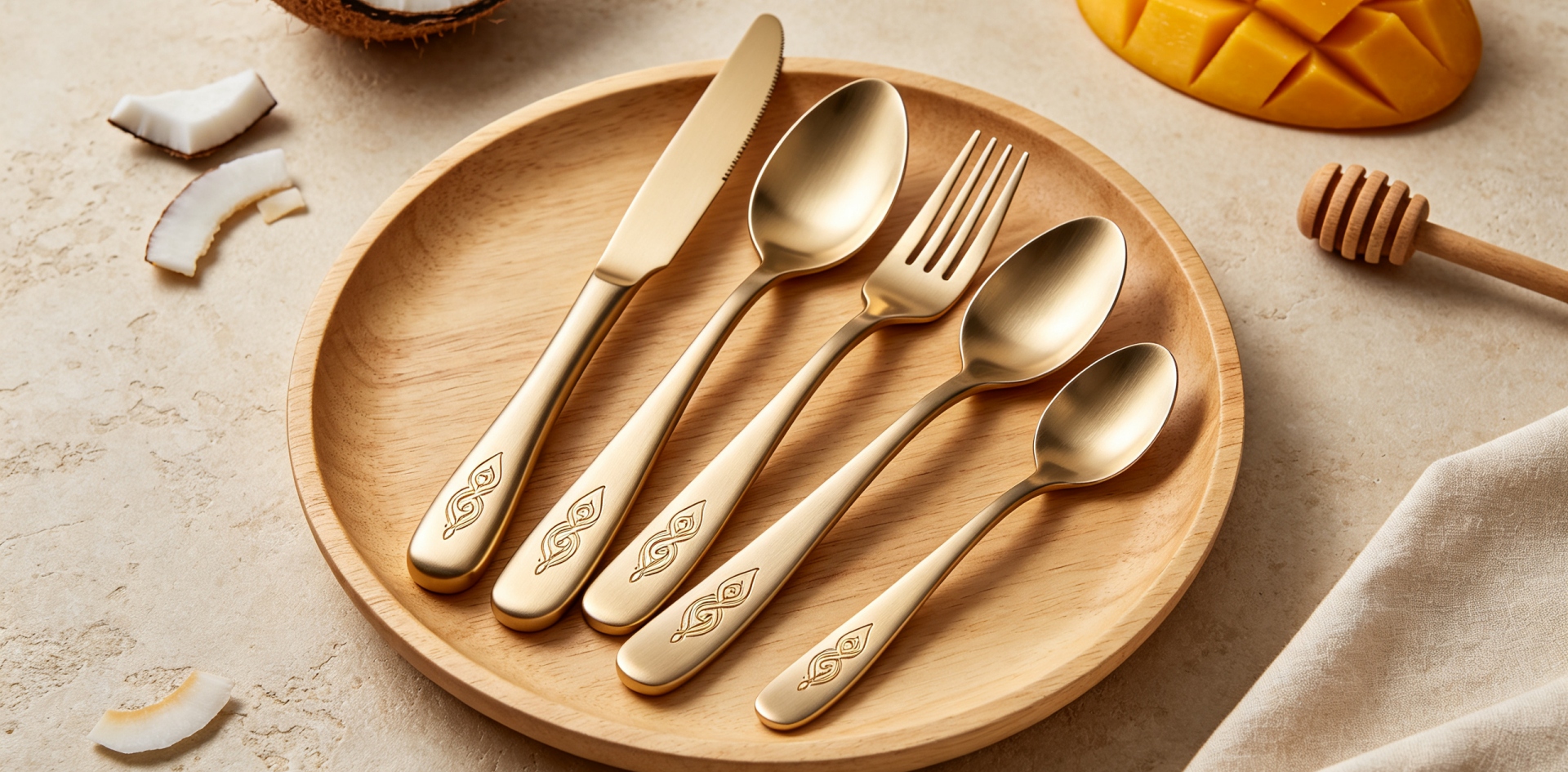
Stainless Steel Cutlery Rounded Edge Design for B2B Collections
Small contact details can make a noticeable difference in the overall experience of stainless steel cutlery. For spoons, forks and knives, the way edges, corners and transitions are formed can affect how the product feels in the hand and during normal use. For B2B buyers developing private label or OEM collections, these details are worth confirming during the product development stage.
A stainless steel cutlery product is not defined only by its material or overall shape. The smaller finishing details can also influence the consistency and usability of the finished collection. This is particularly important when the same product will be manufactured in large quantities.
Why Edge Details Matter in Stainless Steel Cutlery
Spoons, forks and knives contain many areas where the metal changes direction or meets another part of the product. These areas need to follow the intended design and should be consistent across the production batch.
For example, the transition around a spoon handle, the edges surrounding a fork structure or the corners of a knife handle can all contribute to the overall feel of the finished product.
A well-developed design considers these details before the product enters mass production. The objective is to make the finished cutlery comfortable and consistent while maintaining the appearance required by the customer.
For B2B projects, these details can also become part of the approved product reference.
Rounded Details on Stainless Steel Spoons
A spoon contains several areas that need careful attention during product development. The bowl, handle and connecting areas all contribute to the final appearance and user experience.
Rounded transitions can create a smoother visual relationship between different parts of the product. However, the exact treatment depends on the spoon design and the customer's requirements.
When developing a custom spoon, buyers can provide reference products or design drawings to communicate the desired appearance. The manufacturer can then evaluate how the design can be reproduced during production.
The physical sample is particularly useful because it allows the buyer to check the actual product rather than relying only on drawings.
Fork Tine and Edge Details
Forks have distinctive tine structures that require their own manufacturing considerations. The shape, spacing and finishing of the tines can influence the overall appearance of the product.
For a custom fork collection, these details should be confirmed before bulk production. The factory needs to understand the customer's expectations and establish a suitable production reference.
When several fork models are developed for the same collection, consistent design treatment can also help the products look related while maintaining different functions.
For distributors and private label brands, this can be useful when creating a complete stainless steel flatware range.
Knife Edge and Handle Transitions
Knives have different edge and handle requirements compared with spoons and forks. Depending on the product design, the blade and handle areas may require different manufacturing and finishing considerations.
For B2B customers, the knife should be evaluated as a complete product rather than looking only at the blade.
The handle transition, overall shape and finishing details should correspond with the approved design. When a custom knife is developed, the sample gives the buyer an opportunity to confirm these details before the factory starts large-volume production.
Sample Approval for Custom Cutlery
A product drawing can communicate dimensions and general design information, but a physical sample provides additional information that cannot always be understood from a drawing.
During sample approval, B2B buyers can examine the spoon, fork or knife in their hands and check the actual edge treatment, transitions and overall finishing.
If the product is intended for retail or hospitality use, the buyer can also evaluate how the cutlery feels when handled in a normal use environment.
Once the sample is approved, the factory can use it as an important reference for bulk production.
Keeping Edge Details Consistent During Mass Production
Large-volume stainless steel cutlery orders require consistency. Even when the basic design is simple, small variations can become visible when many pieces are placed together.
A stable production process and quality inspection system can help manufacturers identify products that do not meet the agreed requirements.
For B2B customers, this is especially important for private label collections. The buyer's customers may expect every piece within the same product line to have a consistent appearance and feel.
Clear product specifications and approved samples can therefore provide useful references for production and future reorders.
Edge Details in OEM and Private Label Projects
OEM and private label projects often involve more detailed product requirements than standard wholesale products.
A brand may have a specific concept for how its spoon, fork and knife should look and feel. Small details such as rounded transitions and edge treatment can become part of the product identity.
Homefelt factory can work with customers on customized stainless steel cutlery projects based on drawings, reference samples or product concepts. The team can discuss the manufacturing requirements before sampling and bulk production.
This allows customers to develop products according to their own requirements rather than selecting only from standard models.
Balancing Product Detail and Manufacturing Requirements
Custom product development involves balancing design expectations with practical manufacturing considerations.
A highly detailed design may require additional development work, while a simpler design may be easier to reproduce at large volume. The right solution depends on the customer's target market, quantity, product positioning and budget.
For this reason, it is useful for buyers to communicate their priorities at the beginning of the project.
An experienced manufacturer can then evaluate the design and discuss practical options before the final product specification is confirmed.
Quality Documentation for B2B Cutlery
For larger B2B projects, product samples are often supported by specifications and quality documentation.
Depending on the customer's market and purchasing requirements, the project may include product specifications, inspection records, certification documents or other supporting information.
Homefelt factory has experience serving brand customers and has passed BSCI, SEDEX 4P, BRC and ISO9001 audits, with FAMA and FSC certificates available for relevant requirements.
For buyers, discussing documentation requirements before production can make the purchasing process more organized and provide useful references for future orders.
Developing a Consistent Cutlery Collection
Rounded edges and contact details are only one part of a complete stainless steel cutlery design. When combined with the right spoon, fork and knife forms, they can contribute to a collection that feels consistent across multiple products.
For a brand developing its own flatware range, establishing these details during the first product development stage can make later product expansion easier.
Additional spoon, fork and knife models can then be developed with reference to the established product style and manufacturing requirements.
Homefelt Factory for Custom Stainless Steel Cutlery
Homefelt factory has 40 years of experience in the stainless steel cutlery business and supports OEM/ODM, private label, wholesale and bulk production for B2B customers.
The factory can work with customers on stainless steel spoons, forks and knives from product development and sampling through production, quality control, packaging and shipping arrangements.
Whether you already have a finished product drawing or only have an initial concept, you can discuss your requirements with the manufacturing team and develop a practical solution for your market.
Stainless Steel Cutlery Embossed Pattern Design for Custom B2B Collections
Custom Stainless Steel Cutlery Tooling for OEM B2B Projects
Related Article



