
Stainless Steel Cutlery Set Piece Count: A Practical Guide for B2B Buyers
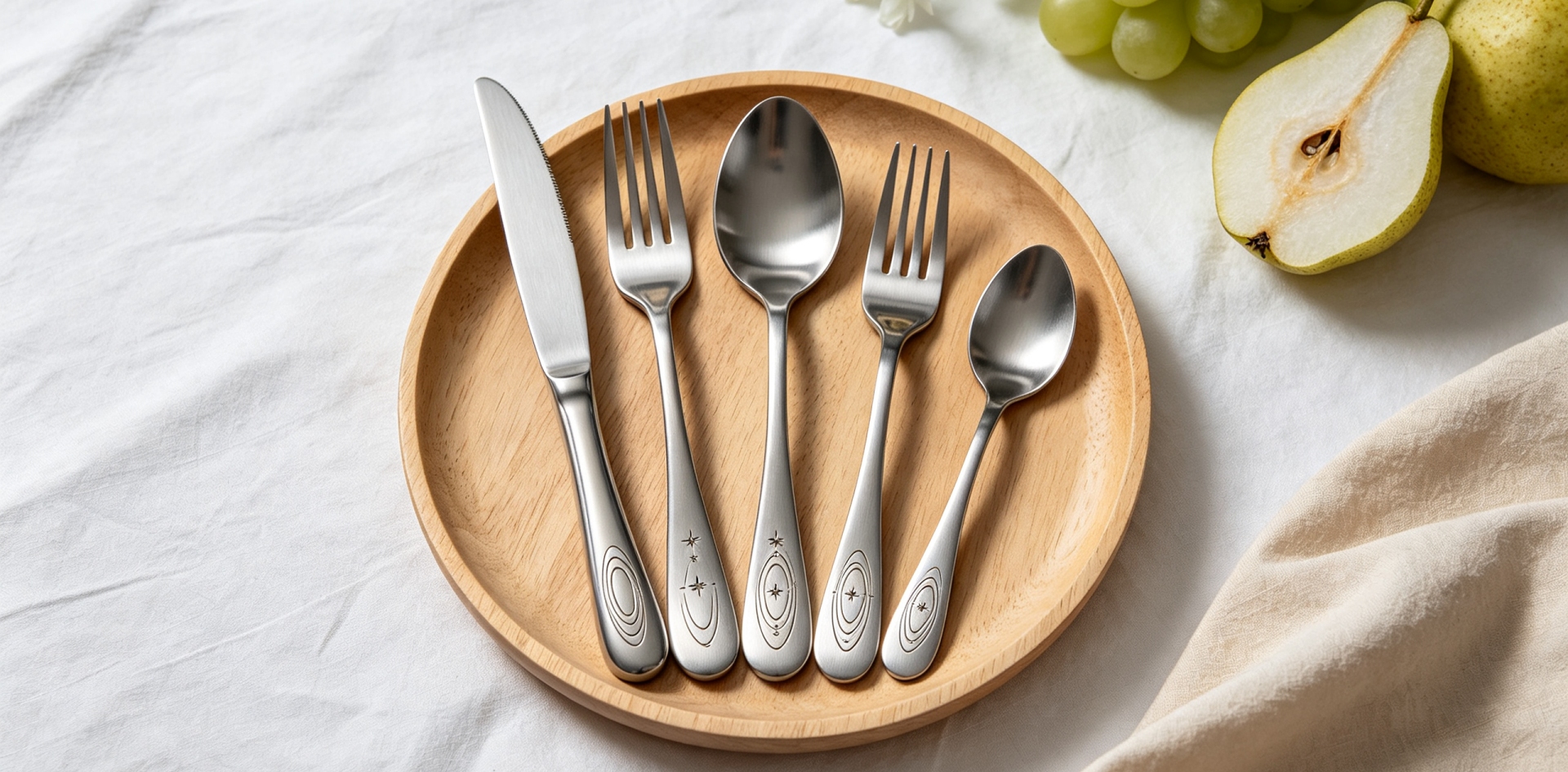
Stainless Steel Cutlery Set Piece Count: A Practical Guide for B2B Buyers
When a B2B buyer develops a stainless steel cutlery set, the first decisions often focus on the design of the knife, fork, and spoon. Another important commercial decision is how many pieces should be included in the finished set.
Piece count affects the product format, packaging requirements, SKU structure, quotation, and purchasing quantity.
For wholesalers, distributors, retailers, and private label brands, choosing the right set size is therefore part of product development rather than simply a packaging decision.
A well-planned piece count can help a stainless steel flatware set fit the intended sales channel while allowing the manufacturer to prepare an efficient production and packing solution.
Why Piece Count Matters in B2B Cutlery
A stainless steel cutlery set can be offered in several different configurations.
Some sets may contain only the basic knife, fork, and spoon combination. Others may include additional pieces or multiple place settings.
The number of pieces changes the commercial positioning of the set.
A smaller set may be suitable for a compact product offering, while a larger set may be developed as a more complete tableware solution.
For B2B buyers, the important question is not simply how many pieces can fit into one package.
The set should be developed according to the target market, sales channel, customer requirements, and purchasing strategy.
Piece Count and Product Positioning
The number of pieces can influence how a product is presented to the market.
A wholesaler may need several set sizes to serve different customer segments.
A private label brand may develop a basic set alongside a larger version for customers looking for a more complete flatware collection.
These can become separate commercial SKUs even when the individual stainless steel cutlery pieces share the same design.
This creates an opportunity for B2B buyers to build a broader product range without developing an entirely different cutlery design for every SKU.
Using a Common Cutlery Design Across Different Sets
One practical approach is to use the same approved knife, fork, and spoon design across several set configurations.
The individual pieces remain consistent while the number of pieces changes according to the commercial requirement.
For example, a brand may use one coordinated stainless steel flatware design as the foundation for multiple set formats.
This can simplify product development because the manufacturer is not creating a completely new utensil for every set.
Instead, the focus can remain on the approved products and how they are combined into different commercial packages.
This approach can be useful for wholesalers and private label brands that want to expand their assortment efficiently.
Piece Count and SKU Planning
Every additional set configuration can become a separate SKU.
This means B2B buyers should consider the number of set formats they actually need before finalizing the product program.
Too many variations can make purchasing, inventory management, packaging, and forecasting more complicated.
A more focused range can make it easier to manage stock and communicate with the supplier.
For an OEM project, the buyer can discuss the planned set configurations with the manufacturer at the beginning.
This allows the production and packaging requirements to be considered together.
Piece Count and Packaging Development
The number of pieces directly affects the package.
A larger set requires enough internal space to hold all the approved cutlery pieces while maintaining the intended presentation.
The packaging structure also needs to protect the stainless steel products during handling and transportation.
For private label projects, the buyer may already have a retail packaging concept.
The manufacturer can then review the relationship between the cutlery pieces and the package dimensions.
If the packaging is being developed at the same time as the set, the piece count should be confirmed early because changing the number of products later can affect the entire package structure.
Piece Count and Bulk Quotation
For B2B purchasing, the set configuration is an important part of the quotation.
The manufacturer needs to know exactly what constitutes one finished set before calculating the product and packaging requirements.
A quotation for a six-piece set is naturally different from a quotation for a larger set, even when the individual cutlery pieces use the same design.
The buyer should therefore confirm the exact set composition when requesting a commercial quotation.
This helps ensure that the price is based on the actual product being purchased.
OEM and ODM Set Development
OEM buyers may already have a defined set concept.
They can provide the required pieces, quantities, drawings, reference samples, and packaging requirements.
The manufacturer can then prepare the product specification and sample according to the requested configuration.
ODM customers may prefer to start from an existing cutlery design and develop a suitable set format for their market.
In both cases, the number of pieces can be adjusted according to the commercial objective.
The key is to confirm the final configuration before mass production.
Private Label Stainless Steel Cutlery Sets
Private label brands often need their set format to match their own product strategy.
The brand may want to create a recognizable range in which the individual knife, fork, and spoon designs remain consistent while different set sizes serve different purchasing needs.
This can make the product family easier to understand.
The same visual identity can appear across several SKUs, while the piece count differentiates the products.
For a growing brand, this can provide a practical way to expand a stainless steel flatware assortment.
Piece Count and Wholesale Purchasing
Wholesale buyers often need to balance product variety with purchasing efficiency.
A set with more pieces naturally requires more stainless steel products and may require a different package configuration.
The buyer should therefore consider the expected order quantity for each SKU.
If several set formats are planned, the factory can discuss production quantities and packaging requirements for each one.
This is particularly useful when the customer wants to order multiple SKUs in one bulk shipment.
Developing Sets for Different Sales Channels
Different sales channels may require different product formats.
A retail brand may prefer a fully packaged stainless steel cutlery set.
A distributor may need several set sizes for different customers.
A professional supply company may prefer to focus on individual knives, forks, and spoons rather than retail-oriented sets.
For B2B buyers, understanding the intended sales channel helps determine whether a particular set format makes commercial sense.
The manufacturer can then develop the production and packaging requirements around that decision.
Keeping the Individual Pieces Consistent
When several set formats use the same stainless steel cutlery design, consistency between the individual pieces becomes important.
The knife, fork, and spoon should match the approved design and specification.
The same material, finish, dimensions, and visual characteristics should be maintained according to the agreed product requirements.
This creates a stable foundation for multiple set SKUs.
For repeat orders, the approved individual products can continue to be used as the basis for different commercial combinations.
Piece Count and Future Product Expansion
A well-planned set program can also provide room for future expansion.
A brand may begin with one core stainless steel flatware set and later introduce additional configurations.
If the individual products are already standardized, new set combinations can potentially be developed without redesigning the entire collection.
This can make product line expansion more manageable.
For wholesalers, it also creates an opportunity to test different set formats while maintaining a consistent product identity.
Homefelt for Custom Stainless Steel Cutlery Sets
Homefelt specializes in stainless steel knives, forks, spoons, cutlery sets, and flatware for B2B customers.
With more than 40 years of experience in the stainless steel cutlery business, the factory supports OEM, ODM, private label, wholesale, and bulk manufacturing projects.
Customers can provide their preferred set configuration, individual cutlery requirements, packaging concept, target quantity, and other product specifications.
For a custom project, the factory can work with the buyer to develop the individual stainless steel pieces and the corresponding set format.
When several set SKUs are required, the configurations can be organized around an approved product range so that the collection remains consistent.
This approach is suitable for wholesalers, distributors, retailers, and private label brands looking to develop stainless steel flatware sets for larger commercial orders.
From Set Planning to Bulk Production
The piece count of a stainless steel cutlery set may look like a simple number, but it can influence several stages of a B2B project.
It affects the product SKU, package structure, quotation, purchasing quantity, inventory planning, and shipment organization.
For this reason, the set configuration should be confirmed before mass production begins.
Once the individual products, piece count, packaging, and quantities have been approved, the manufacturer has a clearer basis for production.
For B2B buyers, this creates a more organized path from product concept to quotation, sample approval, bulk order, and future replenishment.
If you are developing a custom stainless steel cutlery set for wholesale, OEM, ODM, or private label sales, you can send your preferred piece count, product requirements, or reference set to begin the quotation and development process.
Request a Custom Stainless Steel Cutlery Set Quotation
Develop an OEM Stainless Steel Flatware Set
Start a Private Label Cutlery Set Project
Request Wholesale Stainless Steel Flatware Set Pricing
Develop Custom Knife, Fork and Spoon Sets
B2B Stainless Steel Cutlery Supplier for Multi-Market Product Programs
Stainless Steel Cutlery Handle End Width: A Practical Detail for B2B Custom Designs
Related Article



