
Stainless Steel Cutlery Set Piece Weight Balance for OEM Production
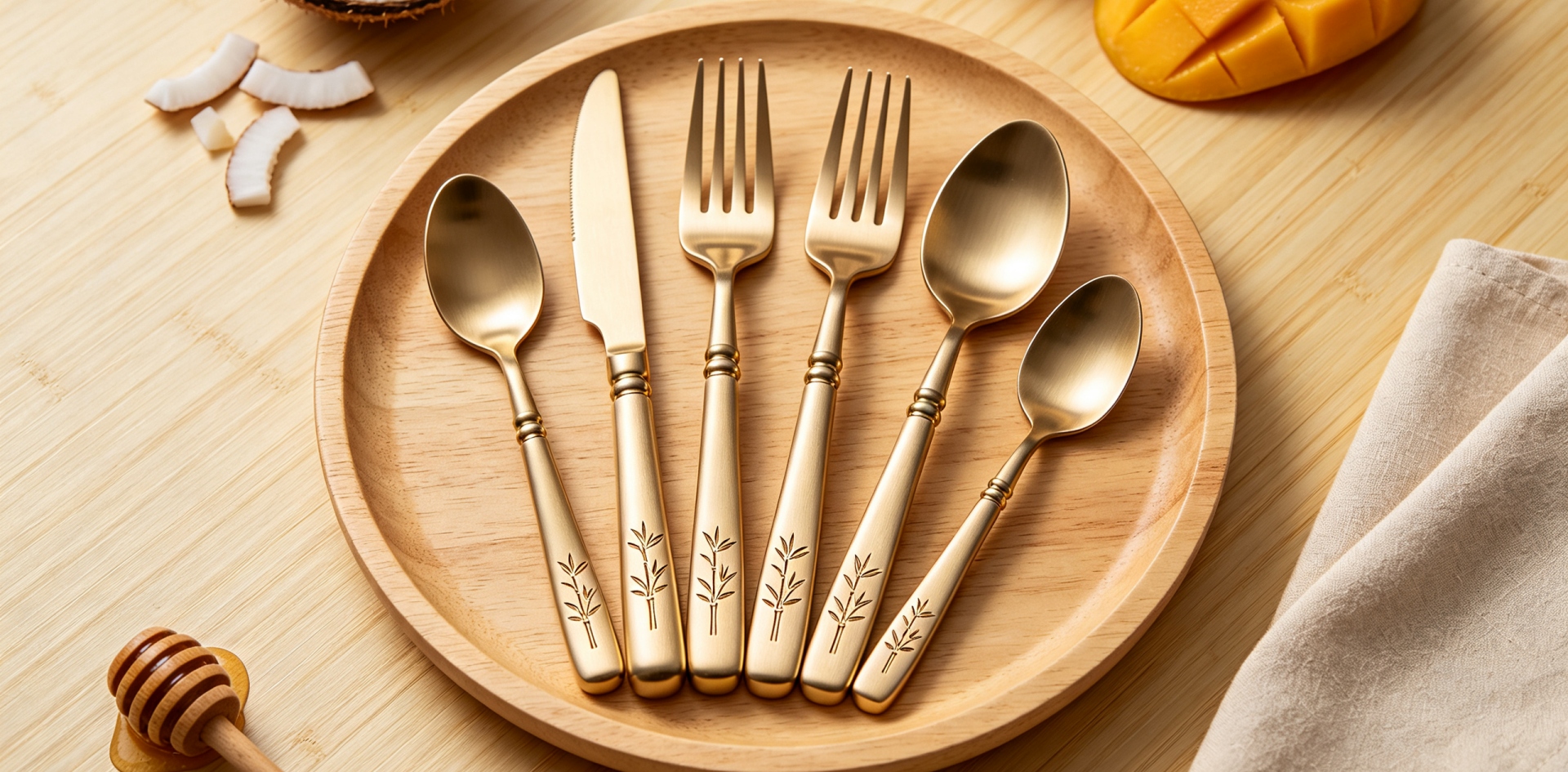
Stainless Steel Cutlery Set Piece Weight Balance for OEM Production
When buyers evaluate a stainless steel cutlery set, attention often goes first to design, material grade, surface finish and overall dimensions. However, the weight relationship between knives, forks and spoons also deserves consideration. A set can look coordinated while individual pieces feel noticeably different in the hand, particularly when customers compare matching items or use the products as part of a premium tableware collection.
For importers, wholesalers, retailers and hospitality suppliers, defining piece-weight expectations early helps align product development with the intended market. Homefelt factory supports custom stainless steel cutlery manufacturing, OEM and ODM projects, private label production and bulk orders, helping business customers translate product concepts into workable manufacturing specifications.
What Does Piece-Weight Balance Mean?
Piece-weight balance refers to the planned weight relationship among the different items in a cutlery collection. It does not mean that a knife, fork and spoon must weigh the same. Their shapes, dimensions, material distribution and functional structures are different, so natural weight differences are expected.
Instead, the goal is to establish an appropriate weight profile for each product while keeping the collection consistent with its design concept and intended use.
For example, a table knife may weigh more than a teaspoon because its blade and handle have different structural requirements. A serving spoon may be heavier than a standard dinner spoon because of its larger dimensions. The important question is whether the weight of each item matches the agreed specification and whether the complete set delivers the intended user experience.
Why Weight Relationships Matter to B2B Buyers
Creating a Consistent Product Experience
Customers often handle several pieces from the same set in succession. If one item feels unexpectedly light or heavy compared with the approved sample, they may perceive the collection as inconsistent even when the visible finish is similar.
Weight expectations are particularly relevant for premium retail collections, hotel tableware programs and branded flatware ranges. Buyers should evaluate the complete assortment rather than approving only one spoon or fork in isolation.
Matching the Target Market
Different sales channels may prefer different weight profiles. A value-oriented wholesale range may prioritize practical specifications and competitive pricing, while a premium retail collection may require a more substantial feel and carefully coordinated proportions.
Hospitality buyers may focus on durability, handling and the suitability of the cutlery for repeated daily use. Retail brands may pay closer attention to how weight supports the product's positioning and customer expectations.
These requirements should be discussed before tooling, sampling and bulk production begin, especially when a buyer is developing several price levels within one product portfolio.
Supporting More Reliable Cost Planning
Weight is also connected to material consumption. Changes to product dimensions, thickness or construction may affect the amount of stainless steel used and can influence production costs.
A request to make a handle heavier, for instance, should be reviewed alongside its cross-section, shape, material distribution and manufacturing method. Simply increasing material usage may not create the intended balance.
For OEM projects, the objective is to find a practical combination of product feel, construction, appearance and target cost rather than optimizing one factor independently.
How to Establish Weight Specifications
A useful product specification should define the target weight for each item instead of providing one general weight for the entire set.
The specification can include:
-
Product name and item code for each knife, fork and spoon.
-
Stainless steel grade and material thickness where applicable.
-
Overall length, width and other key dimensions.
-
Target unit weight and agreed acceptable tolerance.
-
Surface treatment and construction details that may influence the finished product.
-
Sampling and inspection methods used to verify weight.
-
Packaging configuration and the number of pieces included in each set.
The appropriate weight target depends on the design and market positioning. Buyers should not apply one universal weight requirement to every cutlery pattern because differences in dimensions and construction make direct comparisons unreliable.
For an established product, previous approved specifications and production records can provide a useful starting point. For a new collection, the factory can discuss the design requirements and prepare samples for evaluation.
Factors That Influence Finished Cutlery Weight
Material Thickness and Dimensions
Thickness and overall dimensions are important contributors to the finished weight. Two forks with similar external shapes may have different weights if their material thickness or detailed geometry differs.
When reviewing a quotation or sample, buyers should compare weight alongside the drawing and material specification. A weight difference should not automatically be treated as a defect until the relevant dimensions and construction have been checked.
Handle Geometry
Handle width, length, cross-section and decorative features can affect material distribution. A broad, solid-looking handle may have a different weight profile from a narrow handle with a tapered shape, even when both belong to the same collection.
For custom projects, buyers should communicate whether the design prioritizes a lightweight feel, a more substantial grip or a particular visual proportion. These preferences can guide sample development without relying on vague descriptions alone.
Knife Construction
Table knives may differ from forks and spoons in blade geometry and construction. Depending on the design, blade dimensions and the method used to join or form components can influence total weight.
For this reason, knife weight should be specified and assessed separately rather than estimated from the weight of the matching fork or spoon.
A Practical Example: Developing a Coordinated Retail Set
Imagine a distributor preparing a private label collection containing dinner knives, dinner forks, dinner spoons and teaspoons. The first sample set meets the visual design requirements, but the buyer finds that the dinner spoon feels heavier than expected while the teaspoon is lighter than the reference product.
A practical development process begins by recording the measured weight of each item and comparing it with the approved design specifications. The team then checks the relevant dimensions, thickness and handle geometry to identify the source of the difference.
If a revision is necessary, the factory can discuss which design parameters can be adjusted while preserving the appearance and functional requirements. Revised samples are weighed again and evaluated as a complete collection before approval.
This is an illustrative workflow. The specific adjustment depends on the actual product construction and the buyer's acceptance criteria.
Weight Inspection During Bulk Production
Unit weight can be checked using a suitable calibrated scale and an agreed sampling plan. Buyers and manufacturers should establish how many pieces will be checked, how samples will be selected and how results will be recorded.
Inspection records may identify the product code, measured weight, sample quantity and any deviations from the approved specification. If a discrepancy appears, the team can compare the affected items with the master sample and review the relevant production details before deciding on corrective action.
Weight inspection should be considered alongside other quality checks, including dimensions, surface finish, visible defects and construction. Weight alone cannot establish overall product quality, but it provides a useful objective measurement when the acceptance limits have been agreed in advance.
Working With Homefelt on OEM and Wholesale Projects
Homefelt factory supports stainless steel knife, fork and spoon customization for importers, distributors, retailers and hospitality suppliers. OEM and ODM services can help customers coordinate product design, material and dimensional specifications, private label requirements, packaging and transportation.
For business customers planning a new collection, it is useful to share the intended market, item assortment, target product feel, reference samples, estimated order volume and target price range. These details help the manufacturing team assess the project more effectively.
Homefelt has business credentials that include BSCI, SEDEX 4P, BRC and ISO 9001 audit or certification experience, as well as Disney audit experience. FAMA and FSC certificates are available for applicable projects. Customers should confirm the relevant documents and scope for their particular requirements.
You May Be Interested In
Stainless Steel Cutlery Design Detail Repeatability for OEM Production
Stainless Steel Cutlery Finish Boundary Definition for OEM Manufacturing
Related Article



