
Stainless Steel Cutlery Specification Management for B2B
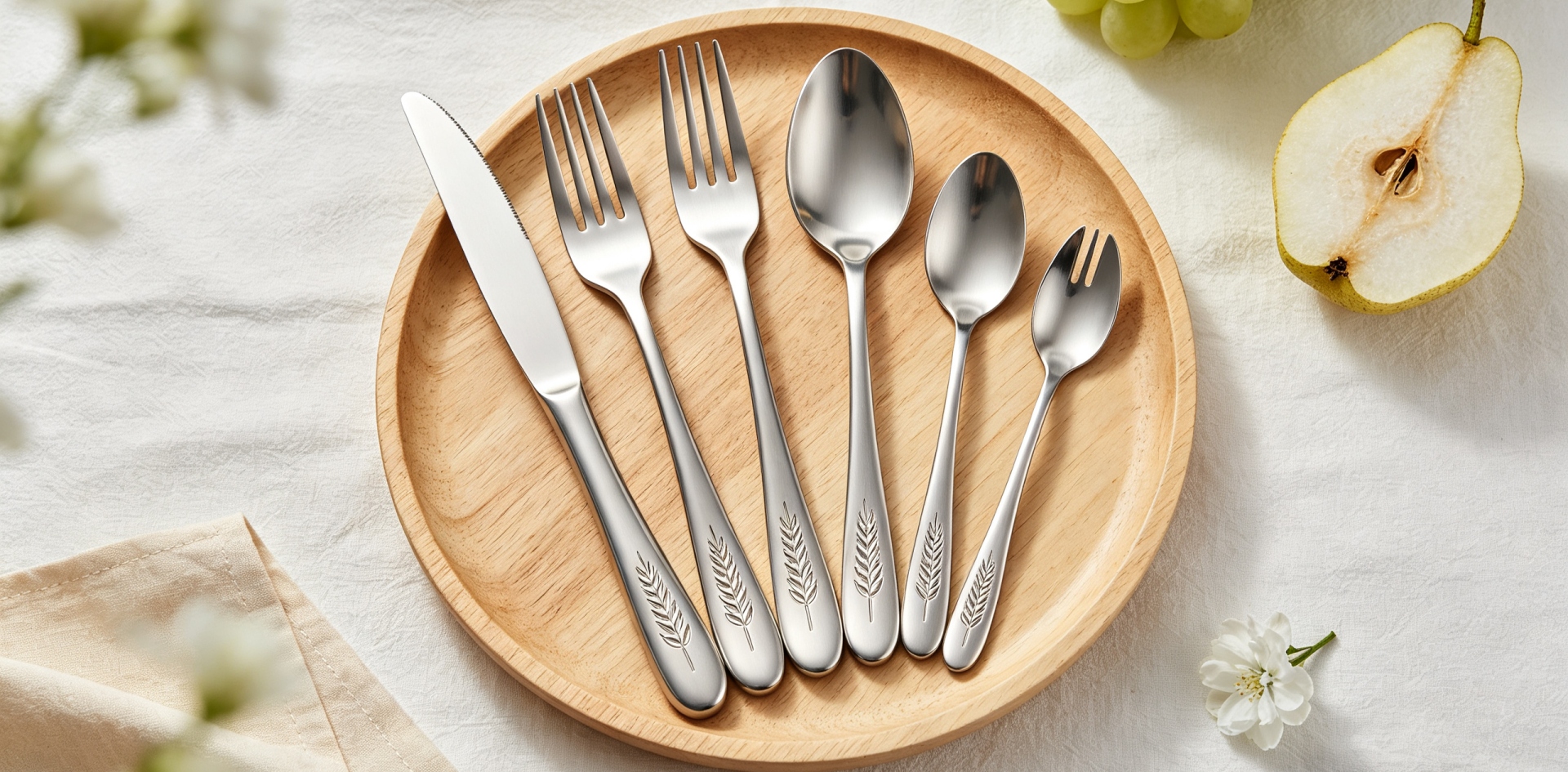
Stainless Steel Cutlery Specification Management for B2B
B2B stainless steel cutlery projects often become more complex as a product range grows. A buyer may start with a few knives, forks and spoons, then gradually add new designs, finishes, packaging requirements or customized products.
When several products are being purchased from the same manufacturer, keeping their specifications organized becomes an important part of long-term product management.
Clear specification management helps buyers communicate what each product should be while allowing the factory to understand the differences between related items.
Why Specification Management Matters
A stainless steel cutlery product can contain many individual requirements.
Material, dimensions, weight, handle design, surface finish, branding and packaging may all form part of the final specification.
When a buyer has only one product, these details are relatively easy to manage.
As the product range expands, however, similar products can easily become confused if their requirements are not clearly separated.
For distributors, retailers and private label brands, organized specifications provide a clearer foundation for purchasing and manufacturing.
Separate Common Requirements From Product-Specific Details
One practical approach is to distinguish between requirements that apply to the whole collection and requirements that apply only to one product.
For example, several products may use the same stainless steel specification and general finish, while their dimensions and functional shapes are different.
The common requirements can be defined at collection level, while each individual knife, fork or spoon retains its own product information.
This makes the product range easier to understand without forcing every SKU into exactly the same specification.
Keep Dimensions Clearly Defined
Dimensions are particularly important for stainless steel cutlery because small differences can change the appearance and functionality of a product.
A specification may include overall length, handle dimensions, bowl dimensions, fork head dimensions or knife blade dimensions.
For custom products, buyers should communicate which measurements are fixed and which may be subject to normal manufacturing tolerance.
This gives the factory a more practical understanding of the product requirements.
It also makes future communication easier when the same product is reordered.
Document Material Requirements
Material should be clearly associated with each product.
A cutlery collection may contain several products that appear similar, but the material specification should still be documented rather than assumed from appearance.
For B2B projects, material information can be included together with the relevant product identification and other technical requirements.
This becomes especially useful when a collection includes both existing products and newly customized designs.
Manage Surface Finish Requirements
Surface treatment can vary between different cutlery projects.
A buyer may request polished stainless steel for one collection and a different appearance for another.
Even within one brand, different collections may have different finishing requirements.
Clearly associating the finish with the relevant product or collection helps prevent assumptions during manufacturing.
For coordinated knives, forks and spoons, buyers can also specify whether the same finish should be applied across the complete range.
Keep Branding Requirements Separate
Branding information deserves its own clear reference.
A custom stainless steel cutlery product may include a logo, brand mark or other identifying detail.
The buyer should communicate the location and appearance of the branding rather than relying only on a general statement such as “add logo.”
This is particularly important when several products use different handle shapes.
The same brand may appear differently depending on the available area and product design, so each SKU should have its relevant requirements clearly identified.
Consider Packaging as Part of the Product Program
Packaging can also differ between B2B projects.
A distributor may require individual pieces, while a retail brand may sell complete cutlery sets.
Another customer may require a particular presentation format for its own sales channel.
These requirements should be connected to the correct product or collection.
Keeping packaging information separate from the physical cutlery specifications can make the information easier to update without changing the core product requirements.
Useful for Multi-Customer B2B Manufacturing
Manufacturers serving B2B customers may produce similar stainless steel cutlery for different brands.
Each customer can have different requirements for dimensions, finishes, branding and packaging.
For buyers, this makes clear specification management particularly important when customized products are involved.
Homefelt factory supports OEM, ODM, private label and wholesale stainless steel cutlery projects for B2B customers. Customized knives, forks, spoons and complete flatware sets can be developed according to individual project requirements.
Avoid Using Product Names as the Only Reference
Product names are useful, but they are not always enough to identify a complete specification.
Two customers may both describe a product as a “dinner fork,” while their actual requirements are different.
Similarly, two spoons may have similar names but different dimensions, handle designs or finishes.
For this reason, product names should work together with clear product identification and specifications.
This creates a more reliable reference for purchasing and production.
Make Specifications Easy to Review
A specification system does not need to be complicated.
The most useful information is usually information that the buyer and factory can understand quickly.
A practical product reference may include:
-
Product identification
-
Product type
-
Material
-
Overall dimensions
-
Key functional dimensions
-
Weight where required
-
Handle requirements
-
Surface finish
-
Branding requirements
-
Packaging requirements
-
Special customization notes
The exact fields can vary according to the project.
The objective is to make important requirements visible and easy to verify.
Useful for Growing Private Label Collections
Private label brands often add products gradually.
A collection may begin with a few core pieces and later expand into additional knives, forks, spoons or complete sets.
When the original specifications are organized clearly, new products can be developed with a better understanding of the existing collection.
The manufacturer can then see which characteristics should remain consistent and which are intended to change.
This supports controlled collection growth without making every new product development process start from zero.
Improving Communication Between Purchasing and Manufacturing
In a B2B company, the person communicating with the factory may not always be the same person who developed the product.
Purchasing teams, product managers, designers and quality teams may all need to understand the same product.
Clear specifications provide a common reference for these different roles.
This can reduce misunderstandings when a product moves from development into purchasing and then into regular wholesale supply.
Specification Management for Long-Term Cutlery Supply
The value of clear specifications becomes greater as a product program continues.
A one-time project may only require a small amount of documentation. A long-term stainless steel cutlery program may involve multiple products, repeat orders and future collection expansion.
Organized specifications provide continuity between these stages.
For importers, distributors and brands, this can make it easier to communicate with a manufacturing partner as the business grows.
For the factory, it provides a clearer understanding of what each customer expects from the finished product.
A well-managed specification is therefore not simply a technical document. It is a practical communication tool connecting product development, purchasing and manufacturing.
If you are preparing a custom stainless steel cutlery project, providing the factory with clear product requirements from the beginning can make the development and quotation process more straightforward. Whether you need individual knives, forks and spoons or a complete private label flatware collection, organized specifications give both sides a clearer starting point.
Custom Stainless Steel Cutlery Manufacturing
OEM & ODM Stainless Steel Flatware
Stainless Steel Cutlery Product Positioning for B2B Brands
Stainless Steel Cutlery Specification Compatibility for B2B
Related Article



