
Stainless Steel Cutlery Specifications for Custom B2B Projects
Stainless Steel Cutlery Specifications for Custom B2B Projects
When a wholesaler, distributor, retailer or private label brand starts a new stainless steel cutlery project, the first challenge is often not finding a supplier. It is defining exactly what the finished product needs to be.
A stainless steel spoon, fork or knife may look straightforward, but a professional B2B project usually involves many specifications. Material, thickness, weight, dimensions, handle design, surface finish, logo, set composition, packaging and delivery requirements can all affect the final product.
For this reason, a clear product specification sheet can make communication between a buyer and a stainless steel cutlery manufacturer much more efficient.
Homefelt factory works with international B2B customers on stainless steel knives, forks, spoons and complete flatware sets. With more than 40 years of stainless steel cutlery manufacturing experience, Homefelt supports standard products as well as OEM, ODM and private label projects.
What Should Be Included in a Stainless Steel Cutlery Specification?
A useful specification should describe the product clearly enough for the manufacturer to understand the intended result.
For a stainless steel spoon, for example, the specification may include the overall length, bowl size, thickness, weight, material grade, handle shape and surface treatment.
For a fork, buyers may also need to define the number and shape of tines.
For a knife, the blade design, thickness, handle construction and overall balance may require additional discussion.
When several products form one collection, the relationship between each item is also important.
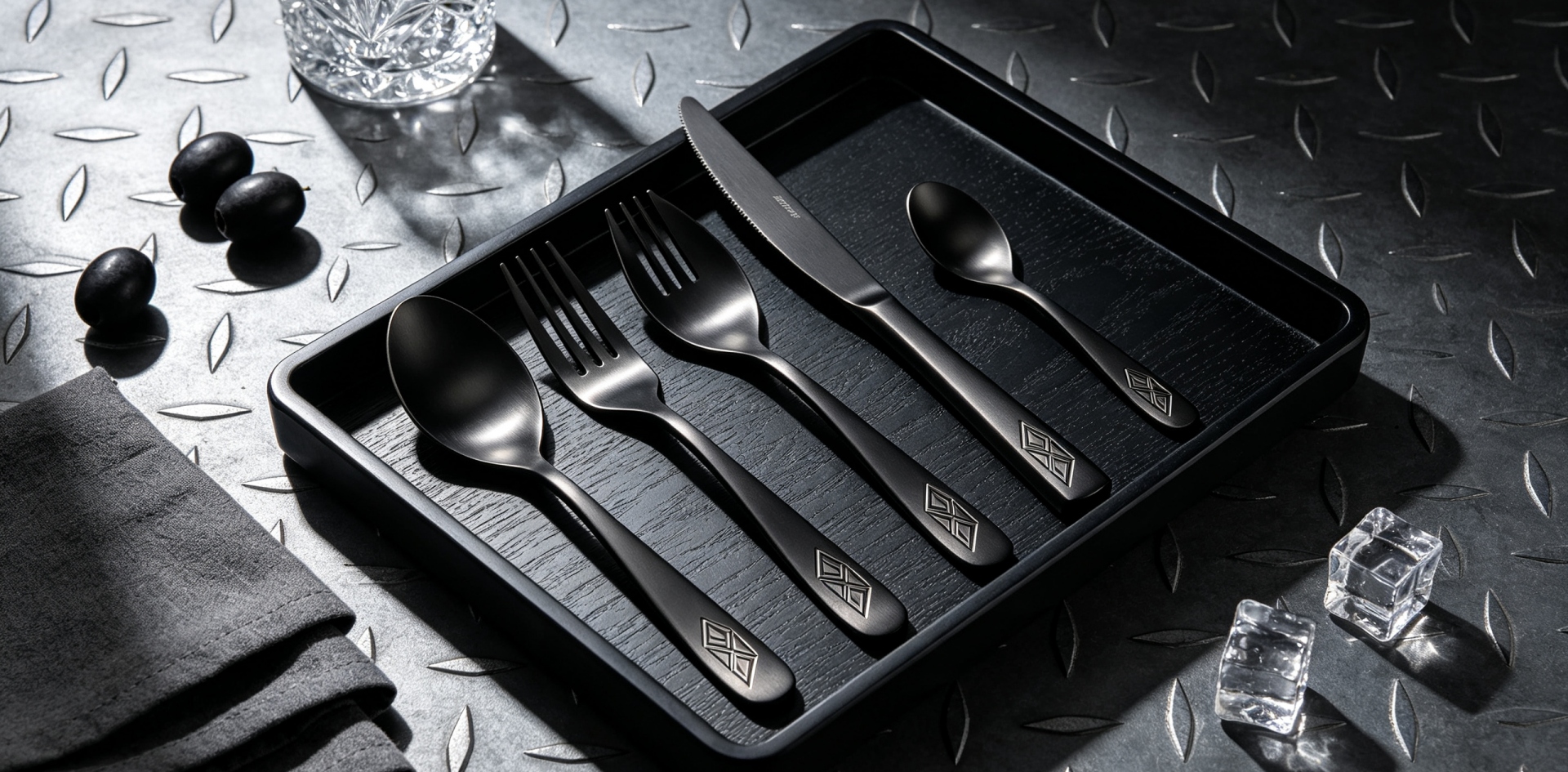
A table spoon, table fork and table knife should normally have a coordinated appearance. The handle proportions, surface treatment and overall style can be developed as one collection rather than as separate products.
Material Specification
Stainless steel grade is one of the basic specifications that should be confirmed before production.
Depending on the project, buyers may consider materials such as 18/10, 18/8 or 18/0 stainless steel.
The correct choice depends on the buyer's target market, product positioning, performance requirements and cost structure.
Instead of selecting a material only according to price, B2B buyers can discuss the intended application and market positioning with the manufacturer.
For repeat orders, the approved material specification should remain consistent so that future production can follow the same product standard.
Product Dimensions and Weight
Dimensions are another important part of a professional specification.
For cutlery, small differences in length, thickness and weight can change the overall feeling of a product.
For example, a buyer may want a lightweight spoon for a particular retail collection, while another project may require a heavier and more substantial flatware set.
A specification sheet can therefore include:
-
Overall product length
-
Handle dimensions
-
Bowl or blade dimensions
-
Product thickness
-
Individual piece weight
-
Tolerance requirements
-
Set composition
These details give the production team a clearer reference during sampling and mass production.
Handle Design and Product Appearance
The handle is often one of the most recognizable elements of stainless steel cutlery.
B2B customers may start with an existing product reference, drawing, photograph or completely new concept.
Depending on the project, the handle can be developed around different shapes, proportions and decorative details.
For OEM and ODM projects, Homefelt can discuss the design requirements with the customer and evaluate how the concept can be translated into a production-ready stainless steel knife, fork or spoon.
The goal is not simply to copy a reference product. It is to understand the buyer's requirements and develop specifications that are suitable for actual production.
Surface Finish and Color
Surface treatment can change the appearance of the same basic cutlery design.
Common options include mirror, satin, matte and brushed finishes. Some projects may also require decorative or colored finishes.
For a complete flatware collection, consistency is important.
If a buyer wants a spoon, fork and knife to be sold as one set, the surface appearance should be coordinated across all pieces.
For customized projects, buyers can provide photographs, physical samples or visual references to communicate the expected appearance.
Product Sets and Collection Planning
Many B2B customers do not purchase only one type of cutlery.
They may need a complete combination such as:
-
Table spoon
-
Table fork
-
Table knife
-
Dessert spoon
-
Teaspoon
-
Serving spoon
-
Serving fork
The exact combination depends on the customer's market and sales channel.
A manufacturer with experience in complete cutlery programs can help coordinate the specifications of different pieces so the final collection has a consistent appearance.
This can be especially useful for private label brands and distributors preparing a new product range.
Packaging Is Part of the Product Project
For B2B customers, the product itself is only one part of the purchasing project.
Packaging can also be customized according to the intended sales channel.
A customer may require individual packaging, multi-piece sets, gift boxes, retail boxes, sleeves or other packaging formats.
Packaging requirements should ideally be discussed together with the product specifications instead of being considered only after production has been completed.
Homefelt can coordinate product customization and packaging requirements as part of an integrated B2B service.
Certification and Factory Qualification
For international buyers, factory qualification can be an important part of supplier evaluation.
Homefelt's website provides information about its manufacturing experience and factory-related qualifications, including BSCI, SEDEX 4P, BRC and ISO 9001 audits, as well as Disney audit experience and FAMA and FSC certifications.
These materials can help buyers understand the manufacturer's business background and compliance framework.
For a specific project, buyers can also communicate their required documentation, testing requirements or customer-specific compliance requirements with the sales team before placing an order.
This is particularly useful when a cutlery project is being developed for a major retailer, brand or distribution network.
Using Project Experience to Define Requirements
Every B2B project can have different priorities.
A distributor may focus on stable specifications and repeat supply.
A private label brand may pay more attention to handle design, logo placement and packaging.
A restaurant or foodservice supplier may focus on product durability, weight, collection consistency and commercial requirements.
A retailer launching a new collection may need product development, packaging and delivery coordination at the same time.
An experienced manufacturer can therefore provide more value when it understands the complete project rather than only the individual product.
From Product Design to Delivery
A stainless steel cutlery project can involve several stages:
-
Understanding the customer's market and product positioning
-
Reviewing drawings, photographs or reference samples
-
Confirming material and product specifications
-
Developing or adjusting the product design
-
Preparing samples
-
Confirming the approved sample
-
Confirming logo and packaging requirements
-
Organizing bulk production
-
Completing quality and quantity checks
-
Preparing packaging and shipment
The exact process can be adjusted according to the customer's project.
Some customers may already have finished drawings and only need manufacturing.
Others may have a general concept and need assistance developing the product.
Homefelt can discuss both situations and build a suitable service process around the customer's requirements.
A One-Stop Service for B2B Cutlery Projects
For international buyers, coordinating several different suppliers can increase communication and project management work.
A more integrated approach can bring product development, customization, packaging and shipment planning into one project.
Homefelt provides OEM, ODM and private label manufacturing support for stainless steel knives, forks, spoons and flatware sets.
Depending on the project, customers can discuss:
-
Product design
-
Material selection
-
Product dimensions
-
Weight and thickness
-
Surface finish
-
Logo customization
-
Cutlery set composition
-
Retail packaging
-
Bulk production
-
Quality requirements
-
Shipping arrangements
This allows the service to be adjusted according to the actual needs of the customer instead of forcing every project into the same standard process.
Building a Long-Term Manufacturing Partnership
For B2B buyers, the first order is often only one step in a longer product program.
Once a product specification has been approved, the same specifications may need to be maintained for future orders.
This is why manufacturing experience, communication and specification management can become important over time.
Homefelt has more than 40 years of experience in stainless steel cutlery manufacturing and serves wholesalers, distributors, retailers, foodservice suppliers and private label brands.
The objective is not only to complete one shipment, but to support customers as their product range develops.
How Cutlery Size and Weight Affect Stainless Steel Flatware Selection
Stainless Steel Fork Tine Cross Section for B2B Cutlery
Related Article



