
Stainless Steel Cutlery Stamping and Forming: A Key Detail in B2B Manufacturing
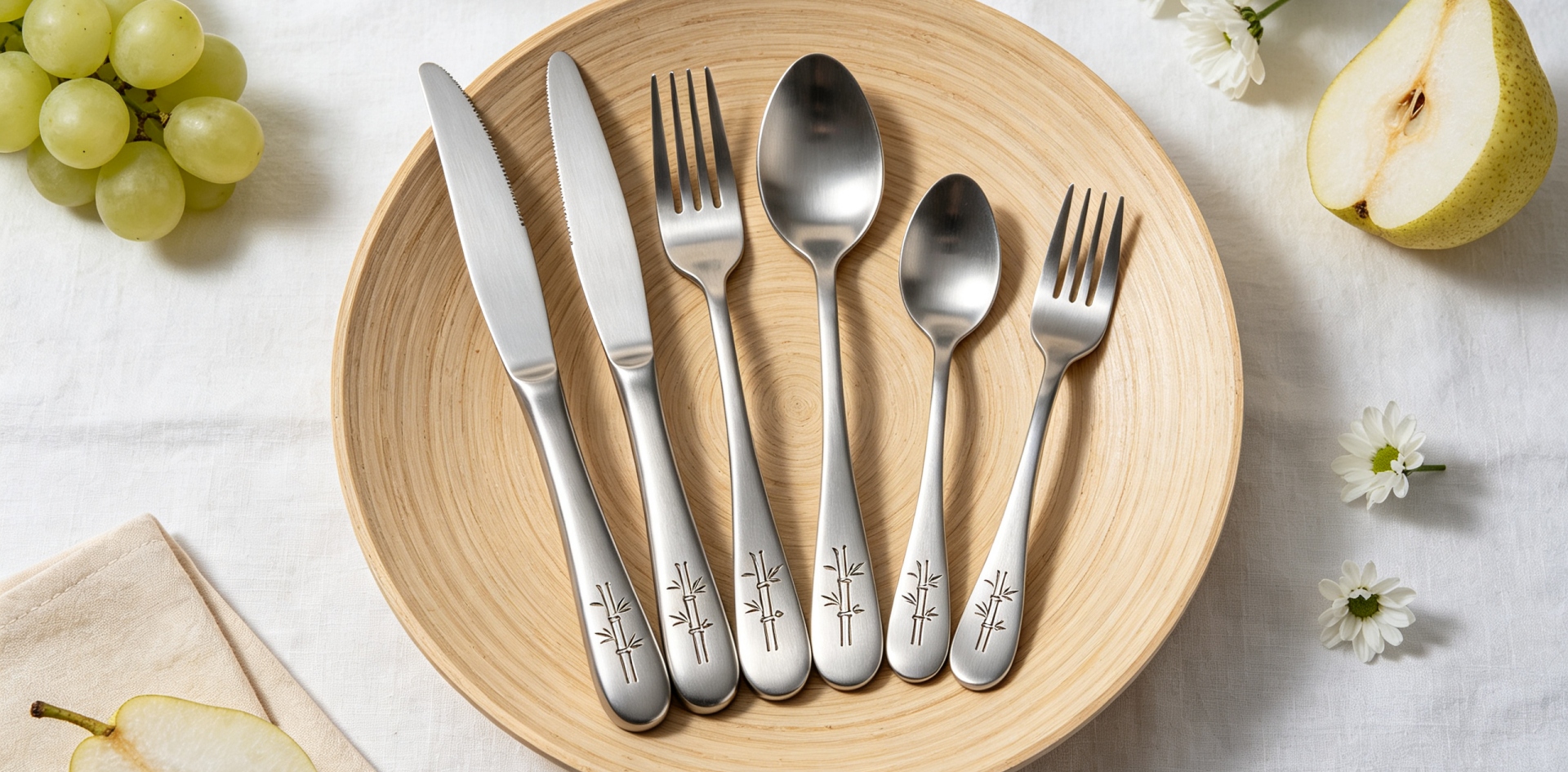
Stainless Steel Cutlery Stamping and Forming: A Key Detail in B2B Manufacturing
When a stainless steel cutlery design moves from an idea to an actual product, one of the most important stages is forming the stainless steel into the required shape.
For B2B buyers, this process may not be as visible as the final polishing or packaging, but it has a direct connection with the finished product. The way stainless steel is stamped and formed can influence the shape, proportions and consistency of knives, forks and spoons.
This becomes particularly important when a buyer is developing a custom collection for OEM, ODM or private label production.
Why Stamping and Forming Matter
Stainless steel cutlery starts as a material that needs to be transformed into a functional product. Through forming operations, the flat material gradually takes on the shape required for the individual item.
A spoon needs its bowl to be formed. A fork needs its head and tines to achieve the intended configuration. A knife needs its blade and handle areas to follow the approved design.
These are not simply visual changes. The forming process needs to work together with the product's dimensions and overall construction.
For B2B customers, this means that a successful design is one that not only looks right in a drawing but can also be reproduced consistently during manufacturing.
Turning a Design Into a Manufacturable Product
Many custom cutlery projects begin with a simple concept.
A brand may provide a drawing, an existing product, a photograph or a design reference. The manufacturer then needs to translate that concept into a practical production solution.
During this stage, forming requirements need to be considered.
The shape of the product, the depth of formed areas and the transitions between different sections can all influence how the material behaves during production.
A design that appears straightforward on a screen may require careful development before it can be produced efficiently in large quantities.
This is why communication between the buyer and manufacturer is especially valuable during the early development stage.
Forming and Different Types of Cutlery
Not every cutlery item requires the same forming approach.
A spoon has a distinct bowl shape that needs to be produced consistently across the required quantity. A fork has a different structure, while a knife has a relatively different relationship between its functional section and handle.
As a result, each product needs to be considered according to its own design requirements.
When a B2B customer orders a complete collection, the manufacturer may need to manage several different forming requirements within the same project.
The goal is to make each individual product meet its own specifications while maintaining the intended appearance of the overall collection.
Why Sample Development Is Important
For customized stainless steel cutlery, the first sample is more than a visual reference.
It gives the buyer an opportunity to examine how the design has been translated into an actual stainless steel product.
The buyer can look at the shape, proportions and formed areas and compare the sample with the original reference.
If a spoon bowl needs to be adjusted, or if a particular transition does not look as expected, these points can be discussed before bulk production.
This is especially useful when the product is new to the market and there is no previous production reference.
A well-approved sample gives both the customer and the factory a clearer understanding of what the final product should look like.
Consistency During Bulk Production
B2B orders often involve significantly larger quantities than individual retail purchases.
Once the design is approved, the manufacturer needs to reproduce the same characteristics across the production run.
This is where controlled forming becomes important.
If the shape of one piece differs noticeably from another, the collection may lose the consistency expected by the buyer. For brands selling multiple pieces together, even small differences can become more visible when products are displayed side by side.
For this reason, the approved product specifications and sample can serve as important references during manufacturing.
The Role of Manufacturing Experience
Different stainless steel cutlery designs can present different production challenges.
An experienced manufacturer understands that forming is not simply a matter of applying pressure to a piece of metal. The design, material characteristics, tooling and production requirements all need to work together.
This experience becomes particularly valuable for customized projects.
When a buyer wants to modify an existing design, the manufacturer can discuss which changes are practical and which details may require additional development.
This type of communication can help the buyer make better decisions before committing to a large production quantity.
Custom Cutlery for OEM and ODM Projects
OEM customers may already have a finished design that they want to manufacture.
ODM customers may prefer to begin with an existing product concept and develop it further with the manufacturer's support.
In both cases, forming is part of the process of converting the design into a physical product.
A professional stainless steel cutlery factory can work with customers on different types of knives, forks, spoons and complete flatware sets.
The project may involve modifications to an existing model or the development of a completely new product.
The more clearly the design requirements are communicated, the easier it becomes to evaluate the manufacturing route.
Private Label Cutlery Development
Private label brands often need products that combine recognizable design with practical manufacturing.
A customized cutlery collection can include several coordinated SKUs, each with its own functional characteristics.
During development, the manufacturer needs to understand which design features are essential to the brand and which areas can remain flexible.
This allows the production process to focus on the details that matter most to the final product.
For example, a brand may have a particular concept for the overall shape while allowing the manufacturer to recommend practical adjustments that make the design more suitable for repeated production.
This type of cooperation can be useful when developing a long-term product range.
What Buyers Should Discuss Before Production
A detailed discussion before production can make a custom cutlery project easier to manage.
B2B buyers can provide:
Product drawings or reference samples
Required knife, fork and spoon types
Approximate dimensions
Estimated order quantities
Desired material specification
Surface finish requirements
Private label requirements
Target market and sales channel
Any important forming or design details
Not every technical point needs to be finalized in the first inquiry. However, the more information available, the easier it is for the manufacturer to understand the intended product.
This also gives the supplier a better basis for discussing sample development and quotation.
From Prototype to Large-Scale Production
The transition from a single sample to a large order is an important stage in any B2B manufacturing project.
A product that works well as a prototype needs to be suitable for repeated production.
This means that the approved design must be translated into a stable manufacturing process.
For a cutlery factory, the objective is to reproduce the required product characteristics across the order rather than simply create one successful sample.
For the buyer, this provides greater confidence when planning a retail launch, wholesale program or long-term replenishment.
Supporting Future Reorders
A clearly established product specification can also make future orders easier.
If a private label brand returns for another production run, the previous approved product can provide a useful reference.
This is particularly helpful when the same cutlery collection needs to be produced again or when additional SKUs are introduced later.
A manufacturer familiar with the original project can better understand the design direction and the important characteristics that need to be maintained.
Building a Practical B2B Cutlery Program
For wholesalers and distributors, product development is often connected with long-term assortment planning.
Instead of purchasing one isolated SKU, a buyer may want to create a group of knives, forks and spoons that can be sold together.
In this situation, manufacturing considerations should be included from the beginning.
A practical design can be easier to reproduce, easier to expand and easier to manage across multiple SKUs.
The manufacturer and buyer can work together to establish the product concept first and then develop the individual pieces according to their specific functions.
Choosing a Stainless Steel Cutlery Manufacturer
When selecting a supplier for a custom project, buyers should look beyond the finished product photographs.
The manufacturer's ability to understand drawings, develop samples and move from prototype to bulk production is also important.
For OEM and private label projects, the supplier may need to support several stages of development rather than simply manufacture a standard catalog item.
An experienced stainless steel cutlery manufacturer can work with businesses on custom knives, forks, spoons and complete flatware collections for wholesale and B2B orders.
Clear communication about the product requirements can make the entire process more efficient.
Why Manufacturing Details Matter to B2B Buyers
A cutlery product may look simple once it is finished, but many manufacturing decisions are behind that final appearance.
Stamping and forming are among the stages that help transform stainless steel into the required product shape.
For B2B buyers, understanding this part of the process can make custom development discussions more practical. It also helps explain why a reference sample, clear specifications and careful product approval are valuable before a large order is placed.
When design and manufacturing requirements are considered together, a custom cutlery project has a clearer path from the first concept to repeatable production.
If you are planning an OEM, ODM or private label stainless steel cutlery project, you can provide your reference design, required products and estimated quantity to a specialized manufacturer. The factory can then review the concept, discuss customization options, develop samples and prepare a quotation for bulk production.
Request a Custom Stainless Steel Cutlery Quote
Discuss Your OEM Flatware Project
Develop a Private Label Cutlery Collection
Request a Stainless Steel Cutlery Sample
Stainless Steel Cutlery RFQ: How B2B Buyers Can Get a More Accurate Quotation
Col des Couverts Inox : Pourquoi ce Détail Compte dans un Projet B2B
Related Article



