
Stainless Steel Cutlery Stamping and Forming for Consistent Production
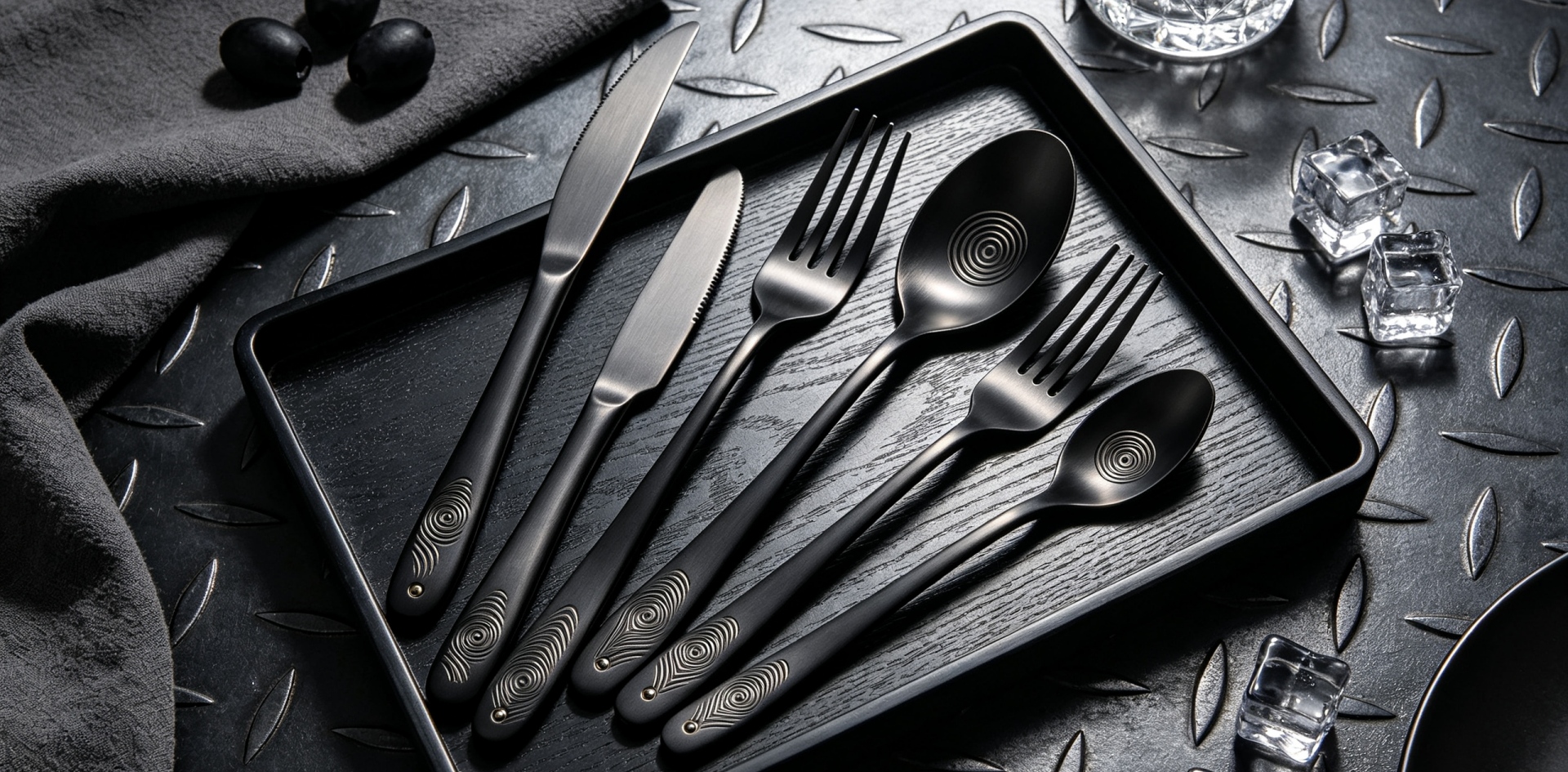
Stainless Steel Cutlery Stamping and Forming for Consistent Production
When buyers source stainless steel spoons, forks and knives for wholesale or private label projects, the final appearance of the products depends on much more than the original design.
The forming process is one of the important stages that turns stainless steel material into the actual shape of a finished cutlery product. The way the material is formed can influence dimensions, contours, proportions and consistency between individual pieces.
For B2B buyers, understanding this part of stainless steel cutlery manufacturing can make it easier to evaluate samples and communicate product requirements with a factory.
A professional stainless steel cutlery manufacturer needs to connect product design, forming processes, tooling and quality control so that the approved sample can be reproduced consistently during large-volume production.
What Is Stamping and Forming in Cutlery Manufacturing?
Stainless steel cutlery starts from stainless steel material that needs to be processed into the required product shape.
Depending on the product, different forming operations may be used to create the spoon bowl, fork head, knife structure and other components.
The exact production process depends on the design and product specification.
For B2B buyers, the important point is that the final dimensions are influenced by the relationship between:
-
Stainless steel material
-
Material thickness
-
Product dimensions
-
Tooling design
-
Forming process
-
Product structure
-
Subsequent finishing processes
These factors need to work together to produce the approved product.
Forming a Stainless Steel Spoon
A stainless steel spoon has a distinctive bowl shape that must be developed according to the product dimensions.
Important parameters can include:
-
Overall spoon length
-
Bowl length
-
Bowl width
-
Bowl depth
-
Handle length
-
Handle width
-
Material thickness
-
Product weight
The bowl needs to maintain a consistent shape throughout production.
For customized spoon projects, the buyer may have specific requirements for the bowl profile or the relationship between the bowl and handle.
These requirements can be reviewed during sample development and confirmed before mass production.
Forming a Stainless Steel Fork
Fork production involves different structural requirements because the working section contains multiple tines.
The forming process needs to create the required fork head shape while maintaining consistent tine positioning.
Relevant product parameters may include:
-
Overall fork length
-
Fork head width
-
Tine length
-
Tine spacing
-
Handle dimensions
-
Material thickness
-
Product weight
For a customized fork, the customer may provide an existing reference product or a new design concept.
The factory can evaluate the design and develop the appropriate production solution based on the required dimensions.
Stainless Steel Knife Forming
Knives require a different approach because the working section is a blade rather than a spoon bowl or fork head.
Depending on the product design, the manufacturing process may involve forming and other operations to achieve the required blade and handle structure.
Buyers may need to confirm:
-
Overall knife length
-
Blade length
-
Blade width
-
Handle length
-
Handle dimensions
-
Material thickness
-
Product weight
-
Blade profile
For a complete collection, the knife should also maintain a visual relationship with the matching spoon and fork.
Why Consistent Dimensions Matter
For B2B buyers, one of the most important reasons to pay attention to forming is production consistency.
A buyer may approve a specific spoon design based on a physical sample.
When thousands or tens of thousands of pieces are produced, each piece should remain within the agreed product requirements.
Consistency can be evaluated through key measurements such as:
-
Overall length
-
Width
-
Working-section dimensions
-
Handle dimensions
-
Material thickness
-
Product weight
-
Shape and appearance
The approved sample and product specification can provide important references for production and inspection.
Sample Development Before Bulk Manufacturing
For customized stainless steel cutlery, the sample stage is an important opportunity to confirm the final product.
A buyer can evaluate the physical sample and compare it with the original design concept.
For example, the buyer may check whether:
-
The spoon bowl has the expected shape
-
The fork head matches the intended proportions
-
The knife blade has the required profile
-
The handle dimensions are correct
-
The complete collection looks consistent
-
The product dimensions match the specification
If changes are required, they can be discussed before the production specification is finalized.
This process is especially valuable for OEM, ODM and private label projects.
How Buyers Can Evaluate a Manufacturer
When comparing stainless steel cutlery manufacturers, buyers should look beyond product photographs.
Useful questions include:
-
Can the factory develop customized products?
-
Can the supplier provide product samples?
-
Can product dimensions be confirmed before bulk production?
-
Does the factory have experience with large-volume orders?
-
Can the manufacturer support OEM or ODM development?
-
Can the factory provide relevant certification and audit information?
-
Can packaging and transportation be coordinated?
The answers can help buyers understand whether a supplier is suitable for a long-term project rather than only a single standard-product order.
Experience in Product Development
B2B cutlery projects often start with a simple requirement.
A customer may send a product photograph and ask for a similar stainless steel spoon, fork or knife. Another customer may have a complete design but require a factory capable of converting the design into mass production.
In these situations, manufacturing experience is important.
The factory needs to understand the relationship between dimensions, material thickness, tooling and forming so that the proposed product can be manufactured efficiently.
For a complete collection, the same approach can be applied to the spoon, fork and knife so that the finished products share a consistent design style.
Product Parameters Should Be Clear
Before bulk production, buyers and manufacturers should confirm the main product specifications.
A specification can include:
-
Product name
-
Stainless steel grade
-
Overall dimensions
-
Material thickness
-
Product weight
-
Handle dimensions
-
Working-section dimensions
-
Surface finish
-
Logo requirements
-
Packaging requirements
For repeat orders, these specifications can become an important reference.
This is particularly useful for distributors and private label brands that expect to reorder the same products in the future.
Certification and Manufacturing Information
In addition to product specifications, international buyers may want to review supplier qualifications and relevant factory documentation.
Homefelt presents its stainless steel cutlery manufacturing experience together with BSCI, SEDEX 4P, BRC and ISO9001-related credentials, as well as Disney audit experience and FAMA and FSC certificates.
For specific projects, buyers can also discuss inspection requirements, product testing and relevant documentation according to the requirements of their market.
These materials can help buyers evaluate the manufacturing partner from both product and supplier perspectives.
One-Stop Service for Customized Cutlery
A stainless steel cutlery project normally involves several stages.
Homefelt can provide a one-stop service according to the customer's requirements, covering product development, manufacturing, packaging and transportation.
The service can include:
-
Product design support
-
Product specification development
-
Custom tooling
-
Sample production
-
Stainless steel spoon customization
-
Stainless steel fork customization
-
Stainless steel knife customization
-
OEM manufacturing
-
ODM development
-
Private label production
-
Packaging customization
-
Bulk production
-
Transportation coordination
The service package can be adjusted according to the customer's actual situation.
A customer with finished drawings may only need manufacturing and packaging support, while another customer may need assistance from product concept development through final delivery.
The goal is to provide a dedicated solution for each customer rather than simply offering a standard product.
Supporting Customers From Product Idea to Production
For international B2B buyers, the value of a stainless steel cutlery manufacturer is not limited to production capacity.
A capable supplier can also help connect product design with practical manufacturing requirements.
From the first product concept to sample confirmation and bulk production, each stage can be coordinated around the customer's requirements.
Homefelt focuses on stainless steel knife, fork and spoon manufacturing and supports wholesale, OEM, ODM, private label and large-volume production projects.
We aim to provide one-stop service, develop practical solutions according to each customer's situation and build long-term relationships in which we grow together with our customers.
You May Be Interested In
Stainless Steel Cutlery Handle Thickness Design for B2B Buyers
Custom Stainless Steel Cutlery Tooling for OEM and ODM Projects
Related Article



