
Stainless Steel Cutlery Supplier Onboarding for OEM and Bulk Buyers
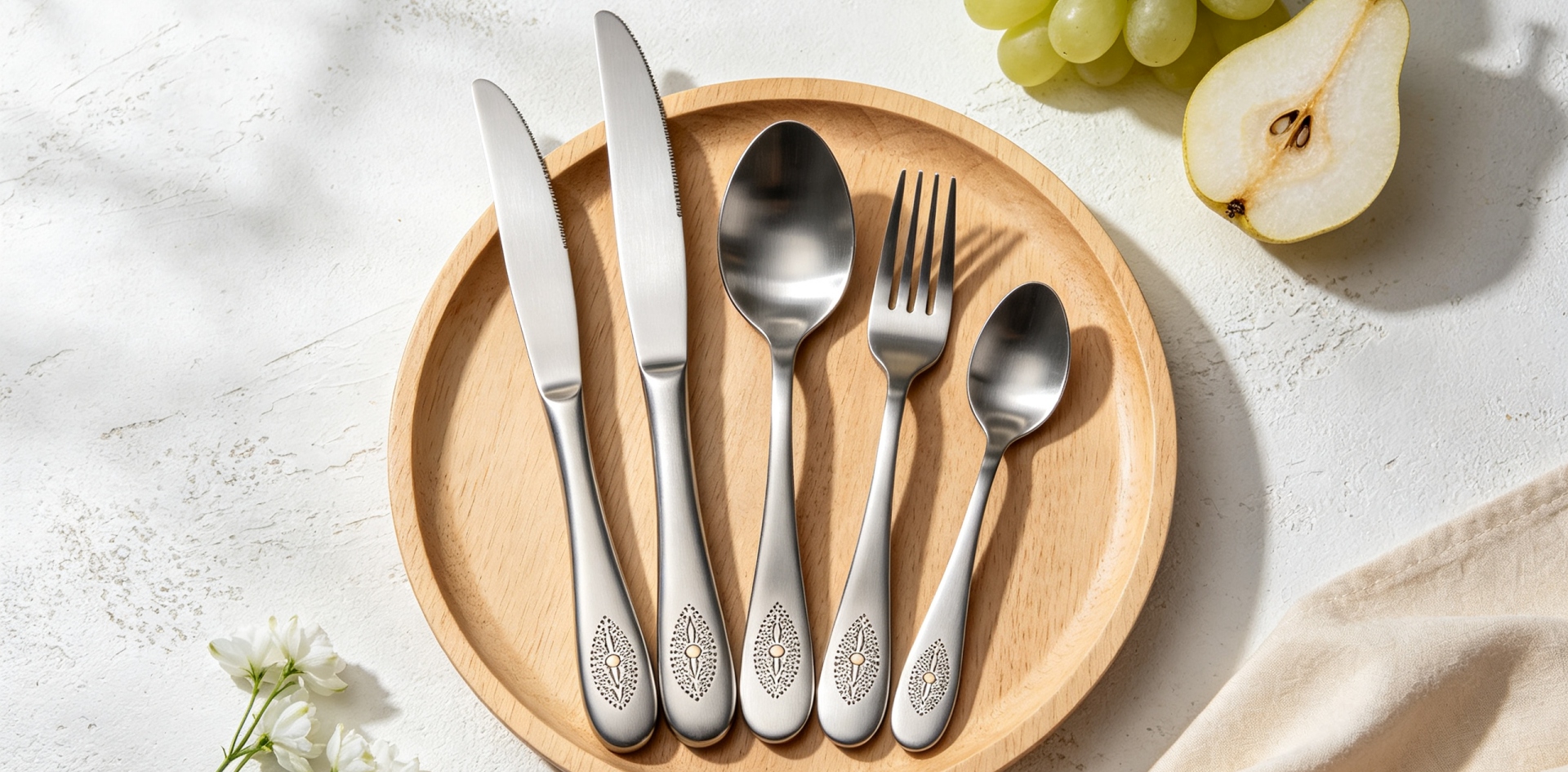
Stainless Steel Cutlery Supplier Onboarding for OEM and Bulk Buyers
When a brand or distributor starts working with a new stainless steel cutlery manufacturer, the first production order is only one part of the process. The supplier also needs to understand the customer's products, specifications, packaging requirements and purchasing expectations.
A clear supplier onboarding process can make this transition much easier.
For stainless steel knives, forks, spoons and flatware sets, buyers may already have established products, approved samples and packaging artwork. The challenge is to transfer this information accurately to the new manufacturing partner and make sure the factory understands what must remain unchanged and what can be customized.
For OEM and bulk buyers, a structured onboarding process creates a stronger foundation for future orders.
What Does Supplier Onboarding Involve?
Supplier onboarding means giving a new stainless steel cutlery factory enough practical information to understand the project.
The information may include:
-
Product names and references
-
Existing product specifications
-
Approved samples
-
Product photographs
-
Drawings where available
-
Packaging information
-
Branding requirements
-
Expected order quantities
-
Delivery requirements
-
Inspection expectations
Not every project requires every document.
The objective is to create a clear starting point for the manufacturer.
For a distributor, this may mean transferring information for an existing range of spoons, forks and knives. For a private label brand, it may include product specifications together with branded packaging requirements.
Starting With the Actual Product
The physical cutlery product is often the most useful reference.
A buyer may provide an existing stainless steel spoon, fork or knife together with photographs and available specifications. The manufacturer can then review the product and discuss which requirements can be reproduced or customized.
This is especially important when older product documentation is incomplete.
A professional stainless steel cutlery factory should be able to discuss the product from a manufacturing perspective rather than relying only on a general product description.
Homefelt works with stainless steel knives, forks, spoons and flatware sets for OEM, ODM, private label and wholesale customers. Product references, samples and customer requirements can be reviewed as part of the project discussion.
Separating Existing Requirements From New Requirements
Supplier onboarding becomes clearer when buyers distinguish between what is already approved and what is being changed.
For example, a customer may want the existing stainless steel spoon to remain unchanged but introduce new branded packaging.
Another customer may want to retain the current fork while developing a matching knife.
These are different project requirements and should not be mixed together.
A useful project file can separate:
Existing product requirements
New product requirements
Packaging requirements
Branding requirements
Delivery requirements
This helps the factory understand which elements should remain stable and which are open for development.
Transferring Product References Clearly
Product references are particularly useful when several similar cutlery products are involved.
A buyer may have multiple spoon models, different forks or several table knife styles. Using clear internal references can help prevent confusion.
For example:
-
Spoon A01
-
Fork A02
-
Knife A03
-
Set A04
The actual naming system is determined by the buyer, but the principle remains the same: each product should have an identifiable reference connected to the relevant sample or specification.
For OEM manufacturing, this creates a practical bridge between the customer's purchasing system and the factory's production information.
Homefelt can work with customer product references and related specifications when preparing stainless steel cutlery manufacturing programs.
Packaging Information During Onboarding
Packaging should be introduced early rather than added at the end of the project.
A private label customer may already have approved packaging artwork, while another buyer may need the factory to help develop a suitable packaging solution.
The supplier should understand:
-
Package type
-
Number of pieces per package
-
Brand information
-
Label requirements
-
Carton arrangement
-
Shipping marks
For wholesale buyers, bulk packaging may be more important than retail presentation. For private label brands, branded boxes and set presentation may be central to the product.
Homefelt provides one-stop service covering stainless steel cutlery production, product design, packaging and transportation according to customer requirements.
This allows packaging requirements to be discussed together with the product rather than managed as a separate project.
Moving From Existing Supplier to New Manufacturer
A supplier onboarding project often occurs because a buyer wants to add another manufacturing source, expand capacity or develop a new collection.
The buyer may already have years of product information but still need to establish a new manufacturing relationship.
In this situation, the new factory needs enough information to understand the existing product without assuming that every manufacturing detail is identical.
A practical process can include:
-
Product information review
-
Sample or reference confirmation
-
Specification discussion
-
Packaging review
-
Commercial quotation
-
Sample or production confirmation
-
Bulk manufacturing
The exact process depends on the project, but each stage creates an opportunity to confirm important requirements before moving forward.
Supplier Capability for OEM Projects
The supplier's manufacturing experience is an important part of onboarding.
A buyer may have a large product range and expect the manufacturer to handle different stainless steel knives, forks and spoons. The factory therefore needs to have sufficient experience with cutlery production and B2B purchasing requirements.
Homefelt has 40 years of experience in the stainless steel cutlery business and has worked with well-known brands.
Its capabilities include OEM, ODM, private label, wholesale and large-volume stainless steel cutlery production.
For a new customer, this experience can help the factory understand not only the individual product but also the wider purchasing project.
Documentation and Factory Qualifications
During supplier onboarding, buyers may also review factory certifications, audits and relevant testing documentation.
Homefelt has passed BSCI, SEDEX 4P, BRC and ISO9001-related requirements and has experience with Disney audits. The factory also has FAMA and FSC certificates.
The documents applicable to a particular project should be confirmed according to the customer's market, product requirements and purchasing standards.
This information can be reviewed alongside product samples and manufacturing capability to create a more complete supplier assessment.
Making the First Order a Practical Test
The first order with a new manufacturer can provide useful information about the working relationship.
Beyond the finished stainless steel cutlery, buyers can observe how the factory handles communication, product information, packaging coordination, production organization and delivery.
This makes the first order more than a transaction. It can become a foundation for a longer supply relationship.
For Homefelt, the objective is to support customers beyond a single bulk shipment. The factory can adapt its one-stop service according to the customer's requirements, from product design and manufacturing to packaging and transportation.
Building a Long-Term Manufacturing Relationship
Once supplier onboarding is complete, future orders can become easier because both sides have established a shared product reference.
The buyer understands how to communicate requirements, while the manufacturer has a clearer understanding of the product range and project expectations.
This can be particularly valuable for private label brands and distributors that expect repeat orders or future collection expansion.
As the relationship develops, new stainless steel spoons, forks, knives and flatware sets can be added to the existing supply program.
A Reliable Starting Point for OEM and Bulk Supply
Successful supplier onboarding is ultimately about transferring information clearly and establishing mutual understanding before large-scale production begins.
For stainless steel cutlery buyers, the process should connect the actual product, specification, packaging, branding and commercial requirements.
Homefelt factory supports OEM, ODM, private label, wholesale and bulk stainless steel cutlery projects, providing a one-stop manufacturing service for customers who need knives, forks, spoons and complete flatware solutions.
If you are introducing a new stainless steel cutlery manufacturer, you can send Homefelt your existing product information, samples, drawings, packaging details and estimated quantities. The team can review the requirements and discuss how to establish the new manufacturing program.
Stainless Steel Cutlery Portfolio Review for OEM and Private Label Buyers
Stainless Steel Cutlery Replenishment Planning for OEM and Wholesale Buyers
Related Article



