
Stainless Steel Cutlery Surface Waviness for B2B
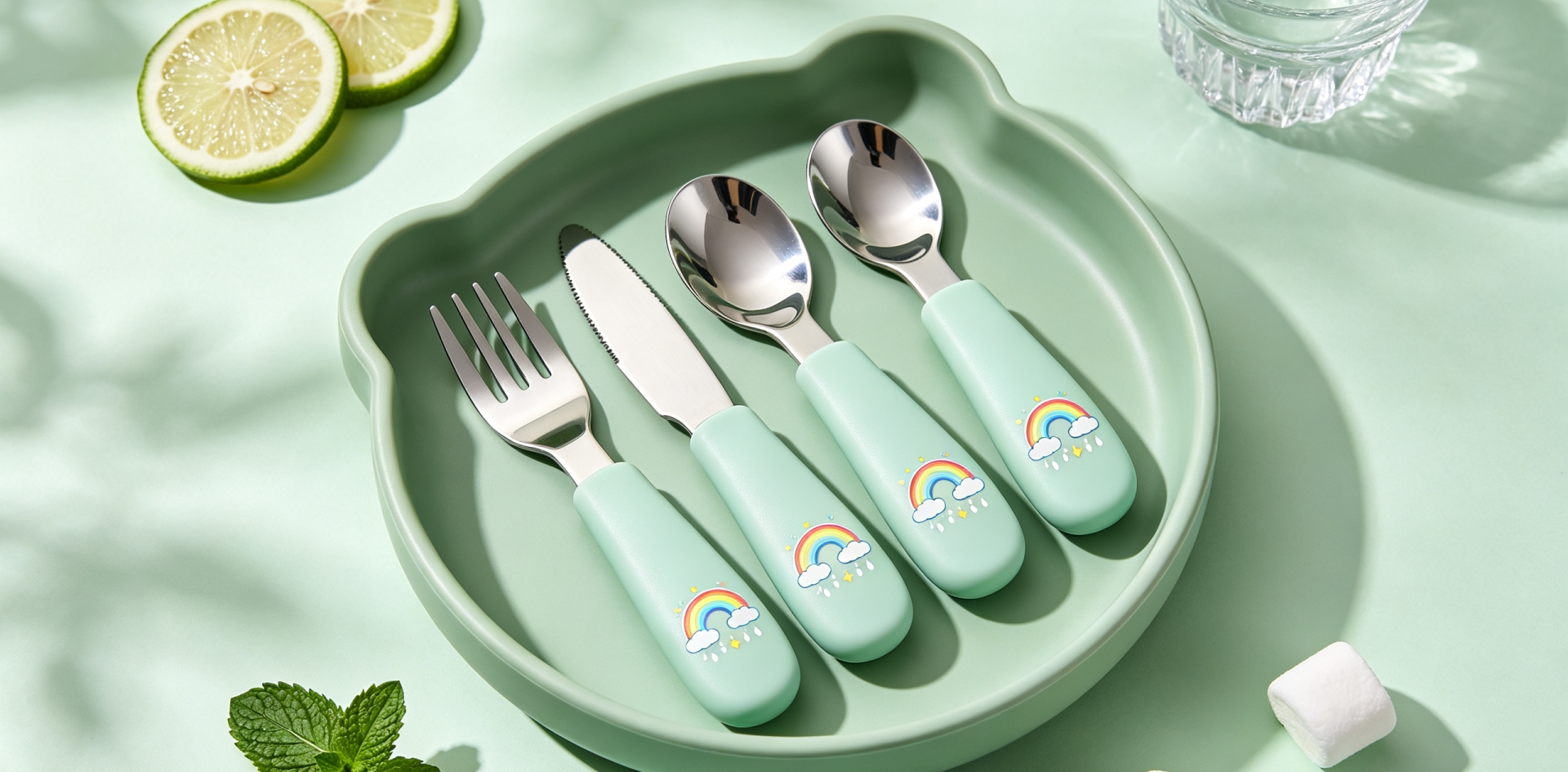
Stainless Steel Cutlery Surface Waviness for B2B
When stainless steel cutlery is viewed under bright lighting, buyers may notice much more than the basic shape and color of the product. The way light moves across the metal surface can reveal subtle variations that are difficult to see under normal conditions.
One of these details is surface waviness.
Surface waviness refers to larger-scale, gradual variations across a metal surface. It is different from obvious scratches, individual polishing marks or general surface smoothness. For stainless steel knives, forks and spoons, controlling this characteristic can contribute to a more uniform visual appearance across a complete B2B order.
For private label brands, wholesalers and distributors, this can become particularly important when products are displayed together or photographed for commercial use.
What Is Surface Waviness on Stainless Steel Cutlery?
A stainless steel surface may appear smooth to the touch while still showing subtle changes in how it reflects light.
These changes can occur as gentle variations across the surface rather than as clearly defined defects. Under ordinary lighting, they may be barely noticeable. Under strong directional lighting, however, they can become more visible.
This is why a stainless steel cutlery product can feel smooth while still showing a slightly uneven reflection.
Surface waviness should therefore be considered separately from surface roughness and individual scratches. Each characteristic describes a different aspect of the finished metal surface.
For B2B manufacturing, understanding these differences helps buyers communicate more clearly with a stainless steel cutlery factory.
Why Surface Waviness Matters for B2B Buyers
For a single piece of cutlery, a subtle visual variation may not appear significant. A large production order creates a different situation.
When dozens or hundreds of knives, forks and spoons are placed together, differences in surface reflection can become easier to compare.
This can affect the overall appearance of a product collection, particularly when the cutlery uses a bright polished finish.
Retail brands may display several pieces together in packaging. Hospitality buyers may place large quantities of the same model on tables. Distributors may photograph products for catalogs or online sales.
In each situation, consistent surface appearance can contribute to a more professional presentation.
Surface Waviness and Polishing
Polishing plays an important role in the final appearance of stainless steel cutlery.
The objective is not simply to make the metal shiny. The polishing process needs to create the intended surface appearance while maintaining the shape and proportions of the product.
Pressure, polishing movement, equipment condition and process consistency can all influence the finished surface.
If the process creates uneven visual transitions, light may reflect differently across different areas of the same piece.
For a B2B project, the desired surface finish should therefore be discussed together with the product design. A buyer may want a highly reflective appearance, a softer satin effect or another defined finish, and each option requires appropriate process control.
How Surface Geometry Influences Reflection
The reflection seen on stainless steel cutlery is affected by both the surface condition and the underlying shape.
A perfectly uniform finish on a deliberately curved area will naturally reflect light differently from a flat area. This means that visual inspection needs to consider the intended geometry of the product.
For example, the handle of a spoon may have a gradual curve, while the blade of a knife may contain larger flat or angled areas. A fork may combine a shaped head with a narrower transition into the handle.
These different areas can produce different reflections even when they are manufactured to the same general finish specification.
This is why experienced manufacturers evaluate surface appearance together with the actual product structure.
Consistency Across Knives, Forks and Spoons
A complete flatware collection may contain several different product shapes.
The challenge is not necessarily to make every piece reflect light in exactly the same way. Instead, each product should maintain the intended surface characteristics for its own geometry while remaining visually compatible with the collection.
For example, a table knife and dinner spoon may have different curved areas, but their finishes should still communicate the same overall design language.
For OEM and ODM projects, this can be discussed during the development stage. Reference samples can help establish the expected appearance before a larger order is released.
Surface Waviness in Private Label Collections
Private label brands often invest in a consistent visual identity across their products.
The handle design, material finish and overall proportions may all be selected to create a particular impression. If the surface appearance varies significantly between production pieces, it can weaken that consistency.
This becomes even more noticeable when products are packed together as a set.
A polished knife, fork and spoon displayed side by side can create strong visual reflections. Small differences in surface appearance may therefore become more apparent than when the products are viewed individually.
For brands selling premium-looking stainless steel flatware, defining the desired surface standard before production can help align expectations between the buyer and manufacturer.
Practical Quality Control for Surface Appearance
Surface quality does not always require complicated inspection equipment for every B2B order.
Visual inspection under controlled lighting can reveal many differences that are difficult to identify under ordinary room lighting.
Reference samples can also provide a useful comparison point. Instead of relying only on general descriptions such as “high polish,” the production team can compare finished pieces against an approved reference.
For projects with specific visual requirements, the buyer and factory can agree on the inspection conditions and acceptable range during product development.
The purpose is to establish a realistic standard that can be reproduced during commercial production.
Why Reference Samples Matter
A reference sample provides something concrete for both sides to evaluate.
Words can describe a finish, but they may not communicate every visual detail. A physical sample can show the relationship between the product shape, surface finish and light reflection.
For a custom stainless steel cutlery project, the approved sample can become part of the production reference.
This is especially helpful for repeat orders. If a brand reorders the same cutlery several months later, the original sample can help the factory maintain continuity instead of relying only on written descriptions.
Surface Requirements for OEM and ODM Projects
Custom cutlery development often involves several decisions at the same time.
The buyer may specify the stainless steel material, product dimensions, handle design, surface finish, packaging and branding requirements. Surface waviness is not necessarily the most important specification for every product, but it can become relevant when the visual quality of the finished collection is important.
The factory can help determine which surface characteristics need to be controlled according to the customer's product positioning.
This allows the manufacturing specification to remain practical rather than adding unnecessary technical requirements.
Homefelt Factory for Custom Stainless Steel Cutlery
Homefelt factory provides stainless steel knives, forks, spoons and complete flatware sets for B2B customers.
OEM, ODM, private label, wholesale and bulk production can be developed according to the customer's specific project requirements.
Customers can discuss product design, material, surface finish, packaging and transportation needs with the factory team. Instead of treating each requirement separately, Homefelt can build a customized service package around the customer's actual project.
This one-stop approach can be useful for brands and distributors developing a complete cutlery collection. Product design and manufacturing details can be discussed together before the order moves into mass production.
For projects where surface appearance is important, reference samples and agreed finishing requirements can also provide a practical basis for production communication.
Supporting Long-Term Product Consistency
A successful B2B cutlery program is not limited to the first shipment.
Brands may reorder successful products, expand their collections or introduce matching knives, forks and spoons later. Maintaining a clear product reference can make these future developments easier.
Surface appearance is one part of that reference.
When the material, dimensions, construction and finishing requirements are clearly understood, the factory has a stronger basis for maintaining product continuity across different production runs.
For distributors and wholesalers, this can also make product management easier because repeat orders can be based on an established specification rather than a new interpretation of the product each time.
A More Complete View of Cutlery Quality
Stainless steel cutlery quality is made up of many different characteristics.
Material, dimensions, structure, surface finish and visual consistency all contribute to the final product. Surface waviness is only one part of this larger picture, but it can be relevant when a polished cutlery collection needs to maintain a consistent appearance under commercial lighting.
For B2B buyers, the most useful approach is to identify which visual and structural details matter to the product and discuss them with the manufacturer before production.
This creates a clearer connection between the original design concept, the approved sample and the final bulk order.
For OEM, ODM and private label projects, that communication can help turn a visual idea into a repeatable stainless steel cutlery product.
Homefelt Factory for B2B Cutlery Projects
Homefelt factory supports customers with customized stainless steel knives, forks, spoons and flatware sets for different B2B applications.
Whether the project requires a new product design, private label collection, wholesale supply or large-volume production, the service can be adjusted according to the customer's needs.
Product development, customization, packaging and transportation can be coordinated as part of an integrated service approach.
For buyers preparing a new collection, discussing the desired surface appearance at an early stage can help establish realistic production expectations. Once the product is approved, the relevant requirements can be retained as part of the manufacturing reference for future orders.
A consistent stainless steel cutlery surface is the result of product geometry, finishing processes and production control working together. By paying attention to details such as surface waviness when they are relevant to the project, B2B buyers can create a clearer specification and a more consistent finished collection.
Custom Stainless Steel Cutlery for OEM & ODM Projects
Private Label Stainless Steel Flatware Manufacturing
Wholesale Stainless Steel Knife, Fork and Spoon Collections
Homefelt Factory Custom Cutlery Service
B2B Stainless Steel Cutlery Manufacturing
Stainless Steel Spoon Wall Thickness for B2B Orders
Stainless Steel Knife Blade Taper for B2B Cutlery
Related Article



