
Stainless Steel Cutlery Symmetry for B2B Production
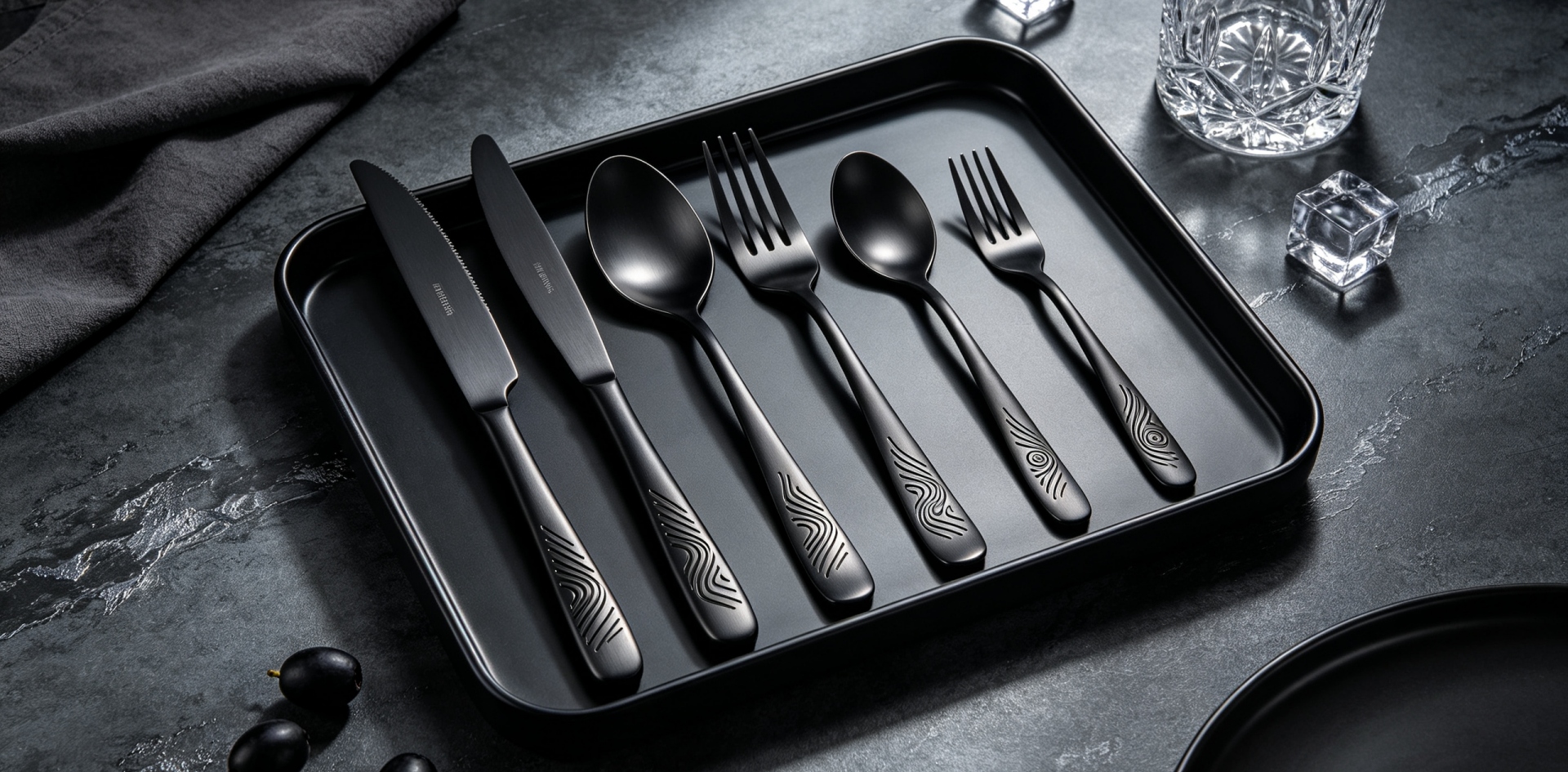
Stainless Steel Cutlery Symmetry for B2B Production
Symmetry is one of those details that buyers may notice without immediately identifying it. When a stainless steel fork, spoon or knife looks balanced and well proportioned, the product feels naturally finished. When one side differs noticeably from the other, even a small deviation can change the overall impression.
For B2B brands developing custom stainless steel cutlery, symmetry is therefore worth considering during product development and manufacturing.
It is particularly relevant for products with clearly defined left and right sides, decorative details, curved handles or carefully shaped functional sections. Once a design enters bulk production, maintaining the intended symmetry across the order becomes part of producing a consistent commercial product.
What Does Symmetry Mean in Cutlery?
In stainless steel cutlery, symmetry generally refers to how closely corresponding areas on the left and right sides follow the intended design.
A fork head is an obvious example. The two sides of the head should normally maintain a balanced relationship around the centerline. The handle may also have a symmetrical profile, depending on the design.
A spoon can have a balanced bowl shape and handle profile, while a knife may have symmetrical or intentionally asymmetrical elements depending on its blade and handle construction.
The key point is that symmetry does not necessarily mean that every product must have identical geometry on both sides.
Some designs are intentionally directional or asymmetrical. In those cases, the manufacturing requirement is to reproduce the approved asymmetrical design consistently.
Symmetry is therefore best understood as a controlled design characteristic rather than a simple rule that every product must follow.
Why Symmetry Matters for B2B Cutlery
A single piece of cutlery may look acceptable when viewed quickly. However, when multiple pieces are placed side by side, differences become easier to recognize.
This is particularly relevant for wholesale and private label customers.
A distributor may receive thousands of forks from the same production order. If the head shape, handle contour or decorative details vary visibly from piece to piece, the collection may appear less consistent.
For a brand, consistency can be even more important because the finished product represents its own product identity.
A carefully developed design needs to remain recognizable throughout the production quantity.
Symmetry can therefore contribute to the visual consistency of a stainless steel cutlery collection.
Fork Head Symmetry
Forks provide a clear example of why symmetry deserves attention.
The fork head contains several elements that need to work together: the outer profile, central axis, shoulders, tines and transition toward the handle.
If the two sides of the head do not follow the intended geometry, the fork can look slightly tilted or unbalanced even when the total dimensions are within the general specification.
The relationship between the tines and the centerline can also affect the visual appearance.
During custom development, the approved fork sample provides an important reference for these details. The manufacturer can use the agreed design to establish the production requirements for the finished fork.
Spoon Bowl Symmetry
A spoon has a different type of symmetry because the bowl is a three-dimensional curved surface.
The left and right sides of the bowl normally need to maintain a balanced relationship with the centerline. If one side develops a noticeably different contour, the spoon may look uneven when viewed from above.
The transition from the bowl toward the neck and handle can also influence the visual balance.
For a custom spoon, symmetry should therefore be considered together with the bowl shape and overall product proportions.
This is especially useful when a brand wants several spoon sizes to belong to the same collection.
Knife Symmetry and Direction
Knives can contain both symmetrical and directional design elements.
Some handles are designed with a balanced left-right profile, while certain blade designs may intentionally use different functional characteristics on each side.
The important consideration is whether the final product matches the approved design.
For a custom knife, the handle profile, blade relationship and transition areas can be reviewed together.
If the handle is intended to be symmetrical, this characteristic should remain consistent throughout production. If the blade is intentionally directional, the manufacturing process should preserve that design rather than accidentally introducing unwanted variation.
Symmetry and Handle Design
Handle geometry is another area where symmetry can strongly influence the appearance of a cutlery collection.
A handle may have a central decorative line, curved sides, tapered ends or a particular cross-sectional form.
If the design is intended to be symmetrical, the relationship between the two sides should remain visually balanced.
This can be particularly noticeable with polished stainless steel because reflected light can emphasize differences in shape.
For custom OEM and ODM products, the handle should therefore be evaluated not only from a top view but also from different angles.
A physical sample can provide a much clearer understanding of the actual three-dimensional form.
How Manufacturing Can Influence Symmetry
Stainless steel cutlery passes through a series of manufacturing operations before becoming a finished product.
Cutting, forming, shaping, grinding and polishing can all influence the final geometry.
When a product contains symmetrical features, each stage needs to support the intended shape.
The objective is not simply to produce a symmetrical sample. The same characteristics need to remain stable during mass production.
This is especially important for customized products because the design may contain details that differ from standard factory models.
A suitable manufacturing process and clear product reference can help the factory reproduce the approved design more consistently.
Sample Approval Before Bulk Production
A physical sample is particularly useful for evaluating symmetry.
A buyer can place the sample on a suitable surface and view it from different directions. Several samples can also be compared side by side.
For a fork, the head and handle can be checked visually. For a spoon, the bowl and handle can be examined from above and from the side. For a knife, the relationship between the blade and handle can be reviewed as a complete product.
If the buyer wants a particular visual characteristic adjusted, the change can be discussed before bulk production.
This makes the sample an important communication tool between the customer and the manufacturer.
Symmetry Across Matching Cutlery Pieces
A coordinated collection does not require every piece to have exactly the same geometry, but the products should normally share a recognizable design language.
For example, the knife, fork and spoon may use similar handle proportions or decorative principles.
The symmetry of each individual product contributes to this overall appearance.
When several pieces are presented together in retail packaging or a hospitality setting, a consistent collection can create a more organized visual impression.
For B2B brands, this can be valuable when developing a recognizable private label product range.
Maintaining Symmetry in Repeat Orders
Consistency becomes particularly important when a customer reorders the same product.
The first order may establish the original design, but future production needs to reproduce it rather than gradually changing its appearance.
This is why keeping clear product specifications and an approved reference sample can be useful.
For a long-term B2B relationship, the same design reference can support future orders and new products.
If a customer later develops a matching spoon or fork, the existing product can also provide a visual reference for the new design.
Homefelt Factory for Custom Stainless Steel Cutlery
Homefelt factory provides customized stainless steel knife, fork, spoon and flatware manufacturing for B2B customers.
The factory can work with technical drawings, reference samples, product photographs or initial design concepts. Depending on the customer's requirements, the project can include product development, sample production, OEM, ODM and private label manufacturing.
For customers with an established product design, the focus can be on accurate production and bulk order consistency.
For customers still developing their concept, the factory can discuss the product structure, proportions, finishing and other manufacturing requirements before sampling.
Homefelt can also coordinate packaging and transportation, creating an integrated service for customers who prefer to manage several parts of their project through one factory.
This approach allows the service to be adapted to different customer situations rather than using the same process for every order.
Preparing a Custom Cutlery Specification
When discussing a new stainless steel cutlery project, buyers can provide the information already available.
Useful materials may include product drawings, reference samples, photographs, dimensions, material requirements, surface finish, estimated quantities and packaging preferences.
If symmetry is an important part of the design, it can be highlighted during the initial product discussion.
This is especially useful when the product contains distinctive handle contours, decorative details or specially shaped fork and spoon heads.
Clear communication at the beginning gives the manufacturer a better understanding of which visual characteristics are essential to the finished product.
From Design Detail to Commercial Production
Symmetry may seem like a small part of stainless steel cutlery design, but it demonstrates how many individual details contribute to the final appearance of a product.
For B2B buyers, the objective is not simply to receive one attractive sample. The same design needs to remain recognizable and consistent throughout the commercial production quantity.
This requires attention to product development, manufacturing processes, sample approval and repeat-order control.
Homefelt factory can support these stages for customers developing custom stainless steel knives, forks, spoons and complete flatware collections.
Whether the project involves OEM, ODM, private label or wholesale production, the service can be adjusted to the customer's product requirements, from initial development through manufacturing, packaging and transportation.
A carefully controlled symmetrical design can help a cutlery product look more balanced, consistent and intentional. When that design is reproduced accurately across a large order, the result is a stronger connection between the original product concept and the finished commercial collection.
Custom Stainless Steel Cutlery Manufacturing for B2B Buyers
OEM & ODM Stainless Steel Flatware Solutions
Private Label Knife, Fork and Spoon Manufacturing
Stainless Steel Cutlery Polishing Direction for B2B Brands
Stainless Steel Cutlery Symmetry for B2B Production
Related Article



