
Stainless Steel Cutlery Thermal Feel for B2B Products
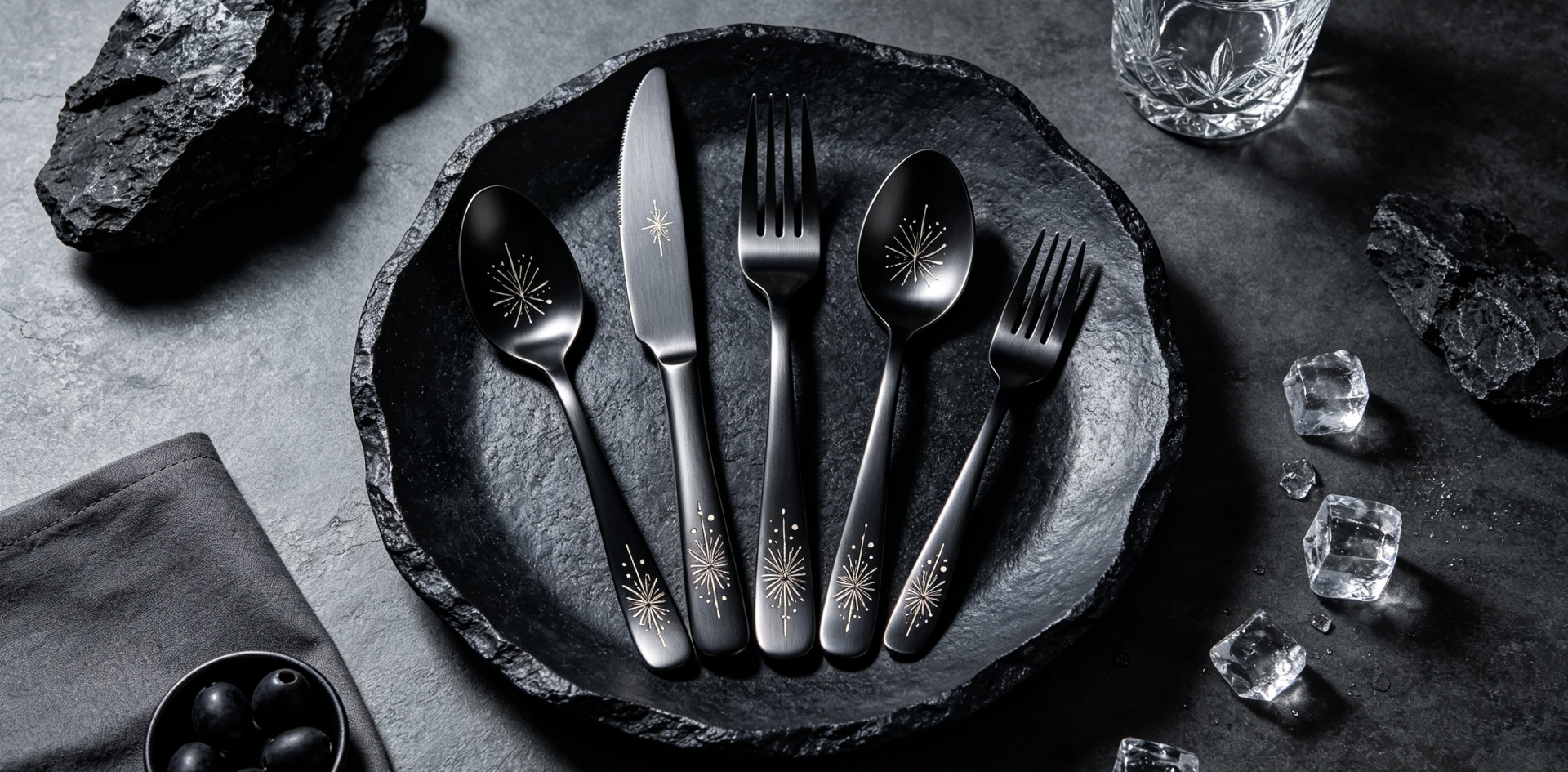
Stainless Steel Cutlery Thermal Feel for B2B Products
When people evaluate stainless steel cutlery, they usually notice the appearance first. The shape of the handle, surface finish, weight and overall design are easy to see. However, there are also physical characteristics that users experience without necessarily thinking about them directly.
One of these is thermal feel.
Stainless steel cutlery can feel different in the hand depending on its temperature, surrounding environment and construction. A spoon taken from a cool storage area may initially feel different from one that has been sitting in a warm dining environment. In the same way, cutlery used with hot or cold food creates a different sensory experience during a meal.
For B2B buyers developing custom stainless steel knives, forks, spoons and flatware sets, understanding this aspect can help create products that are better matched to their intended application.
What Is Thermal Feel in Stainless Steel Cutlery?
Thermal feel describes how a material feels to the touch as heat moves between the product and the user's hand.
Stainless steel is a metal, so it can quickly feel cool when it is cooler than the surrounding environment. If the product is warmer, the sensation can change accordingly.
The feeling is not determined by the material name alone. Product dimensions, mass, surrounding temperature, handling time and other physical factors can all influence how a piece feels when held.
For everyday cutlery, these changes are usually subtle. Nevertheless, they are part of the overall tactile experience of the product.
Why Does This Matter for B2B Cutlery?
For many standard purchasing projects, thermal feel may not be a primary specification. The more important requirements may be appearance, durability, quantity and price.
However, some B2B buyers place greater emphasis on the complete user experience.
Premium tableware brands, hospitality suppliers and companies developing distinctive private label collections may want to understand how the product feels when it is actually used rather than evaluating it only from photographs.
This is particularly relevant when a new cutlery design has a distinctive handle shape or construction. A sample can reveal physical characteristics that are difficult to communicate through a product drawing.
Material and Environmental Conditions
The surrounding environment has an obvious influence on how stainless steel cutlery feels.
Cutlery stored in a cool room can feel different from cutlery used in a warm dining area. Products placed close to hot food or cold food may also experience changes during normal use.
This is one reason why product samples should ideally be evaluated in conditions that resemble the intended market.
A buyer developing flatware for a particular commercial environment can consider where and how the products will normally be stored, presented and used.
The objective is not necessarily to control temperature during everyday use. Instead, it is to understand the expected experience and make sure that the physical product is appropriate for its intended application.
How Handle Design Influences the Experience
The handle is the part of the cutlery that users hold most directly, so its shape can influence how the product feels in the hand.
A wider handle may create a different tactile experience from a narrow one. A rounded profile can feel different from a flatter profile. The amount of material in the handle can also affect the way users perceive the product.
These characteristics are relevant to OEM and ODM projects because a custom handle is often one of the most visible elements of a private label collection.
When developing a new handle design, B2B buyers can therefore consider more than visual appearance. The actual physical experience should also be evaluated through samples.
Testing Before Mass Production
A physical sample is especially useful when the buyer wants to evaluate the complete product experience.
Instead of only checking the sample against a drawing, buyers can hold the knife, fork and spoon naturally and use them in a normal dining situation.
Several pieces can be compared together to see whether the collection provides a consistent experience.
The buyer can also consider how the cutlery feels when first picked up, after several minutes of use and when moved between different parts of the table setting.
These observations do not need to become complicated laboratory tests. For many commercial projects, practical hands-on evaluation provides useful information before the product is approved for mass production.
Thermal Feel and Different Cutlery Pieces
Knives, forks and spoons are not identical products, even when they belong to the same collection.
A knife may have a different construction from a spoon, while a fork has its own head and handle relationship. As a result, users may perceive each piece slightly differently.
For a B2B buyer developing a coordinated collection, it can be useful to test representative pieces rather than evaluating only one product.
This helps confirm whether the overall product family provides the intended experience.
For private label brands, this consistency can be particularly valuable because customers often expect products within the same collection to feel related.
Considering Hot and Cold Food Applications
Cutlery is used with a wide variety of foods and beverages. Some meals involve hot dishes, while others include chilled desserts, fruit or cold foods.
The cutlery itself does not need to be designed around every possible temperature condition. However, the intended application can still be considered when evaluating a new product.
For example, a brand developing a premium dessert-oriented collection may approach the product experience differently from a company supplying general-purpose tableware.
The key is to understand the actual use case before deciding which product characteristics deserve greater attention.
Thermal Feel Is Only One Part of Product Experience
Thermal sensation should not be considered independently from other product characteristics.
Weight, handle shape, surface finish, dimensions and overall construction all contribute to how stainless steel cutlery feels in use.
A product can have an attractive appearance but still provide a different experience when held. Conversely, a relatively simple design can feel well considered when its physical characteristics work together.
For B2B buyers, this means product development should look at the complete experience rather than optimizing one characteristic in isolation.
This approach can also make communication with the manufacturer more effective. Instead of requesting an isolated change without context, the buyer can explain the intended use and the desired overall product experience.
Custom Stainless Steel Cutlery for Private Label Brands
Private label projects give brands an opportunity to create stainless steel cutlery around their own market requirements.
The buyer may have a particular handle concept, collection style or target customer in mind. The manufacturer then needs to translate those requirements into a practical product that can be manufactured consistently.
This is where experience in stainless steel cutlery production becomes important.
A factory familiar with OEM and ODM development can discuss the relationship between the design concept and the physical product, allowing the buyer to review samples before confirming the final production specification.
Homefelt Factory for OEM, ODM and Bulk Cutlery
Homefelt Factory specializes in stainless steel knives, forks, spoons and complete flatware sets for B2B customers.
The factory supports OEM, ODM and private label manufacturing, as well as wholesale and large-volume production.
For a new project, buyers can provide product drawings, reference samples, photographs or initial concepts. The development discussion can then cover the details that are important for the intended application, including product design, construction and overall user experience.
For companies building their own flatware collections, this allows the product to be developed around the brand's requirements rather than relying only on standard catalog specifications.
How B2B Buyers Can Prepare for Product Development
Before requesting a quotation, buyers can prepare several basic details.
The first is the type of cutlery required. This may include individual knives, forks and spoons or a complete flatware set.
The buyer can then provide the preferred design style, estimated quantity and target market. If a reference product already exists, photographs or physical samples can make communication easier.
It is also useful to describe the intended application. A product designed for everyday retail use may have different priorities from a collection developed for a premium hospitality environment.
This information gives the manufacturer a clearer understanding of the project and creates a better starting point for sample development.
From Physical Experience to Commercial Product
A successful B2B cutlery product is created through many small decisions.
The design needs to look appropriate, the construction needs to be practical, and the final product needs to provide an experience that matches the intended market.
Thermal feel is only one part of that experience, but considering it during sample evaluation can help buyers understand the physical characteristics of their stainless steel cutlery more completely.
For brands developing custom flatware, these details can also help distinguish a product from standard market offerings without requiring unnecessarily complicated designs.
By evaluating the actual sample before mass production, B2B buyers can make adjustments while the project is still in the development stage.
This creates a clearer path from an initial concept to a finished stainless steel cutlery collection suitable for wholesale, retail or private label sales.
Co-Branded Stainless Steel Cutlery for B2B Collections
Stainless Steel Cutlery Gift Sets for B2B Brands
Related Article



