
Stainless Steel Cutlery Trade Show Samples for B2B Brands
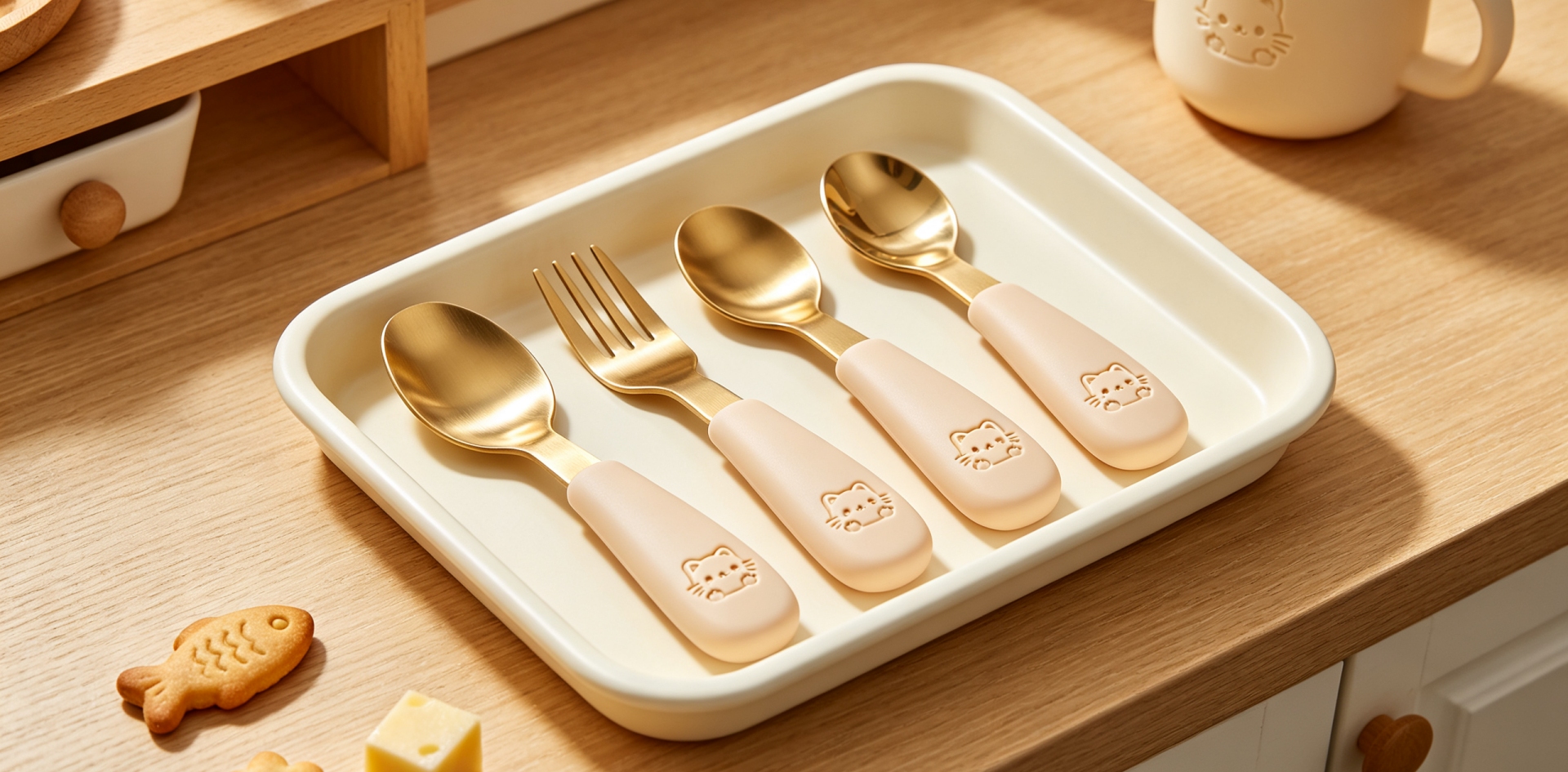
Stainless Steel Cutlery Trade Show Samples for B2B Brands
For stainless steel cutlery brands, distributors and importers, a trade show can create valuable opportunities to meet new buyers. However, displaying products at an exhibition is not simply a matter of bringing as many knives, forks and spoons as possible.
The sample selection needs to communicate the product range clearly. Buyers should be able to understand the quality, design direction, customization possibilities and commercial applications within a relatively short conversation.
A well-prepared sample collection can also make the transition from an initial meeting to a quotation and future bulk order much easier.
Choosing Samples That Represent the Product Range
A trade show display usually has limited space, so every stainless steel cutlery sample needs a purpose.
Instead of presenting many products with little variation, a B2B brand can select representative items from several important categories. These may include different handle styles, surface finishes, product weights or complete flatware collections.
For example, a display could include several representative knives, forks and spoons that demonstrate different design directions. A buyer can then discuss whether a similar concept would work for their own market.
This approach gives visitors a clearer understanding of the supplier's manufacturing capabilities without requiring a large exhibition space.
Showing Complete Cutlery Collections
Individual pieces are useful for demonstrating specific details, but complete collections can communicate the commercial value of a product range more effectively.
A four-piece or larger stainless steel flatware set allows buyers to see how the knife, fork and spoon work together visually.
For private label brands, a coordinated collection can also demonstrate how several products can be developed under one brand identity.
Homefelt factory can support custom stainless steel knives, forks, spoons and complete flatware sets, allowing buyers to discuss individual products as well as broader collection concepts.
Using Samples to Start Custom Development
Trade show conversations often begin with an existing product but quickly move toward customization.
A buyer may like the shape of one handle, the surface finish of another product or the proportions of a particular spoon. Rather than selecting one standard item exactly as displayed, the buyer may want to combine different characteristics into a new product concept.
This is where factory manufacturing experience becomes important.
A professional stainless steel cutlery factory can review the requested changes and determine how they can be translated into a manufacturable product.
For OEM and ODM projects, the exhibition sample can therefore become the starting point for further product development rather than simply being a finished catalog item.
Demonstrating Different Surface Options
Surface treatment can have a strong visual effect when buyers see products in person.
Polished stainless steel, matte surfaces and selected decorative finishes can create different impressions even when the basic cutlery shape is similar.
Samples allow buyers to compare these options directly rather than relying only on photographs.
For a B2B collection, it can be useful to show a limited number of carefully selected finishes that represent the available production direction. This gives buyers practical references when discussing their own product requirements.
Sample Presentation for Private Label Projects
For private label customers, the product itself is only one part of the presentation.
Packaging, labels and brand elements can influence how the finished product will appear in the target market. A trade show sample can therefore include examples of customized packaging alongside the stainless steel cutlery.
This helps buyers discuss the complete commercial product rather than focusing only on the individual spoon, fork or knife.
Homefelt can coordinate stainless steel cutlery customization with packaging requirements for B2B projects, allowing product and presentation details to be discussed together.
Making Technical Information Easy to Discuss
Trade show conversations are often short. Buyers may meet many suppliers during the same exhibition, so useful product information should be easy to access.
A sample reference can include basic details such as:
Product code
Material
Length
Weight
Finish
Set composition
Packaging format
Available customization
Minimum production requirements
These details provide a useful starting point for a quotation after the exhibition.
The information does not need to overwhelm the buyer. Its purpose is to create a clear reference that both sides can use when continuing the conversation.
Samples Should Reflect Actual Production Capability
An important consideration for B2B buyers is whether the products shown at a trade show can actually be produced consistently in commercial quantities.
A visually attractive sample has limited value if the factory cannot reproduce the same specifications for a bulk order.
This is why exhibition samples should ideally represent the factory's real manufacturing capabilities.
Homefelt focuses on stainless steel cutlery production for wholesale, OEM, ODM and private label customers. The factory can develop knives, forks, spoons and complete flatware sets according to confirmed product specifications and production requirements.
From Exhibition Sample to Quotation
After a buyer shows interest in a sample, the next step is usually to define the exact product requirements.
The buyer may request changes to dimensions, weight, handle design, finish, packaging or set composition. Once these details are clear, the factory can prepare the relevant quotation and discuss production requirements.
This process is much more efficient when the original exhibition sample has a clear product reference.
For custom projects, buyers can also provide their own drawings, existing samples, brand requirements or product concepts after the exhibition. These materials give the factory a stronger basis for developing the next version.
Preparing Samples for Different Buyer Types
Not every trade show visitor is looking for the same product.
A distributor may be interested in a broad stainless steel cutlery range. A retailer may focus on attractive packaged sets. A hospitality buyer may require durable commercial products, while a private label brand may be more interested in developing a unique collection.
A well-planned sample display can therefore contain several product directions without becoming confusing.
The key is to make the differences easy to understand and then discuss the buyer's specific requirements.
This gives the conversation a natural path from sample selection to product customization and eventually to bulk manufacturing.
Why Factory Support Matters After the Exhibition
The exhibition itself is only the beginning of the business relationship.
After buyers return to their offices, they may need updated samples, detailed specifications, packaging proposals, revised quotations or production discussions.
A factory that can continue supporting these stages can make the transition from an exhibition conversation to a commercial project more straightforward.
Homefelt provides stainless steel cutlery manufacturing support for B2B customers, including product customization, OEM and ODM development, private label production, packaging coordination and bulk manufacturing.
This allows a buyer to start with a physical sample and gradually develop it into a finished commercial product.
Building a Sample Strategy for Future Sales
A trade show sample collection can also become a long-term sales resource.
Products that attract repeated interest can be retained as representative samples for future meetings, customer presentations and quotation discussions. New designs can then be added when the product range expands.
Over time, this creates a more organized sample library that helps sales teams introduce the factory's capabilities to different B2B customers.
For brands developing stainless steel cutlery collections, the same principle applies to product development. A successful sample can become the reference for a larger series of knives, forks, spoons and matching sets.
Turning Product Interest Into a Production Project
The most useful trade show sample is not necessarily the most complicated one. It is the sample that gives a buyer enough information to start a practical business discussion.
When the buyer can see the product, discuss customization and understand how the factory can support bulk production, the conversation can move naturally toward a commercial project.
For companies looking for a stainless steel cutlery manufacturer, Homefelt can review existing samples, drawings or new product concepts and discuss suitable manufacturing arrangements.
If you are preparing for a trade show or looking for samples for your next stainless steel cutlery collection, contact Homefelt at ingrid@homefelt.net. Share the products, styles, quantities or customization ideas you are considering, and the factory can discuss the next steps for sampling and bulk production.
Custom Stainless Steel Cutlery Samples
OEM Stainless Steel Flatware Manufacturing
Private Label Cutlery Production
Stainless Steel Cutlery Replenishment Planning for B2B Brands
Centralized Stainless Steel Cutlery Procurement for B2B Brands
Related Article



