
Stainless Steel Cutlery Transition Consistency for B2B
Stainless Steel Cutlery Transition Consistency for B2B
When developing stainless steel knives, forks and spoons, buyers often focus on the major dimensions such as length, width, thickness and handle shape. However, the smaller transition areas between different sections of a cutlery piece can also influence the appearance and production consistency of the finished product.
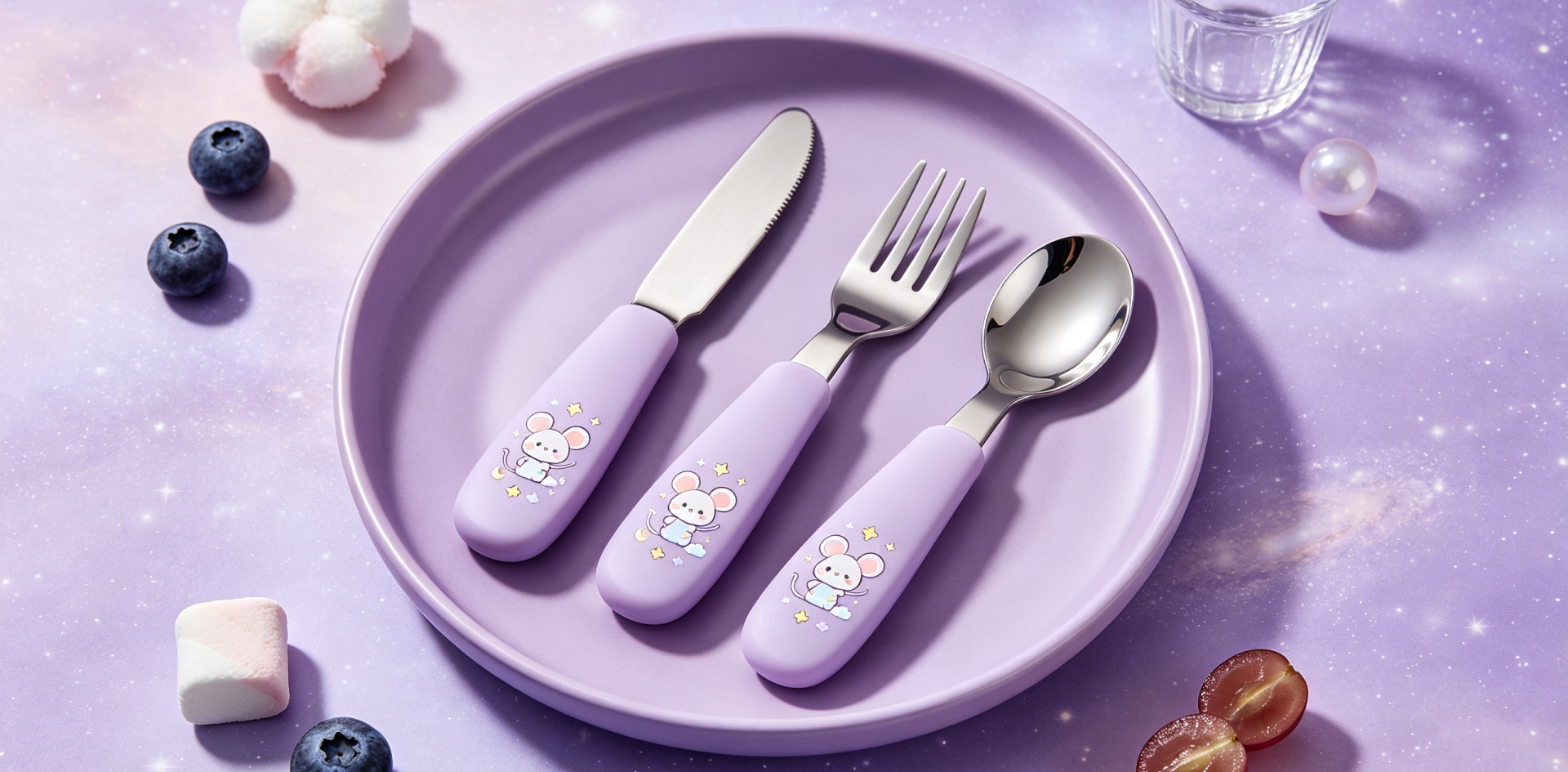
A stainless steel knife may have a transition between the blade and handle. A fork connects the head and handle through a shaped neck area, while a spoon transitions from its bowl into the handle.
These areas may look simple, but they contribute to the overall flow of the product. For B2B customers ordering customized stainless steel cutlery, consistent transitions can be an important part of a complete product specification.
What Is Transition Consistency in Cutlery?
Transition consistency refers to how smoothly and consistently one section of a cutlery piece connects to another.
The change may involve width, thickness, curvature or surface shape.
For example, the handle of a stainless steel fork may gradually change from the neck into the main handle. A spoon may have a controlled transition between the bowl and handle. On a knife, the blade and handle connection can form another important visual area.
The objective is to make these changes follow the approved product design consistently across the production quantity.
Why Small Transitions Matter
A stainless steel cutlery piece is viewed as one complete product. If one section changes abruptly or inconsistently, the overall appearance can be affected even when the main dimensions are correct.
This becomes more noticeable on modern designs with clean lines and relatively simple surfaces.
For private label brands, small visual details can also contribute to the identity of a collection. A carefully developed transition can make a product look more intentional and coordinated.
For large-volume B2B orders, consistency is important because the same transition is repeated across hundreds or thousands of pieces.
Transition Design and Product Proportions
Transition areas should be considered together with the surrounding dimensions.
A wide handle may require a different transition from a narrow handle. A heavier knife blade may need a different connection from a lightweight design.
The same principle applies to forks and spoons.
The transition should visually connect the two sections without making either side appear disproportionately large or small.
During OEM and ODM product development, this can be reviewed as part of the complete design rather than being treated as an isolated detail.
Supporting a Coherent Knife, Fork and Spoon Collection
When a customer develops a complete stainless steel flatware collection, similar design principles can be applied across the knife, fork and spoon.
The actual geometry does not need to be identical because each product has a different function.
Instead, the transition language can be coordinated.
For example, the handle connection on the fork and spoon may share a similar visual flow, while the knife uses a corresponding design principle appropriate to its blade structure.
This can help create a more unified appearance when the three pieces are placed together.
Importance for Custom Stainless Steel Cutlery
Standard catalog products usually have established production specifications.
Custom cutlery is different because the customer may request a new handle shape, different dimensions or a completely new collection.
When the design changes, the transition areas may also need to be adjusted.
A product that looks attractive in a drawing still needs to be practical for stainless steel forming, polishing and finishing.
This is where communication between the customer and factory becomes important.
From Design Concept to Production Sample
For a customized stainless steel cutlery project, the first design may be provided as a drawing, image or physical reference.
The factory can review the concept and develop a sample according to the proposed specifications.
The sample gives the customer an opportunity to examine the complete product rather than evaluating only individual measurements.
At this stage, the transition between different sections can be reviewed together with the overall proportions, surface finish and handle design.
If adjustments are required, they can be incorporated before bulk production.
Manufacturing Consistency in Large Orders
Once the design has been approved, the challenge becomes maintaining the same result throughout mass production.
The production team needs to work according to the confirmed specifications and manufacturing process.
Transition areas should remain consistent with the approved sample instead of gradually changing during production.
This is particularly relevant for private label products that may be reordered over a long period.
A stable product reference helps the factory and customer maintain the same design direction across future orders.
Surface Finishing Around Transition Areas
Transition areas can also affect how a stainless steel cutlery piece reflects light.
On polished products, changes in shape can create different reflective patterns. On matte or other surface finishes, the transition may still influence how the surface appears under lighting.
For this reason, finishing should be considered together with the underlying product shape.
A technically correct transition can still require careful finishing to achieve the intended appearance.
This is one reason why customized stainless steel cutlery should be developed as a complete product rather than through isolated specifications.
Different Customer Requirements, Different Solutions
A restaurant supplier may prioritize durability and practical daily use.
A retail brand may place more emphasis on appearance and collection consistency.
A private label customer may want a distinctive handle design that separates the collection from standard market products.
These different requirements can lead to different transition designs.
Homefelt factory can discuss the customer's target market, product concept and expected order quantity before establishing the final manufacturing requirements.
This allows the product solution to be developed around the customer's actual business needs.
Homefelt Custom Stainless Steel Cutlery Manufacturing
Homefelt factory specializes in stainless steel knives, forks, spoons and complete flatware sets for B2B customers.
The factory supports OEM, ODM, private label, wholesale and bulk production projects.
Customers can provide drawings, reference samples or initial ideas. The product can then be developed according to the required dimensions, design direction, surface finish and production requirements.
For customers who need a complete service package, Homefelt can also coordinate product design, customization, packaging and transportation according to the project situation.
This one-stop approach allows customers to discuss several connected requirements with one stainless steel cutlery manufacturing partner.
Building a Service Package Around Your Project
Not every customer needs the same level of support.
If you already have a finished drawing, the project may focus mainly on manufacturing and bulk supply.
If you have a product concept but need help developing the final design, additional product development support may be appropriate.
If you are building a private label collection, the service can also include customized packaging and transportation coordination.
Homefelt can create a suitable service package according to the customer's actual situation rather than applying one fixed solution to every project.
From One Product to Long-Term Cooperation
A customized stainless steel cutlery project can often develop into a larger product program.
A customer may begin with one knife, fork or spoon and later add matching products to create a complete collection.
As the business grows, the customer may also require new packaging, additional SKUs or larger production quantities.
Having a factory that understands the original product specifications can make these future developments easier to coordinate.
Homefelt aims to build long-term relationships with B2B customers by supporting their product development and manufacturing needs as their businesses grow.
Why Factory Communication Matters
Good stainless steel cutlery manufacturing starts with clear communication.
Before requesting a quotation, buyers can provide as much information as available, including product drawings, dimensions, material requirements, finish, estimated quantity, packaging expectations and target market.
If some specifications are not finalized, that is also useful information to communicate.
The factory can then understand which parts of the project are already confirmed and which areas still require development.
This creates a more practical starting point for discussing customization and production.
A Practical Partner for Stainless Steel Cutlery Development
For B2B buyers, choosing a stainless steel cutlery factory is not only about finding a supplier capable of producing knives, forks and spoons.
The factory should also understand how product design, manufacturing, packaging and transportation connect within the customer's project.
Homefelt provides customized stainless steel cutlery manufacturing for wholesalers, distributors, retailers and private label brands.
Depending on the project, the service can cover product design, OEM, ODM, private label production, wholesale supply, bulk manufacturing, packaging coordination and transportation arrangements.
The exact service package can be adjusted according to the customer's requirements.
Stainless Steel Cutlery Material Traceability for B2B Orders
Custom Stainless Steel Cutlery Service Packages for B2B
Related Article



