
Stainless Steel Cutlery Tray Fit for B2B Retail Sets
Stainless Steel Cutlery Tray Fit for B2B Retail Sets
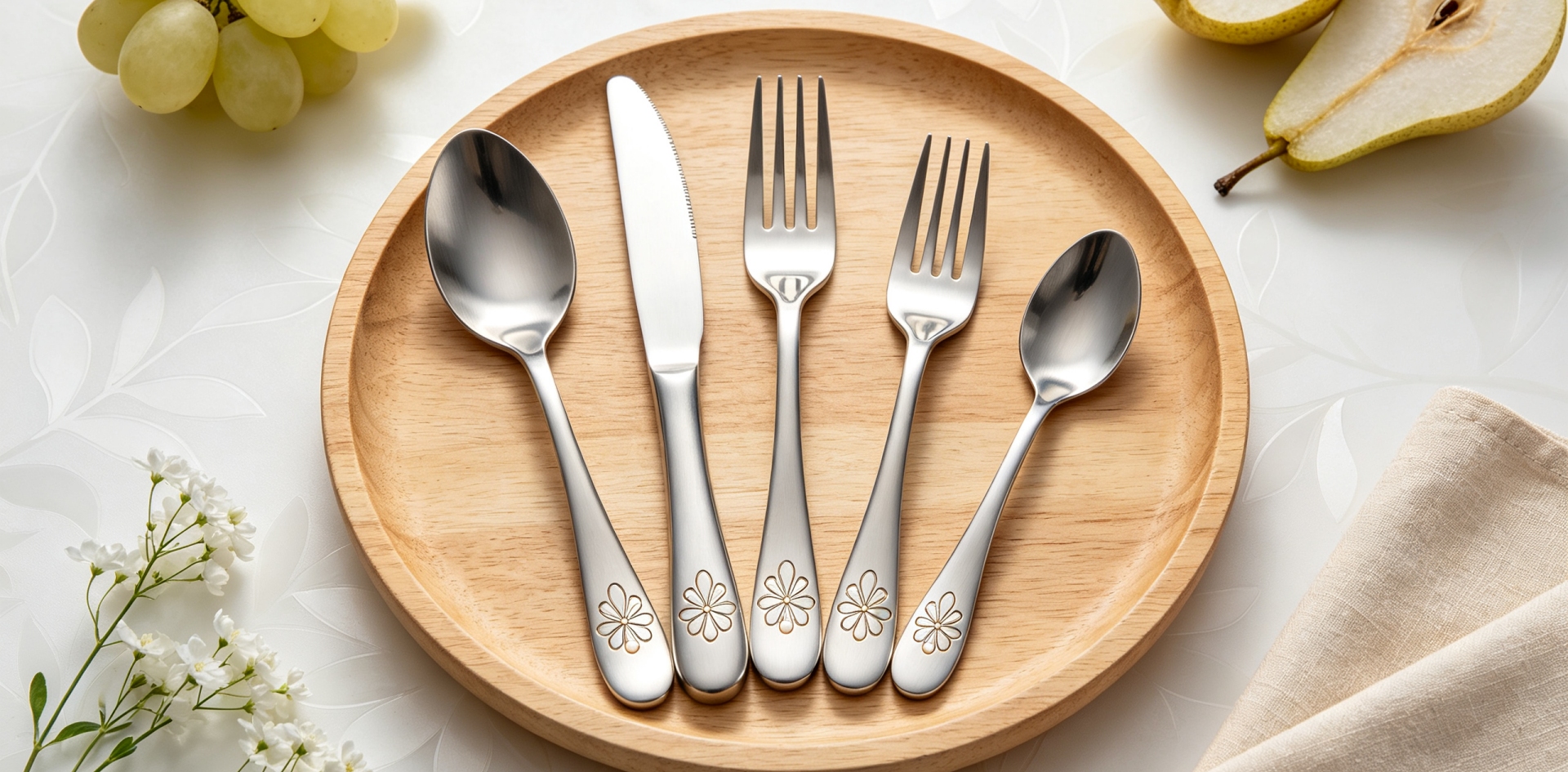
For a retail stainless steel cutlery set, the tray inside the package has a practical role that goes beyond presentation. It helps keep knives, forks and spoons in their intended positions, reduces movement during transportation and allows buyers to see the complete set clearly when the package is opened.
For B2B brands, distributors and importers, this detail becomes more important when a product is ordered in large quantities. A tray that fits the cutlery correctly can support a more consistent package appearance from the first carton to the last shipment.
Why Tray Fit Matters for Stainless Steel Cutlery Sets
Stainless steel cutlery pieces have different lengths, widths and shapes. A table knife may require more space than a spoon, while a fork needs enough room around its tines to avoid unnecessary contact with neighboring pieces.
If an inner tray is too loose, individual pieces can move during transportation. If it is too tight, removing the cutlery may become inconvenient and the packaging may be placed under unnecessary pressure.
For B2B retail products, the objective is to create a practical balance between retention, presentation and easy handling.
A properly designed tray can help maintain the intended arrangement of a flatware set while making the product look organized when the package is opened.
Matching the Tray to the Cutlery Design
Tray development should start with the actual cutlery specifications rather than using a generic insert for every collection.
Length is one of the first considerations. Different knife, fork and spoon sizes may require different cavities or positioning points. The tray should accommodate the longest pieces without leaving excessive unused space.
Width is also important. A wider handle design may need more room than a narrow traditional handle. Decorative details, textured surfaces and special handle shapes can also affect how each piece sits inside the package.
The shape of each cavity should follow the functional requirements of the product. The goal is not necessarily to surround every millimeter of the cutlery, but to provide enough support to prevent unnecessary movement while keeping the set easy to remove.
Keeping Pieces Separated
When several stainless steel cutlery pieces are packed together, separation becomes an important consideration.
Knives, forks and spoons can have different surface shapes and contact points. During transportation, repeated movement inside a package may cause pieces to touch one another. For certain finishes or special designs, unnecessary contact can affect the visual appearance of the products.
An appropriate tray layout can create defined positions for individual pieces. Small spacing adjustments can make a noticeable difference when thousands of sets are packed and shipped.
For B2B projects, this is especially useful when the same collection will be produced repeatedly. Once the approved tray arrangement is established, it can become part of the product packaging specification for future orders.
Supporting a Consistent Retail Presentation
Packaging is often the first physical interaction between a customer and a cutlery collection. Even when the stainless steel products themselves are manufactured to consistent specifications, a poorly arranged package can make the product look less organized.
A well-fitted tray gives each piece a defined position. This can make a 16-piece, 20-piece, 24-piece or larger flatware set easier to understand at a glance.
For private label brands, this can also support a consistent visual identity across multiple product collections. Different sets may use different tray layouts while maintaining a similar packaging structure.
This approach can be useful for brands that are developing several stainless steel cutlery collections for retail distribution.
Tray Material and Construction Considerations
The material selected for an inner tray depends on the packaging concept, target market and required presentation.
Paperboard-based inserts can work well for brands looking for a more traditional retail presentation. Molded inserts can provide defined cavities and repeatable positioning. Other packaging structures may be selected depending on the product design, packaging dimensions and transportation requirements.
The tray should also work with the outer box. An insert that fits the cutlery correctly but leaves excessive movement inside the retail package may not provide the expected protection.
For this reason, cutlery, tray and outer packaging should be considered as one coordinated package rather than three independent components.
Testing the Complete Package
Before mass production, the complete packed set should be reviewed rather than checking only the tray by itself.
The cutlery should be placed into the intended positions to confirm that every piece fits naturally. The package should then be closed and handled under realistic conditions.
This review can identify issues such as pieces moving out of position, handles lifting above the intended surface, excessive pressure on the box or difficulty removing individual pieces.
For B2B orders, early testing is particularly valuable because packaging adjustments become more difficult after large-volume production has started.
Different Markets, Different Packaging Needs
A retail flatware set for a supermarket may require a different packaging structure from a premium private label collection or a hospitality-focused product.
Some buyers prioritize compact dimensions and efficient carton utilization. Others may focus more heavily on presentation, gift-style opening experience or premium materials.
There is therefore no single tray configuration suitable for every stainless steel cutlery project.
A professional supplier should be able to discuss the product, target market, packaging structure and order quantity together before confirming the final solution.
How Homefelt Supports Customized Cutlery Projects
At Homefelt factory, stainless steel knives, forks, spoons and complete flatware sets can be developed according to different B2B project requirements.
For customers developing their own collections, the service can extend beyond manufacturing the stainless steel pieces. Product specifications, set composition, packaging structure and other project details can be coordinated according to the customer's requirements.
OEM and ODM customers may need different levels of support. Some already have complete drawings and packaging specifications, while others have a product concept and need assistance turning it into a production-ready collection.
Private label customers may also require coordinated packaging for different sets, finishes or product ranges. A customized approach makes it easier to align the cutlery and its packaging before bulk production.
Homefelt can provide stainless steel cutlery customization, OEM/ODM manufacturing and wholesale production for B2B customers looking to develop or expand their flatware programs.
From Product Specification to Finished Order
A successful B2B cutlery project is rarely determined by one specification alone. The knife, fork and spoon need to work as a collection, while the packaging needs to accommodate the finished products in a practical way.
This is why early communication about product dimensions, set composition, packaging requirements and expected order volume can help create a smoother production process.
For buyers planning a new stainless steel flatware set, it is useful to provide the supplier with the basic information available, such as product drawings, dimensions, quantities, target packaging style and branding requirements.
The supplier can then evaluate the requirements and discuss suitable manufacturing and packaging options before the order is finalized.
Building a Practical Long-Term Flatware Program
For distributors and private label brands, packaging details become increasingly important as product lines grow.
A successful first collection may later expand into additional spoon, fork, knife and complete cutlery sets. Having a clear packaging structure makes it easier to manage these product variations while maintaining a recognizable presentation.
Homefelt factory works with B2B customers on stainless steel cutlery projects ranging from individual pieces to complete flatware collections and large-volume orders.
The goal is not simply to produce stainless steel cutlery, but to support customers with a coordinated service package covering customization, manufacturing and related project requirements.
Stainless Steel Fork Tine Count for B2B Cutlery Design
Stainless Steel Knife Blade Shoulder Width for B2B Cutlery
Related Article



