
Stainless Steel Cutlery Visual Proportions: A Key Detail for Custom B2B Collections
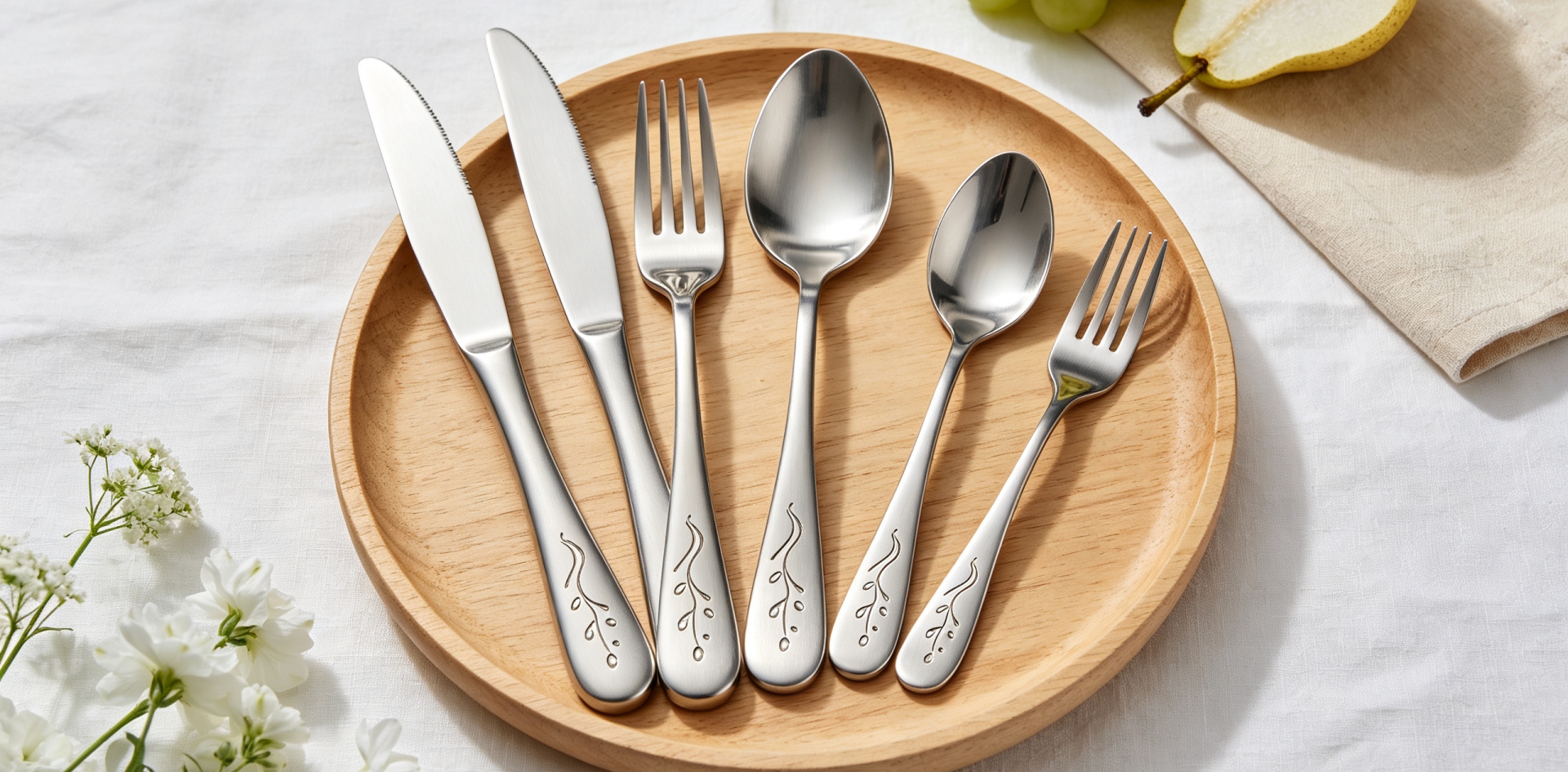
Stainless Steel Cutlery Visual Proportions: A Key Detail for Custom B2B Collections
When developing a stainless steel cutlery collection for a brand, distributor or wholesale program, individual measurements are only part of the product design. A knife can have the correct length, a fork can meet its functional requirements, and a spoon can be produced according to specification, yet the complete collection may still look unbalanced when the three pieces are placed together.
This is where visual proportion becomes important.
Visual proportion describes how the different parts of a cutlery piece relate to each other and how several pieces look when presented as one collection. For B2B buyers developing custom flatware, this detail can influence the appearance of samples, retail presentation, packaging and the overall identity of the product range.
Why Visual Proportion Matters in Custom Cutlery
Stainless steel cutlery is made up of relatively simple shapes, which means small changes can become surprisingly noticeable. The relationship between the working section and handle, the apparent width of the handle, the size of the head and the amount of visual weight at each end can all affect the overall impression.
A fork with a relatively broad head may require a different visual treatment from a narrow fork. A spoon with a large bowl can look disproportionate if its handle is too visually light. A table knife may need a stronger visual presence because of its blade construction.
For this reason, custom cutlery design should not be treated as a collection of completely independent products.
The Three Pieces Should Work Together
When a customer develops a knife, fork and spoon as one collection, the objective is usually not to make every measurement identical. Instead, the pieces should share recognizable design relationships.
For example, the handle language can remain consistent while the functional ends naturally differ according to their purpose. The fork needs its tines, the spoon needs its bowl, and the knife needs its blade. Their functional sections cannot simply be copied from one product to another.
What can be coordinated is the visual weight, general silhouette and relationship between major design areas.
This creates a collection that looks intentional when the products are displayed together.
Visual Weight Is More Than Actual Weight
One common misunderstanding in cutlery development is that visual weight and physical weight are the same thing.
They are related, but they are not identical.
A wider handle may look heavier even if the actual product weight has changed very little. A large decorative area can make one part of the handle appear more substantial. A narrow neck may visually separate the handle from the working section, making the two areas appear more distinct.
For a B2B brand, these details can affect how customers perceive the collection before they even use the products.
That is why visual balance should be reviewed during sample development rather than only after bulk production has started.
Comparing Knife, Fork and Spoon Proportions
A useful way to review a new collection is to place the main cutlery pieces side by side.
Look at the overall silhouette first rather than focusing immediately on individual measurements.
Does one piece appear noticeably heavier at the handle?
Does one working section look unusually large compared with the others?
Do the handles appear to belong to the same family?
Are the major design lines positioned consistently?
Does the collection still look balanced when the pieces are placed in the same direction?
These simple checks can reveal design differences that may not be obvious when each product is reviewed separately.
This approach is particularly useful when developing private label stainless steel flatware, because the final products are often photographed, packaged and displayed as a group.
Design Proportion and Handle Development
The handle often plays an important role in the visual identity of a cutlery collection.
Two handles can have similar lengths but create completely different impressions because of their width, taper, profile or decorative treatment.
For a custom B2B project, the handle should therefore be considered together with the functional section.
If a handle becomes visually dominant, the working end may appear smaller. If the handle is too visually narrow, a large spoon bowl or broad fork head can make the product look unbalanced.
The goal is not necessarily mathematical symmetry. The goal is a coherent visual relationship.
How Proportion Affects a Custom Cutlery Set
For buyers developing a complete cutlery set, visual proportion becomes even more important.
A set may contain several spoons, forks and knives, depending on the intended market and product positioning. When all pieces are arranged together, repeated design features should create a clear connection.
This does not mean every item has to have the same handle shape or exactly the same visual dimensions. Instead, the collection should have a recognizable design language.
A B2B manufacturer can work from drawings, reference samples or customer concepts to translate this design language into individual products.
For brands, this can be useful when creating a collection that needs to feel different from standard catalog products.
Using Technical Drawings to Control Proportion
Visual proportion is easier to manage when important design relationships are documented clearly.
A technical drawing can show the overall dimensions of a product and provide reference points for major design areas. Additional views can help clarify the relationship between the handle and functional section.
For more detailed projects, customers may also provide visual references or marked-up drawings showing which areas should appear stronger, softer, wider or more delicate.
This information gives the manufacturer a clearer starting point for sample development.
It also becomes useful later when additional SKUs are added to the same collection.
Sample Development Before Bulk Production
A sample is especially valuable when visual proportion is an important part of the project.
Images and drawings are useful for communication, but a physical stainless steel cutlery sample provides a much better understanding of how the design actually looks and feels.
The sample can be viewed from different angles and placed beside other products in the collection. This allows the buyer and manufacturer to identify details that may need adjustment before production quantities are confirmed.
For example, the handle may need a small visual change to better match the spoon and fork. A decorative area may need to be reduced. Or the overall relationship between the working section and handle may need refinement.
Making these decisions at the sample stage is much easier than changing a large production quantity later.
Proportion and Manufacturing Practicality
A visually attractive design still needs to be suitable for manufacturing.
When a custom cutlery design contains several different widths, transitions and decorative details, the manufacturer needs to evaluate how these features can be produced consistently.
This is particularly important for B2B orders where quantities can be substantial and repeat orders may follow.
The final design should therefore balance appearance with practical production requirements.
A good custom project is not simply a drawing that looks attractive. It is a design that can be translated into stable production while maintaining the intended appearance.
Keeping Proportions Consistent Across New SKUs
Many brands do not stop with one cutlery set. Once a successful collection has been established, they may want to add additional products.
This is where a clear approach to visual proportion becomes valuable.
If the original collection has established a recognizable relationship between handle width, working-section size and overall silhouette, new products can be developed using the same principles.
This helps the product line grow without making every new SKU look unrelated.
For distributors and private label brands, this can also make future product development more efficient because the manufacturer already has an established design reference.
A Practical Approach for B2B Buyers
When discussing a custom stainless steel cutlery project with a manufacturer, it is useful to communicate both exact specifications and visual expectations.
Provide the desired product dimensions where possible, but also explain how the pieces should look when presented together.
Reference photos can help communicate the general direction. Technical drawings are useful for precise dimensions. Existing samples can provide a physical reference when appearance and proportions are difficult to describe in words.
The more clearly these elements are combined, the easier it becomes to develop an accurate sample.
From Visual Concept to Commercial Cutlery Collection
For a B2B buyer, the purpose of custom cutlery development is ultimately to create a product that can be manufactured, sold and reordered successfully.
Visual proportion is one part of that process, but it can have a strong influence on how the finished collection is perceived.
A balanced relationship between knife, fork and spoon can make a collection look more deliberate. Consistent visual weight can strengthen the connection between different SKUs. Clear technical references can help a manufacturer reproduce the intended design during production.
For brands looking for OEM, ODM or private label stainless steel cutlery, these details can be discussed before sampling and quotation. Starting with a clear concept gives both sides a better foundation for developing the final product.
If you have an existing design, reference sample or new cutlery concept, you can provide the product requirements, expected quantity and customization details to a stainless steel cutlery manufacturer. From there, the project can move toward sample development, quotation and bulk production according to the agreed specifications.
Custom Stainless Steel Cutlery for Your Brand
OEM Stainless Steel Flatware Manufacturing
Private Label Cutlery Collection Development
Wholesale Stainless Steel Cutlery Supplier
Request a Custom Cutlery Quotation
Stainless Steel Cutlery Design Conversion: From Concept to B2B Production
Edelstahlbesteck mit Oberflächenkombinationen für individuelle B2B-Kollektionen
Related Article



