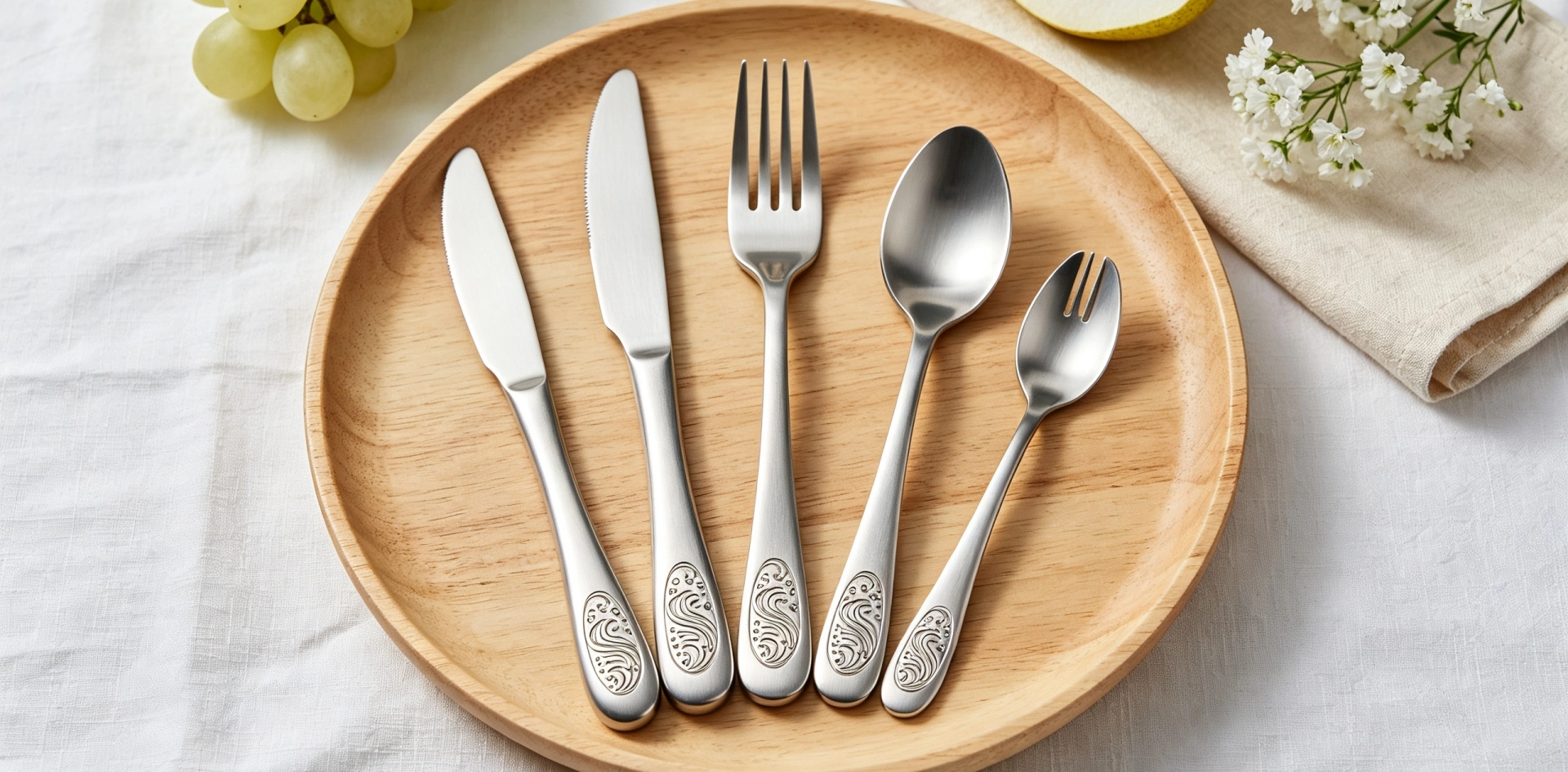
Stainless Steel Flatware Finishes: Polished, Satin and Brushed Guide
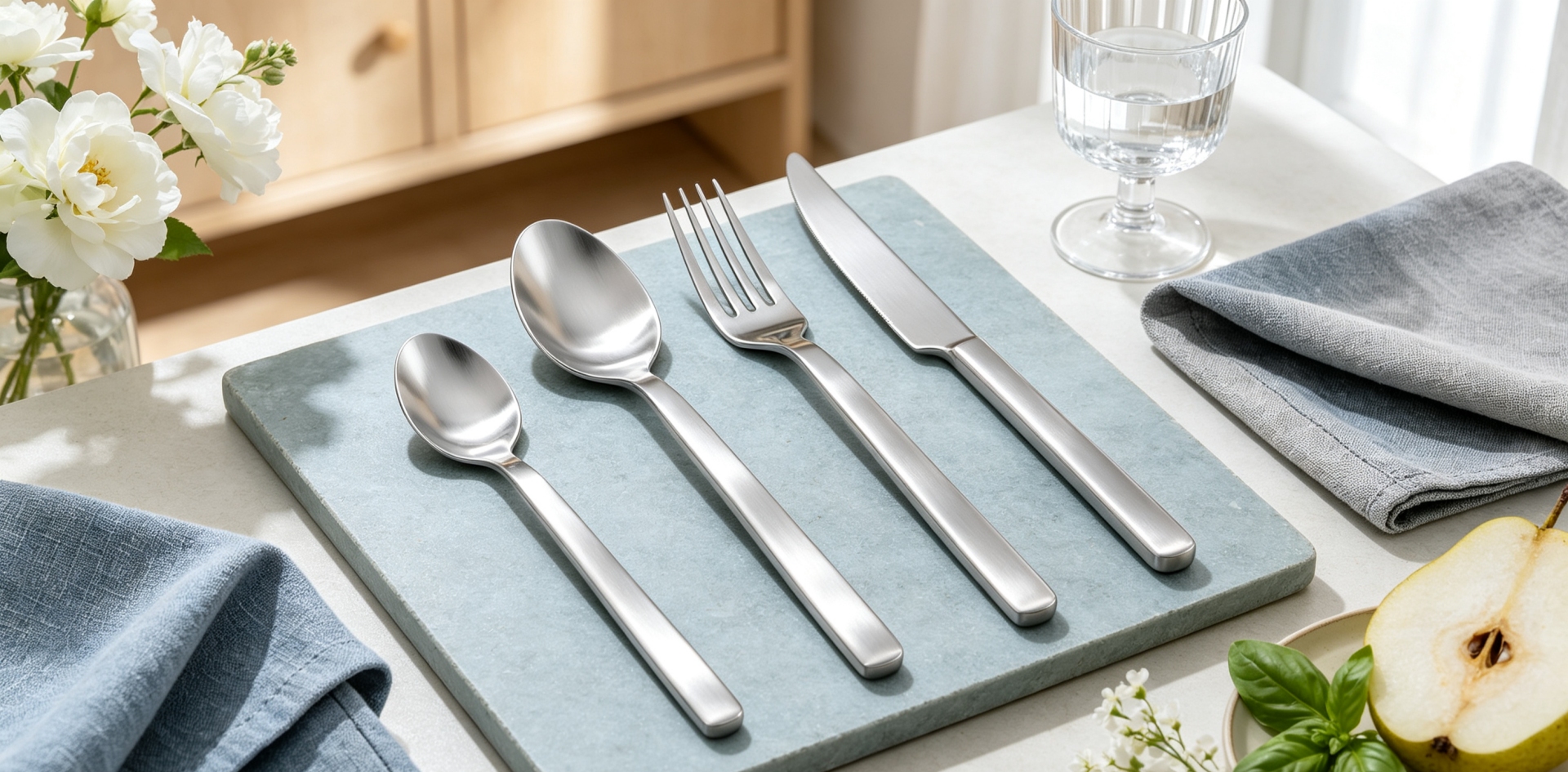
Stainless Steel Flatware Finishes: A Practical Guide for B2B Buyers
The surface finish of stainless steel flatware has a direct influence on how a fork, spoon or knife looks and feels. For B2B buyers, finish selection is therefore more than a visual decision. It can affect product positioning, collection consistency, cleaning expectations, packaging presentation and the overall dining experience.
Polished, satin and brushed finishes are among the most commonly considered options for stainless steel flatware. Each creates a different visual character, and the same product design can look significantly different when the surface treatment changes.
For restaurants, hotels, distributors, retailers and private label brands, the right finish should be selected together with the product design, material, target market and intended application.
What Is a Stainless Steel Flatware Finish?
A surface finish describes the appearance and texture created on stainless steel after forming and surface treatment.
The finish can influence:
-
Reflectivity
-
Texture
-
Visual brightness
-
Perceived product style
-
Surface appearance
-
Collection consistency
The final appearance depends not only on the selected finish but also on the material, polishing process, product geometry and manufacturing quality.
Why Finish Selection Matters
A flatware collection can have the same dimensions and handle shape but appear completely different with another finish.
A highly reflective surface can create a formal and premium impression.
A softer satin surface can provide a more understated appearance.
A brushed surface can emphasize texture and contemporary design.
For B2B projects, the finish should support the intended market position.
Polished Stainless Steel Flatware
Polished stainless steel flatware has a bright and reflective surface.
It is commonly selected when buyers want a classic, refined table presentation.
A polished finish can highlight the curves and details of a handle and make the entire collection appear brighter under dining-room lighting.
Potential applications include:
-
Hotels
-
Restaurants
-
Hospitality projects
-
Premium retail
-
Formal dining
Mirror Polish
Mirror polishing aims to create a highly reflective surface.
The result can provide a clean and elegant visual effect.
Because the surface reflects surrounding light strongly, the consistency of polishing becomes particularly important.
Uneven polishing or visible surface marks can become more noticeable on highly reflective products.
Satin Stainless Steel Flatware
Satin finishes provide a softer visual effect than highly polished surfaces.
They can reduce strong reflections and create a more understated appearance.
Satin flatware can work well in modern restaurants, contemporary hospitality settings and retail collections where a refined but less reflective appearance is preferred.
Brushed Stainless Steel Flatware
Brushed finishes create a visible directional texture on the stainless steel surface.
The texture can give the product a contemporary and industrial character.
The direction and consistency of brushing are important because uneven surface lines can affect the appearance of the finished collection.
Matte Stainless Steel Flatware
A matte appearance can create a subtle and modern visual effect.
Depending on the manufacturing process, the surface may have less reflection than a polished product.
Matte-style finishes can be suitable for brands seeking a contemporary product identity.
The exact finish should be confirmed through a physical sample because terminology can vary between suppliers.
Polished vs Satin Finish
Polished and satin finishes create different visual impressions.
Polished surfaces emphasize brightness and reflection.
Satin surfaces provide a softer and more subdued appearance.
Neither is universally better.
The appropriate choice depends on the dining environment, brand identity and target customer.
Satin vs Brushed Finish
Satin and brushed surfaces can both appear less reflective than polished stainless steel, but their visual characteristics are different.
A satin finish can provide a relatively soft appearance.
A brushed finish emphasizes directional surface texture.
For custom products, buyers should compare physical samples rather than relying only on finish names.
Finish and Handle Design
Surface treatment can change how a handle design appears.
A polished finish can emphasize curves and decorative details.
A brushed finish can highlight geometric lines.
A satin finish can create a balanced appearance on simple handle profiles.
Handle design and surface finish should therefore be evaluated together.
Finish and Product Shape
Complex product shapes can interact differently with surface treatments.
Curves may reflect light differently from flat areas.
Deep decorative details can also produce different visual effects depending on the finish.
For custom flatware, a physical prototype can help determine whether the selected finish supports the intended design.
Finish and Stainless Steel Material
The material specification affects the characteristics of the finished product, but surface treatment also has a significant effect on appearance.
B2B buyers should specify material and finish separately.
For example, a project can define the stainless steel material, product thickness and surface finish as separate requirements.
This creates a clearer manufacturing specification.
Finish Consistency
Consistency is essential when a fork, spoon and knife are sold as one collection.
The products should have comparable surface characteristics even though their shapes are different.
Inconsistent brightness, texture or brushing direction can make a collection appear poorly coordinated.
Quality control should therefore include finish consistency.
Surface Preparation Before Polishing
Before the final finish is applied, the stainless steel surface may require preparation.
Grinding and other processes can remove or reduce manufacturing marks.
The quality of surface preparation affects the final result.
A highly polished product requires careful control because imperfections can remain visible after finishing.
Polishing Process
Polishing can involve multiple stages depending on the required surface appearance.
The objective is to create a consistent surface while maintaining the intended product shape.
Excessive processing can affect dimensions, edges or details, so the finishing process should be controlled according to the product specification.
Brushing Process
Brushing creates a directional texture across the stainless steel surface.
The direction, pressure and consistency of the treatment influence the finished appearance.
For collections containing multiple product shapes, the manufacturer should maintain a consistent visual direction across the range.
Finish and Cleaning
Different surface treatments can have different visual responses to fingerprints, water marks and handling.
A polished surface may show reflections and marks more clearly under certain lighting.
A textured finish can create a different visual effect.
For commercial buyers, cleaning practices should be considered alongside the intended finish.
Finish for Restaurants
Restaurant environments vary widely.
Formal dining concepts may favor polished flatware.
Modern restaurants may prefer satin or brushed products.
High-volume foodservice operations may prioritize practical appearance and easy maintenance.
The finish should match the restaurant's overall design and service requirements.
Finish for Hotels
Hotels often use flatware across different dining environments.
A hotel may require one finish for formal restaurants and another for casual dining areas.
When multiple collections are used, the specifications should be clearly documented to avoid confusion during future purchasing.
Finish for Retail Brands
Retail brands can use surface finish as part of their product differentiation.
A distinctive finish can help create a recognizable collection when combined with a custom handle design or packaging.
Retail buyers should evaluate samples under realistic lighting before final approval.
Finish for Distributors
Distributors may offer several finishes to serve different customer segments.
A standard polished collection can target traditional hospitality customers, while satin or brushed products can address contemporary commercial and retail demand.
Clear product descriptions are important when selling multiple finish options.
Finish for Private Label Products
Private label brands can specify the surface treatment as part of the product identity.
The finish can be coordinated with packaging, product photography and other tableware.
Once the final finish is approved, the manufacturer should retain a reference sample for repeat production.
Finish and Product Cost
Surface treatment can affect production cost depending on the required process and level of finishing.
The final quotation may also be influenced by product weight, material, dimensions, design complexity, order quantity and packaging.
Buyers should compare equivalent specifications when evaluating supplier prices.
Custom Surface Finish Development
Some buyers may want a finish that does not correspond exactly to a standard description.
In such cases, the manufacturer can evaluate a reference sample, image or physical surface example.
A prototype can then be produced for approval.
This approach is more reliable than relying on general terms such as premium, matte or luxury.
Inspecting the Finished Surface
Quality inspection should evaluate the surface under appropriate lighting.
Potential inspection points include:
-
Scratches
-
Uneven polishing
-
Inconsistent brightness
-
Irregular brushing
-
Visible grinding marks
-
Surface stains
-
Finish differences between products
The approved sample should be used as the main reference.
Finish Specification for B2B Orders
A useful finish specification should identify the intended surface appearance clearly.
It can include:
-
Finish type
-
Reference sample
-
Product dimensions
-
Material
-
Surface requirements
-
Inspection criteria
-
Packaging requirements
A physical sample is especially useful for custom projects.
Working With an Experienced Manufacturer
Surface finishing requires coordination between product design, forming and final processing.
Homefelt has more than 30 years of stainless steel manufacturing experience and produces stainless steel cutlery together with kitchen and dining products, BBQ tools, pet bowls and children's tableware.
For international B2B customers, Homefelt supports standard and customized stainless steel products.
Importers, distributors, restaurant suppliers, hospitality businesses and private label brands can discuss material, dimensions, product design, surface finish, packaging, branding and estimated quantities according to their requirements.
For repeat production, approved samples and documented finish specifications can help maintain consistency between orders.
What B2B Buyers Should Prepare
Before requesting a quotation, buyers can provide:
-
Product reference
-
Material requirement
-
Handle design
-
Dimensions
-
Thickness
-
Target weight
-
Preferred finish
-
Finish reference sample if available
-
Quantity
-
Packaging requirements
-
Branding requirements
-
Target market
Complete information makes it easier for a manufacturer to understand the desired result.
Choosing the Right Finish
The selection process can begin with the intended product positioning.
Choose a polished finish when brightness and formal presentation are priorities.
Consider satin when a softer and understated appearance is preferred.
Consider brushed when visible directional texture supports the product design.
For a custom project, the final choice should always be confirmed through physical samples.
Long-Term Finish Consistency
For repeat B2B orders, finish consistency is particularly important.
A retailer may need the same product several seasons later.
A hotel may require replacement pieces years after the original purchase.
A distributor may need multiple shipments that look identical in its catalog.
Maintaining an approved finish reference can help support consistent future production.
Conclusion
Stainless steel flatware finishes play an important role in product appearance, brand positioning and commercial use. Polished, satin and brushed finishes each offer different visual characteristics, and the best choice depends on the target market, product design and dining environment.
B2B buyers should evaluate surface finish together with material, dimensions, thickness, weight and handle design. Physical samples are especially valuable because finish names alone cannot fully communicate the appearance of a finished product.
Homefelt has more than 30 years of stainless steel manufacturing experience and works with international B2B customers on standard and customized stainless steel products.
By defining the finish clearly and maintaining an approved sample as a production reference, restaurants, hotels, distributors, retailers and private label brands can build stainless steel flatware collections with a more consistent and recognizable appearance.
You May Be Interested In
Custom Stainless Steel Flatware: From Product Concept to Mass Production
Private Label Stainless Steel Flatware Manufacturing: A B2B Guide
Wholesale Stainless Steel Flatware Supplier: B2B Buying Guide
Stainless Steel Cutlery Quality Control and Inspection Guide
Stainless Steel Cutlery Handle Design: A Practical Guide for B2B Buyers
18/10 vs 18/0 Stainless Steel Flatware: A B2B Buying Guide


Stainless Steel Flatware Thickness Guide for B2B Buyers
Private Label Stainless Steel Flatware Manufacturing Guide
Related Article