
Stainless Steel Fork Tine Design for OEM and Wholesale Flatware
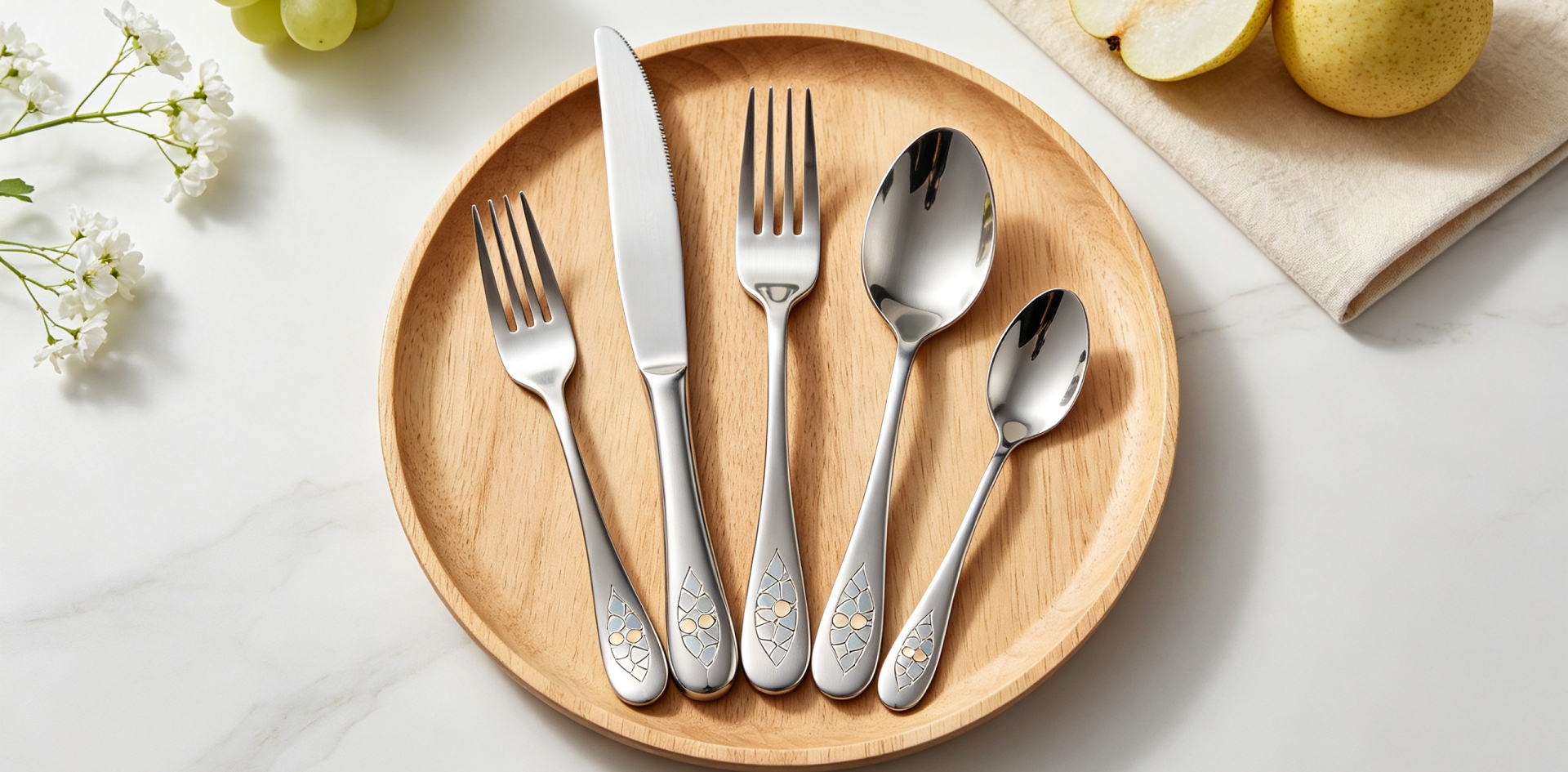
Stainless Steel Fork Tine Design for OEM and Wholesale Flatware
When sourcing stainless steel forks for wholesale or private label projects, buyers often pay attention to the handle and surface finish first. However, the fork head and tine structure are also important parts of the product specification.
The number, length, spacing, thickness and shape of the tines can change the appearance and overall character of a stainless steel fork. These details also need to work together with the handle and the matching spoon and knife when the fork is part of a complete flatware collection.
For B2B buyers, confirming the fork-head specification before mass production can help the factory produce a more consistent product and reduce unnecessary revisions during the sampling stage.
Key Fork Tine Specifications for B2B Buyers
A stainless steel fork can be described through several measurable specifications.
Depending on the project, buyers may confirm:
-
Overall fork length
-
Fork-head length
-
Number of tines
-
Tine length
-
Tine width
-
Tine spacing
-
Tine thickness
-
Shape of the tine tips
-
Head-to-handle proportion
-
Product weight
-
Stainless steel material
-
Surface finish
Not every project requires the same level of detail.
For a standard wholesale fork, an existing product specification may be sufficient.
For an OEM or ODM project, however, these parameters can become important when developing a differentiated design.
Why Tine Length Matters
Tine length is one of the most visible features of a fork.
A longer tine structure can create a more elongated appearance, while a shorter head can give the fork a more compact visual proportion.
The correct specification depends on the overall fork length and handle design.
For example, if the handle is relatively long but the fork head is too short, the product may appear visually unbalanced.
If the head is too long compared with the handle, the opposite effect may occur.
For this reason, tine length should normally be reviewed together with the total fork dimensions rather than selected independently.
Tine Spacing and Fork Appearance
The distance between tines is another specification that can affect the appearance of the fork.
A fork with narrow spacing can have a visually denser head. Wider spacing creates a different appearance and changes the relationship between the individual tines.
For customized flatware, the buyer can provide a reference fork or drawing to communicate the desired structure.
The factory can then evaluate the requested dimensions and create a sample for approval.
This process is particularly useful for private label customers who want their fork design to have a distinctive appearance.
Number of Tines
The number of tines can vary according to the fork type and product design.
For B2B purchasing, buyers should clearly identify the intended fork style when requesting a quotation.
A standard table fork, a specialized fork or a customized design may have different head structures.
Rather than assuming that every stainless steel fork follows one standard specification, buyers can confirm the number of tines together with the head dimensions.
When the fork belongs to a matching spoon, fork and knife collection, the head design should also fit the visual language of the other pieces.
Tine Thickness and Overall Product Specification
Tine thickness should be considered together with the overall product construction.
A buyer may have a specific thickness requirement based on an existing product or collection design.
However, thickness is only one part of the final result.
The material specification, product dimensions, forming requirements and overall weight all need to work together.
For this reason, a physical sample is useful when the customer has a precise requirement for the final product.
The buyer can compare the approved sample with the reference product and confirm whether the fork has the expected proportions and hand feel before bulk production.
Connecting the Fork Head With the Handle
A fork is not only a head with several tines.
The transition area between the head and handle is also important to the overall appearance.
A modern flatware collection may use a relatively simple transition with clean lines.
Another collection may have a more decorative handle and require a different relationship between the fork head and handle.
For OEM and ODM projects, the customer can provide a handle drawing, reference sample or design concept.
The manufacturer can then develop the fork head so the complete product has a coordinated appearance.
Matching Forks With Spoons and Knives
When the fork is sold as part of a stainless steel flatware set, it should be considered alongside the spoon and knife.
The three pieces do not need to have identical functional structures, but they should share a recognizable design language.
Buyers can compare:
| Product | Main Specification | Collection Relationship |
|---|---|---|
| Fork | Head length, tine structure, handle | Match overall handle design |
| Spoon | Bowl size, length, handle | Match proportions and finish |
| Knife | Blade size, length, handle | Match handle and visual style |
This approach helps prevent a common problem in flatware development: individual products look acceptable, but the complete collection does not look unified.
For private label brands, collection consistency can be especially important because the products are often displayed and sold together.
Choosing Fork Specifications for Different Markets
A B2B buyer should consider the target market before finalizing the fork design.
A general retail product may focus on balanced proportions and broad market suitability.
A foodservice customer may have different requirements for its commercial flatware range.
A private label brand may want a more distinctive fork head and handle combination to differentiate its collection.
A distributor may also require several fork models for different customer segments.
Therefore, the specification should be based on the commercial purpose of the product rather than simply choosing the most common size.
Homefelt Stainless Steel Cutlery Factory
Homefelt provides stainless steel cutlery manufacturing services for international B2B customers, including stainless steel forks, spoons, knives and complete flatware sets.
The company supports OEM, ODM and private label projects, allowing customers to discuss product dimensions, fork-head specifications, handle design, material, finish, packaging and other requirements.
Customers do not always need to provide a complete technical drawing.
A reference sample, photograph or basic product concept can also be used as the starting point for a customization discussion.
This is useful for wholesalers and distributors who may know the target market and product positioning but need a manufacturing partner to help turn the concept into a production specification.
Experience in Stainless Steel Fork Manufacturing
Homefelt states that it has more than 40 years of experience in the stainless steel cutlery business and 17 years as an Alibaba Gold Supplier.
The company also states that it has experience working with well-known brands and provides manufacturing services for B2B cutlery projects.
For customized forks, manufacturing experience is useful when several product parameters need to be considered together.
A customer may have a preferred tine structure but also need the fork to match an existing spoon and knife.
The manufacturer can evaluate the complete collection rather than treating the fork as an isolated product.
This project-based approach can help customers develop a more consistent flatware range.
Certifications and Factory Evaluation
Product specifications are only one part of supplier evaluation.
For international B2B purchasing, customers may also review factory certifications, audits and available compliance documentation.
Homefelt lists BSCI, SEDEX 4P, BRC and ISO 9001, as well as Disney audit, FAMA and FSC credentials.
Depending on the customer's market and project, additional testing or documentation requirements may also need to be discussed before production.
For buyers developing a private label fork or complete stainless steel flatware collection, product samples and factory qualification materials can be reviewed together as part of the supplier selection process.
From Fork Sample to Bulk Production
For customized fork projects, sample approval is an important step before large-volume manufacturing.
The buyer can confirm:
-
Overall fork length
-
Head dimensions
-
Number of tines
-
Tine length
-
Tine spacing
-
Tine thickness
-
Handle proportions
-
Product weight
-
Surface appearance
-
Relationship with the matching spoon and knife
Once the sample is approved, these details can become part of the production reference.
For repeat orders, keeping the approved specifications consistent can help the buyer maintain the same product quality and appearance across different purchasing cycles.
One-Stop OEM and ODM Service
A customized stainless steel fork project may involve more than product manufacturing.
Depending on the customer's requirements, Homefelt can provide a one-stop service covering product design, manufacturing, packaging and transportation.
A customer with an existing fork drawing may only require OEM production.
Another customer may need assistance developing the fork design, matching it with a spoon and knife, creating private label packaging and arranging bulk shipment.
The service package can be customized according to the customer's actual project.
This gives B2B buyers greater flexibility when developing new products or expanding an existing stainless steel flatware collection.
Building a Long-Term Cutlery Collection
A successful fork project can become the starting point for a broader product collection.
Once the fork design has been confirmed, matching spoons and knives can be developed around the same handle style, finish and overall design language.
Additional flatware products can then be introduced while maintaining a consistent collection identity.
For distributors and private label brands, this can make product expansion more manageable because the new products are based on an established design direction.
A long-term manufacturing relationship can also make future product development and repeat purchasing more efficient.
You May Be Interested In
Custom Stainless Steel Flatware Handle Design for OEM Projects
How to Match Knife Fork and Spoon Sizes in a Stainless Steel Flatware Set
Related Article



