
Stainless Steel Fork Tine Spacing for B2B Custom Designs
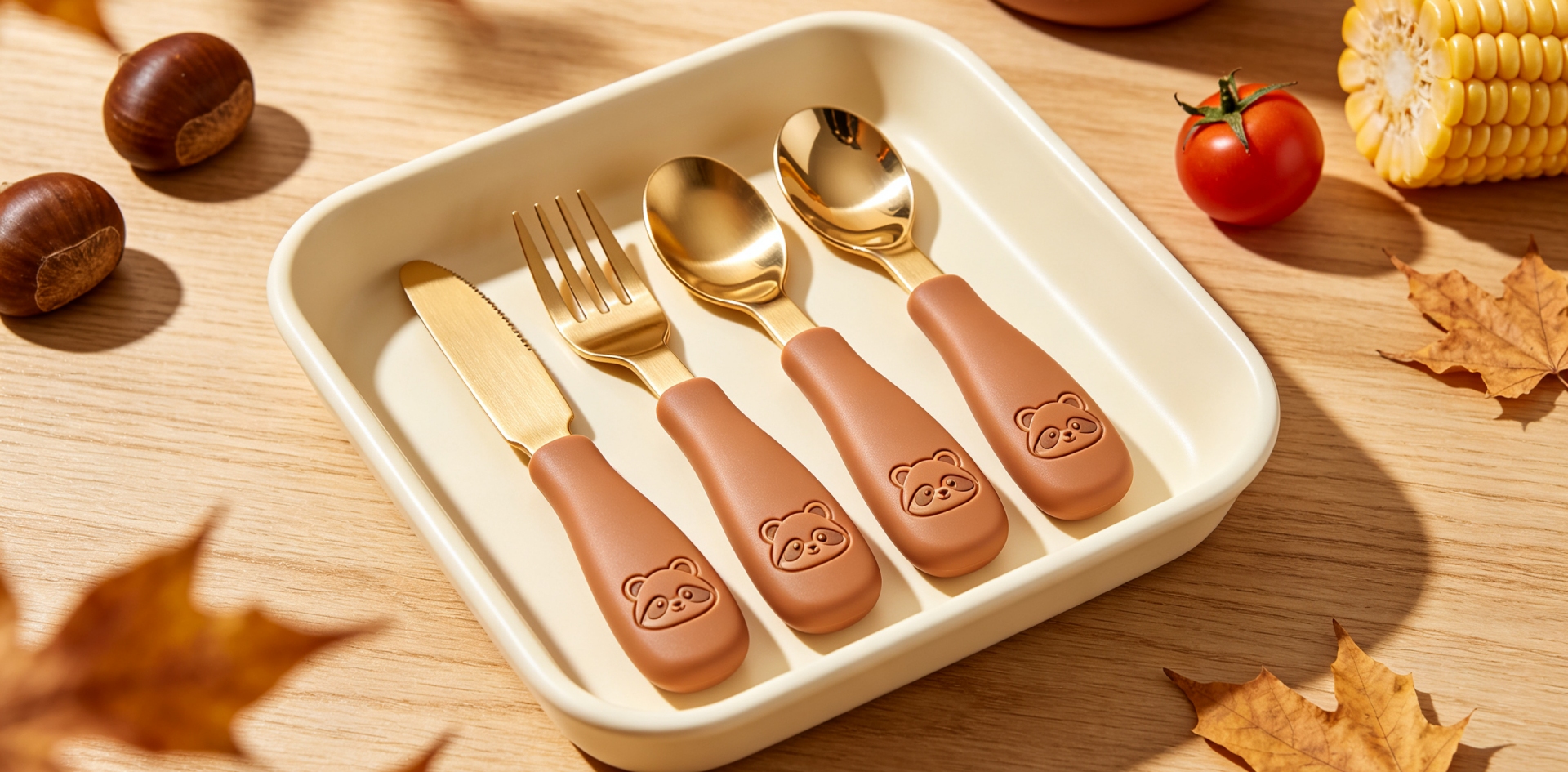
Stainless Steel Fork Tine Spacing for B2B Custom Designs
When developing a stainless steel fork for a commercial cutlery collection, buyers often focus on the overall length, handle design and general appearance. Another small but meaningful detail is the spacing between the fork tines.
Tine spacing influences the appearance of the fork head and can also affect how the fork interacts with food during everyday use.
For B2B buyers developing custom stainless steel flatware, understanding this detail can make communication with a manufacturer more precise.
What Is Fork Tine Spacing?
Fork tine spacing refers to the gaps between adjacent tines on the fork head.
Although the difference may look small, the spacing contributes to the overall shape of the fork.
A fork with relatively narrow gaps can create a more compact visual appearance, while wider spacing can give the fork head a more open appearance.
The appropriate arrangement depends on the intended product design and use.
For an OEM stainless steel flatware factory, the spacing forms part of the physical geometry that needs to be translated from the buyer's concept into a repeatable production design.
Why Tine Spacing Matters
The fork is a functional product, not only a decorative object.
The relationship between the tines and the gaps between them affects how the fork interacts with different foods.
At the same time, tine spacing contributes to the visual identity of the fork head.
For a B2B brand developing a coordinated collection, these two aspects should be considered together.
A design that looks attractive but does not suit the intended application may require adjustment before entering mass production.
Tine Spacing and Fork Head Appearance
The fork head is one of the most recognizable areas of a fork.
Even when two forks have similar overall dimensions, different tine spacing can make them look noticeably different.
This becomes particularly important when developing a private label collection where the buyer wants the fork to have a specific visual character.
The spacing can contribute to whether the design feels compact, open, traditional or contemporary.
For custom stainless steel cutlery, this detail can therefore be part of the overall design language.
Consider the Number of Tines Together With Spacing
Tine spacing should not be evaluated independently from the number of tines.
The total width of the fork head, the number of tines and the space between them all work together.
Changing one element can influence the appearance of the others.
For example, maintaining the same fork-head width while changing the number of tines will naturally change the available space between them.
This is why an experienced ODM cutlery manufacturing supplier will normally consider the complete fork-head geometry rather than treating tine spacing as an isolated measurement.
Function Should Guide the Design
Different forks may be designed for different uses.
A general table fork, for example, may have different requirements from a specialized fork developed for a particular food category.
For B2B buyers, the intended application should therefore be communicated when discussing a custom fork.
The manufacturer can then understand whether the project is primarily focused on general dining, hospitality use, retail presentation or another application.
This context helps connect the visual design with practical functionality.
Tine Spacing and Food Interaction
The gaps between tines influence how food is held and separated.
The exact effect depends on the food being handled and the complete geometry of the fork head.
For this reason, buyers developing a new fork should consider the intended use rather than selecting spacing purely according to appearance.
If a brand already has a successful fork in its product range, that existing product can also provide a useful reference for a new design.
A reference sample gives the manufacturer a clearer understanding of the desired relationship between the tines.
Keep the Fork Consistent With the Collection
A fork rarely exists alone in a commercial flatware program.
It is usually part of a set that includes knives and spoons.
The fork head should therefore fit the visual language of the complete collection.
For example, a very delicate fork head may appear inconsistent with a heavy handle design, while an overly open fork head may not match a compact and minimal collection.
For private label stainless steel cutlery, the relationship between individual pieces is an important part of product development.
Review the Fork From Different Angles
Tine spacing can look different depending on how the fork is viewed.
A buyer reviewing only a front-facing photograph may not notice other aspects of the fork-head structure.
During product development, it can be useful to review the fork from the front, side and top where appropriate.
This helps the buyer and manufacturer understand the complete shape rather than relying on one image.
For a custom fork manufacturing project, physical samples are especially useful when the exact appearance and proportion need to be evaluated.
Avoid Over-Specifying Without a Purpose
B2B buyers sometimes create very detailed specifications for individual product features.
Detailed requirements can be valuable, but every specification should have a clear reason.
If the exact tine spacing is important to the brand or function, it should be defined clearly.
If a small variation does not affect the intended product, an appropriate manufacturing tolerance may provide the factory with the flexibility needed for stable production.
This creates a more practical balance between design control and manufacturing efficiency.
Tine Spacing in Repeat Production
Once a custom fork has been approved, its tine arrangement becomes part of the established product reference.
This matters when the same product is produced again.
A buyer should expect the basic fork-head design to remain consistent with the approved version unless a change has been discussed and confirmed.
For wholesale and bulk stainless steel flatware programs, maintaining the established fork design helps ensure that new inventory continues to match earlier products.
It also makes the product easier to recognize across different purchasing cycles.
How Buyers Can Communicate the Requirement
When discussing tine spacing with a stainless steel cutlery supplier, a buyer can provide several useful references.
A technical drawing can identify the intended dimensions. A physical sample can show the desired overall appearance. A marked photograph can also indicate which part of the fork the buyer wants to adjust.
The clearest approach is often to combine a visual reference with a simple explanation of the intended function.
This gives the manufacturer enough context to understand both the design and the purpose behind it.
Supporting Custom Fork and Flatware Projects
Homefelt factory manufactures stainless steel knives, forks, spoons and complete flatware collections for B2B customers, including OEM, ODM, private label and wholesale projects.
For buyers developing a custom fork, the product can be discussed as part of the wider cutlery collection rather than as an isolated item.
Design details such as fork-head proportions, tine arrangement, handle design and surface finish can be considered together before the product moves toward manufacturing.
For importers, distributors, retailers and brands, this approach helps turn a design concept into a practical commercial product.
Fork tine spacing may be a small detail, but it contributes to both function and appearance.
When it is considered together with the complete fork-head design and the rest of the stainless steel cutlery collection, it can help create a product that is more consistent with the buyer's intended concept.
Custom Stainless Steel Cutlery Manufacturing
OEM & ODM Stainless Steel Flatware
Private Label Cutlery Production
Stainless Steel Cutlery User Experience for B2B Brands
Stainless Steel Cutlery for Coastal Environments
Related Article



