
Stainless Steel Fork Tine Spacing: A Practical Detail for B2B Custom Designs
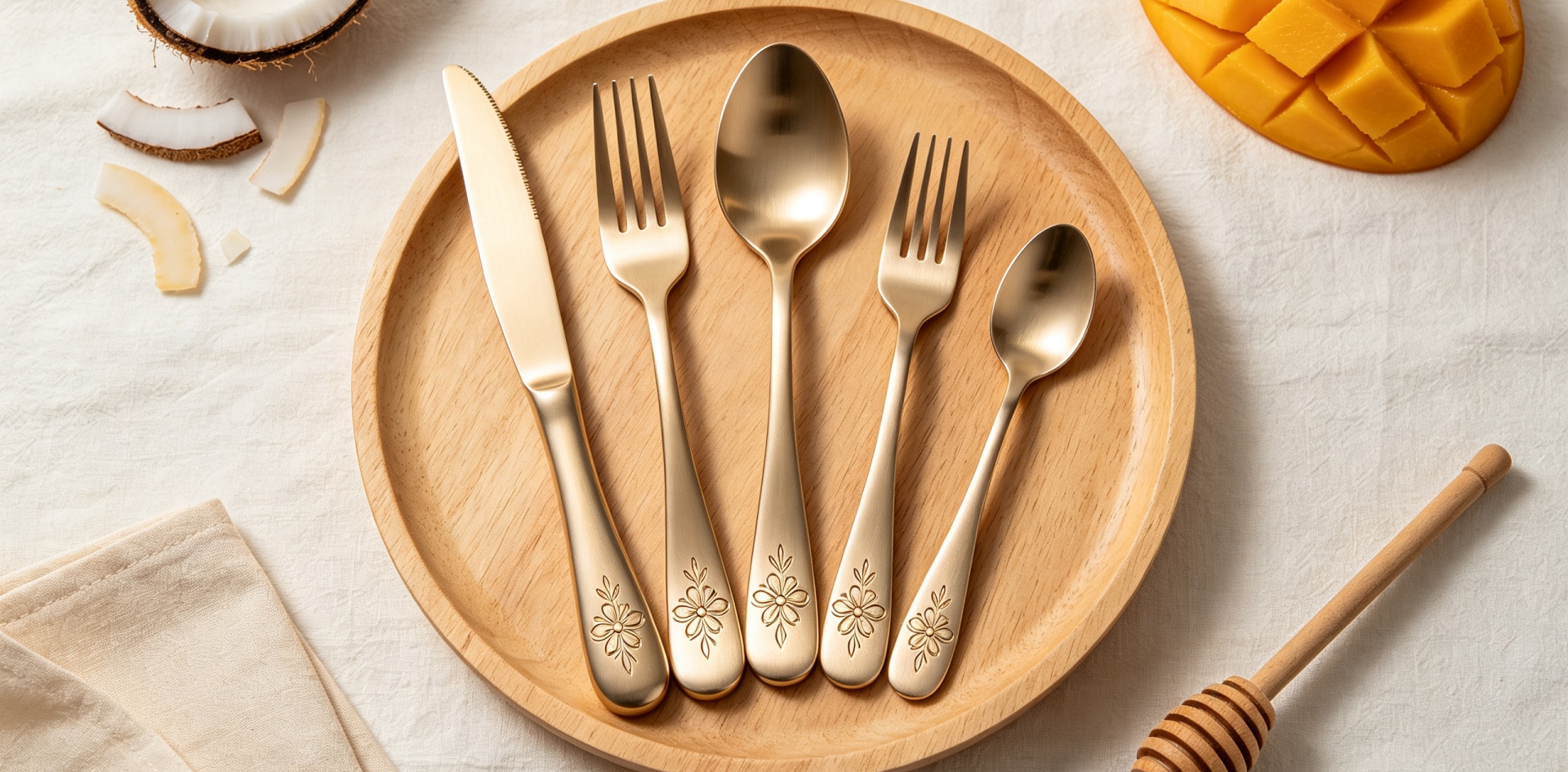
Stainless Steel Fork Tine Spacing: A Practical Detail for B2B Custom Designs
When developing a stainless steel fork for a B2B product range, buyers usually begin with the overall shape, length, material, and handle design. Yet the space between the tines is another detail that can influence both the appearance and construction of the finished fork.
Tine spacing is the distance and visual relationship between the individual tines of a fork. It may look like a small technical specification, but changes in this area can alter the character of the product. For OEM, private label, and custom flatware projects, defining this detail clearly can help a manufacturer understand the intended design and develop a product that fits the rest of the collection.
The goal is not simply to make the gaps wider or narrower. The spacing should work together with the number of tines, tine width, fork head shape, overall proportions, and manufacturing requirements.
Why Tine Spacing Changes the Look of a Fork
The front section of a fork is one of its most recognizable features. Even when two forks have similar handles and overall dimensions, different tine spacing can make them appear noticeably different.
Narrower gaps can create a more compact and refined appearance. Wider gaps can make the tines appear more separated and visually open. The effect also depends on the thickness and shape of the tines themselves.
For a B2B collection, this detail can be used to support a particular design direction. A simple commercial range may use a straightforward tine arrangement, while a more distinctive private label collection may require a specific spacing pattern that complements its overall design language.
Because the change can be subtle, it is often easier to communicate the intended result through a drawing or reference sample rather than through a general description alone.
Tine Spacing and Fork Proportions
Spacing cannot be considered independently from the width of the fork head.
Imagine two forks with the same number of tines. If one fork has a wider head, the available space between the tines can be distributed differently. If the head is narrower, the same number of tines may require a more compact arrangement.
The relationship between tine width and gap width therefore contributes to the overall visual balance.
For a custom project, the manufacturer may review the fork head as a complete structure rather than treating each measurement separately. This helps ensure that the final shape looks intentional and remains consistent with the design supplied by the buyer.
For B2B customers developing several SKUs, this becomes even more useful because the same design principles can be applied across different fork models.
Different Fork Designs Require Different Approaches
There is no universal tine arrangement for every stainless steel fork.
A standard table fork, for example, may have a different head proportion from a more specialized fork. The overall length, head width, tine length, and handle design can all influence the appropriate spacing.
This is why a custom manufacturer needs to understand the complete product rather than receiving only one isolated dimension.
If a buyer already has a reference fork, the manufacturer can use it to understand the desired proportions. If the buyer is starting with an original concept, the tine spacing can be developed together with the rest of the fork head.
For OEM and ODM projects, this approach allows the final product to be developed around the customer's intended market and collection rather than simply selecting a standard stock model.
The Relationship Between Tine Shape and Spacing
Spacing is only one part of the tine design.
The width, length, thickness, and tip shape of each tine also influence the appearance of the fork. A narrow tine with a larger gap creates a different visual effect from a wider tine with a smaller gap, even if the overall fork width remains unchanged.
The ends of the tines also contribute to the final impression. Their alignment and shape need to work with the central lines of the fork head.
For a private label product, these details can help distinguish a custom model from a generic reference.
At the same time, excessive complexity is not always necessary. A clean and carefully proportioned tine arrangement can provide a strong result while remaining suitable for commercial production.
Why Tine Spacing Matters in Series Production
A custom design has to move beyond the drawing stage. For a B2B order, the fork must be produced repeatedly and consistently across the required quantity.
Tine spacing is therefore also a manufacturing consideration.
The forming and shaping process must reproduce the intended arrangement accurately. If the spacing varies noticeably between pieces, the fork head can appear inconsistent when the products are placed together.
For larger wholesale orders, repeatability becomes especially important. The same product may also need to be reordered months or years later, making clear product specifications valuable for maintaining continuity.
A properly defined fork design gives the manufacturer a reliable reference for future production.
Developing a Consistent Flatware Collection
A fork rarely exists alone in a complete flatware program. It may be sold together with spoons, knives, or other pieces that share the same handle and design language.
The fork head naturally has unique functional requirements, but its overall style should still relate to the other products.
For example, a collection may use similar proportions, clean lines, and a specific degree of visual simplicity. The tine arrangement can then be developed to fit that overall direction.
This is especially important for flatware sets. When the pieces are displayed together, small differences in proportion become easier to notice.
A B2B manufacturer can therefore look at the fork as part of the larger collection when discussing a custom project.
Tine Spacing and Custom Brand Development
For a private label brand, customization does not necessarily mean creating an extremely unusual product.
Sometimes a collection becomes distinctive through several controlled details. The handle profile, surface finish, overall proportions, and fork head can all contribute to the final identity.
Tine spacing can be one element within this system.
A brand may want a fork with a slightly different visual rhythm from common market products while maintaining a familiar and practical shape. In this case, the spacing can be adjusted as part of the overall design rather than treated as an isolated feature.
This approach can create a more coherent product while keeping the manufacturing requirements realistic.
What B2B Buyers Should Provide to a Manufacturer
When requesting a custom stainless steel fork quotation, a buyer does not necessarily need to provide a complete manufacturing specification from the first message.
However, useful information can include a technical drawing, reference product, desired fork length, approximate head dimensions, tine arrangement, finish, estimated order quantity, and the number of SKUs involved.
If tine spacing is an important part of the design, it should be identified clearly on the drawing or supported by a reference image.
For an OEM or private label project, it can also be useful to show how the fork relates to the spoon and knife in the same collection. This gives the manufacturer a better understanding of the overall design direction.
Clear information at this stage can make the quotation process more efficient and reduce unnecessary revisions later.
Balancing Design and Commercial Production
A successful custom fork needs to satisfy more than one requirement. It should look right, fit the intended product range, and be practical to manufacture in the required volume.
This balance is particularly important for B2B buyers because a custom design may eventually become a recurring product rather than a one-time order.
The tine arrangement should therefore be evaluated together with the complete fork construction. A manufacturer can review the proposed dimensions and discuss whether adjustments are needed to make the design more suitable for series production.
This does not mean that every custom design should be simplified. Instead, the purpose is to find a practical way to preserve the design intention while creating a product that can be manufactured consistently.
From a Small Detail to a Complete B2B Product
Tine spacing may occupy only a small area of a stainless steel fork, but it is part of the visual structure that customers see every time the product is used or displayed.
For wholesalers, distributors, importers, and private label brands, such details can be valuable when developing a collection that needs to look different from standard market products.
A well-defined fork head can also make communication with a factory more efficient. When dimensions, references, quantities, and design expectations are clear, the manufacturer has a stronger basis for preparing a quotation and evaluating production requirements.
If you are developing a custom stainless steel fork, you can begin with a drawing, sample, or simple product concept. The tine arrangement can then be refined together with the overall fork proportions and the other pieces in the collection.
For OEM, ODM, and private label projects, this step-by-step approach can turn a small design idea into a commercially viable stainless steel flatware product suitable for wholesale and repeat B2B supply.
Custom Stainless Steel Fork Manufacturing
OEM Stainless Steel Flatware for Your Brand
Private Label Cutlery Production
Wholesale Stainless Steel Fork Supplier
Custom Flatware Collection Development
Request a Custom Stainless Steel Fork Quotation
Edelstahlgabel Zinkenlänge: Ein wichtiges Detail für individuelle B2B-Designs
Edelstahlbesteck Vorderteil: Wie die Form die B2B-Kollektion beeinflusst
Related Article



