
Stainless Steel Fork Tine Spacing for OEM and Bulk Flatware Orders
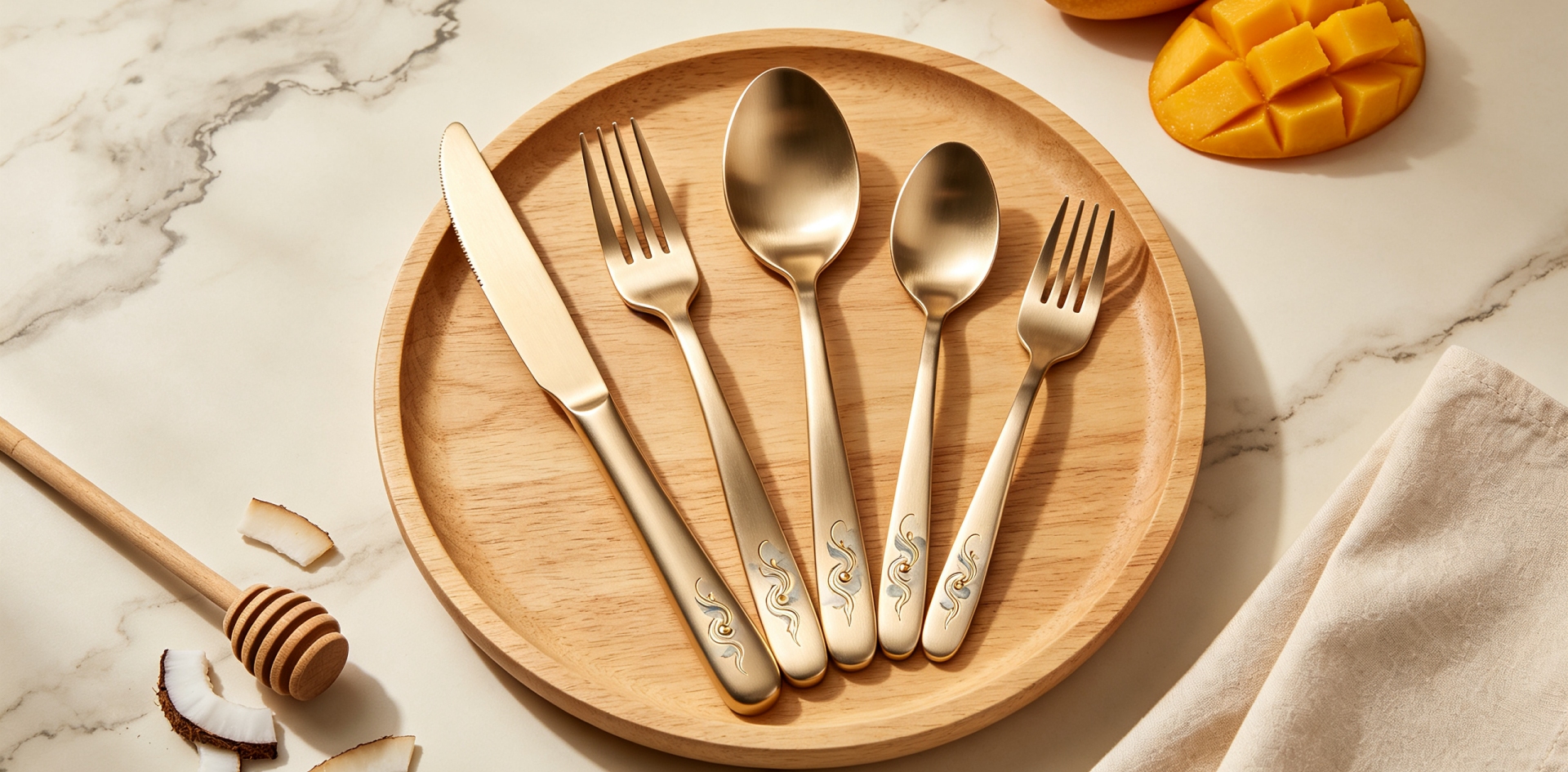
Stainless Steel Fork Tine Spacing for OEM and Bulk Flatware Orders
Fork tine spacing is a small but important specification in stainless steel flatware. The distance between individual tines influences how a fork interacts with food, while also affecting the visual appearance of the finished product.
For B2B buyers developing stainless steel forks for restaurants, hotels, catering suppliers, distributors and private label brands, tine spacing should be considered as part of the product specification rather than left entirely to visual judgment.
Different food applications may require different fork characteristics. A manufacturer therefore needs to understand the intended use before confirming the final design.
Homefelt factory specializes in stainless steel knives, forks and spoons and provides OEM, ODM, private label, wholesale and bulk production services for international customers.
Why Tine Spacing Matters
The spaces between fork tines determine how food passes through the working end of the fork.
A closely spaced arrangement may provide a different handling experience from a more open arrangement. The choice can influence how easily food is picked up, separated or held during normal use.
Tine spacing also affects the visual proportion of the fork head. Even a small change can make a fork appear more delicate, more substantial or more suited to a particular collection.
For private label customers, this detail can therefore influence both function and product identity.
Spacing Should Match the Intended Application
There is no single tine spacing suitable for every stainless steel fork.
A fork intended for general table service may have different requirements from one designed for a specific food-service application.
B2B buyers should therefore consider:
-
Intended food application
-
Fork size
-
Number of tines
-
Tine width
-
Tine thickness
-
Tine length
-
Spacing between tines
-
Overall head shape
-
Handle design
These parameters work together.
Changing only the distance between tines without considering the rest of the fork head may affect the overall visual balance and functional performance.
Tine Spacing and Food Handling
The primary purpose of a fork is to handle food effectively.
The spacing between tines can influence how food is held and separated. For example, foods with different textures and structures may respond differently to the same fork geometry.
For B2B product development, the correct approach is to define the intended application first and then establish a suitable tine configuration.
Homefelt can discuss these requirements with customers during the OEM and ODM development process.
A reference sample can also help communicate the desired result more accurately than a general description such as “wide” or “narrow” spacing.
Tine Spacing and Visual Appearance
Fork design is not only about function.
The relationship between tine spacing, tine width and the outer shape of the fork head creates a recognizable visual style.
A premium private label collection may require a refined and closely controlled appearance, while a commercial collection may prioritize a practical and robust look.
For a complete flatware collection, the fork should also visually coordinate with the spoon and knife.
Homefelt can work with customers to develop a fork specification that fits the overall collection instead of treating the fork as an isolated product.
Manufacturing Consistency Is Critical
Tine spacing becomes particularly important during bulk production.
A prototype may look correct, but a production order containing thousands of forks requires the same spacing to be reproduced consistently.
If the distance between tines varies noticeably, the appearance of the collection may become inconsistent. More importantly, the approved sample may no longer represent the actual bulk product.
For this reason, tine spacing should be included in the product specification and checked during production.
An approved sample can provide the factory with a clear physical reference for the final fork head.
How Buyers Can Define Fork Spacing
When placing an OEM or ODM order, buyers can provide several types of information.
Technical drawings can specify the dimensions directly. A physical sample can communicate the intended shape and proportions. Product photographs may also be useful during the initial discussion.
For accurate production, however, the final specification should ideally combine drawings, written requirements and an approved sample.
This gives the manufacturer a clearer understanding of the expected result.
Homefelt can review customer requirements before production and help confirm the practical specification for the stainless steel fork.
Bulk Production for Private Label Collections
Private label customers often need multiple flatware pieces to share a consistent design language.
The fork tine spacing should therefore work with the spoon bowl, knife profile and handle design of the collection.
Homefelt has experience manufacturing stainless steel knives, forks, spoons and complete flatware sets for international B2B customers.
For bulk production, the approved design becomes the reference for manufacturing. This helps ensure that the fork supplied in the final order remains consistent with the product approved during development.
Experience, Expertise and Product Documentation
A reliable flatware supplier needs more than production capacity. Product development also requires practical experience in translating customer requirements into manufacturable specifications.
Homefelt has extensive experience in stainless steel cutlery manufacturing and has worked with well-known brands.
The factory has passed BSCI, SEDEX 4P, BRC, ISO9001 and Disney audits, and has FAMA and FSC certificates. Supporting testing and certification documents can be provided or discussed according to individual customer requirements.
For fork development, however, the most useful starting point remains the product specification, sample and intended application.
OEM, ODM and One-Stop Customization
Homefelt supports OEM, ODM and private label manufacturing for stainless steel cutlery buyers.
Customers can customize fork dimensions, tine configuration, handle design, finish and other product details according to their market requirements.
The factory can also provide one-stop support covering product design, manufacturing, packaging and transportation.
Instead of using the same service process for every customer, Homefelt can develop an exclusive service package according to the customer's project, target market and order requirements.
This is particularly useful for distributors and brands developing new stainless steel flatware collections.
From Sample to Large-Volume Production
A successful B2B fork project starts with a clear product requirement.
The buyer defines the intended application and design direction. The manufacturer then reviews the technical requirements, develops samples and confirms the final specification.
After sample approval, the same standard can be transferred into bulk production.
For large orders, this process helps connect product development with manufacturing consistency and makes future repeat orders easier to manage.
Homefelt focuses on stainless steel knives, forks and spoons and supports wholesale, OEM, ODM, private label and large-volume production. The goal is to provide customers with a reliable China service partner and grow together through long-term cooperation.
Stainless Steel Flatware Handle Profile for OEM and Private Label Orders
Stainless Steel Flatware Edge Smoothness for OEM and Wholesale Orders
Related Article



