
Stainless Steel Fork Tine Taper for B2B Cutlery
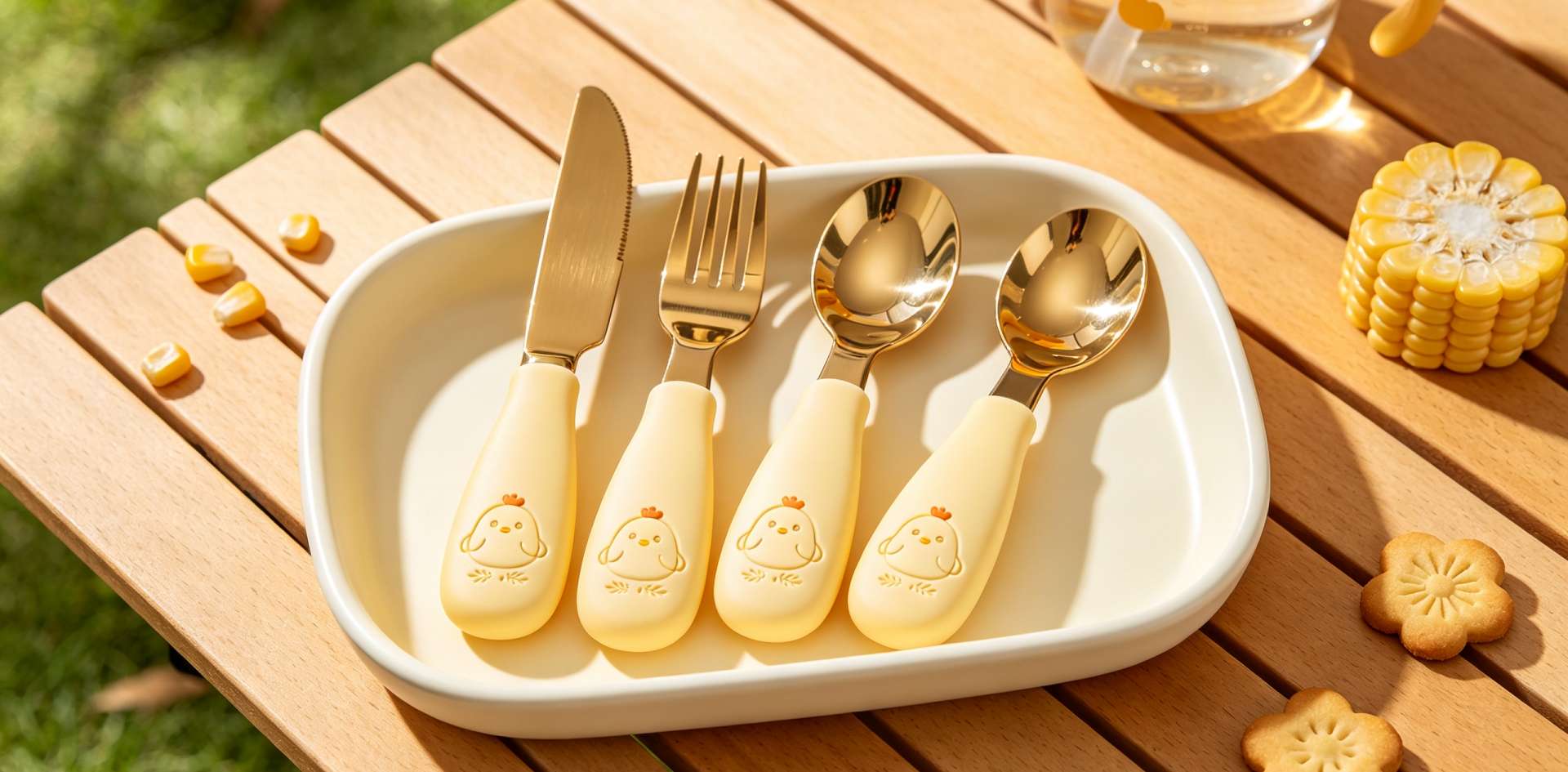
Stainless Steel Fork Tine Taper for B2B Cutlery
A fork may look like one of the simplest pieces in a stainless steel cutlery collection, but its performance depends on many small structural details. The shape of each tine, the spacing between tines and the transition from the fork head to the neck all influence the finished product.
Another detail worth considering in custom fork development is tine taper.
Tine taper refers to how the thickness or visual profile of a fork tine changes along its length. Instead of maintaining exactly the same profile from the base toward the tip, a tine may gradually become slimmer or change its section according to the intended design.
For B2B buyers developing custom stainless steel forks, this detail can influence appearance, handling and the overall character of a cutlery collection.
What Is Fork Tine Taper?
Fork tine taper describes a gradual change in the tine profile from one section to another.
The base of a tine connects with the wider fork head, while the front section approaches the tip. These areas do not necessarily need to have exactly the same visual mass.
A carefully developed taper can create a more refined transition from the main fork head toward the tine tips.
The amount and location of the taper depend on the product design.
Some forks have relatively substantial tines for a strong commercial appearance. Others use a more delicate profile for a lighter and more refined collection.
For OEM and ODM production, the taper can therefore become part of the product specification rather than being treated as an incidental manufacturing detail.
Why Tine Taper Matters in Custom Fork Design
The tine is one of the most visually recognizable parts of a fork.
When customers look at a fork in a product catalog, showroom or retail package, the proportions of the fork head can immediately influence how the product is perceived.
A gradual tine profile can make the fork appear more balanced and intentional.
If the transition is too abrupt, the front of the fork may appear visually heavy or disconnected from the rest of the head.
If the profile is too slender, the product may not match the visual character expected from a particular collection.
For B2B brands, this makes tine taper a useful design consideration when developing a distinctive stainless steel fork.
Tine Taper and the Fork Head
The fork head is a connected structure rather than a group of completely independent tines.
The tine bases need to transition naturally from the central head area.
A suitable taper can help create a smoother visual progression from the wider head toward the narrower front section.
This is particularly important when the fork has a polished surface.
Light reflects differently from wider and narrower areas, so changes in the profile can influence the overall appearance of the finished piece.
During custom development, the fork head and tine profile should therefore be evaluated together rather than designing the tine independently.
Balancing Tine Profile and Fork Proportions
A stainless steel fork normally has several visual relationships that need to work together.
The fork head width, tine length, neck, handle and overall length all contribute to the final proportion.
Tine taper should fit within this larger structure.
For example, a long, slender fork may benefit from a different tine profile than a shorter, heavier commercial fork.
Likewise, a wide handle can create a different visual balance from a narrow handle.
For OEM customers, discussing the fork as a complete product helps the manufacturer understand the intended result rather than simply following isolated dimensions.
Tine Taper and Eating Experience
Fork geometry is not only about appearance.
The tine profile also forms part of the functional end of the product.
The front of the fork interacts directly with food, while the base connects the tines to the rest of the fork head.
The transition between these areas should therefore be considered carefully.
The objective is not necessarily to make every tine as thin as possible.
Instead, the design should provide an appropriate combination of appearance, structural requirements and practical use.
This is why a custom stainless steel fork should be evaluated as a complete functional product.
Designing for Different B2B Markets
Different buyers can have different expectations for fork design.
A hospitality-focused collection may prefer a substantial appearance that fits a professional table setting.
A retail private label collection may emphasize a more refined and contemporary silhouette.
A distributor may need several fork styles within one product range.
Tine taper can be adjusted as part of these broader design directions.
Rather than using one standard fork profile for every customer, an OEM or ODM manufacturer can work from the buyer's drawings, samples or design references.
This creates more flexibility for developing a collection with its own visual identity.
Tine Taper and Surface Finishing
The final surface treatment can make changes in tine geometry more visible.
A polished stainless steel fork reflects light along the edges and surfaces of the tines.
A gradual profile change may create a clean visual transition, while inconsistent forming can make individual pieces appear different.
This is one reason why custom fork development should consider forming and finishing together.
The factory needs to reproduce the intended geometry consistently before the final polishing stage.
For larger B2B orders, maintaining this relationship across production is especially important.
From Drawing to Production Sample
For a custom fork, a drawing or reference image can define the general concept, but a physical sample often provides a better understanding of the finished geometry.
The buyer can inspect the tine profile, head proportions and overall appearance before approving the production version.
If changes are required, the tine taper can be adjusted during development.
This is more efficient than discovering a proportion issue after a large production quantity has already been manufactured.
For private label brands, the approved sample can then become an important reference for future orders.
Maintaining Consistency in Bulk Production
A custom design only creates value when it can be reproduced consistently.
Once the fork profile has been approved, production needs to maintain the intended tine geometry across the order quantity.
Forming control, tooling condition and inspection procedures all contribute to this consistency.
The objective is not to make every fork visually identical in every microscopic detail, but to maintain the commercially important dimensions and appearance within the agreed product standard.
For wholesalers, distributors and private label brands, this consistency supports repeat purchasing and product continuity.
How Buyers Can Specify Tine Taper
B2B buyers do not always need to provide complex engineering documentation.
A useful product brief can include:
-
Overall fork length
-
Fork head width
-
Tine length
-
General tine profile
-
Reference drawing or existing sample
-
Desired visual character
-
Material specification
-
Surface finish
-
Packaging requirements
-
Target order quantity
If the taper is an important design feature, the buyer can highlight it on the drawing or provide a reference sample.
The manufacturer can then review the design and determine how the geometry should be produced.
This creates a clearer communication process between the buyer and factory.
Tine Taper for OEM and ODM Projects
OEM customers may already have a defined fork design and require the manufacturer to reproduce it.
ODM customers may have a general concept and want the factory to help develop the final product.
Tine taper can be relevant to both approaches.
For an OEM project, the factory focuses on reproducing the agreed profile accurately.
For an ODM project, the manufacturer can discuss alternative proportions and production considerations during development.
This flexibility allows the fork design to be adapted to different brand positions and target markets.
Homefelt Factory for Custom Stainless Steel Forks
Homefelt factory provides stainless steel knives, forks, spoons and complete flatware sets for B2B customers.
The factory supports OEM, ODM, private label, wholesale and large-volume production.
For customers developing custom forks, product requirements can be discussed together with design, surface finish, packaging and transportation.
Instead of treating each requirement separately, Homefelt can provide a customized service package based on the customer's project.
This approach is useful for brands and distributors that need a complete cutlery collection rather than a single standard item.
A custom fork can be developed around the customer's preferred dimensions, appearance and commercial positioning.
The factory can then coordinate the production requirements needed to turn the approved design into a finished stainless steel product.
Why Small Fork Details Can Make a Difference
The overall impression of stainless steel cutlery is created by many small design decisions.
Tine spacing affects the relationship between the tines.
Tine length affects the visual proportion of the fork head.
Tine alignment affects consistency.
Tine taper adds another layer by controlling how the profile develops from the base toward the front.
None of these details needs to dominate the design.
The most successful commercial cutlery often looks simple because the different proportions work together naturally.
For B2B buyers, discussing these details during product development can help create a more controlled and distinctive final product.
Building a Consistent Cutlery Collection
When a fork is part of a complete knife, fork and spoon collection, its design should also relate to the other pieces.
The handle proportions, surface finish and overall visual weight should create a coordinated appearance.
A fork with a highly distinctive tine profile may need to be balanced by an appropriately designed knife and spoon.
This is where an experienced stainless steel cutlery manufacturer can provide value beyond basic production.
The factory can consider the relationship between individual pieces while developing the complete collection.
For private label brands, this can help create a stronger product family that remains recognizable across different SKUs.
From Custom Design to Bulk Order
The purpose of discussing tine taper is not simply to focus on one small technical feature.
It is to show how detailed product development can support a better B2B cutlery program.
Once the design is confirmed, the same specifications can be used for sample approval, bulk production, packaging and future replenishment.
A clear specification also makes communication easier when customers request quotations from a factory.
The buyer can explain the product concept more precisely, while the manufacturer can evaluate the requirements before production begins.
For large-volume orders, this preparation helps connect the original design concept with practical manufacturing.
A stainless steel fork may contain only a few visible components, but each part contributes to the finished result.
Tine taper is one example of a small structural decision that can influence the appearance and character of a custom fork.
For OEM, ODM and private label buyers, discussing this detail together with the complete fork design can create a clearer production reference and a more consistent final collection.
Custom Stainless Steel Forks for OEM & ODM Projects
Private Label Stainless Steel Flatware Manufacturing
Custom Knife, Fork and Spoon Collections
Wholesale Stainless Steel Cutlery for B2B Buyers
Homefelt Factory Custom Cutlery Service
OEM Stainless Steel Cutlery Manufacturing
Stainless Steel Knife Spine Thickness for B2B Cutlery
Stainless Steel Cutlery Orange Peel Texture for B2B
Related Article



