
Stainless Steel Knife Blade and Handle Connection for Custom B2B Cutlery
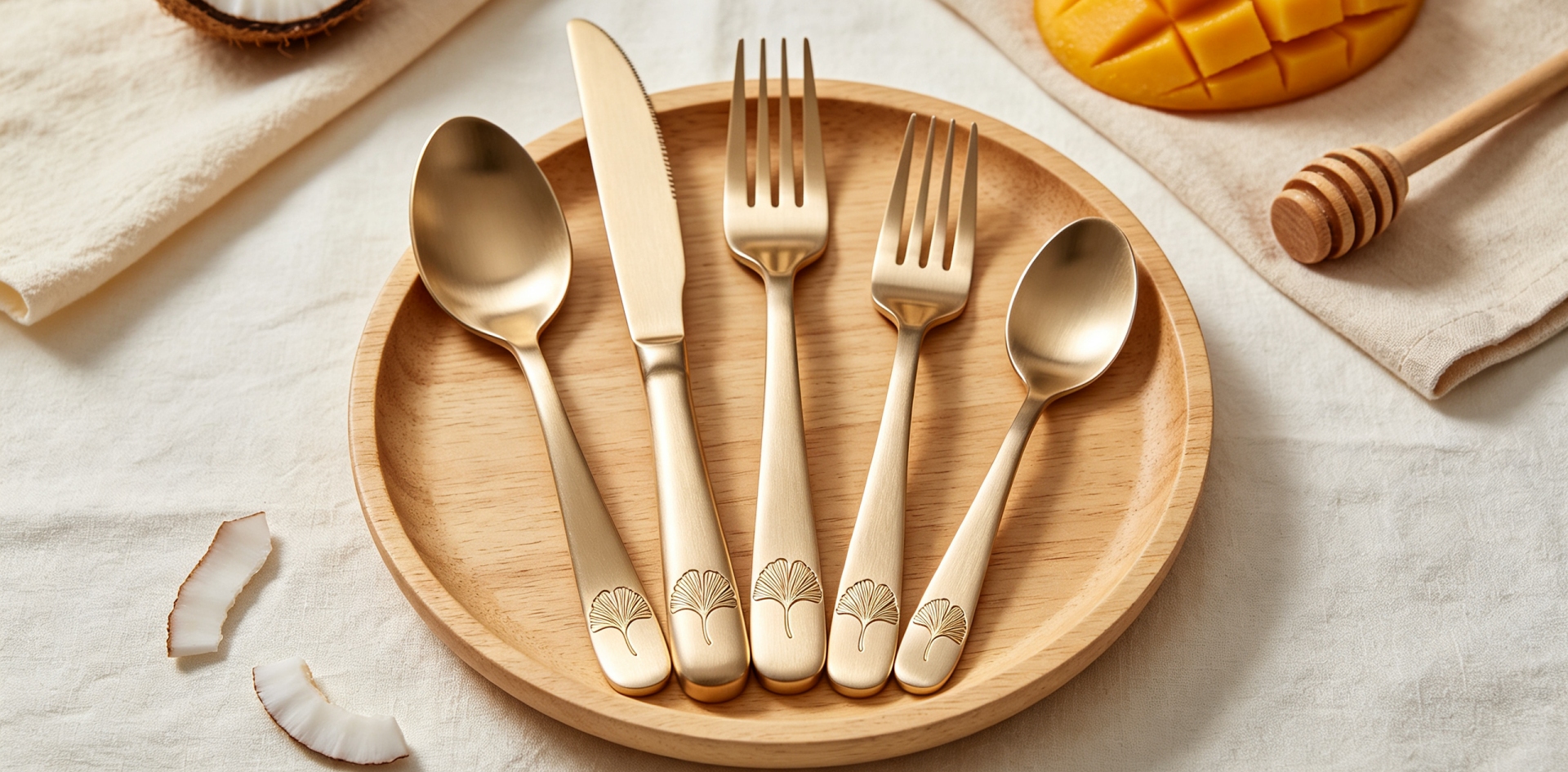
Stainless Steel Knife Blade and Handle Connection: A Practical Detail for Custom B2B Cutlery
When developing a custom stainless steel table knife, the blade and handle are often designed as two separate areas. The blade provides the main cutting function, while the handle determines much of the grip and visual identity.
However, the area where these two sections meet can have a strong influence on the final appearance of the knife.
This connection creates a transition between the functional and gripping parts of the product. For B2B buyers developing OEM, ODM or private label cutlery, controlling this transition can help create a knife that feels more coherent and better integrated into the complete flatware collection.
Why the Blade-to-Handle Connection Matters
A table knife has a long continuous silhouette. Even when the blade and handle have clearly different functions, the eye sees them as one product.
The connection between them therefore affects how the knife is perceived.
A very pronounced transition can make the blade and handle look strongly separated. A softer transition can create a more continuous visual flow.
Neither approach is automatically correct. The right solution depends on the design direction of the collection.
For a minimalist stainless steel cutlery range, a clean transition may be appropriate. A more decorative private label collection may use a stronger visual separation.
The important point is that the transition should be intentional.
Creating a Clear Design Relationship
When a knife is developed for a B2B collection, the connection should support the overall design language.
The handle may have a particular shape or decorative concept, while the blade has its own functional requirements. The transition provides the point where these two areas meet.
If the connection is not considered during design development, the final product can look like two unrelated parts.
A well-developed transition helps the blade and handle appear to belong to the same product.
This is especially important when the knife is displayed beside matching forks and spoons.
Visual Flow From Blade to Handle
The human eye naturally follows the outline of a cutlery piece.
On a knife, this means that the blade profile, transition area and handle silhouette work together.
A change in width, direction or curvature at the connection can influence the visual flow of the entire product.
For a custom design, these changes should be reviewed as part of the complete silhouette rather than individually.
A technical drawing can help establish the intended shape, while a physical sample can show how the transition looks in actual stainless steel.
This combination is particularly useful for OEM projects where the customer has a specific product concept in mind.
Blade and Handle Should Be Developed Together
One common approach to custom product development is to design the handle first and add the blade later.
This can create problems if the two sections do not work together.
For example, a handle with a strong decorative character may require a blade design with a similarly defined visual presence. A very simple handle may work better with a cleaner blade transition.
The manufacturer should therefore consider both areas during the development process.
This does not mean changing the functional requirements of the knife. It means making sure the functional and visual elements are compatible.
The Connection Also Affects the Collection
A private label table knife rarely stands alone.
It may be sold together with a dinner fork, table spoon and other pieces. Customers may see all of these products next to each other in packaging or retail displays.
The knife should therefore communicate the same general design direction as the rest of the collection.
For example, if the fork and spoon have smooth, continuous visual lines, a knife with an excessively abrupt transition may appear unrelated.
The solution is not necessarily to copy the exact shape of the other products. Instead, the manufacturer can use the same design principles across the collection.
This creates a stronger relationship between the individual pieces.
Different Commercial Positions, Different Design Choices
The appropriate blade-to-handle connection can vary according to the intended market.
A wholesale collection may require a familiar and practical appearance. A premium retail range may place more emphasis on distinctive design details.
A hospitality project may prioritize a straightforward construction that works well across larger quantities. A private label brand may want the transition to become one of the recognizable characteristics of its collection.
For B2B buyers, defining the intended market position early can help guide the design discussion.
The manufacturer can then understand not only what the knife should look like, but also why the design is being developed in a particular way.
Using a Reference Sample
If the buyer already has a knife with a preferred blade-to-handle connection, a physical sample can be an effective reference.
The purpose may be to reproduce a similar transition, modify the shape or combine the preferred feature with a new handle design.
A reference sample can communicate three-dimensional characteristics that may be difficult to explain in a product description.
However, it is still useful to identify exactly which part of the reference should be used as inspiration.
For example, the buyer may want to retain the general transition while changing the blade profile and handle design.
Clear communication helps prevent the manufacturer from interpreting the reference too broadly.
Technical Drawings for Custom Knife Development
A technical drawing can define the major characteristics of the connection.
It can show the overall profile, key dimensions and relationship between the blade and handle.
For more detailed custom projects, additional views can be useful because the transition may not be fully understood from one view alone.
This information becomes particularly important when the same knife will be produced repeatedly.
Once the design has been approved, the technical drawing can become part of the production reference for future orders.
Sample Review Before Bulk Production
The physical sample is where the blade-to-handle connection can be evaluated most effectively.
The buyer can look at the knife from different angles, place it beside matching cutlery and examine the overall silhouette.
At this stage, the buyer may discover that the transition needs to be slightly softer, more defined or visually balanced with the handle.
Such adjustments are easier to make before the bulk order begins.
For this reason, sample approval is an important step for custom stainless steel table knife projects.
Manufacturing Considerations
A visually attractive connection also needs to be practical for production.
The manufacturer needs to consider how the selected shape will be formed, finished and reproduced across the required quantity.
For B2B projects, consistency is particularly important.
A design that looks correct on one sample should also be suitable for repeated production. The connection should therefore be clearly defined in the product specifications.
This is one area where an experienced stainless steel cutlery factory can help transform a design concept into a practical production solution.
Keeping the Design Consistent in Repeat Orders
Many B2B buyers expect successful products to become repeat orders.
A retailer may reorder a private label knife each season. A distributor may replenish stock throughout the year. A brand may add the same knife to different sales programs.
In these situations, the original blade-to-handle connection needs to remain consistent.
Approved samples and technical specifications provide useful references for this purpose.
The more clearly the design is documented, the easier it is to maintain the intended appearance during future production.
Developing Matching Knives Within One Collection
Some brands may want more than one knife type in the same product family.
For example, a collection could include different table knife designs for different applications or market segments.
The same design language can be carried across the products without requiring identical blades.
The blade-to-handle connection can become one of the recurring principles that visually links them.
This makes it possible to expand the product range while keeping a recognizable brand identity.
What B2B Buyers Should Include in an Inquiry
When contacting a stainless steel cutlery manufacturer about a custom table knife, buyers can provide the information already available.
Useful details include:
Knife type
Overall dimensions
Material requirement
Blade design
Handle concept
Blade-to-handle reference
Surface finish
Logo or branding requirements
Estimated quantity
Packaging requirements
Reference photos, drawings or samples
If the design is still being developed, that is also useful information to communicate.
The manufacturer can then understand which specifications are confirmed and which areas still require discussion.
From Design Detail to Commercial Product
The blade-to-handle connection may seem like a small detail, but it demonstrates how many decisions contribute to the final appearance of custom stainless steel cutlery.
A successful knife needs more than an appropriate blade and attractive handle. The transition between them should support the overall design and work naturally with the rest of the collection.
For OEM and private label brands, these details can help create a product that feels intentionally developed rather than simply selected from a standard catalog.
For wholesalers and distributors, they can also provide a way to introduce more distinctive products while maintaining practical manufacturing requirements.
Working With a Custom Cutlery Manufacturer
When a B2B buyer has a design concept, the manufacturer can help move it through the development stages.
The process can begin with a drawing, reference sample or basic product idea. The manufacturer can review the requirements, clarify technical details and prepare a sample.
After sample approval, the agreed specifications can be used for quotation and bulk production.
This approach allows the buyer to remain involved in the important design decisions while the manufacturer focuses on turning those decisions into a stable production product.
Build a Better Custom Table Knife
The connection between blade and handle is one of the visual points that defines a table knife.
When this area is carefully considered, it can help create a smoother silhouette, stronger product identity and better relationship between the different pieces of a cutlery collection.
For brands developing private label stainless steel flatware, this level of detail can be especially valuable.
If you already have a table knife concept, reference product or drawing, you can share the requirements with a stainless steel cutlery manufacturer and begin discussing sample development, customization and bulk production.
A well-defined design detail can become part of a commercially successful product when it is properly communicated, sampled and documented.
Custom Stainless Steel Table Knife Manufacturing
OEM Stainless Steel Cutlery for Your Brand
Private Label Stainless Steel Flatware
Wholesale Stainless Steel Table Knives
Custom Knife, Fork and Spoon Development
Request a Custom Table Knife Quotation
Stainless Steel Cutlery Handle Symmetry: A Detail for Custom B2B Designs
Stainless Steel Fork Tine Tips: A Practical Detail for Custom B2B Cutlery
Related Article



