
Stainless Steel Knife Blade Profile: A Practical Detail for B2B Cutlery Projects
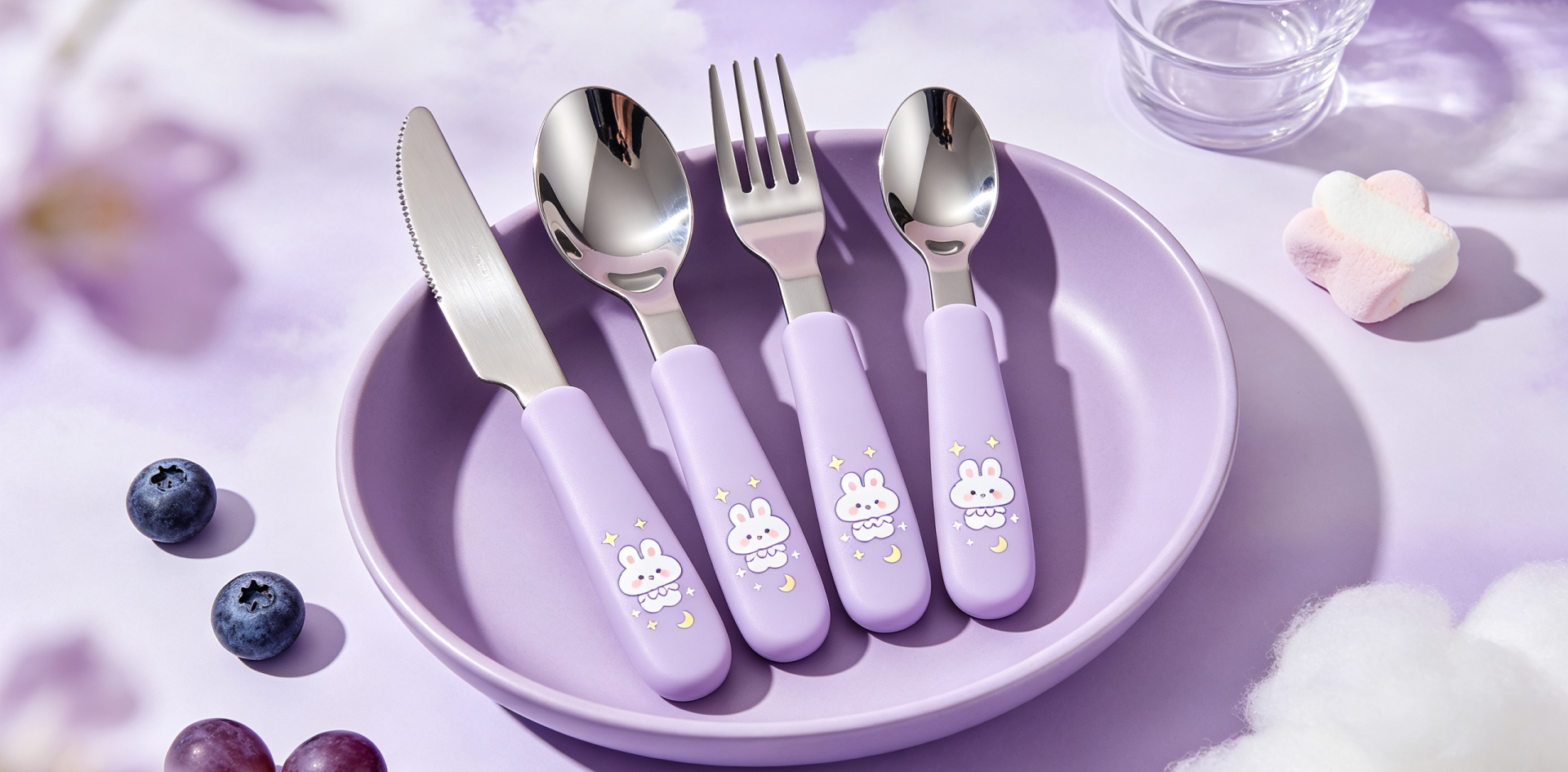
Stainless Steel Knife Blade Profile: A Practical Detail for B2B Cutlery Projects
When developing stainless steel cutlery, the knife often receives particular attention because its working part has a direct relationship with everyday use. Buyers may consider the material, handle design, surface finish and overall dimensions, but the blade profile is another detail that deserves careful consideration.
The profile of a table knife influences its appearance and contributes to how the knife performs during normal table use. For B2B buyers developing custom cutlery, understanding this detail can make communication with a manufacturer more precise and help turn a design idea into a practical production specification.
What Is a Knife Blade Profile?
The blade profile refers to the overall shape and contour of the knife blade when viewed from the side or from above.
Different table knives can have noticeably different profiles even when they have similar overall lengths. Some designs have a relatively straight appearance, while others use a more curved or tapered shape.
The relationship between the blade, handle and transition area also contributes to the visual character of the knife.
For standard products, these characteristics are usually already defined. For OEM and private label projects, however, buyers may have the opportunity to specify or modify the profile according to their product concept.
Why Blade Profile Matters
A table knife needs to look appropriate as part of the overall flatware collection while also being practical for its intended use.
A profile that is too visually heavy may change the character of a lightweight modern collection. A very slim profile may create a different impression from a traditional or substantial table setting.
This means the blade should not be considered separately from the rest of the product.
When developing a custom stainless steel knife, manufacturers and buyers need to consider how the blade profile relates to the handle, overall length and style of the other cutlery pieces.
For a complete collection, these relationships can help create a consistent appearance across knives, forks and spoons.
Blade Profile and Product Positioning
Different markets can have different preferences for table knife design.
A retail brand may want a clean and contemporary knife with a simple silhouette. A hospitality supplier may prefer a more substantial appearance. A premium private label collection may require more carefully defined proportions and transitions.
The blade profile can contribute to these differences.
There is no single shape that is suitable for every B2B application. The appropriate design depends on the intended market, customer expectations and overall positioning of the collection.
This is why a professional cutlery manufacturer should understand the commercial purpose of a product before finalizing its production details.
Working From a Reference
Many custom cutlery projects begin with a reference rather than a complete technical drawing.
A buyer may have an existing knife, a photograph, a sketch or a product from another collection that demonstrates the desired appearance.
Such references can be useful during the early stages of development.
The manufacturer can review the reference and identify the main characteristics that need to be reproduced or modified. These may include the blade silhouette, handle shape, total length and relationship between the different sections.
If the customer wants a different result, those changes can then be incorporated into the sample development process.
The Value of Physical Samples
Blade shape can be difficult to judge from a two-dimensional image alone.
A physical sample allows the buyer to examine the actual silhouette and compare it with other pieces in the collection.
The sample can also be held and used for a practical assessment. This helps buyers determine whether the overall shape feels appropriate for the intended product.
For B2B projects, the sample stage provides an opportunity to identify adjustments before a large production order is released.
This can be particularly useful for new private label collections where the design will later be produced in significant quantities.
Matching the Knife With the Rest of the Collection
A table knife is rarely sold completely independently in a coordinated flatware program.
It is commonly presented alongside dinner forks, table spoons and other pieces.
For this reason, the knife should visually belong to the same collection.
The handle can share common design characteristics with the fork and spoon, while the blade can be adapted to the knife's specific function.
The goal is not to make every part identical. Instead, the products should have enough common elements to create a recognizable collection.
For brands, this can be useful when expanding an initial product range into additional SKUs.
Manufacturing Considerations
A blade profile also needs to be suitable for consistent manufacturing.
For a single sample, a particular shape may appear straightforward. For a large B2B order, however, the same characteristics need to be reproduced across the complete production quantity.
The manufacturer therefore needs to consider the relationship between the requested design and the production process.
Clear specifications and an approved reference sample can provide a practical basis for production.
This is particularly important when a buyer plans repeat orders. A clearly established product specification gives both sides a common reference for future manufacturing.
Custom Knife Development for OEM Projects
OEM buyers often want their products to look different from standard market offerings.
A customized blade profile can be one of the details used to create that distinction.
The customer may request a particular silhouette, a different transition between blade and handle or a design adapted to an existing brand collection.
A manufacturer experienced in stainless steel cutlery can evaluate these requirements and determine how they can be incorporated into a production-ready design.
For ODM projects, the manufacturer may also contribute practical suggestions based on existing production experience.
Private Label Opportunities
Private label brands often need products that are recognizable while remaining practical to manufacture.
A customized table knife can become part of this strategy when its design is coordinated with the rest of the collection.
Rather than selecting unrelated standard products, the brand can develop a consistent visual direction for its knives, forks and spoons.
The blade profile is one of the details that can support this approach.
Combined with a suitable handle, finish and overall product shape, it can help create a collection that reflects the brand's intended market position.
What B2B Buyers Should Include in a Knife Inquiry
When contacting a stainless steel cutlery manufacturer about a custom knife project, buyers can provide several useful details.
These may include:
The preferred knife type
Reference photos or samples
Approximate overall dimensions
Blade profile preferences
Handle design requirements
Desired stainless steel material
Surface finish
Estimated order quantity
Target market
Private label or OEM requirements
Not every specification needs to be finalized before the first discussion. However, providing the available information helps the manufacturer understand the project and prepare a more relevant quotation.
From Sample Approval to Bulk Production
Once the blade profile and other product details have been confirmed, the approved sample can serve as a reference for bulk manufacturing.
This is especially important for larger wholesale orders.
A B2B buyer may need thousands of pieces for a retail launch, hospitality program or distributor product range. In these situations, the ability to translate an approved design into repeatable production becomes an important part of the supplier relationship.
Clear communication at the development stage can help reduce uncertainty when the project moves into larger-scale manufacturing.
Building a More Distinctive Cutlery Collection
A stainless steel table knife does not need to rely on dramatic decoration to look distinctive.
Sometimes the silhouette, blade profile and relationship between the blade and handle are enough to create a recognizable product.
For B2B brands, this can be a practical way to develop a collection that feels intentional while remaining suitable for everyday use.
The same design thinking can then be applied across related forks and spoons to create a complete flatware program.
Choosing a Manufacturer for Custom Stainless Steel Knives
When sourcing custom stainless steel knives, price is only one part of the purchasing decision.
The manufacturer also needs to understand how design requirements are converted into samples and then into bulk production.
For OEM, ODM and private label projects, this ability can be particularly valuable because the buyer may require more than a standard catalog product.
An experienced stainless steel cutlery factory can work with buyers on customized knives, forks, spoons and complete flatware sets for wholesale and B2B programs.
The more clearly the product concept is communicated, the easier it becomes to discuss development, quotation and production requirements.
A Small Design Detail With Commercial Value
The blade profile may appear to be a small part of a table knife, but it contributes to both the visual identity and practical character of the finished product.
For B2B buyers, the key is to define the profile according to the intended application and product positioning rather than selecting a shape without considering the rest of the collection.
A reference sample, clear product requirements and close communication with the manufacturer can provide a strong foundation for custom knife development.
If you are preparing a new stainless steel cutlery collection, you can share your existing reference, design concept, estimated quantity and target market with a manufacturer. This gives the factory a practical starting point for discussing customization, sample development and bulk production.
Request a Custom Stainless Steel Knife Quote
Discuss Your OEM Table Knife Project
Develop a Private Label Cutlery Collection
Col des Couverts Inox : Pourquoi ce Détail Compte dans un Projet B2B
Edelstahlbesteck mit abgerundeten Kanten: Ein wichtiges Detail für B2B-Projekte
Related Article



