
Stainless Steel Knife Blade Taper for B2B Cutlery
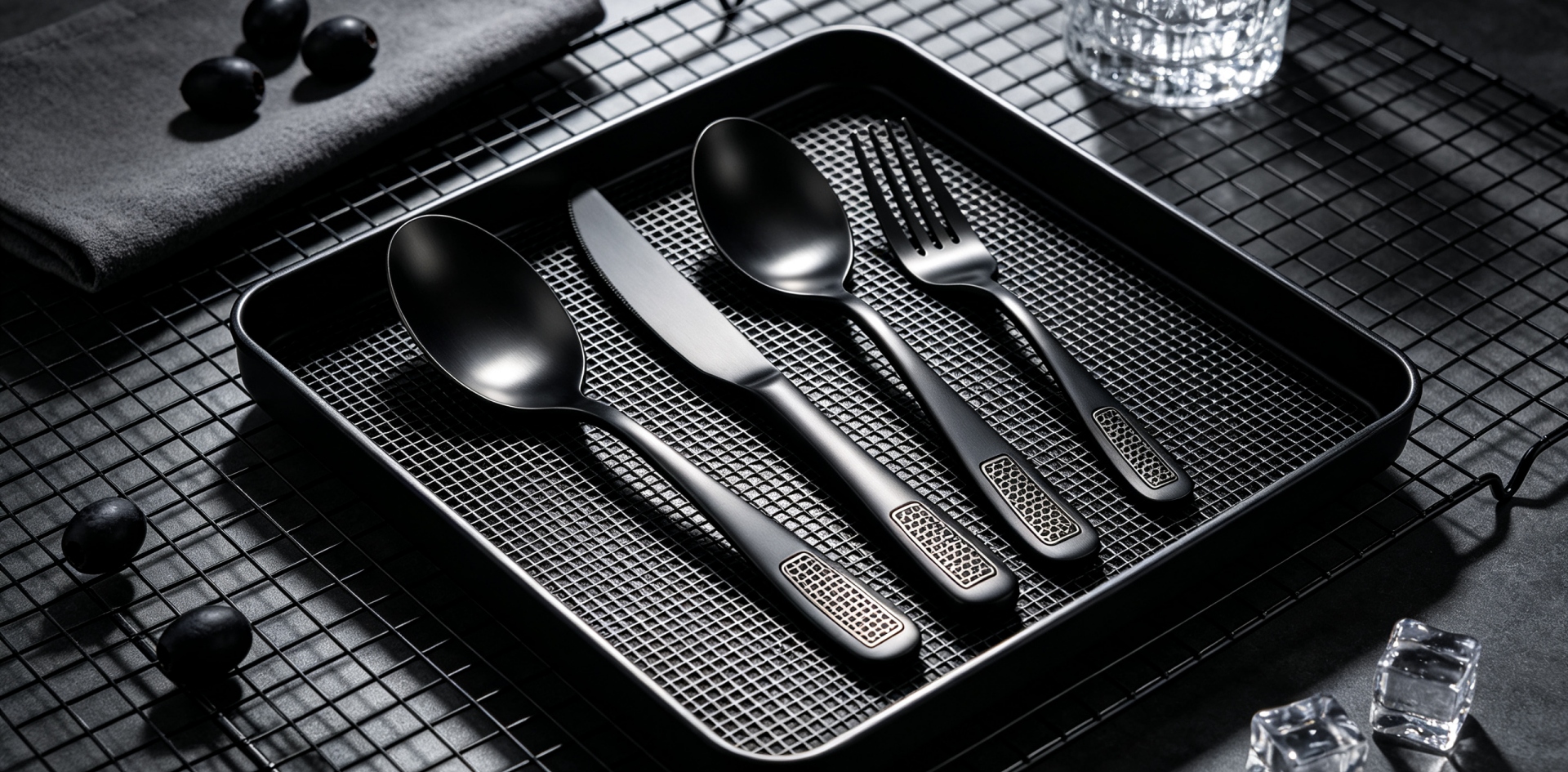
Stainless Steel Knife Blade Taper for B2B Cutlery
When a stainless steel table knife is developed for a professional cutlery collection, buyers often focus on the overall blade shape, handle design, thickness and finish. Another structural detail that can influence the final appearance is the way the blade gradually changes in thickness from one area to another.
This gradual change is commonly described as blade taper.
For B2B buyers developing custom stainless steel knives, understanding blade taper can help turn a general design idea into a more clearly defined manufacturing specification. It can also help the factory maintain a consistent appearance across larger production quantities.
Blade taper is not simply a question of making a knife thinner. It is about how the blade transitions through its length and how that transition works with the overall product design.
What Is Blade Taper?
A stainless steel knife does not necessarily maintain exactly the same thickness throughout the entire blade. Depending on the design, the blade can gradually change through different sections.
The taper may be subtle or more visually noticeable. Its exact form depends on the knife design, material, manufacturing process and intended application.
For a B2B cutlery project, the important point is that the taper should be intentional and repeatable.
A sample may have a particular visual balance because of the relationship between the blade, handle and transition areas. If the production version changes significantly, the finished knife may look different even when its overall length and width remain the same.
This is why blade taper can be useful to discuss during custom product development.
How Blade Taper Influences Knife Appearance
The blade is one of the largest visible areas of a table knife. Small changes in its profile can affect how the entire product is perceived.
A gradual taper can create a lighter visual transition toward the front of the knife. A more substantial blade profile can create a stronger and heavier appearance.
Neither style is universally suitable. The appropriate design depends on the product positioning and the visual language of the collection.
For a modern private label range, a carefully controlled taper may support a clean and streamlined appearance. For a more traditional collection, a different blade proportion may be more appropriate.
The important factor is consistency between the original concept and the finished production.
Blade Taper and Overall Knife Proportion
A knife should be considered as one complete product rather than a group of unrelated measurements.
Blade length, blade width, handle length, handle thickness and the transition between the blade and handle all influence how the taper is perceived.
For example, the same blade taper may look very different on a narrow knife compared with a wide, substantial table knife.
This is why experienced stainless steel cutlery manufacturers normally review the entire design when discussing a custom blade. A buyer may provide a drawing or reference sample, while the factory evaluates whether the proposed proportions are practical for production.
For OEM and ODM projects, this collaboration can help avoid situations where a design looks correct in a digital drawing but produces an unexpected result after manufacturing.
Maintaining Taper Consistency in Bulk Production
For a B2B buyer, one approved knife is only the beginning.
The real requirement is to reproduce the design consistently across the complete order.
During large-volume production, manufacturing conditions need to remain stable enough that the blade profile does not vary noticeably from piece to piece. Forming, grinding and finishing operations can all contribute to the final blade shape.
A clear production reference can therefore be valuable.
The approved sample, product drawing and agreed specifications can work together to establish the expected blade profile. This gives the production team a practical reference and helps reduce unnecessary interpretation during manufacturing.
For repeat orders, maintaining this reference becomes even more useful. A successful product may be reordered months or years later, and the original design characteristics need to remain understandable to the manufacturing team.
Blade Taper in Custom Stainless Steel Knife Development
Custom knife projects can begin in different ways.
Some buyers already have a complete technical drawing. Others have an existing sample they want to reproduce or modify. Some brands may only have a visual concept and need assistance turning it into a manufacturable product.
In each situation, blade taper can be considered as part of the overall development process.
The factory can review the blade profile together with material selection, dimensions, handle construction and finishing requirements. If the proposed structure needs adjustment for manufacturing reasons, these issues can be discussed before production begins.
This is particularly useful for private label brands that want a distinctive knife without creating an unnecessarily difficult production process.
Balancing Design and Manufacturing
A custom knife needs to look right, but it also needs to be suitable for repeatable production.
A highly detailed blade profile may require more manufacturing control than a straightforward design. That does not mean detailed designs cannot be produced. It means the design should be evaluated together with the available production process and expected order volume.
For B2B buyers, this practical discussion can help establish realistic expectations before confirming a production order.
Instead of changing the design after production has started, buyers can work with the factory during the development stage to determine which blade characteristics are essential to the final product.
This approach can save time and make communication between the buyer and manufacturer more efficient.
Blade Taper and Coordinated Cutlery Collections
A knife is often sold together with forks and spoons, so its visual proportions may need to coordinate with the rest of the collection.
The knife does not need to copy the exact structure of a spoon or fork. However, the overall design language can be connected through proportions, handle style, surface treatment and visual weight.
For example, a slim knife with a refined blade profile may work naturally with a lightweight fork and spoon collection. A heavier knife may require stronger visual proportions throughout the range.
For brands developing complete flatware collections, these relationships can be discussed at the beginning of product development.
This allows the manufacturer to consider the collection as a whole rather than producing each piece independently.
Supporting OEM, ODM and Private Label Programs
OEM and ODM customers often require more than a standard catalog product.
They may need a particular blade profile, customized dimensions, special finishing, branded packaging or a complete knife, fork and spoon collection.
Homefelt factory provides custom stainless steel cutlery services for B2B customers, including OEM, ODM, private label, wholesale and large-volume production.
Customers can discuss their product concepts and specifications with the factory team. Product design, customization, packaging and transportation requirements can be considered together according to the actual project.
This one-stop approach can be useful for buyers who are developing a new collection and want to manage multiple stages through one experienced manufacturing partner.
From Approved Sample to Repeat Orders
Once a knife design has been approved, its important characteristics should be kept clear for future production.
Blade taper can be one of the details included in the product reference together with material, dimensions, handle structure and surface finish.
This helps create continuity between the original development sample and later production orders.
For distributors and private label brands, consistency across repeat purchases can be especially important. Customers expect a reordered product to maintain the same visual identity as the original collection.
A well-defined manufacturing reference gives the factory a clearer basis for reproducing the product.
Why Small Blade Details Matter to B2B Buyers
Large production orders are built from many small manufacturing decisions.
Blade shape, handle proportions, surface finish and transition areas all contribute to the final product. Blade taper may not be the first feature a buyer notices, but it can influence how the knife looks when viewed individually or as part of a complete collection.
For B2B buyers, discussing these details before mass production can make product development more structured.
The objective is not to make every project technically complicated. It is to identify the details that matter to the finished product and establish a practical specification that the factory can reproduce consistently.
Homefelt Factory for Custom Stainless Steel Knives
Homefelt factory supports B2B customers looking for stainless steel knives, forks, spoons and complete flatware sets.
For custom projects, customers can develop products according to their own market positioning, collection concept and purchasing requirements. OEM, ODM, private label and wholesale production can be arranged according to the project scope.
The factory can support customers through product development, customized specifications, packaging and transportation coordination, providing an integrated service approach for different types of B2B cutlery programs.
For buyers preparing a new knife design, details such as blade taper can be discussed together with the broader product structure. Once the specifications are confirmed, they can become part of the production reference for the current order and future reorders.
A successful stainless steel knife is the result of many design and manufacturing details working together. Blade taper is one of the structural characteristics that can help define the visual balance of the blade and contribute to a consistent finished product.
For buyers planning OEM, ODM, private label or bulk stainless steel cutlery orders, discussing these details with the factory at an early stage can help create a clearer path from product concept to reliable mass production.
Custom Stainless Steel Knife Manufacturing for B2B Brands
OEM & ODM Stainless Steel Flatware Development
Private Label Stainless Steel Cutlery Manufacturing
Wholesale Stainless Steel Knife, Fork and Spoon Collections
Homefelt Factory Custom Stainless Steel Cutlery Service
Stainless Steel Cutlery Surface Waviness for B2B
Stainless Steel Fork Neck Thickness for B2B Cutlery
Related Article



