
Stainless Steel Knife Blade Width for Custom B2B Cutlery
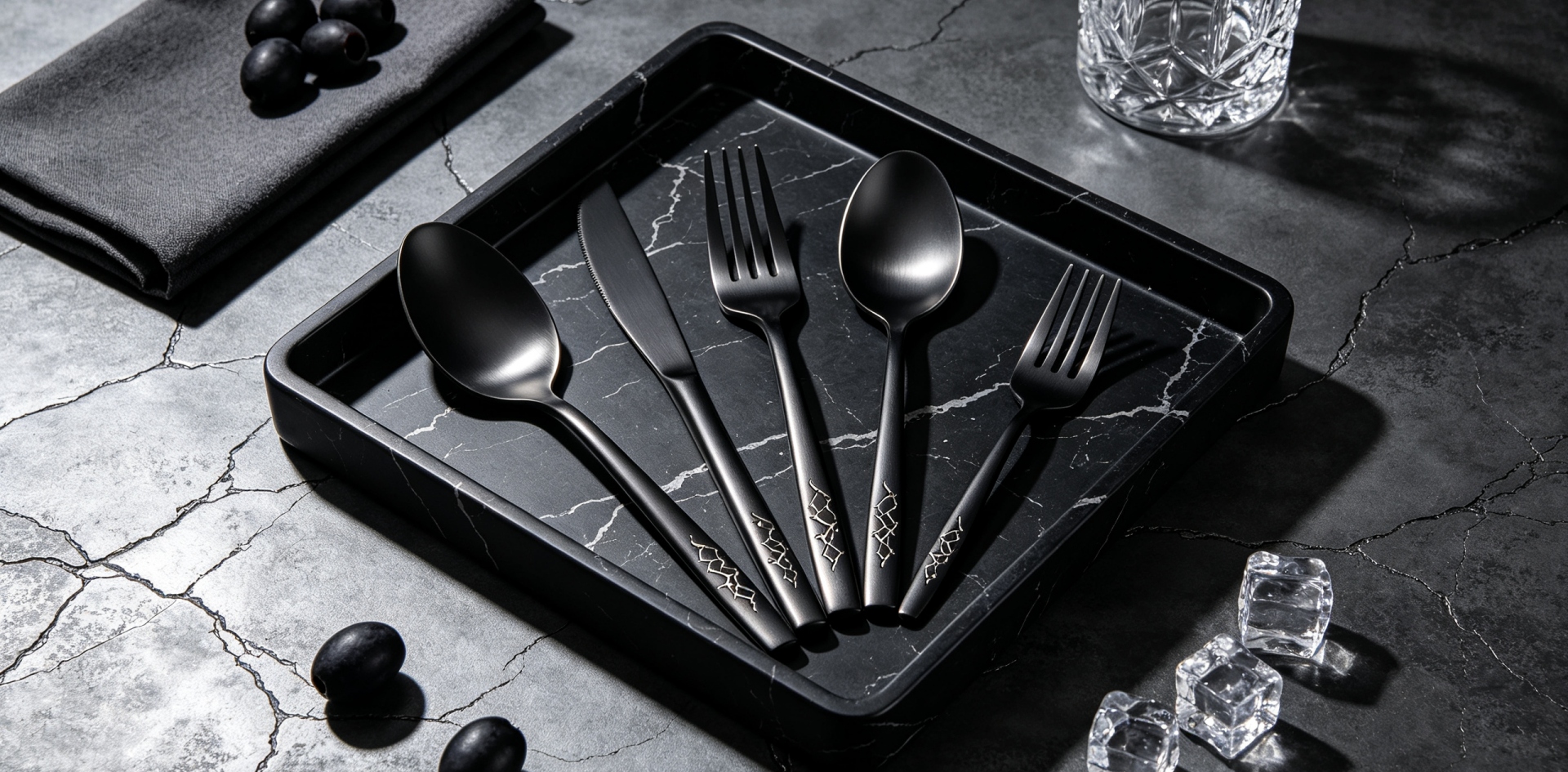
Stainless Steel Knife Blade Width for Custom B2B Cutlery
When developing a stainless steel table knife for a B2B cutlery collection, blade width is an important design detail that is easy to overlook. The width of the blade affects more than the appearance of the knife. It also influences the visual proportion between the blade and handle, the perceived strength of the product, the cutting experience and the overall character of a flatware collection.
For brands and distributors developing custom stainless steel cutlery, blade width should therefore be considered as part of the complete knife design rather than treated as an isolated measurement.
Why Stainless Steel Knife Blade Width Matters
A table knife with a relatively narrow blade can create a lighter and more refined visual impression. A wider blade can make the same knife appear stronger, more substantial and more prominent when placed beside a fork and spoon.
Neither direction is automatically suitable for every cutlery design. The important point is consistency between the blade width, handle proportions, knife length, material thickness and the visual language of the complete collection.
For B2B buyers developing a private label cutlery range, these details can make a noticeable difference when comparing samples. Two knives may use similar stainless steel material and have similar overall lengths, yet their different blade proportions can create very different product impressions.
Blade Width and Overall Knife Proportion
The blade should visually connect with the handle instead of looking too narrow or too broad in relation to it. If the blade is relatively wide while the handle is slim, the knife can appear visually heavy toward the front. If the blade is very narrow while the handle is large, the product may look unbalanced.
During custom cutlery development, manufacturers can evaluate the blade and handle as one continuous product profile. This makes it easier to adjust the proportions before a design enters larger-scale production.
For a B2B collection, proportion is particularly important because the table knife will normally be displayed alongside matching forks and spoons. The knife should belong to the same design family even though its functional structure is different.
Blade Width and Cutting Feel
Blade width can also influence how a table knife feels during use. The blade needs sufficient surface area to maintain an appropriate relationship between its cutting edge, upper blade section and overall knife body.
A suitable width helps the knife feel stable in the hand while allowing the cutting edge to perform its intended function. However, blade width should not be considered independently from blade thickness, edge geometry and material selection.
For this reason, a custom stainless steel knife should be developed through a combination of dimensional details rather than by changing only one specification.
Visual Character of Different Blade Proportions
Blade width can contribute to the overall design character of a stainless steel knife.
A slimmer blade can support a minimalist and contemporary appearance. A moderately wider blade may create a more substantial traditional tableware look. A carefully proportioned blade can also help a collection appear balanced when the same handle concept is applied across knives, forks and spoons.
These differences are useful for B2B brands that want to create a recognizable flatware collection without making the design unnecessarily complicated.
Blade Width in Custom OEM and ODM Development
When a buyer provides a drawing or reference sample, blade width can be included as one of the controlled specifications during product development.
A professional OEM or ODM manufacturer can review the relationship between blade width and other knife dimensions, then help translate the design into a practical stainless steel cutlery product.
For private label projects, the buyer may also have an existing product style that needs to be reproduced with specific modifications. In this situation, controlling blade width consistently becomes important because even a small change in proportion can affect the appearance of the finished knife.
Consistency Across Production Quantities
Once the blade design has been confirmed, maintaining consistent blade width across production is important for a B2B order. Variations can become more noticeable when large quantities of knives are placed together.
Consistent forming, trimming and finishing processes help the finished products maintain the intended blade profile. This is particularly relevant when the knife is part of a larger cutlery set where multiple pieces need to look visually coordinated.
For repeat orders, maintaining the approved product specification also helps keep the knife consistent with previous production.
Matching Blade Width With the Complete Cutlery Set
A stainless steel knife is rarely evaluated completely on its own. In most B2B projects, it is part of a coordinated flatware set.
The knife blade should therefore be considered together with the fork head, spoon bowl and shared handle design. The objective is not to make every piece identical, but to make the pieces visually related.
For example, a refined handle paired with an excessively wide blade may create a different impression from the original collection concept. Similarly, a strong and substantial handle may require a blade proportion that visually supports the same design language.
This is why product-level coordination is valuable when developing custom stainless steel flatware.
How Buyers Can Specify Blade Width
For a custom stainless steel knife project, buyers can provide the target blade width together with the overall knife length, handle dimensions, material specification, thickness and surface finish.
If a drawing is not available, a physical reference sample or product image can also help communicate the intended design direction. The manufacturer can then review the available information and determine which details need to be confirmed before sample production.
Clear specifications reduce unnecessary adjustments and make the sample approval process more efficient.
Homefelt Factory for Custom Stainless Steel Cutlery
Homefelt factory focuses on stainless steel knives, forks, spoons and complete cutlery sets for B2B customers. The factory supports OEM, ODM, private label and wholesale production, allowing buyers to develop custom product proportions according to their own collection requirements.
For a custom stainless steel knife, details such as blade width, handle proportions, material, finish and overall form can be discussed during product development. Buyers can provide drawings, reference samples or basic product requirements for evaluation.
For larger projects, Homefelt can also support coordinated knife, fork and spoon collections so that individual pieces maintain a consistent overall design.
Stainless Steel Cutlery Handle Taper for B2B Custom Designs
Stainless Steel Spoon Bowl Bottom for Custom B2B Cutlery
Related Article



