
Stainless Steel Knife Edge Curve for Custom B2B Cutlery
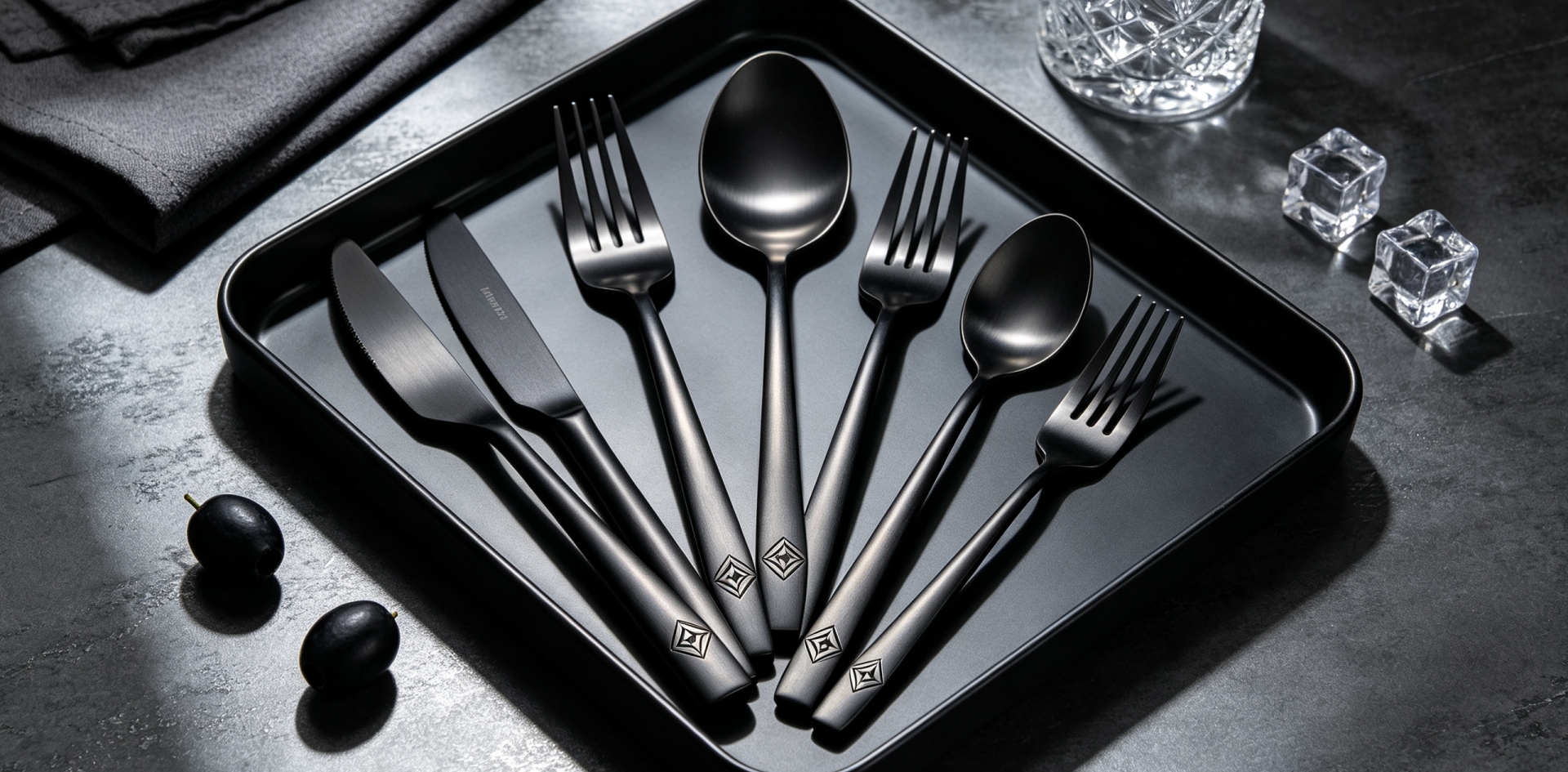
Stainless Steel Knife Edge Curve for Custom B2B Cutlery
The cutting edge is one of the most important visible features of a stainless steel table knife. While blade length and width define the basic dimensions, the curve of the cutting edge can have a strong influence on how the knife looks and how its blade works during a cutting motion.
For B2B customers developing custom stainless steel knives, the cutting-edge curve is therefore an important product detail to consider together with the blade profile, tip shape and handle design.
A knife does not always need a completely straight cutting edge. Different curves can create different cutting characteristics and visual styles, making this detail useful when developing a specific stainless steel flatware design.
What Is the Knife Edge Curve?
The knife edge curve describes the shape of the cutting line running along the lower part of the stainless steel knife blade.
Some table knives use a relatively straight edge, while others have a more noticeable gradual curve. The curve may remain subtle through most of the blade and become more pronounced toward the front.
The exact shape depends on the intended knife design.
The cutting edge should also be considered together with the upper blade profile. When both lines are coordinated, the complete blade can have a more controlled and balanced silhouette.
Knife Edge Curve and Cutting Motion
The shape of the cutting edge can influence the way a table knife moves against food during use.
A gradual curve can support a natural rocking movement, while a straighter edge can create a different cutting motion. The appropriate design depends on the intended function and overall structure of the stainless steel knife.
For this reason, the cutting edge should not be designed only according to appearance.
When developing a custom stainless steel table knife, the blade shape can be considered from both functional and visual perspectives. This allows the edge curve to work with the blade length, width and handle position.
Relationship Between Edge Curve and Blade Length
The same edge curve can look very different on blades of different lengths.
A short stainless steel knife with a strong curve may appear visually compact, while a longer blade with a similar curve can create a more elongated silhouette.
This means that edge curvature should be evaluated together with blade length.
For custom stainless steel cutlery, buyers can establish the intended blade proportions first and then determine how the cutting edge should flow through the available space.
The transition should look intentional rather than appearing as an independent curve added to an otherwise straight blade.
Edge Curve and Knife Tip
The front section of the blade also affects how the cutting edge terminates.
A stainless steel knife with a rounded tip may use a different edge transition from a knife with a more defined tip.
The cutting edge needs to connect naturally with the tip so that the blade silhouette remains continuous.
This is particularly important for custom knife designs because changing the tip can also change the apparent length and curvature of the cutting edge.
When developing a stainless steel table knife, these two areas should therefore be reviewed together.
The Relationship Between Cutting Edge and Knife Back
The upper blade line and lower cutting edge create the overall blade shape.
If the upper profile is relatively straight but the cutting edge has a pronounced curve, the blade can have a more dynamic appearance. If both lines are relatively gentle, the knife may look simpler and more understated.
The relationship between these two lines can influence the visual character of the stainless steel knife.
For B2B buyers developing a private-label cutlery collection, this provides another opportunity to create a distinctive product without changing the basic function of the table knife.
Edge Curve and Blade Width
Blade width also affects the appearance of the cutting edge.
A wider blade provides more vertical space between the upper blade line and cutting edge. A narrower blade creates a slimmer visual profile.
If the same cutting-edge curve is applied to both designs, the resulting knives may look quite different.
Therefore, custom stainless steel knife development should consider blade width and edge curvature as related dimensions.
A well-coordinated combination can make the blade look proportionate from the tip through the handle connection.
Different Edge Profiles for Different Designs
Stainless steel table knives can have different visual styles.
A clean, relatively straight edge can support a minimalist design. A more flowing edge can give the knife a softer or more traditional appearance.
Neither approach is universal. The right profile depends on the intended product.
For OEM and ODM projects, customers can provide a reference knife, drawing or visual concept to communicate the desired blade style. The edge curve can then be developed as part of the complete product rather than selected separately.
This is particularly useful when the knife needs to match a specific stainless steel fork and spoon.
Matching the Knife With a Complete Cutlery Set
A stainless steel knife is often sold as part of a coordinated set.
The fork and spoon do not have cutting edges, but their overall proportions and handle lines can still influence how the knife should be designed.
For example, a knife with a smooth, flowing blade profile may pair naturally with a fork and spoon that use similarly soft handle transitions.
The goal is not to make all three pieces identical. Each piece has a different function and therefore requires its own structure.
Instead, related visual proportions can help create a coherent stainless steel flatware collection.
Evaluating the Edge Curve on a Physical Sample
The actual curve of a stainless steel knife is easier to evaluate when the product is viewed in three dimensions.
A drawing can show the intended outline, but a physical sample allows the buyer to see the relationship between the edge, blade thickness, tip and handle.
The knife can also be placed next to the corresponding fork and spoon to check whether the complete collection has the intended visual balance.
If the cutting edge appears too straight, too curved or poorly connected to the tip, adjustments can be made during the sample development stage.
For custom B2B stainless steel cutlery, this can help establish a clearer final product specification before larger production.
Keeping the Edge Profile Consistent
Once a stainless steel knife design has been approved, the cutting-edge profile should remain consistent.
Small differences in the curve can become visible when many knives are placed together. Consistent blade geometry is especially important for customers who intend to reorder the same product over time.
An approved sample and defined product specifications can provide a reference for maintaining the intended edge curve.
This helps preserve the appearance of a stainless steel knife collection across repeated production.
Homefelt Custom Stainless Steel Knife Development
Homefelt provides stainless steel cutlery customization for B2B customers, including stainless steel knives, forks, spoons and complete flatware sets.
For custom knife projects, customers can discuss blade length, width, tip shape, cutting-edge curve, knife back profile, handle design and other product details. These elements can be developed together so the final stainless steel knife has a coordinated overall structure.
Homefelt supports OEM and ODM stainless steel cutlery development based on customer drawings, reference samples or product concepts. Customers can also develop matching knives, forks and spoons as part of one complete collection.
According to the customer's requirements, Homefelt can provide a dedicated service package covering product design and customization, together with related packaging, transportation and other one-stop services.
For long-term cooperation, the same product design can also be maintained while customers develop additional stainless steel cutlery products. Homefelt aims to support continued product development and grow together with customers through ongoing cooperation.
The cutting-edge curve may seem like a small detail, but it contributes to both the appearance and functional character of a stainless steel table knife. When the edge, blade, tip and handle are designed as one complete product, the finished knife can achieve a more balanced and intentional result.
Stainless Steel Spoon Bowl Rim for Custom B2B Cutlery
Stainless Steel Fork Head Width for Custom B2B Cutlery
Related Article



