
Stainless Steel Knife Handle Transition for B2B Brands
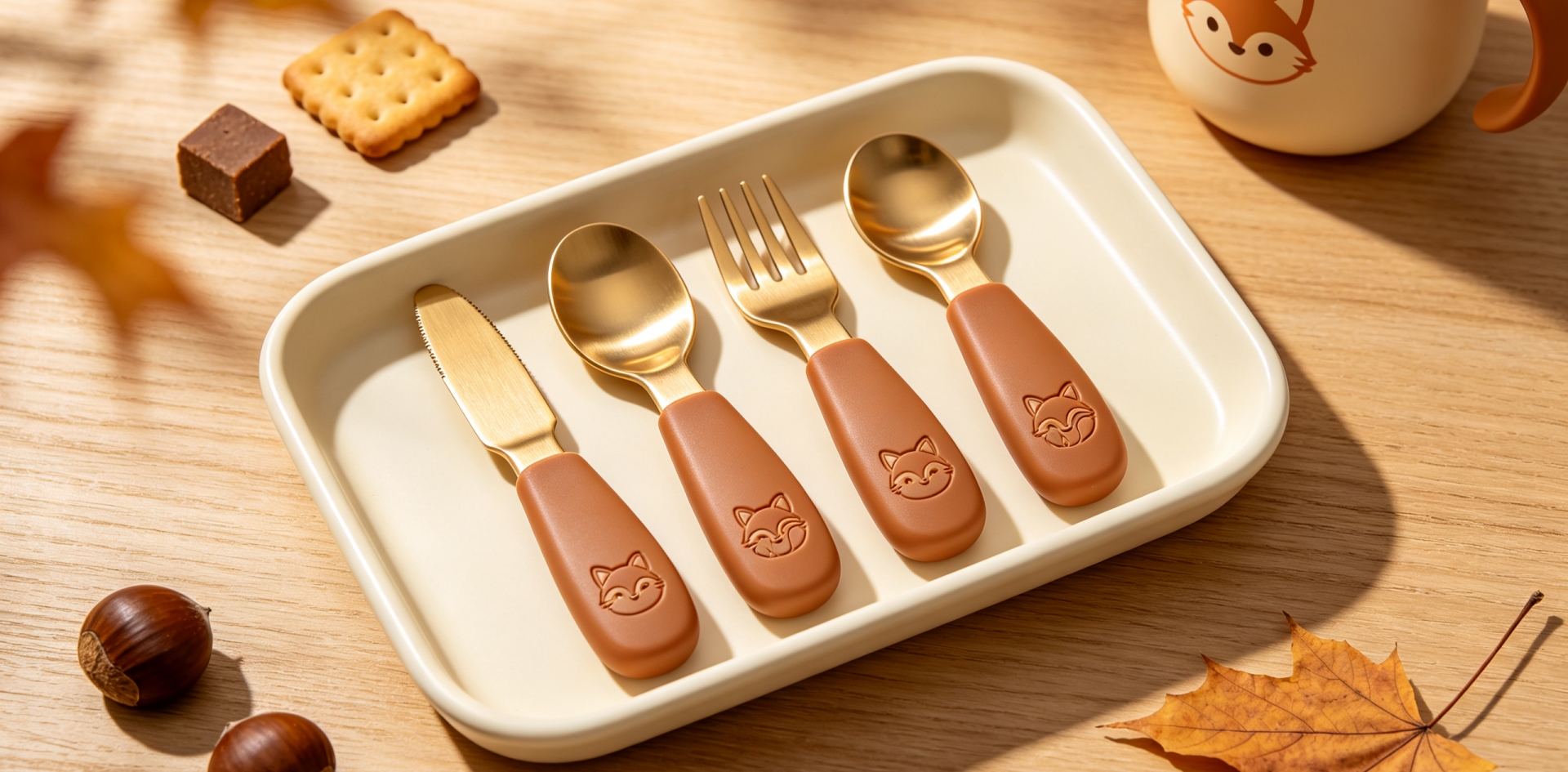
Stainless Steel Knife Handle Transition for B2B Brands
In stainless steel cutlery design, the connection between the knife handle and blade is one of the areas where several product requirements come together. It needs to look natural, feel comfortable and remain consistent with the overall design of the collection.
For B2B brands developing custom knives, this transition is more than a visual detail. It can influence the proportions of the product, the relationship between the handle and blade, and the way the knife fits with matching forks and spoons.
When a collection is produced in large quantities, the transition also needs to be reproduced consistently from one piece to another.
Understanding the Handle-to-Blade Transition
The transition is the area where the handle visually and structurally meets the knife blade. Depending on the design, this area may be relatively smooth and continuous or may contain a more defined step, collar or decorative element.
Different designs create different impressions.
A simple transition can give a knife a clean and contemporary appearance. A more defined transition can create a stronger visual feature and may help establish the identity of a particular collection.
For custom stainless steel cutlery, the important point is that the transition should be considered as part of the complete knife rather than designed separately from the handle and blade.
The Relationship Between Handle and Blade
A knife can have an attractive handle and a well-designed blade, yet the complete product may still look unbalanced if the two sections do not work together.
The length and width of the handle influence the visual weight of the blade. Similarly, the shape of the blade can affect how the handle appears.
For this reason, B2B product development should consider the relationship between both sections.
A slim handle may work particularly well with a narrow blade profile, while a broader handle may require a different blade proportion. The exact combination depends on the intended design.
When a brand develops a matching knife, fork and spoon collection, the knife also needs to maintain the same general visual language as the other pieces.
Creating a Smooth Visual Flow
One of the most noticeable characteristics of a well-coordinated knife is the visual flow from the handle toward the blade.
The transition should support the direction of the product rather than interrupt it unintentionally.
This can be achieved through carefully controlled curves, straight lines, changes in width or other design features.
For a modern collection, the transition might be kept simple and understated. For a decorative collection, the same area could become an opportunity to introduce a distinctive detail.
For OEM and ODM projects, these decisions can be discussed during the development stage so that the factory understands which visual characteristics are important to the customer.
Why the Transition Matters for a Cutlery Collection
A knife is rarely sold completely alone in the B2B cutlery market. It is often part of a larger collection.
When customers place the knife beside a fork and spoon, the differences between the products become easy to see.
The knife may have a different functional section, but the handle shape, surface finish and general proportions can still connect it visually to the other pieces.
The handle-to-blade transition should therefore be compatible with the overall design language.
For example, if a collection uses smooth curved handles, an extremely sharp transition on the knife may appear disconnected. If the collection has a more geometric appearance, a controlled straight transition may be more appropriate.
The goal is not to make every piece identical. It is to create a clear relationship between them.
Transition Design and Production Practicality
A design detail must also be practical for manufacturing.
The more specific the shape of a transition becomes, the more carefully it may need to be considered during tooling, forming, grinding and finishing.
For B2B buyers, this does not mean that custom designs should be simplified unnecessarily. Instead, the desired appearance should be evaluated together with the production method.
A professional manufacturer can review whether the proposed shape is suitable for stable mass production and whether the same appearance can be reproduced across future orders.
This is particularly important for private label brands that expect their products to remain available for several years.
A design that depends on a very precise transition needs a clear reference and controlled production process.
Sample Development for Custom Knife Projects
A physical sample is especially useful when reviewing the connection between the handle and blade.
From photographs alone, it can sometimes be difficult to understand the actual proportions of the two sections.
With a physical sample, the buyer can evaluate the complete silhouette and inspect the transition from different angles.
The sample can also be compared directly with the matching fork and spoon.
If the transition appears too narrow, too wide, too sharp or visually disconnected, adjustments can be made before bulk production.
For an OEM or ODM project, this stage creates a practical reference between the customer and the factory.
Maintaining Consistency in Bulk Production
Once a knife design has been approved, the next challenge is maintaining the same appearance across the production quantity.
This is particularly important around transition areas because small differences can become visible when many products are displayed together.
The approved design should therefore be translated into clear production specifications and supported by an appropriate manufacturing process.
For repeat orders, maintaining the same reference is equally important.
A brand may place its first order with a relatively small quantity and later increase production. If the product needs to remain visually consistent, the original specifications and approved sample can provide a useful reference for future manufacturing.
This helps protect the identity of the product over time.
Surface Finish and Transition Appearance
The surface finish can change how a transition is perceived.
A highly reflective polished surface may emphasize changes in shape because light moves across the different surfaces. A satin or brushed finish can create a softer visual effect.
For colored stainless steel cutlery, the transition may also become more noticeable because the color treatment follows the product geometry.
This means that the finish should be evaluated together with the physical shape.
For custom projects, buyers can review both the geometry and surface treatment during the sample stage instead of making these decisions independently.
Developing a Consistent Knife Family
A B2B brand may eventually require more than one knife model.
For example, a collection could include a table knife, a smaller knife or another specialized model. These products do not have to share exactly the same blade shape, but they can retain common handle and transition principles.
This creates a recognizable family of products.
The same design language can then extend to matching forks and spoons.
For brands expanding their product range, this can be a practical way to create new references while maintaining a consistent collection identity.
Homefelt Factory for Custom Stainless Steel Cutlery
Homefelt factory provides stainless steel knife, fork, spoon and complete flatware manufacturing services for B2B customers.
For custom knife projects, customers can provide technical drawings, reference samples, photographs or initial product ideas. The factory can discuss the handle, blade, transition, dimensions, material and surface finish according to the requirements of the project.
The service can be adapted to different stages of development.
A customer with a finished design may need manufacturing, bulk production and packaging support. Another customer may need help turning an initial concept into a production-ready sample.
Homefelt can coordinate product development, manufacturing, packaging and transportation as part of an integrated service.
This is useful for brands and distributors that prefer to manage several stages of a cutlery project through one experienced manufacturing partner.
Preparing Information for a Custom Knife
When requesting a quotation or discussing a new design, buyers can provide the information they already have.
Useful materials may include the desired knife length, blade dimensions, handle design, stainless steel specification, finish, estimated quantity and packaging requirements.
A reference image showing the desired handle-to-blade transition can also be helpful.
If the knife needs to match an existing fork and spoon, those references should be shared as well. This gives the factory a clearer understanding of the complete collection rather than only one individual product.
The earlier these relationships are defined, the easier it becomes to develop a coordinated product.
From Product Detail to Complete B2B Service
The handle-to-blade transition may seem like a small design feature, but it demonstrates why successful custom cutlery development requires attention to the complete product.
A knife must combine appearance, function and manufacturing practicality. It also needs to fit naturally into the larger collection and remain consistent when produced in volume.
For B2B customers, working with a factory that can support these different stages can simplify the development process.
Homefelt factory can provide custom stainless steel knife, fork and spoon manufacturing, OEM, ODM and private label production, together with packaging and transportation support.
The service can be adapted to the customer's specific situation, whether the requirement is for a single customized knife, a coordinated flatware collection or a large-volume production program.
A well-designed transition helps connect the two most recognizable sections of a knife and gives the finished product a more intentional appearance. When this detail is defined clearly and reproduced consistently, it becomes part of the overall quality of the collection.
Custom Stainless Steel Knife Manufacturing for B2B Brands
OEM & ODM Stainless Steel Flatware Solutions
Private Label Stainless Steel Cutlery Manufacturing
Stainless Steel Cutlery Flatness for B2B Production
Stainless Steel Spoon Curvature for B2B Custom Designs
Related Article



